 Ferndale Siding
 New-Construction Windows Are a Different Job Than Replacement
Installing windows in a house that's still open to the studs is a different trade than swapping out an old window in a finished wall. There's no existing frame to reuse, no old caulk line to match, and no shortcuts available — the window has to be flashed, integrated with the weather-resistive barrier, and sealed correctly the first time, because once siding and trim go on, it's buried. For a new build going up in Custer, that first install is the only chance to get the water management right before the house is closed in for decades.
We work new-construction window packages for builders and homeowners in the Custer area regularly, alongside our core siding work in Ferndale and the rest of Whatcom County. That combination matters: a window opening and the siding around it are one system, not two separate trades that happen to meet at the same wall.
What Custer's Coastal Climate Does to Windows Over Time
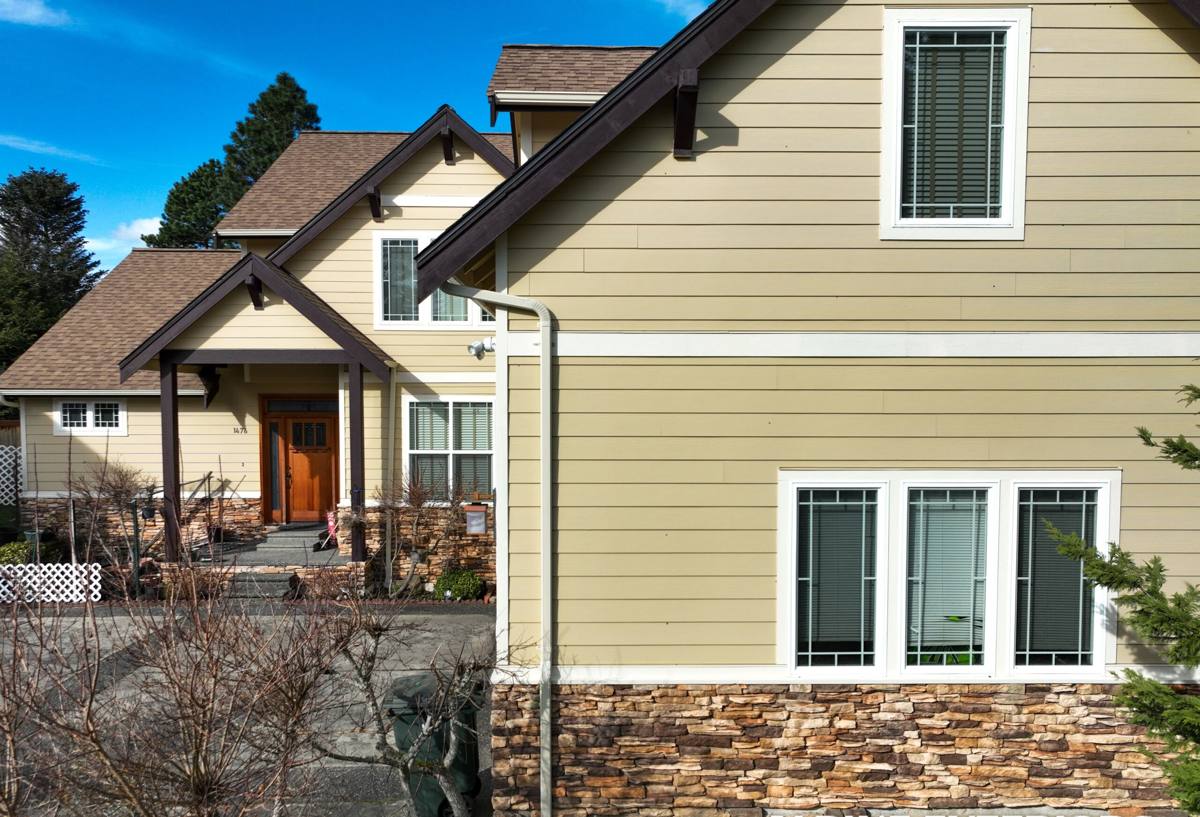
Custer sits close enough to the water and open farmland that homes here take a different kind of weather beating than a house tucked into town. Three things drive most of the window problems we get called out to fix on other builders' work — and the ones we design around from day one on new construction.
Salt Air and Metal Corrosion
Proximity to Puget Sound and Georgia Strait means salt-laden air reaches Custer on a regular basis. Salt accelerates corrosion on unprotected fasteners, hinges, and lower-grade aluminum components. It doesn't ruin a window overnight, but over ten or fifteen years it will find every weak point in a hardware set or cladding that wasn't specified for a marine-influenced environment.
Driving Rain and Wind-Driven Water
Whatcom County storms don't just drop rain straight down — wind off the water pushes it sideways into wall assemblies. A window that's watertight in a calm rain can still leak under wind-driven rain if the flashing details and sill pan weren't built to shed water outward and downward no matter which direction it's coming from.
Moss and Algae Season
The long wet stretch from fall through spring keeps moss and algae active on north-facing and shaded elevations for months at a time. Around windows, that shows up as green staining on sills, buildup in track channels, and — if drainage details are wrong — trapped moisture behind trim that never gets a chance to dry out between storms.
Choosing the Right Frame and Glass for This Location
There's no single "best" window material for every house, but for new construction in a Custer-area exposure, the tradeoffs matter more than they would in a more sheltered inland location.
| Frame Material | Coastal/Salt-Air Performance | Maintenance | Typical Fit |
|---|---|---|---|
| Vinyl | Good — won't corrode, handles moisture well | Low; occasional cleaning of tracks and weep holes | Cost-conscious new builds, most standard elevations |
| Fiberglass | Very good — dimensionally stable, resists warping in wet/dry cycling | Low | Larger openings, higher-exposure walls, longer-term ownership |
| Aluminum-Clad Wood | Depends heavily on cladding quality and hardware spec; can perform well but is less forgiving of a poor install | Higher — interior wood needs monitoring at any seal failure | Design-driven projects where the wood interior look is a priority |
| Bare Aluminum | We don't spec this for direct coastal exposure without a proven marine-grade finish — corrosion risk over time isn't worth it | Higher | Rarely our recommendation for this location |
For most new-construction jobs in Custer, we steer owners toward vinyl or fiberglass for the bulk of the house, reserving premium materials for feature windows where the extra cost buys a look the owner specifically wants. That's a maintenance and moisture-behavior call, not a knock on any manufacturer — it's about matching the product to how much weather this specific site sees.
Getting the Installation Sequence Right
Most window failures we're asked to diagnose trace back to sequencing, not the window itself. On new construction, the order of operations is what keeps water moving out of the wall instead of into it.
Sill Pan First
Every rough opening gets a sloped sill pan before the window ever goes in. This creates a dedicated drainage path so any water that gets past the window — through wind-driven rain, condensation, or a future seal failure — has somewhere to go besides the framing.
Weather-Resistive Barrier Integration
The WRB has to shingle-lap correctly around the opening: house wrap laps over the head flashing, and the side and sill flashing tape into the WRB in a specific order so water always drains onto the layer below it, never behind it. This is the detail that separates a window that stays dry in a Custer winter from one that quietly rots the sheathing behind it.
Nailing Fin and Fastening
Fasteners go where the manufacturer specifies, at the spacing specified — skipping fastener locations to "save a step" is one of the most common shortcuts we see undone on other people's work, and it's the first thing that shows up as a loose or racked window a few years in.
Sealant and Backer Rod
Sealant isn't a substitute for correct flashing — it's the last line of defense, not the first. We use backer rod and sealant compatible with both the window frame and the cladding going over it, sized for the actual gap rather than smeared over a joint that's too wide or too narrow to seal properly.
Meeting Washington's Energy Code Without Guesswork
New construction in Whatcom County has to meet the Washington State Energy Code, and windows are one of the bigger swing factors in whether a house hits its targets. Two numbers matter most:
- U-factor — how well the window resists heat loss; lower is better for our climate
- Solar Heat Gain Coefficient (SHGC) — how much solar heat passes through the glass, which affects both winter heat gain and summer overheating on south- and west-facing walls
We spec glass packages to hit code on the prescriptive path where that's the simpler route, or work with the builder's energy consultant when the house is using the performance path instead. Either way, the window schedule gets nailed down before order, not adjusted after installation — changing glass specs on already-installed windows isn't a real option.
How We Work With Builders and Owners in Custer
Our process on a new-construction job is the same whether we're working directly for a homeowner building on a lot in Custer or as a sub for a general contractor.
- Plan review — we look at the window schedule and elevations before ordering, flagging any opening sizes, egress requirements, or exposure conditions that need a closer look.
- Product selection — we walk through frame material, glass package, and hardware finish options against the site's actual exposure, not a generic recommendation.
- Coordination with framing and siding — window install timing gets locked to the WRB and siding schedule so there's no gap where an opening sits exposed to weather longer than it should.
- Installation — sill pan, flashing, fastening, and sealant done in the sequence above, on every opening, not just the visible ones.
- Final walk and punch list — every window operates correctly, seals cleanly, and matches the schedule before we call it done.
What Drives the Cost of a New-Construction Window Package
Costs vary by house, but the factors that move the number are consistent from job to job.
| Factor | Why It Matters |
|---|---|
| Number and size of openings | More glass and larger units mean more material and labor per house |
| Frame material | Vinyl is the cost-efficient baseline; fiberglass and clad-wood run higher |
| Glass package | Meeting or exceeding energy code, plus any tempered/egress requirements, adds cost per unit |
| Wall height and access | Second-story and hard-to-access openings take more time to flash and set correctly |
| Exposure | Higher wind/rain-exposed elevations sometimes warrant upgraded flashing details or sealants |
We give a real number after looking at the plans, not a per-window average pulled out of thin air — a house with six standard openings and a house with two large picture windows and a dozen smaller units can land at very different totals for the same square footage.
A Quick Checklist Before Your Windows Go In
- Window schedule matches the final approved elevations, not an earlier draft
- Frame material chosen with this site's exposure in mind, not just budget
- Glass package confirmed against Washington State Energy Code requirements
- Sill pan and flashing sequence specified in writing, not left to "standard practice"
- Installation timing coordinated with WRB and siding schedule so openings aren't left exposed
- Egress and tempered-glass requirements confirmed for bedrooms, bathrooms, and stairwells
Why Local Experience in Custer Matters
A crew that's already worked openings through Custer's wind and rain exposure knows which elevations tend to need extra attention on flashing, and which product choices hold up once salt air and moss season have had a few years to work on them. That's not something you get from a spec sheet — it comes from having done the install, then gone back years later to see what actually held up on a house in this exact part of Whatcom County. We bring that same standard to every new-construction window package, whether the lot is right in Ferndale or out toward Custer.
If you're planning a new build and want a straight answer on window selection, cost, and how the install will hold up to this area's weather, we're glad to take a look at your plans. Reach out for a free, no-pressure estimate using the form below.