 Ferndale Siding
 Why Roofs Near the Lummi Nation Take More Punishment
Homes in and around the Lummi Nation sit close to Bellingham Bay, which means they catch a different kind of weather than roofs even a few miles inland. Salt-laden air off the water accelerates corrosion on anything metal — fasteners, flashing, gutter hangers — long before it would fail on a roof further from the shoreline. Add in Whatcom County's driving, wind-pushed rain and the long, wet moss season that runs from fall through spring, and you've got three separate stresses working on the same roof at the same time. A roof built to a generic spec sheet, without accounting for all three, tends to show problems early: streaking, soft spots at the eaves, rusted fasteners bleeding through shingles, or moss mats holding moisture against the deck.
None of this means a roof here has to underperform. It means the installation has to account for the actual conditions instead of the minimum code requirement. That's the difference between a roof that needs attention again in eight years and one that goes the full distance of its warranty.
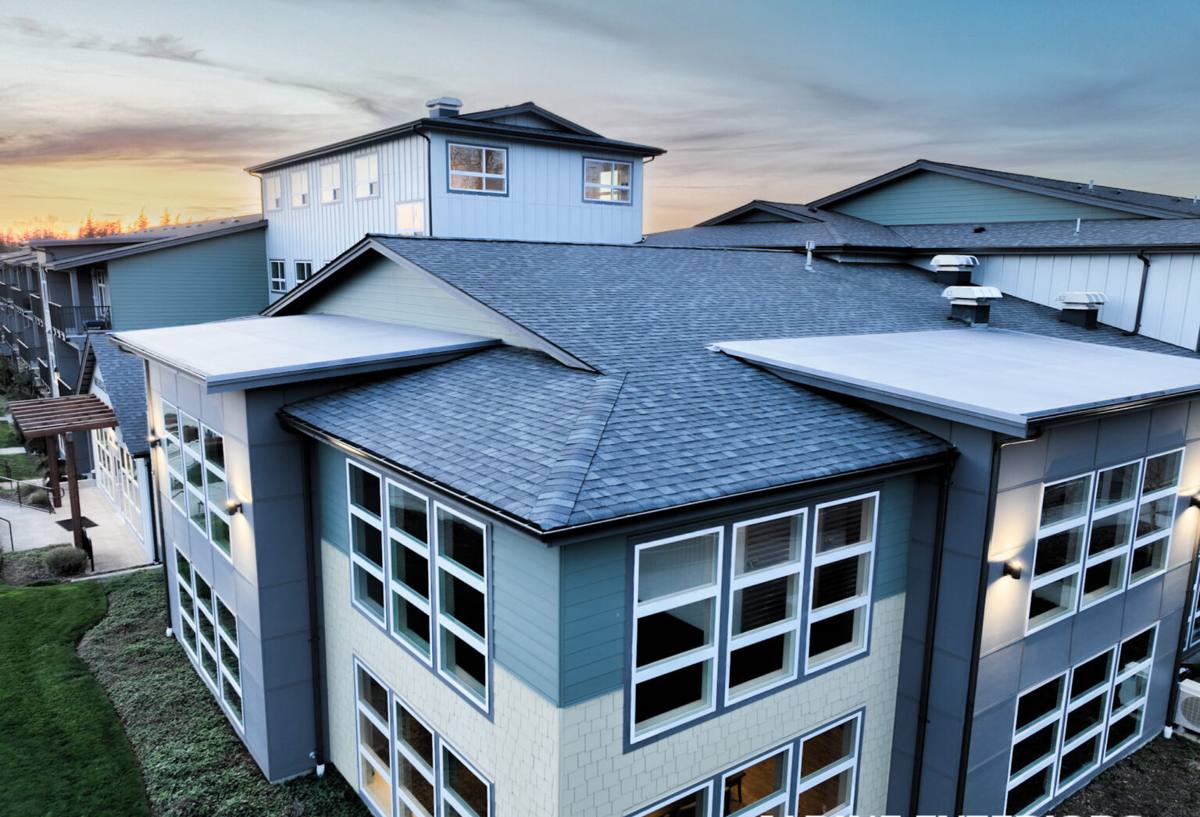
What a Correct Installation Actually Involves
Tear-Off vs. Overlay
An overlay — installing new shingles over the old layer — is sometimes offered as the cheaper option, and in dry, low-moisture climates it can be a reasonable compromise. In Whatcom County's climate, we don't recommend it. Overlaying traps moisture between layers, hides the condition of the deck underneath, and makes it impossible to install continuous underlayment or address any rot that's already started. A full tear-off lets us inspect the deck, replace any soft or delaminated sheathing, and start the new roof system from a clean, dry surface. Given how much moisture this area sees, skipping that inspection is how small rot problems turn into structural ones.
Underlayment and Flashing First, Shingles Second
The shingles are the part everyone sees, but the underlayment and flashing are what actually keep water out during a sideways rainstorm. For this climate, that means a synthetic or self-adhered underlayment across the full roof, with self-adhered ice-and-water membrane extended well up from the eaves, along valleys, and around every penetration — chimneys, vents, skylights. Driving rain doesn't just fall straight down here; wind pushes it up under shingle tabs and along roof edges, which is exactly where a lot of "mystery leaks" originate. Correct installation treats every transition — roof-to-wall, roof-to-chimney, valley, penetration — as its own detail, not an afterthought.
Choosing Materials That Hold Up Out Here
There's no single "best" roofing material for every home — it depends on budget, roof pitch, tree cover, and how long you plan to own the house. What matters is understanding the honest trade-offs for this specific climate.
| Material | Salt-air / corrosion behavior | Moss resistance | Typical lifespan here |
|---|---|---|---|
| Architectural asphalt shingle | Good with corrosion-resistant fasteners and flashing; the shingle itself doesn't corrode | Better with algae-resistant (copper-infused) granules; still needs periodic moss treatment | 20-30 years |
| Metal (standing seam or coated panel) | Needs marine-grade coatings or aluminum near the water; bare or poorly coated steel corrodes faster this close to salt air | Very good — moss struggles to grip a smooth metal surface | 40-50+ years |
| Cedar shake | Not affected by salt corrosion, but absorbs and holds moisture | Poor without diligent maintenance — cedar's texture holds moisture and organic debris that feeds moss | 20-25 years with active upkeep |
| Synthetic composite shingle/shake | Good; components are typically non-metallic or use corrosion-resistant hardware | Good — smoother surface than cedar, resists moisture absorption | 30-50 years |
We'll talk through which of these fits your home and budget during the estimate rather than push one product on every roof. A shaded, moss-prone lot changes the calculus differently than an open, wind-exposed one closer to the water.
Fasteners, Flashing Metal, and Salt Air — the Detail Most Roofs Get Wrong
This is the single most common shortcut we see on roofs that fail early this close to the bay: standard electro-galvanized nails and flashing instead of corrosion-resistant hardware. Galvanized coatings are adequate in a lot of the country, but in a salt-air environment they can start showing rust streaks and losing holding strength years before the shingles themselves are worn out. We install stainless steel or hot-dip galvanized fasteners rated for coastal exposure, and we use aluminum or properly coated steel flashing rather than the bare or lightly coated stock that's common on inland jobs. It costs a bit more up front. It's also the difference between flashing that's still solid in twenty years and flashing that's rusted through in ten.
Ventilation: The Part Homeowners Never See
A roof that traps warm, moist attic air underneath it will fail faster no matter what shingle is on top — the moisture condenses against the underside of the deck, feeds rot, and in cold snaps can contribute to ice damming at the eaves. Correct balanced ventilation (intake at the soffits, exhaust at or near the ridge) keeps the deck temperature closer to the outside air, which does double duty here: it reduces moisture buildup in our wet winters, and it slows the ice-melt-and-refreeze cycle that can happen during the occasional cold snap. We check and correct ventilation as part of every new roof installation — not as an upsell, but because a shingle warranty typically assumes adequate ventilation was present, and skipping it can void that coverage.
Moss: Prevention Beats Removal
Moss on a Whatcom County roof isn't a cosmetic issue — it holds moisture against the shingle surface and, over years, works its way under tabs and into fastener lines. Once it's established, the roots can lift shingle edges. The most effective approach is prevention built into the installation itself:
- Zinc or copper control strips installed near the ridge, which release trace metal ions with every rain that inhibit new moss growth downslope
- Algae/moss-resistant shingles where the budget allows, particularly on shaded, north-facing slopes
- Keeping overhanging branches trimmed back to reduce shade and debris buildup — a maintenance item, not an installation one, but worth planning for before the roof goes on
- Clean, correctly pitched valleys and gutters so standing water and organic debris don't sit on the roof surface
None of this makes a roof moss-proof forever in this climate — that's not realistic. It substantially extends the time between moss treatments and reduces the damage moss does in the meantime.
Permitting and Working On or Near Tribal Land
One thing worth knowing before you get quotes: permitting jurisdiction for a home on or near Lummi Nation trust land can differ from a standard Whatcom County permit process, depending on exactly where the property sits and how it's classified. We don't guess on this — we confirm the correct permitting authority for the specific property before work starts, rather than assuming a county permit automatically covers it. If you're not sure which jurisdiction applies to your home, that's a fair question to ask any contractor bidding the job, and a reasonable one to have answered in writing before a contract is signed.
Our Process, Start to Finish
- Inspection and estimate: we look at the existing roof, attic ventilation, and any visible deck or fascia damage, and give you a written scope and price — not just a per-square number.
- Material selection: we walk through the trade-offs above based on your roof's exposure, shade, and budget.
- Permitting: we pull the correct permit for the property's jurisdiction before any tear-off begins.
- Tear-off and deck inspection: full removal of old roofing, with any soft or rotted decking replaced and documented before we cover it up.
- Underlayment, ice-and-water membrane, and flashing: installed to the details described above, not just the code minimum.
- Ventilation check: intake and exhaust balanced, corrected if the existing setup is inadequate.
- Shingle or panel installation: installed to manufacturer spec so the warranty stays intact.
- Cleanup and final walkthrough: magnetic sweep for stray nails, debris hauled off, and a walkthrough so you know exactly what was done.
After Installation: Keeping It Working
A well-installed roof still needs basic upkeep in this climate — that's the nature of a wet, shaded region, not a sign anything was done wrong. A short annual routine goes a long way:
- Clear gutters and valleys of needles and debris at least once a year, more often under heavy tree cover
- Have moss treated (not power-washed, which can strip granules) as soon as it appears rather than waiting for a heavy mat to form
- Check attic ventilation isn't blocked by insulation or storage after any attic work
- Have flashing around chimneys, skylights, and vents visually checked every couple of years, since these are the first spots to show wear
- Address any interior ceiling staining right away — it's almost always cheaper to fix a small flashing or ventilation issue early than to wait for it to spread
Why a Ferndale-Based Crew Matters for This Job
A crew that works this specific stretch of Whatcom County regularly already knows which details matter here — the fastener grade, the flashing metal, the moss strips, the permitting question — because they've seen what happens on roofs that skipped them. That's different from a crew driving in from outside the region running a standard spec sheet built for a drier climate. Being local also means we're not disappearing after the invoice clears; if a question comes up two years from now, we're still the same crew working the same area.
If you're planning a new roof for a home in or near the Lummi Nation area, we're happy to walk the roof with you, explain what we find, and give you a straight, written estimate — no pressure, no obligation. The form below is the easiest way to get that started.