 Ferndale Siding
 Nooksack sits inland from Ferndale along the river valley that gives the area its name, but "inland" doesn't mean sheltered. Homes here still catch the same marine push off the Salish Sea that soaks the rest of Whatcom County, plus the added moisture that settles into low river-valley ground and lingers under tree cover longer than it does closer to open water. Salt-laden air, driving rain that comes in sideways during winter storms, and a moss season that can run eight or nine months of the year all work on a house's siding at the same time. A siding installation done right in Nooksack has to answer all three, not just look good on install day.
What This Climate Actually Does to Siding
It helps to understand the mechanisms, not just the symptoms. Salt air carries fine chloride particles that settle on exterior surfaces and accelerate corrosion of anything metal — fasteners, flashing edges, trim screws. Once a fastener starts rusting under the siding surface, it can streak the face of the material and eventually lose its grip. Driving rain doesn't just wet a wall; wind-driven rain gets forced sideways and upward under laps, seams, and trim joints that would stay dry in a calmer climate. And moss doesn't just sit on top of siding — it holds moisture against the surface for weeks at a time, which is exactly the condition that breaks down products not engineered for constant damp exposure.
None of this is unique to Nooksack. It's the reality for most of low-elevation Whatcom County. But river-valley pockets like this one tend to hold humidity a little longer after a storm passes, and tree-lined lots common in the area keep roofs and north-facing walls shaded and slower to dry. That combination is worth planning around specifically, not treating as a generic "Pacific Northwest" afterthought.
Why This Matters More Than People Expect
Most siding failures we see in this region aren't dramatic. They're slow: a fastener bleeding rust, a lap joint that never fully dries and starts to swell, moss creeping up from grade and holding water against the bottom courses. By the time it's visible from the street, the damage has usually been building for a couple of years. Getting the installation details right the first time is far cheaper than fixing them after the fact.
Why We Install Only James Hardie Fiber Cement
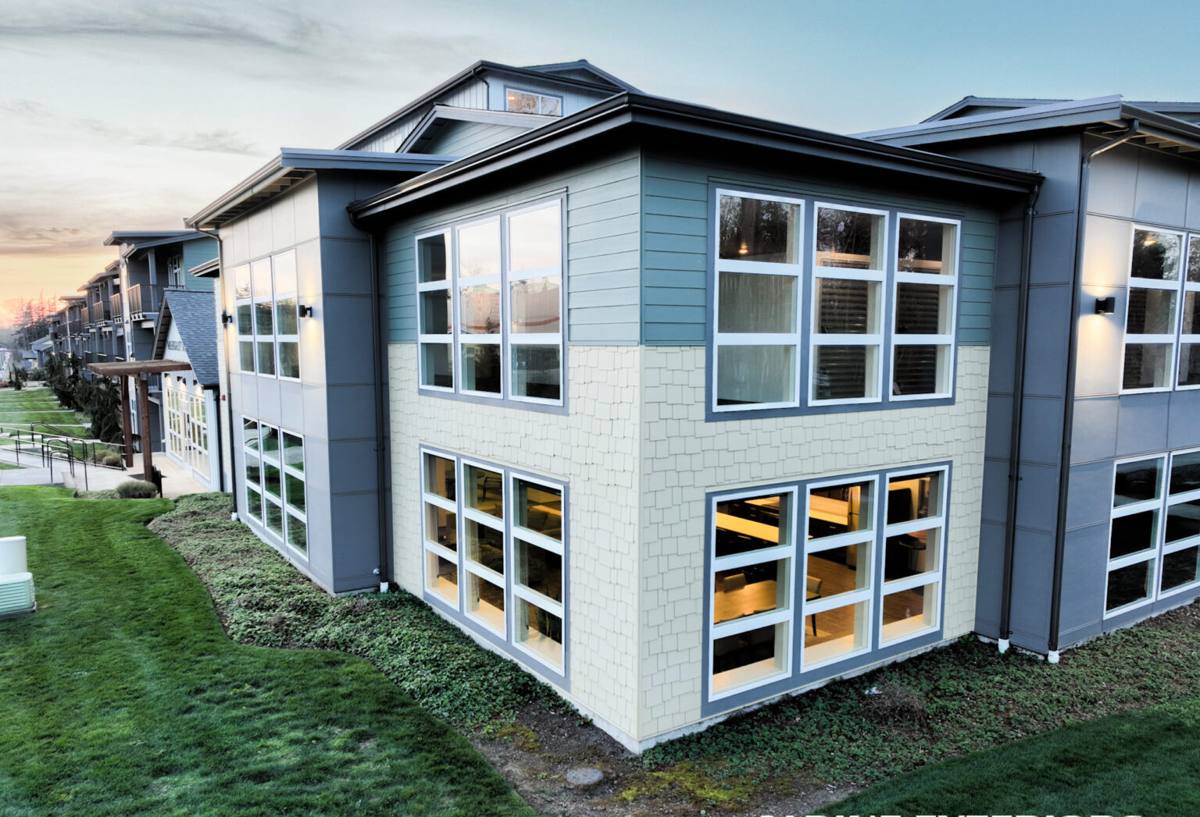
We don't install vinyl, LP SmartSide, primed wood, or other fiber cement brands. That's a deliberate standard, not a sales pitch. James Hardie's fiber cement is non-combustible and dimensionally stable — it doesn't expand and contract with moisture the way wood-based products do, which matters directly in a climate where the material is rarely fully dry. Hardie also makes climate-specific HZ product lines engineered for exactly this kind of high-moisture, marine exposure, and the factory-applied ColorPlus finish is baked on under controlled conditions rather than field-painted, which gives it more consistent resistance to the fading and peeling that job-site paint struggles with out here.
We're not going to tell you every other product is junk — vinyl is inexpensive and low-maintenance in the right setting, and cedar has real appeal for the right buyer. But for a house that's going to sit in Whatcom County's salt air and rain for the next 30-plus years, we'd rather stand behind one product system we know performs, backed by a strong transferable warranty, than offer several options and hope the cheaper ones hold up.
What a Correct Installation Involves
Fiber cement siding is only as good as the assembly behind it. The board itself resists moisture well, but a poor installation can still let water behind it — and once water gets behind siding in this climate, it doesn't dry out quickly.
Drainage Plane and Rainscreen Gap
Every installation starts with a weather-resistive barrier over the sheathing, lapped correctly so water sheds down and out rather than working its way in at the seams. Behind the Hardie boards themselves, we build in a drainage gap — typically furring strips — so that any moisture that does get past the face of the siding has somewhere to go besides sitting against the wall sheathing. In a climate with this much rainfall and this long a wet season, that gap is not optional; it's the difference between siding that dries out between storms and siding that stays damp all winter.
Flashing and Trim Details
Windows, doors, roof-to-wall transitions, and horizontal trim boards are where driving rain finds its way in. Correct flashing — head flashing over openings, kick-out flashing where a roofline meets a wall, proper drip caps over trim — routes water away from these joints before it can pool or wick behind the cladding. This is the detail work that separates a siding job that looks fine for a year from one that performs for decades.
Fastening to Manufacturer Specification
Hardie publishes specific fastener requirements — type, coating, spacing, and penetration depth — for its HZ5 products, which are engineered for exactly this marine, high-moisture zone. Using the wrong fastener, or blind-nailing when face-nailing is called for near an edge, undermines both wind performance and corrosion resistance. We follow the manufacturer's fastening schedule to the letter, because it's also what keeps the transferable warranty intact if you sell the house later.
Our Installation Process
The steps aren't unique to Nooksack, but how carefully each one gets executed is what determines whether the finished siding holds up to local conditions.
- Assessment and measurement: we look at drainage around the foundation, existing moisture damage, roof overhangs, and shaded or moss-prone areas before pricing the job.
- Tear-off and substrate check: old siding comes off, and we inspect the sheathing underneath for rot or soft spots before anything new goes up — covering a damp problem is worse than not fixing it at all.
- Weather barrier and drainage gap installation: the water-resistive barrier and furring strips go up first, with careful attention to every seam and penetration.
- Flashing at all openings: windows, doors, and roof intersections get flashed before siding closes them in.
- Hardie board installation to spec: correct fastener type, spacing, and clearance from grade, decks, and rooflines.
- Caulking and paint touch-up: factory-finished ColorPlus boards need minimal field painting, but cut edges and select joints are sealed per manufacturer guidance.
- Final walkthrough: we go over the finished job with you before calling it complete.
Comparing Siding Options for This Climate
Homeowners in Nooksack often ask why we've standardized on one product instead of offering a menu. The table below is a straightforward look at how the main options behave under sustained coastal-Pacific Northwest exposure — not a knock on any single product, just the trade-offs as we've come to understand them.
| Material | Moisture Behavior | Maintenance in This Climate | Typical Lifespan Here |
|---|---|---|---|
| James Hardie fiber cement | Dimensionally stable, engineered HZ lines for high-moisture zones | Low — factory finish resists fading and peeling | 30+ years with proper install |
| Vinyl | Doesn't absorb water but can warp or gap at seams over time | Low, but color fades and seams can loosen | 20-25 years typical |
| Primed wood / cedar | Absorbs moisture readily; prone to swelling and rot if not maintained | High — repainting and sealing on a regular cycle | Highly variable, maintenance-dependent |
| LP SmartSide (engineered wood) | Treated to resist moisture but still wood-based; edge sealing is critical | Moderate — edge and cut-end sealing required | Moderate, install-sensitive |
What Drives Cost on a Nooksack Siding Job
We won't quote a number without seeing the house, but the factors that move the price are consistent from job to job.
| Factor | Why It Matters |
|---|---|
| Home size and story count | More wall area and taller walls mean more material and more setup, staging, and access time |
| Condition of existing siding and sheathing | Rot or moisture damage found during tear-off adds repair work before new siding can go up |
| Trim and architectural detail | Homes with more corners, dormers, or window trim take more cutting and flashing labor |
| Existing moss or moisture problems | Sites with heavy shade or drainage issues may need extra prep to keep the new siding from facing the same conditions |
| Siding profile and accessories chosen | Lap width, trim style, and accent details affect material cost and installation time |
Living With Fiber Cement Siding in Whatcom County
Correctly installed Hardie siding is genuinely low-maintenance, but "low-maintenance" doesn't mean "no attention needed" in a climate this wet. A short annual checklist keeps it performing the way it's designed to:
- Rinse off moss and algae buildup before it has a chance to hold moisture against the surface, especially on shaded or north-facing walls
- Keep gutters clear so overflow doesn't run down the face of the siding during heavy rain
- Trim back vegetation and tree limbs that keep siding shaded and slow to dry
- Check caulking at trim joints and around windows every year or two and re-seal if it's cracking
- Watch for any rust streaking near fasteners or trim, which can signal a flashing or fastener issue worth catching early
Why Working With a Crew That Already Knows Nooksack Matters
A crew that's put siding on homes throughout Ferndale and the surrounding Whatcom County river-valley communities already knows which walls take the worst of the driving rain, which lots hold onto moss longest, and where the marine air off the Salish Sea reaches even a few miles inland. That local pattern recognition shows up in small decisions — where to add extra flashing, which side of the house needs a wider drainage gap consideration, how close siding can safely sit to grade given local drainage patterns — that a crew unfamiliar with the area might not think to flag. It also means straightforward, realistic timelines, since we're not guessing at how the local weather window affects scheduling and cure times.
If you're planning a siding project in Nooksack or anywhere around Ferndale, we're glad to take a look at your home and walk you through what correct installation looks like for your specific site. Use the form below to request a free, no-pressure estimate.