 Ferndale Siding
 Building a Deck for Point Roberts' Marine Climate
Point Roberts sits out on its own peninsula, surrounded by water on three sides, which means every deck built out here takes a harder hit from the weather than a deck built a few miles inland. Salt-laden air off the water, driving rain that comes in sideways during winter storms, and long stretches of shade and dampness that feed moss growth all add up to conditions that punish a poorly built or poorly chosen deck fast. A deck that would hold up fine in a drier part of Whatcom County can start failing within a few years out here if it wasn't designed with this specific exposure in mind.
That doesn't mean building a good deck in Point Roberts is complicated — it means being deliberate about materials, fasteners, drainage, and detailing from the start. Get those right and a deck out here can last as long as one built anywhere else. Get them wrong and you're looking at soft boards, rusted hardware, and a slick, mossy surface within a handful of seasons.
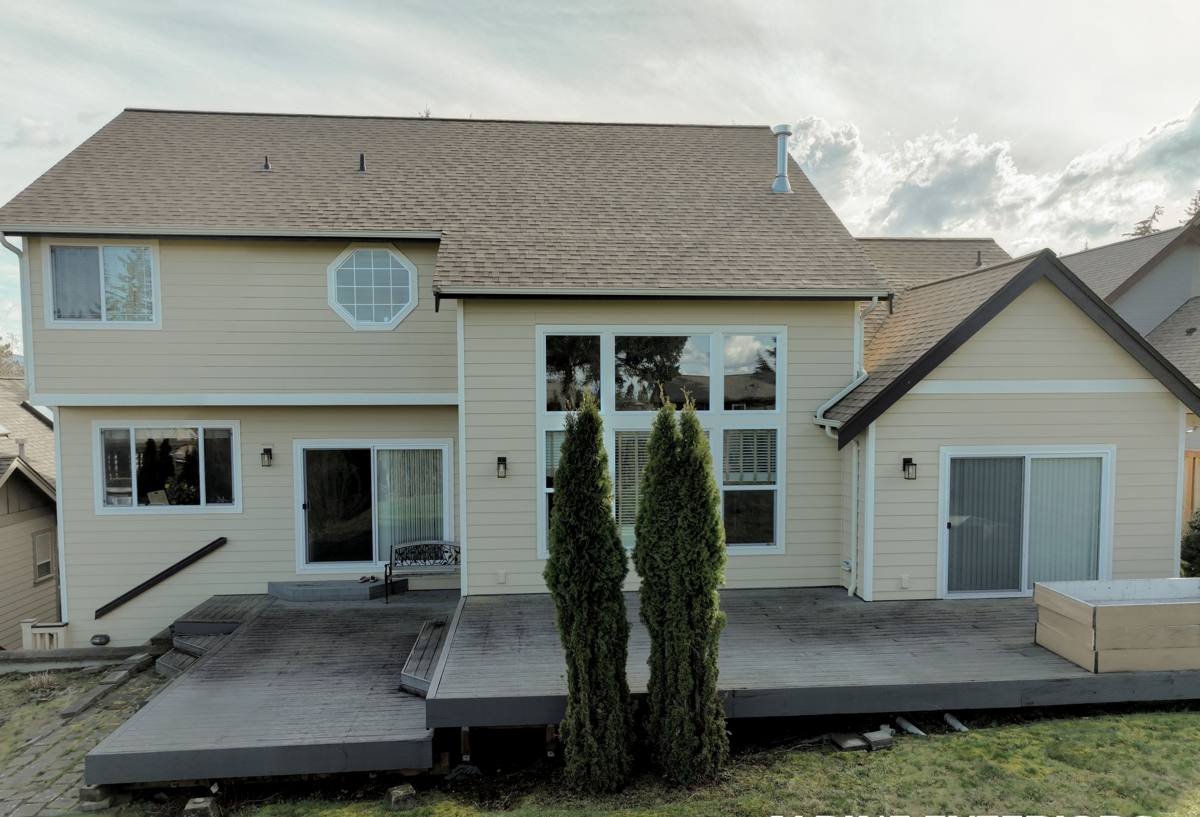
What Salt Air and Driving Rain Do to an Unprotected Deck
Salt air is corrosive to metal, full stop. Fasteners, brackets, and connectors that aren't rated for coastal exposure will start showing rust streaks and pitting well before a standard warranty period is up. Once a fastener starts corroding, it loses holding strength — and on a structure that's carrying live loads and exposed to wind, that's not a cosmetic problem, it's a structural one.
Driving rain adds a second layer of stress. Wind-driven rain doesn't just fall on a deck's surface — it gets pushed sideways and upward into joints, ledger connections, and any gap in the flashing. On a deck attached to the house, the ledger board connection is the single most common point of long-term water damage if it isn't flashed correctly, because water finds its way behind the board and into the rim joist or wall framing where nobody sees it until there's rot.
Where This Shows Up First
- Fastener heads showing rust or black staining within 2-3 years
- Soft or spongy spots near the house-side ledger connection
- Cupping or splitting in boards that face prevailing wind and rain
- Discoloration or staining running down from joints and connectors
Moss, Shade, and the Slip Hazard Nobody Talks About
Whatcom County's moss season runs long, and a deck that sits in partial shade near trees or the north side of a house will grow a layer of moss and algae film faster than most homeowners expect. This isn't just a cleaning nuisance — a mossy deck surface is genuinely slippery, especially on stairs, and it holds moisture against the wood surface longer than an exposed, sun-dried board would. That trapped moisture is what eventually leads to soft, punky wood underneath a coating of moss that looked mostly harmless.
Surface texture, board spacing, and airflow underneath the deck all affect how much moss takes hold. A deck built low to the ground with poor ventilation underneath will grow moss faster and dry out slower than one with proper clearance and airflow. This is one of the areas where design decisions made during construction pay off — or don't — for the life of the deck.
Choosing Decking Materials That Actually Hold Up Here
There's no single "right" decking material for every Point Roberts project — it depends on budget, how much upkeep the homeowner wants to do, and how exposed the deck is. What matters is picking a material honestly, with the local climate factored in, rather than defaulting to whatever's cheapest at the yard.
| Material | Salt Air / Moisture Resistance | Moss & Algae Resistance | Maintenance | Typical Lifespan |
|---|---|---|---|---|
| Pressure-treated wood | Good if fasteners and hardware are also corrosion-rated | Needs regular cleaning and periodic sealing | Annual cleaning, re-sealing every 1-3 years | 15-20 years with upkeep |
| Cedar | Naturally decent, but softens the closer it sits to constant salt spray | Still needs cleaning; moss will take hold if shaded | Regular sealing/staining to hold color and resist moisture | 15-20 years with upkeep |
| Composite decking | Strong — doesn't absorb moisture or salt the way wood does | Better resistance, though surface film can still build in heavy shade | Periodic washing; no staining or sealing needed | 25-30+ years, per manufacturer warranty |
Composite decking generally makes the most sense for homes with heavy shade, constant salt exposure, or owners who don't want a recurring maintenance schedule. Wood decking can absolutely work well here too, and some homeowners prefer the look and feel — it just needs a realistic maintenance commitment to hold up under this climate rather than a coastal one it wasn't chosen for.
Framing and Fasteners: Where Point Roberts Decks Actually Fail
Most deck failures we see in coastal, marine-exposure areas aren't decking board problems — they're framing and fastener problems. The structure underneath is what actually holds the deck up, and it's also the part that's hardest to inspect once the boards are down. Getting it right the first time matters more here than almost anywhere else in the trade.
What a Correct Job Involves
- Stainless steel or coastal-rated hot-dip galvanized fasteners and structural connectors throughout — not standard-grade hardware
- Proper ledger board flashing with a continuous water diversion path, sealed at every penetration
- Footings set to proper frost depth and bearing, engineered for the actual soil conditions on site
- Adequate clearance and airflow underneath the deck to reduce trapped moisture and moss growth
- Joist tape or a moisture barrier on top of framing members to slow water absorption into cut ends and fastener holes
Skipping any one of these doesn't cause an obvious problem on day one. It shows up two, five, or eight years later as a soft spot, a rust stain, or in the worst case, a structural failure at the ledger connection. Building it right the first time costs less than fixing it later.
Our Deck Building Process
We walk every Point Roberts deck project through the same process, adjusted for the specific site conditions — sun exposure, wind direction, slope, and how close the deck sits to the water.
- Site assessment — we look at exposure, drainage, existing structure (for replacements), and how the deck ties into the house.
- Material and design conversation — an honest walkthrough of wood versus composite, railing options, and layout, weighed against budget and maintenance preference.
- Permitting — we handle the permit process so the project meets current code requirements for footings, railings, and structural connections.
- Demolition (if replacing an existing deck) — including an honest look at what condition the ledger and framing were actually in.
- Framing and structural work — footings, ledger flashing, joists, and all coastal-rated hardware installed correctly the first time.
- Decking, railing, and finish work — installed to shed water properly and hold up to the site's specific sun and shade pattern.
- Final walkthrough — we go over care and maintenance expectations specific to your material choice and site conditions.
Permits, Setbacks, and Working in a Border Community
Point Roberts is part of Whatcom County, but it's physically separated from the rest of Washington by the Canadian border, which makes scheduling and logistics a real factor on any construction project out there — materials, crew travel, and inspection timing all need to be planned around that reality. A crew that hasn't worked in Point Roberts before often underestimates this, which leads to delays that have nothing to do with the actual construction work.
Permitting for decks in this area follows standard county requirements around footing depth, guardrail height, and structural connections, along with any setback rules that apply to the specific lot. We handle that process as part of the job rather than leaving it for the homeowner to sort out.
Maintenance Checklist for a Point Roberts Deck
Whatever material a deck is built from, a little seasonal attention goes a long way in this climate. Here's what we recommend to every homeowner after a build:
- Sweep debris and standing leaves off the deck regularly, especially in fall
- Wash the surface at least once or twice a year to remove salt film and early moss growth
- Check fastener heads and visible hardware annually for early rust or staining
- Inspect the ledger board area where the deck meets the house for any soft spots or discoloration
- Re-seal or re-stain wood decking on the schedule the product calls for — don't wait until it looks bad
- Keep gutters and downspouts near the deck clear so runoff isn't dumping directly onto or under it
- Trim back overhanging branches that keep the deck shaded and damp longer than it needs to be
Why a Ferndale Crew That Knows Point Roberts Matters
Building decks in Whatcom County means building for a range of conditions, but Point Roberts' marine exposure is its own animal. A crew that's worked the peninsula knows which fasteners actually hold up out there, how to flash a ledger board so it doesn't leak in three years, and how to plan a project around the logistics of working in an area that's separated from the rest of the county by an international border. That local experience shows up in details that aren't visible on the day the deck is finished, but matter a great deal five and ten years down the road.
If you're planning a new deck or need to replace one that's showing its age, we'd be glad to take a look and give you a straightforward, no-pressure estimate — just fill out the form below.