 Ferndale Siding
 Why Decks Wear Out Faster in Point Roberts
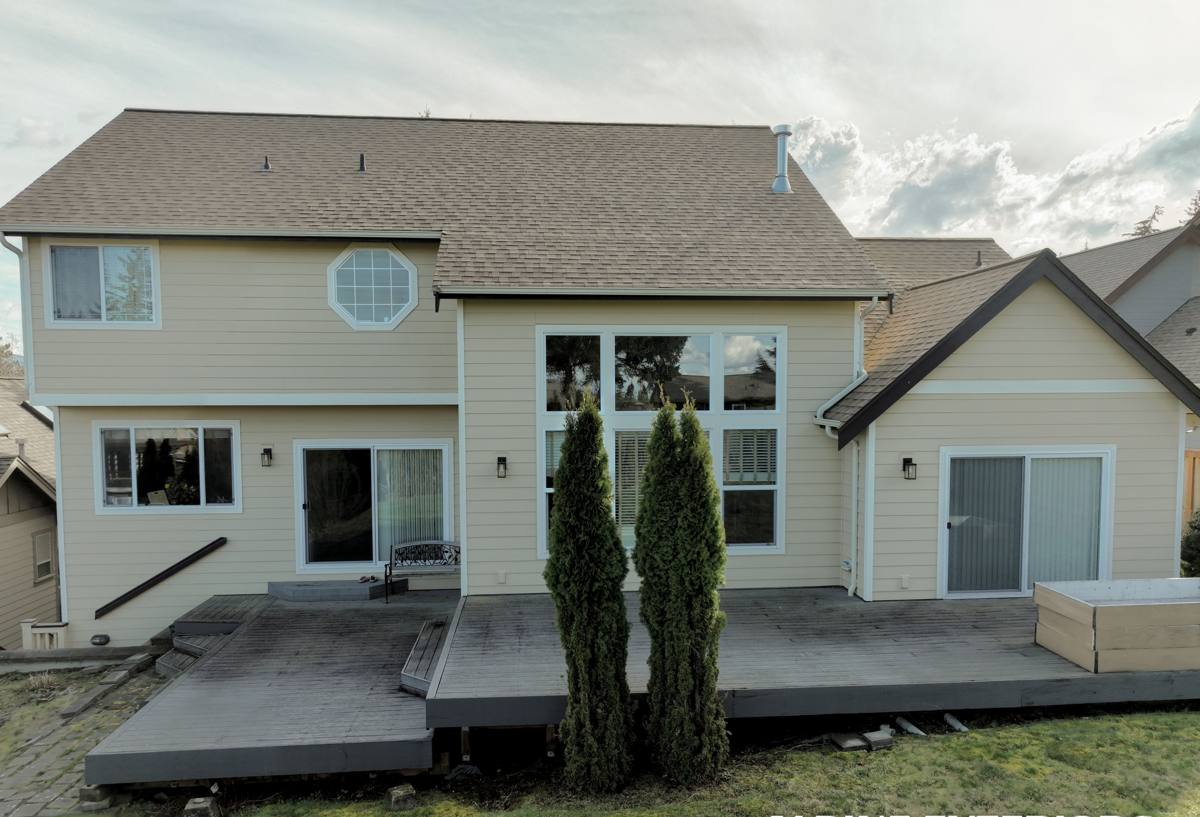
Point Roberts sits on its own peninsula, surrounded by marine water on three sides, which means every deck out here takes a harder beating than a deck built even a few miles inland in Ferndale or Bellingham. Salt-laden air corrodes fasteners, hardware, and any metal connector that isn't rated for coastal exposure. Combine that with Whatcom County's long wet season — driving rain that gets pushed sideways by wind off the water — and you get decking boards, joists, and ledger connections that stay damp far longer than they would in a drier climate. Add a shaded north side of the house or a stand of evergreens nearby, and you get months of moss and algae growth that hold moisture directly against the wood.
None of this means a deck can't last in Point Roberts. It means the deck has to be built and replaced with that exposure in mind, not with the same assumptions you'd use for a deck in a dry inland climate. When we talk about deck replacement here, we're talking about correcting for salt air, standing moisture, and moss from the ground up — not just swapping old boards for new ones.
Repair, Resurface, or Full Replacement?
Not every tired-looking deck needs to come out entirely. But in a marine climate, cosmetic problems on the surface often point to structural problems underneath that a simple board swap won't fix. Before we recommend replacement, we get underneath the deck and check the framing, not just the walking surface.
- Soft, spongy, or spring-y decking boards, especially near the house
- Rust streaks or crumbling metal at joist hangers and connectors
- A ledger board that's separating from the house or shows dark, wet staining
- Persistent moss or black-green algae film that returns within weeks of cleaning
- Posts or footings that feel loose, or a deck that sways underfoot
- Gaps between boards that have closed up or widened unevenly, signaling movement
If the problems are limited to surface boards and the framing underneath is sound, a resurfacing may be enough. If the framing, ledger attachment, or footings are compromised — which is common on older Point Roberts decks that were never built with coastal-grade hardware — full replacement is the honest recommendation, because refastening new boards to failing framing just delays the same problem.
What a Correct Deck Replacement Actually Involves
A deck replacement is more than removing old boards and screwing down new ones. Done right, it starts below the decking surface:
Framing and Structure
We inspect and, where needed, replace joists, beams, and posts, checking for rot at the ends where boards meet framing and at any point where water has been sitting. Joist spacing and beam sizing get checked against current code span tables — older decks were often built to looser standards than are used today.
Ledger Attachment
The ledger board — where the deck attaches to the house — is the single most safety-critical connection on any deck, and it's also the connection most exposed to trapped moisture if it isn't flashed correctly. A correct ledger installation includes proper flashing that sheds water away from the house band joist, not just caulk, and structural bolts or lag screws sized and spaced to code rather than a handful of deck screws.
Fasteners and Hardware
In a salt-air environment, hardware matters as much as the decking itself. We use stainless steel or heavy hot-dip galvanized fasteners and connectors rated for coastal or ACQ-treated lumber use. Standard electro-galvanized hardware corrodes faster here than it would inland, and once a joist hanger starts rusting through, it's a structural problem hiding behind a cosmetic one.
Decking Surface
Board selection, gapping, and fastening pattern all affect how well the surface sheds water and resists moss. Consistent, code-compliant gapping lets water drain instead of pooling, which is one of the simplest and most overlooked defenses against moss buildup.
Choosing a Decking Material for This Climate
There's no single "best" decking material for every homeowner — it comes down to how much maintenance you want to do, your budget, and how much moisture and moss exposure your particular site gets. Here's how the common options actually perform in Point Roberts conditions:
| Material | How It Handles Salt Air & Moisture | Moss & Algae Resistance | Maintenance |
|---|---|---|---|
| Pressure-treated wood | Good if properly sealed and re-sealed; end grain and fastener holes are vulnerable | Needs regular cleaning and sealing to resist growth | Annual cleaning, re-sealing every 2-3 years |
| Cedar | Naturally moisture- and rot-resistant, but still needs sealing in coastal exposure | Better than treated pine but not immune | Regular sealing and cleaning |
| Capped composite (e.g., Trex, TimberTech) | Excellent — the polymer cap resists moisture absorption and salt corrosion | Good; smooth cap sheds water and doesn't hold spores like raw wood grain | Occasional washing; no sealing or staining |
| PVC decking | Excellent; fully synthetic, unaffected by moisture cycling | Very good | Occasional washing |
We install both quality wood and composite/PVC systems and will give you an honest read on which fits your situation. Composite and PVC cost more up front, but on a shaded, moss-prone, or heavily exposed Point Roberts lot, the reduced maintenance and moisture resistance often pay for themselves in avoided sanding, sealing, and repair work over the years. Wood remains a legitimate choice for homeowners who prefer its look and are willing to keep up with sealing on schedule — we're not going to tell you it's the wrong answer, just make sure you know the upkeep it requires here.
Our Deck Replacement Process
- On-site assessment: We inspect the existing deck from the framing up, including the ledger connection and any hidden moisture damage, and give you a straight answer on repair vs. replacement.
- Material walkthrough: We go over decking and railing options with real trade-offs for your site's sun, shade, and moisture exposure — no upsell, just what fits.
- Permit handling: We pull the required permits and coordinate any inspections, so the finished deck is documented and code-compliant.
- Demolition and disposal: Old decking, framing, and hardware are removed and hauled off; we protect landscaping and access points during removal.
- Framing and ledger work: New or reinforced framing goes in first, with corrosion-resistant hardware and correctly flashed ledger attachment.
- Decking installation: Boards are installed with consistent gapping and proper fastening for drainage and long-term stability.
- Final walkthrough: We review the completed deck with you, including basic care guidance specific to the materials chosen.
Permits and Whatcom County Considerations
Deck replacement in Whatcom County generally requires a building permit once the work involves structural framing, height above grade, or attachment to the house — which most full replacements do. Because Point Roberts sits close to shoreline areas, some properties may also fall under additional setback or shoreline management considerations depending on lot location. We don't guess on this; we confirm what applies to your specific property before work starts and handle the permit application as part of the job, so you're not left tracking down inspections yourself.
Why a Crew That Already Works in Point Roberts Matters
Point Roberts is a geographic exclave — the only way in or out by land is through Canada, since it isn't connected by road to the rest of Washington State. That's not a small detail when it comes to scheduling a construction project. A crew unfamiliar with that reality can underestimate travel time, border-crossing logistics for materials and equipment, and the lead time needed to get lumber, hardware, and composite decking delivered on schedule. We already build into our scheduling and material ordering what it takes to work efficiently in Point Roberts, so a project here doesn't turn into a string of delays caused by someone learning the logistics on your job.
There's also a practical trust factor: a contractor who regularly works this community has already dealt with the specific combination of salt exposure, moss, and moisture that Point Roberts decks face, rather than applying assumptions from a drier or more sheltered part of Whatcom County.
Protecting Your New Deck From Moss and Salt Air
A correctly built deck still needs some basic upkeep to get its full lifespan in this climate. A little regular attention goes a lot further than a big repair later:
- Sweep off leaves, needles, and debris regularly so moisture and organic matter don't sit on the surface
- Rinse or gently wash the deck a few times a year to interrupt moss and algae growth before it takes hold
- Keep gutters and downspouts near the deck clear so runoff isn't draining directly onto it
- Trim back overhanging branches or shrubs that keep sections of the deck shaded and damp
- Check fastener heads and railing hardware periodically for early rust or corrosion
- Re-seal wood decking on the schedule recommended for the product you chose — don't wait until it's visibly gray or cracked
What Deck Replacement Typically Costs
Every deck is different, and the honest answer is that cost depends on size, material choice, framing condition, and site access — we won't quote a number without seeing the deck. But these are the main factors that move the price up or down:
| Cost Factor | Why It Matters |
|---|---|
| Deck size and shape | More square footage and complex angles or multiple levels add material and labor |
| Decking material | Composite and PVC cost more upfront than pressure-treated wood; cedar falls in between |
| Framing condition | Rotted joists, beams, or a compromised ledger connection add structural repair before the surface goes on |
| Railing and stairs | Custom railing systems and multi-flight stairs add material and installation time |
| Site access | Tight lots, elevation changes, or limited equipment access can increase labor time |
| Permitting and inspections | Required for most structural replacements and factored into the overall project timeline |
Broadly speaking, a straightforward pressure-treated replacement runs less than a comparable composite or PVC rebuild, but the gap narrows once you account for years of sealing, staining, and repair on a wood deck exposed to this much moisture and salt air.
Get an Honest Look at Your Point Roberts Deck
If your deck is showing soft boards, rusting hardware, persistent moss, or just feels less solid than it used to, it's worth having someone look underneath before deciding what it needs. We'll give you a straight assessment of repair versus replacement, walk you through material options that actually make sense for salt air and moss exposure, and handle the permitting and logistics that come with working in Point Roberts. Fill out the form below for a free, no-pressure estimate.