 Ferndale Siding
 Roof Repair Built for the Nooksack Climate
Homes near Nooksack don't fail the same way homes in drier parts of the country do. Out here in Whatcom County, the roof problems we get called out for almost always trace back to the same three things: moisture that never fully dries out, moss that gets a foothold and doesn't let go, and wind-driven rain that finds the one seam or nail hole a roof has to offer. A roof repair that doesn't account for all three isn't really a repair — it's a patch that buys you a season or two before the same spot fails again.
We've been doing roof repair work for homes in and around Ferndale and the Nooksack area long enough to know which parts of a roof give out first here, and why. This page is about that specific job: what a correct repair looks like on a Nooksack home, what we check that a generalist crew might skip, and how to tell whether you're looking at a repair or something bigger.
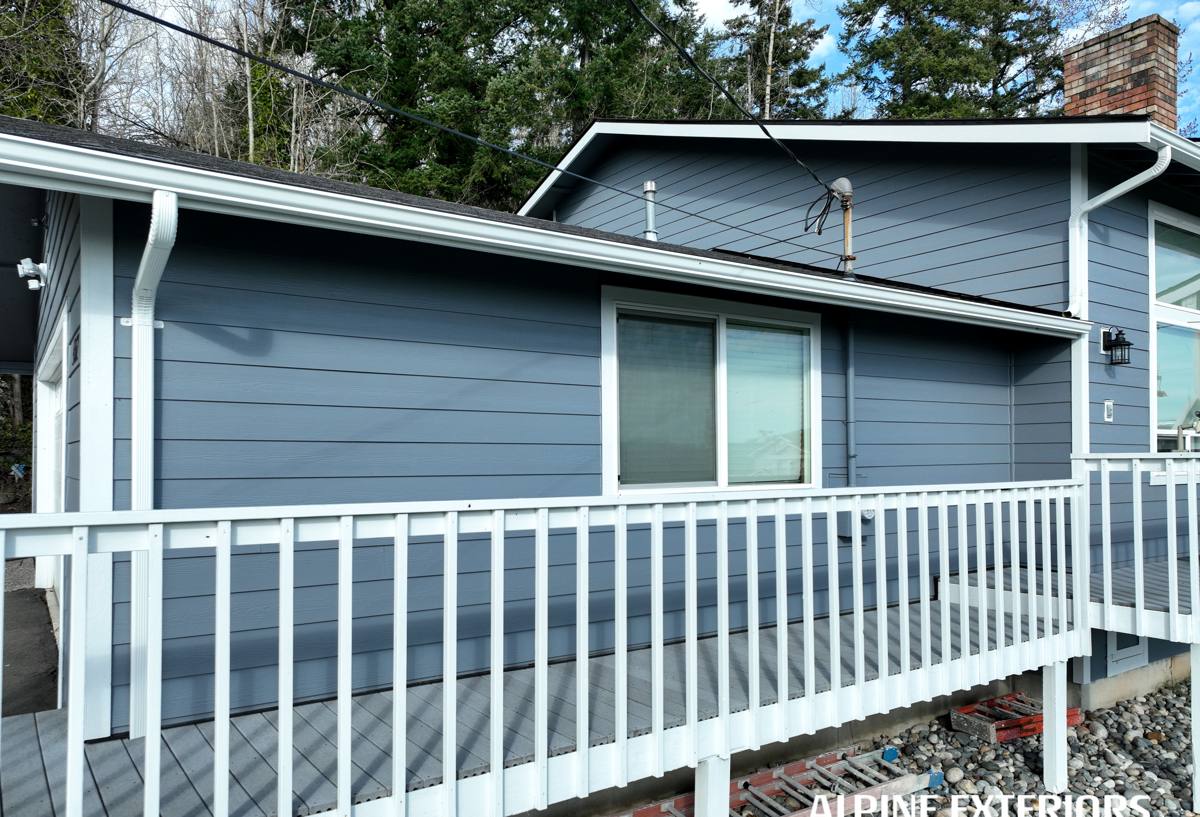
Why Nooksack Roofs Take a Different Kind of Beating
Nooksack sits inland from the coast but still gets plenty of the marine air that moves through this part of Whatcom County — enough salt content in that air, combined with near-constant humidity, to accelerate corrosion on exposed fasteners, flashing, and metal roof edges faster than you'd expect for a location that isn't right on the water. Add in driving rain that comes in sideways during fall and winter storms, and you've got water being pushed into laps and seams that would stay dry in a calmer climate.
Then there's the moss. Whatcom County's long, mild, wet stretch of the year — often eight or nine months where a roof rarely gets a real chance to dry out — is close to ideal growing conditions for moss and algae. Shaded roof sections, north-facing slopes, and areas under overhanging trees are the first to show it, and once moss establishes itself, it does more than look bad.
What Moss Actually Does to a Roof
Moss holds water against the roofing material long after the rain has stopped. On composition shingles, that constant moisture breaks down the asphalt and strips granules faster than normal weathering would. On any roof type, moss mats can lift shingle edges and shakes just enough for wind-driven rain to get underneath. It also works its way into valleys and around flashing, which is exactly where leaks tend to start.
Signs Your Nooksack Roof Needs Repair Now
Most roof damage out here doesn't announce itself with a dramatic leak — it shows up as small signals first. Here's what we tell homeowners to watch for between inspections:
- Moss or dark streaking concentrated on shaded or north-facing sections of the roof
- Granules collecting in gutters or at downspout outlets
- Curling, cupping, or lifted shingle edges, especially near valleys and eaves
- Rust staining or visible corrosion on flashing around chimneys, vents, or skylights
- Water stains or discoloration on interior ceilings, especially after a windy rainstorm
- Daylight visible through the roof deck when viewed from inside the attic
- Soft or spongy spots underfoot when walking the roof (a sign of decking damage)
- Gutters pulling away from the fascia or overflowing during heavy rain
Any one of these on its own might be minor. Two or three together, especially in the same area of the roof, usually means water has already gotten past the surface layer.
What a Proper Roof Repair Actually Involves
A real repair isn't just replacing the shingles you can see damaged from the ground. On a Nooksack home, we treat every repair call as an opportunity to check the systems around the damage, because in this climate, visible damage is often a symptom of something happening one layer down.
Flashing First
Most leaks we trace back to flashing failure, not shingle failure — around chimneys, skylights, plumbing vents, and roof valleys. Flashing that's corroded, under-lapped, or was never properly step-flashed into the wall or siding will let water in no matter how good the shingles around it are. We check and, where needed, replace flashing as part of any repair in that area rather than sealing over a failure point with caulk, which is a short-term fix at best in a climate this wet.
Decking and Structure
If water has been getting in for a while, the plywood or OSB decking underneath may be soft, delaminated, or rotted. We won't put new roofing material over compromised decking — it doesn't hold fasteners properly and the problem just resurfaces. Any soft decking gets cut out and replaced before new material goes down.
Underlayment and Ice-and-Water Protection
In valleys, around penetrations, and along eaves, we use self-adhering waterproof underlayment rather than standard felt. Given how much wind-driven rain this area sees, that extra layer at the vulnerable points matters more here than it would in a drier climate.
Matching Materials
When a repair is isolated to a section of roof, we match the existing shingle or shake profile, color, and exposure as closely as the product line allows so the repair doesn't stand out as a patch. Where an exact match isn't available because the original product has been discontinued, we'll walk you through the closest options honestly rather than guess and hope it blends.
Our Repair Process
The process is the same whether the job is a single flashing repair or a full section replacement — we just don't skip steps because a job looks small.
- Inspection. We get on the roof (not just look at it from the driveway) to check the damaged area, the decking underneath, and the flashing and ventilation nearby.
- Attic check. Where accessible, we look at the underside of the roof deck for staining, rot, or daylight, which tells us more about how long water has been getting in than the exterior alone.
- Written scope. You get a clear explanation of what's damaged, what's causing it, and what the repair involves — no vague "roof needs work" without specifics.
- Repair. We remove and replace only what's compromised, tie in new flashing and underlayment where needed, and match materials to the existing roof.
- Cleanup and check. Gutters and downspouts near the repair get checked too, since a clogged gutter at the eave line is a common contributor to the damage we just fixed.
What Affects the Cost of a Roof Repair
Every roof and every repair is different, so we won't quote a number without seeing the roof, but these are the factors that move the price up or down on most Nooksack-area jobs:
| Factor | Why It Matters |
|---|---|
| Extent of decking damage | Rotted plywood/OSB must be cut out and replaced — this adds labor and material beyond the roofing surface itself |
| Roof pitch and accessibility | Steep or hard-to-access roofs take longer and require more safety setup |
| Flashing condition | Corroded or improperly installed flashing around chimneys, skylights, and valleys often needs full replacement, not just resealing |
| Moss and debris buildup | Heavy moss has to be carefully removed before the actual repair can be assessed and completed |
| Material availability | Matching an older shingle, shake, or metal profile can affect both cost and how seamless the repair looks |
| Number of penetrations | Vents, skylights, and chimneys each add a flashing detail that needs individual attention |
Repair vs. Replacement: How We Decide
Not every damaged roof needs a full replacement, and we don't push toward replacement when a repair will genuinely hold up. At the same time, we won't recommend a repair that's likely to fail again in a year, because that's not honest and it's not a good use of your money.
Generally, a repair makes sense when the damage is localized — a single valley, one flashing detail, a section under a tree limb that fell — and the rest of the roof is in reasonably good condition for its age. Replacement becomes the better option when damage is spread across multiple sections, when the roof is past its expected service life and repairs are becoming frequent, or when decking damage is extensive enough that patch repairs would just be delaying the inevitable. We'll tell you plainly which category your roof falls into and why, including the reasoning, not just the recommendation.
Why a Crew That Already Works Nooksack Matters
Roof repair isn't a generic trade where any competent crew produces the same result regardless of location. A crew that regularly works roofs in the Nooksack and greater Ferndale area already knows which shingle brands and profiles are common on homes built during the area's different growth periods, which makes material matching faster and more accurate. They know which roof orientations in this area collect moss the fastest and check those spots without being told. They're also familiar with how the local combination of humidity, shade, and driving rain shows up as damage patterns — so an inspection here isn't a generic checklist, it's informed by what actually goes wrong on roofs in this specific climate.
There's also a practical side: a local crew can respond faster when a storm knocks a limb into your roof or wind lifts a section of shingles, and they're around afterward if a question comes up about how the repair is holding. That kind of continuity is harder to get from a crew that's just passing through the area for one job.
Maintaining a Repaired Roof Through Whatcom County's Wet Season
A good repair lasts longer with a little upkeep on your end. A few habits make a real difference here:
- Keep gutters and downspouts clear, especially before the fall rains start
- Trim back tree limbs that overhang the roof to reduce shade, debris, and moss growth
- Have moss treated or removed before it spreads rather than after it's established across a slope
- Walk the attic once or twice a year to check for new staining or light penetration
- Address small leaks and stains promptly — in this climate, "small" rarely stays small for long
Get a Straight Answer About Your Roof
If you're seeing moss buildup, a stain on the ceiling, or you just want a second set of eyes on a roof that's getting older, we're happy to take a look. We'll tell you honestly whether you're looking at a repair or something more, and what it involves either way. Fill out the form below for a free, no-pressure estimate.