 Ferndale Siding
 Roofing on an Exposed Peninsula
Point Roberts sits on a small piece of land surrounded on three sides by water, cut off from the rest of Whatcom County by the international border. That geography is part of what makes it a special place to live, and it's also exactly why roofs there take more punishment than roofs a few miles inland in Ferndale or Bellingham. Wind off the water carries salt directly onto shingles, flashing, and fasteners. Rain comes in sideways more often than it falls straight down. And because so many lots sit under tree cover or in the shade of neighboring homes, moss and moisture have months at a time to work into a roof system before a homeowner ever notices a problem.
None of this means a roof on Point Roberts is doomed to fail early. It means the roof has to be built and maintained with that exposure in mind from the start — the right underlayment, the right fastener metal, the right ventilation, and a contractor who has actually seen what a decade of this climate does to a roof deck.
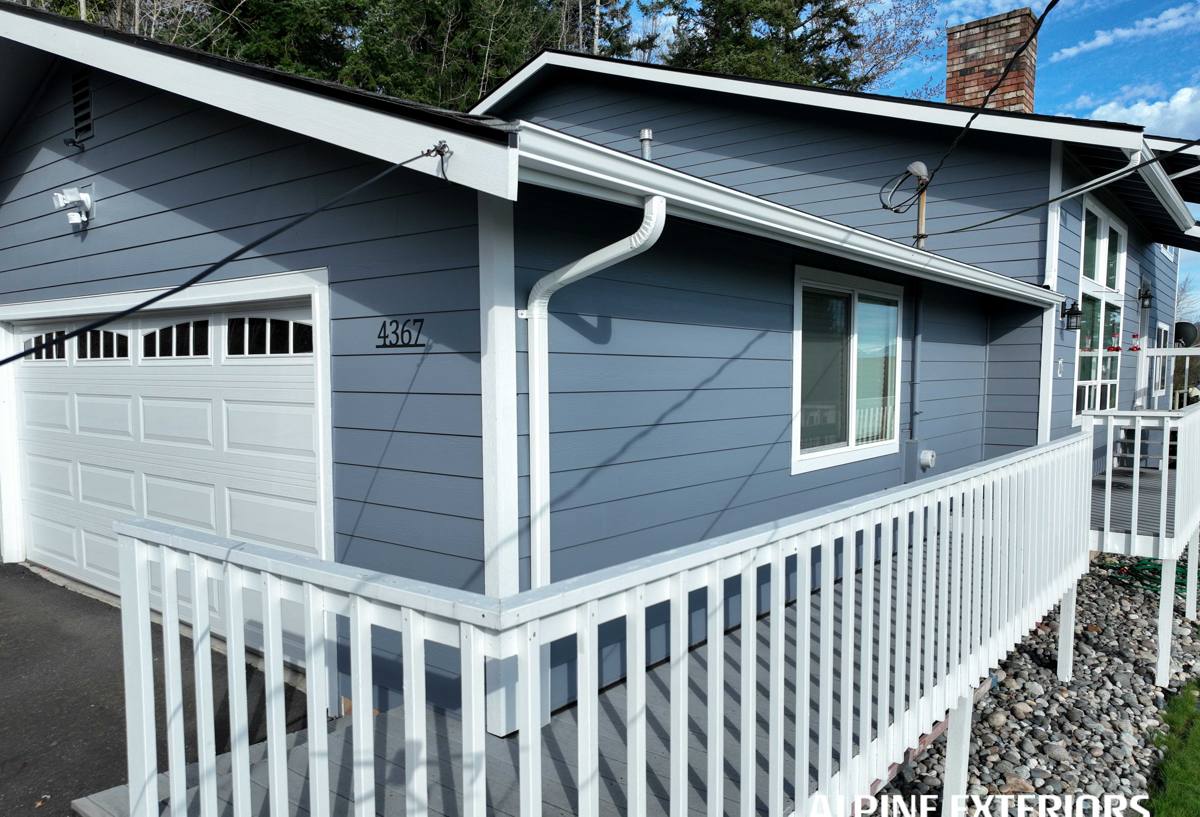
What Salt Air, Driving Rain, and Moss Actually Do to a Roof
Salt Air
Airborne salt accelerates corrosion on anything metal — nail heads, drip edge, flashing around chimneys and vents, and the fasteners holding shingles down. Once corrosion starts at a nail head, water finds a path underneath the shingle, and the leak that shows up on a ceiling months later usually started as a tiny rust spot no one could see from the ground.
Driving Rain
Wind-driven rain doesn't behave like a normal downpour. It gets pushed sideways and even slightly upward under eaves, ridge caps, and shingle tabs that would stay dry in a calmer climate. Roofs built to a bare-minimum standard — thin underlayment, minimal flashing overlap, standard ridge vents — are more likely to let water in during a real Pacific Northwest windstorm than they would in a low-wind inland location.
Moss
Moss holds moisture directly against the roofing material, and on a shaded or north-facing slope it can establish itself within a couple of seasons. Left alone, it lifts shingle edges, traps debris, and slowly rots the decking underneath. By the time moss is visible from the street, it's often already done some of that damage out of sight.
Signs a Point Roberts Roof Is Ready for Replacement
Repairs make sense for isolated damage. A full replacement makes sense once the roof is failing broadly, or once patching one area just means the next area fails a season later. Homeowners on the peninsula should watch for:
- Shingles that are cupping, curling, or losing their granules in patches rather than just at one repaired spot
- Moss or dark streaking that comes back within a year or two of cleaning, especially on shaded slopes
- Rusted or lifted flashing around chimneys, skylights, and roof-to-wall transitions
- Soft spots or sagging when walked on, which usually points to decking damage underneath
- Daylight visible through the roof deck from inside the attic, or damp insulation after a windstorm
- A roof that's reaching the end of its expected service life for its material, even if it "looks fine" from the driveway
- Granules collecting in gutters after every rain, a sign the shingle surface is wearing thin
Any one of these on its own might just need a repair. Several at once, especially combined with the roof's age, is usually the point where replacement costs less over time than another round of patchwork.
What a Correct Replacement Involves in This Climate
A roof replacement built for Point Roberts isn't just "new shingles on the old deck." A job done right addresses the specific ways this climate attacks a roof:
Tear-Off and Deck Inspection
We remove the old roofing down to the deck rather than layering over it. That's the only way to actually see what the moss, rain, and years of salt exposure have done underneath — rotted plywood, rusted-through flashing, or soft spots that a layover would hide for years and then fail all at once.
Upgraded Underlayment
Given how much wind-driven rain this stretch of coastline sees, we treat synthetic or self-adhered underlayment — especially at eaves, valleys, and around penetrations — as a baseline, not an upgrade. It's the layer that protects the deck if wind ever pushes water past the shingle surface.
Corrosion-Resistant Fasteners and Flashing
Standard galvanized fasteners hold up fine inland but corrode faster in salt air. On homes with direct water exposure, stainless or higher-grade coated fasteners and flashing are worth the modest upcharge — it's cheaper to spend a little more once than to re-flash a chimney in eight years instead of fifteen.
Ventilation That Matches the Home
Trapped moisture in the attic accelerates deck rot from the inside, which is a bigger risk in a wet, humid coastal climate than in a dry one. Balanced intake and exhaust ventilation is part of a correct replacement, not an optional extra.
Moss-Conscious Details
Where a home has heavy shade, we talk through options like zinc or copper strips near the ridge, which discourage moss regrowth over time, along with slope-appropriate material choices for the shadiest sections of roof.
Comparing Roofing Materials for a Point Roberts Home
There's no single "best" material for every roof — it depends on the home's exposure, slope, budget, and how much upkeep the owner wants to do. Here's how the common options stack up against this specific climate:
| Material | Salt Air Durability | Moss Resistance | Maintenance | Relative Cost |
|---|---|---|---|---|
| Architectural Asphalt Shingle | Good with corrosion-resistant fasteners | Moderate — needs periodic cleaning on shaded slopes | Low to moderate | Lowest |
| Metal (standing seam or coated panel) | Very good with proper coating | Very good — sheds moss more effectively | Low | Highest |
| Cedar Shake | Fair — needs vigilant maintenance | Poor without regular treatment; retains moisture | High | High |
| Synthetic/Composite Shingle | Good | Good | Low to moderate | Moderate to high |
For most Point Roberts homes, we steer people toward a well-built architectural asphalt system or metal roofing. We generally don't recommend cedar shake for heavily shaded, moisture-exposed lots on this peninsula — it's not that the material is bad, it's that it needs more frequent maintenance than most owners realistically keep up with in a climate this wet, and the moisture retention shortens its real-world life here compared to drier parts of the state.
Getting to Point Roberts Is Part of the Job
Point Roberts is only reachable by land through Canada, which means every delivery of shingles, underlayment, and dump trailers, and every crew arrival, involves a border crossing. That's not a huge deal for a contractor who does it regularly and plans around it — but it's a real logistical wrinkle for a company that's never worked out there before, and it shows up in scheduling slips, delayed material deliveries, and crews who show up without everything they need for the day.
Working the peninsula regularly means we already know how to stage materials, time deliveries, and plan crew schedules around that crossing so it doesn't turn into lost days on your project. It's a small thing that only matters once — on the day your roof is half torn off and the weather's turning.
Permits and Whatcom County Requirements
Point Roberts is unincorporated, so roofing permits and inspections go through Whatcom County rather than a local city building department. We handle the permit application, coordinate any required inspections, and make sure the finished roof meets county code — including wind and moisture provisions that matter more out here than they do on a more sheltered inland lot. Homeowners shouldn't have to chase down permit status themselves; that's part of what a full-service roof replacement should include.
How Our Process Works
- Roof assessment. We inspect the deck, flashing, ventilation, and current material condition — not just the surface — and give you an honest read on repair versus replacement.
- Written estimate. You get a clear scope of work and pricing before anything is scheduled, including material options and why we're recommending what we're recommending for your specific slope and exposure.
- Scheduling around weather and logistics. We build in a realistic timeline that accounts for the border crossing and Pacific Northwest weather windows rather than promising a date we can't hit.
- Tear-off and deck repair. Old roofing comes off, the deck gets inspected and repaired as needed, and you're told about any surprises before we cover them up.
- Installation. Underlayment, flashing, ventilation, and the roofing material go on to manufacturer spec and county code.
- Cleanup and walkthrough. We haul debris off-site, do a magnetic sweep for stray nails, and walk the finished roof with you.
Keeping a New Roof Performing After Installation
A correctly installed roof still benefits from basic upkeep in this climate, especially where moss and salt air are concerned:
- Clear moss growth before it spreads, rather than waiting until it's visibly thick
- Keep gutters clear so water isn't backing up under the shingle edge during heavy rain
- Trim back branches that keep a section of roof shaded and damp
- Have flashing and fastener condition checked periodically, particularly after a strong windstorm off the water
- Address small leaks or lifted shingles quickly — in this climate, small problems don't stay small for long
We're happy to talk through a simple maintenance routine specific to your roof's slope and shade pattern when we finish the job.
Why a Ferndale Crew That Already Works Point Roberts Matters
Any licensed contractor can technically bid a Point Roberts roof. Far fewer have actually built a routine around the border crossing, know how Whatcom County handles permitting for the peninsula, and have seen firsthand what a few years of salt air and moss do to a roof out there versus one closer to Ferndale. That experience shows up in material choices, fastener selection, ventilation decisions, and a schedule that actually holds up.
If your Point Roberts roof is showing its age — or you just want a straight answer on whether it needs replacing or can hold on a few more years — we're glad to take a look. Reach out for a free, no-pressure estimate using the form below.