 Ferndale Siding
 Storm Damage Roofing in a Salt-Air, High-Moisture Neighborhood
Semiahmoo sits close enough to the water that its homes deal with a different mix of weather stress than roofs a few miles inland. You get the same winter windstorms and driving rain that hit the rest of Whatcom County, but layered on top of that is near-constant salt-laden air and a moss season that runs longer than most homeowners expect. A roof repair that would hold up fine in a drier, inland neighborhood can fail early out here if it isn't built for these specific conditions.
We're based in Ferndale and work storm damage calls in Semiahmoo regularly, so this page isn't a generic "storm damage repair" writeup. It's specifically about what we look for, what we fix, and how we build repairs to last in this particular environment.
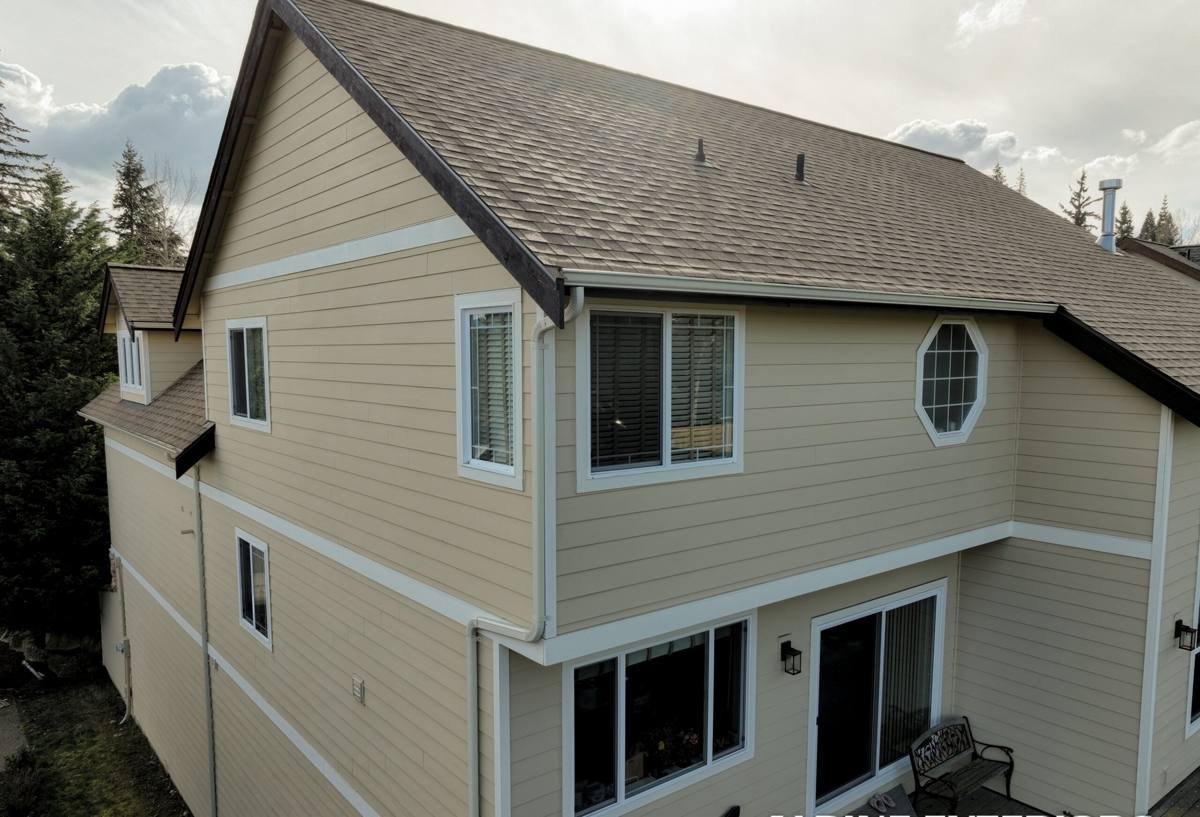
What Coastal Storms Actually Do to a Roof
Most storm damage isn't dramatic. Homeowners picture a tree through the roof, but the more common damage here is quieter and easier to miss.
Wind Uplift and Lifted Shingles or Panels
Sustained wind off the water doesn't just push against a roof — it creates uplift at edges, ridges, and any spot where a fastener has already started to loosen. Once a shingle tab or panel edge lifts even slightly, the next storm gets underneath it more easily. This is progressive damage: it gets worse with each event, not better.
Wind-Driven Rain Forcing Its Way Under Materials
Rain that comes in sideways behaves differently than rain falling straight down. It can be pushed uphill under shingle laps, around vent boots, and past flashing that would otherwise shed water fine in calm conditions. A lot of "mystery leaks" after a storm trace back to wind-driven rain finding a path that normal rainfall never would.
Salt Air Accelerating Fastener and Flashing Corrosion
This is the part that's easy to underestimate. Salt air speeds up corrosion on exposed metal — nail heads, flashing seams, gutter fasteners, and any hardware that isn't rated for coastal exposure. A fastener that would last decades a few miles inland can start weeping rust or losing grip years earlier this close to the water. Corroded fasteners are a common hidden cause of leaks that show up "out of nowhere" after a storm, when really the storm just finished off hardware that was already compromised.
Extended Moss Growth Holding Moisture Against the Roof
Whatcom County's damp, mild climate supports moss most of the year, and shaded or north-facing sections of a roof in this area can stay green well into the dry months. Moss holds water against roofing materials, works its way under shingle edges, and can lift material enough that the next windstorm finishes the job. Storm damage and moss damage often show up together because one makes the other worse.
Signs You May Have Storm Damage Worth Inspecting
Not every sign is obvious from the ground. Here's what we tell homeowners to watch for after any significant wind or rain event:
- Shingles or panels that look lifted, curled, or out of alignment along ridges and edges
- Granules collecting in gutters or at the base of downspouts (a sign of accelerated shingle wear)
- New water stains on ceilings or in the attic, even small ones
- Flashing around chimneys, vents, or skylights that looks bent, separated, or rusted
- Gutters pulling away from the fascia or sagging under debris
- Visible moss or dark streaking that wasn't there before the storm
- Any daylight visible through the roof deck from inside the attic
If you see any of these, the smart move is a full inspection rather than a spot patch — storm damage is rarely contained to just the spot you can see from the yard.
What a Correct Repair Looks Like Versus a Quick Patch
A lot of storm damage repair work in coastal areas gets done as a fast patch: seal the visible leak, replace the obviously damaged shingles, move on. That can hold for a season, but it usually doesn't address the underlying cause, and in a salt-air environment it tends to fail again sooner than it should.
| Approach | What It Addresses | Typical Lifespan Here |
|---|---|---|
| Quick patch / spot seal | Visible leak point only | Often re-fails within 1-3 seasons in coastal exposure |
| Proper storm repair | Root cause: fasteners, flashing, underlayment, and surrounding material condition | Restores expected service life of the roof system |
| Full section replacement (when needed) | Widespread wind or corrosion damage beyond isolated repair | Matches the lifespan of new materials in that area |
A correct repair means we don't just replace what's visibly broken — we check the fasteners and flashing around the damaged area, because if wind or corrosion took out one section, the material right next to it is often on the same timeline. Missing that is how a homeowner ends up paying for the same repair twice.
Documenting Damage for Insurance
Most storm damage repairs in this area involve a homeowner's insurance claim, and how the damage is documented matters as much as how it's fixed. We take clear before-and-after documentation of the damaged area, note the likely cause (wind, wind-driven rain, or age/corrosion contributing factors), and provide a written scope of work that adjusters can use directly. We're straightforward about what's storm-caused versus what's pre-existing wear — that honesty holds up better with insurers than an inflated claim, and it protects you if there's ever a dispute.
What We Recommend Before Filing a Claim
- Get an inspection as soon as reasonably possible after the storm — delayed reporting can complicate claims
- Ask for photo documentation and a written damage assessment, not just a verbal opinion
- Understand your deductible before deciding whether a claim makes sense for smaller damage
- Get the repair scope in writing before work starts, matched to what the adjuster approved
Our Storm Damage Repair Process
- Inspection. We walk the roof (or use a safe elevated method when pitch or condition doesn't allow foot traffic) and check not just the obvious damage but the fasteners, flashing, and underlayment around it.
- Assessment and documentation. We photograph the damage, identify the likely cause, and put together a plain-language scope of work — useful whether you're filing a claim or paying out of pocket.
- Temporary protection if needed. If there's active leaking or exposed decking, we get it covered and weather-tight before the full repair is scheduled, especially with more rain likely.
- Repair. We replace damaged materials, correct the fastening and flashing that failed, and match materials to the surrounding roof where possible.
- Final check. We confirm the repair is sealed and performing correctly before we consider the job done, and walk you through what we found and fixed.
Materials and Hardware Choices for Coastal Exposure
Standard-grade fasteners and flashing are built for general use, not for constant salt air. On repairs in Semiahmoo, we default to hardware that holds up better in this specific environment rather than whatever is cheapest to source.
| Component | Standard Grade | Coastal-Suited Choice |
|---|---|---|
| Roofing fasteners | Standard galvanized | Hot-dip galvanized or stainless steel, better corrosion resistance |
| Flashing | Basic aluminum | Heavier-gauge or coated flashing, less prone to salt pitting |
| Gutter hardware | Standard fasteners | Corrosion-resistant fasteners and hangers |
This isn't about upselling — it's about not repeating a repair in three years because the hardware corroded before the roofing material itself wore out. In a salt-air area, the fasteners and flashing are often the first thing to fail, not the shingles or panels themselves.
Moss Management as Part of Storm Repair
Because moss and storm damage compound each other here, we treat moss removal and prevention as part of a proper storm repair rather than a separate service. That means clearing moss from the repaired area and nearby sections, checking for moisture trapped underneath, and, where it makes sense, recommending simple ongoing steps — keeping shaded areas clear, checking gutters more often, or considering zinc or copper strips at the ridge on roofs that stay damp longest. None of this is complicated or expensive, but skipping it means the next wet season undoes some of what the repair just fixed.
Why It Matters That We Already Work in Semiahmoo
A contractor who mostly works drier, inland neighborhoods can still do competent roofing work, but they may not default to coastal-rated fasteners, may not think to check for salt corrosion on hardware that looks fine at a glance, and may underestimate how long moss stays active here. Working this area regularly means we've already seen which failure points show up again and again on Whatcom County's coastal homes, and we build repairs around that instead of treating every roof as a generic case.
If a recent storm has left you with a leak, missing shingles, damaged flashing, or just a feeling that something's not right up there, we're happy to take a look. The inspection and estimate are free, there's no pressure to sign anything on the spot, and you'll get a straight answer about what's actually storm damage versus what's just wear that's been there a while. Fill out the form below to get started.