 Ferndale Siding
 Semiahmoo's Coastal Climate Is Hard on Siding
Homes along the Semiahmoo waterfront in Whatcom County live with a combination of stressors that inland Ferndale homes don't deal with nearly as much. Salt-laden marine air moves off the bay and settles on exterior surfaces daily, wind-driven rain gets pushed sideways into wall assemblies during winter storms, and the combination of shade, moisture, and mild temperatures gives moss and algae a long growing season that can run nearly year-round. Any one of these on its own is manageable. Together, they're exactly the conditions that expose weak siding materials and sloppy installation work fastest.
This isn't a page about siding in general — it's specifically about what it takes to install siding correctly on a Semiahmoo home, and why the material and the crew both matter more here than they would on a dry, sheltered lot twenty miles inland.
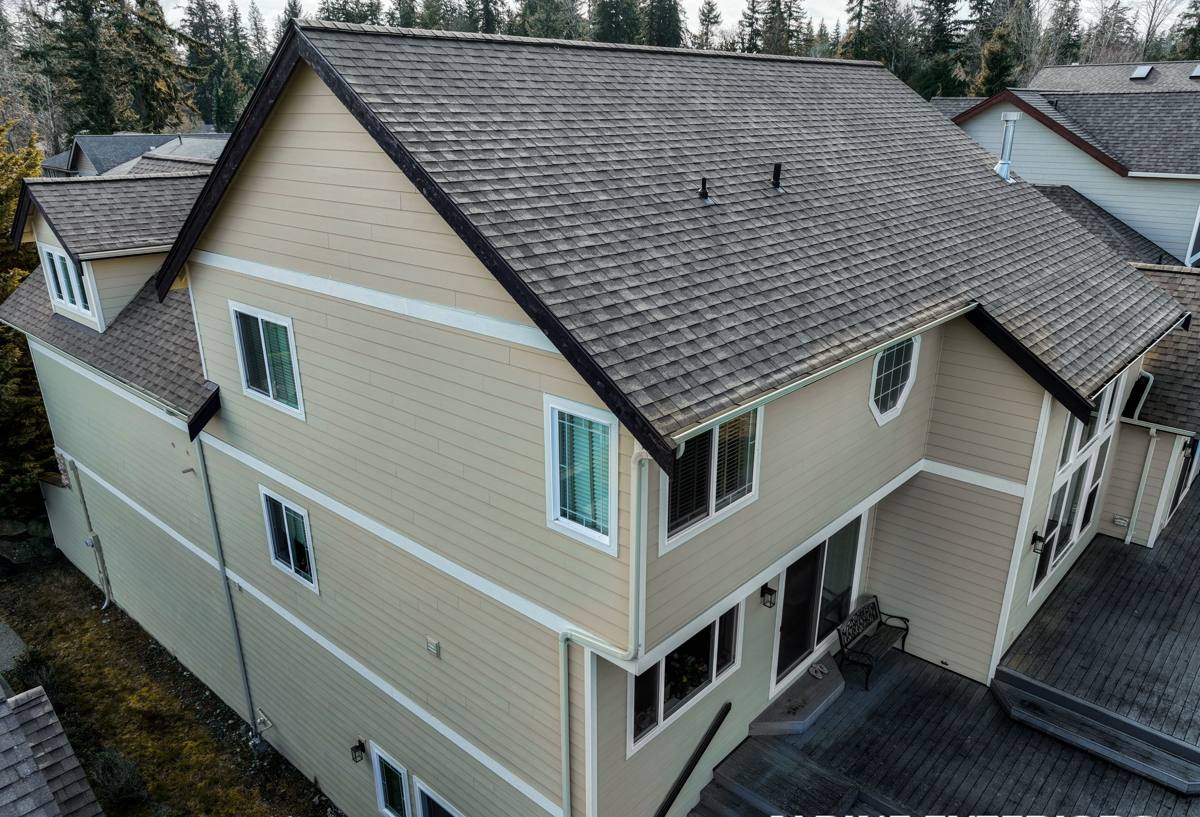
Why Salt Air, Rain, and Moss Change the Equation
Salt air
Airborne salt is corrosive to exposed metal fasteners, trim flashing, and hardware, and it accelerates the breakdown of coatings and caulks that aren't rated for marine exposure. Siding that looks fine in a showroom can chalk, fade, or degrade faster once it's facing the bay full-time.
Driving rain
Whatcom County storms often come with wind, which means rain doesn't just fall on a wall — it's pushed into laps, seams, and butt joints under pressure. A siding system that relies on caulk alone to keep water out, rather than proper lapping, flashing, and a drainage plane behind it, will eventually let moisture in.
Moss and mildew season
Shaded north and west-facing walls near mature trees or close neighboring structures stay damp longer here than in drier parts of the state. Organic growth needs moisture and time, and Semiahmoo's climate hands it both. Siding that absorbs water or has seams where debris can collect will host moss and mildew far more readily than a material engineered to shed water and dry out.
Why We Only Install James Hardie Fiber Cement
We standardized on James Hardie fiber cement siding for every home we work on, including Semiahmoo, and we don't install vinyl, LP SmartSide, primed spruce, cedar, Cemplank, or Allura. That's a deliberate professional standard, not a sales pitch — here's the reasoning specific to this climate:
- Non-combustible core: fiber cement doesn't burn, melt, or warp from radiant heat the way vinyl can, which matters as much for insurance and resale as it does for wildfire-adjacent risk.
- Engineered for the Pacific Northwest: James Hardie's HZ5 product line is formulated for regions with sustained moisture exposure and freeze-thaw cycling, which describes Whatcom County's coastal edge well.
- ColorPlus factory finish: the color is baked on in a controlled factory process rather than field-painted, which gives more consistent UV and salt-air resistance than a job-site paint job, and it comes with its own finish warranty.
- Dimensionally stable: fiber cement expands and contracts far less than vinyl or wood with temperature and moisture swings, which means fewer buckled panels and less caulk failure at the joints over time.
- Strong transferable warranty: when installed to Hardie's specifications, the product carries a long, real warranty that can transfer to a future owner — a genuine selling point if this home is ever sold.
None of this means other products are junk — it means we've chosen not to put our name behind materials that ask more of the installer, the caulk, and the maintenance schedule than we think a Semiahmoo home should have to depend on.
What a Correct Installation Actually Involves
Fiber cement performs the way it's supposed to only when it's installed to spec. Most of the siding failures we get called out to inspect trace back to installation shortcuts, not the material itself.
Weather-resistive barrier first
Before a single piece of siding goes up, the wall needs a continuous, properly lapped weather-resistive barrier and correctly integrated window and door flashing. This is the layer that actually stops bulk water — the siding is the second line of defense, not the only one.
Gapping and fastening to spec
James Hardie panels need specific gaps at butt joints and terminations to allow for minor movement, and fasteners need to be the right type, spacing, and depth — not just whatever's fastest to run through a nail gun. Overdriven or underdriven fasteners are a common source of long-term problems.
Trim, caulking, and clearances
Proper ground clearance, deck and roof-line flashing, and the right caulk in the right joints (not every joint needs caulk — some are designed to be left open for drainage) all matter more in a wind-driven-rain climate than in a dry one. Get this wrong and the siding can look fine for a year or two before problems show up behind it.
How Common Siding Materials Hold Up in This Climate
| Factor | James Hardie Fiber Cement | Vinyl Siding | Untreated/Primed Wood |
|---|---|---|---|
| Salt air exposure | Factory finish holds color and integrity well near the bay | Can chalk and become brittle faster in coastal exposure | Coatings break down faster; needs more frequent repainting |
| Wind-driven rain | Rigid panels with engineered laps resist wind-forced moisture intrusion | Can flex and allow water behind panels in high wind | Absorbs moisture at seams and end grain if not maintained |
| Moss/algae resistance | Dense, low-absorption surface sheds moisture well | Sheds water but seams and channels can trap debris | Porous surface holds moisture, feeding growth |
| Dimensional stability | Minimal expansion/contraction | Expands/contracts noticeably with temperature swings | Swells and shrinks with moisture, can cup or crack |
| Fire resistance | Non-combustible | Can soften or melt under heat exposure | Combustible |
This is a general comparison, not a claim that other products fail on every home — plenty of vinyl and wood siding jobs perform adequately for years. It's simply why, given what Semiahmoo's climate does to exterior materials, fiber cement installed correctly is the standard we're willing to stand behind.
Our Installation Process
- On-site assessment: we walk the home, note existing damage, moisture staining, moss buildup, and any areas where past flashing or trim work looks suspect.
- Written estimate: a clear scope covering tear-off (if needed), weather barrier, flashing details, siding profile and color, and trim work — no vague allowances.
- Prep and moisture check: sheathing gets inspected once old siding is off; any soft or water-damaged sheathing gets addressed before anything new goes up.
- Weather barrier and flashing installation: the drainage plane and window/door flashing get installed and inspected before siding starts.
- Siding installation to Hardie spec: correct gapping, fastening, and lapping, with attention to the wind and rain exposure specific to the home's orientation.
- Trim, caulking, and cleanup: finish details get closed out and the site is cleaned before we walk it with the homeowner.
What to Check Before Hiring a Siding Contractor for a Semiahmoo Home
- Do they carry current WA state contractor licensing and insurance, and will they show proof without hesitation?
- Do they install to the manufacturer's written installation specifications, not just "how we've always done it"?
- Will they explain what weather-resistive barrier and flashing details they use before siding goes on — not just the visible finish material?
- Do they have recent experience with homes in exposed, wind-and-rain-heavy coastal settings like Semiahmoo, not just sheltered inland lots?
- Is the warranty they're offering tied to correct installation, and is it clear in writing what it does and doesn't cover?
- Are they willing to walk the property with you and point out problem areas before quoting, rather than pricing from a photo?
Maintenance and Longevity in a Marine Environment
Even the right material installed correctly still benefits from basic upkeep in a climate like this. Rinsing salt residue and organic buildup off the siding periodically, keeping gutters and downspouts clear so water isn't sheeting down walls, and trimming back vegetation that's shading and dampening a wall all extend the life of any siding system — Hardie included. The difference is that fiber cement gives you a much wider margin for error if maintenance slips for a season, where more moisture-sensitive materials don't forgive that as easily.
Why a Crew That Already Works Semiahmoo Matters
A contractor who's done siding work up and down this stretch of Whatcom County coastline has already seen how wind direction, sun exposure, and moisture behave on homes with similar orientation to the bay. That's not something you can fully substitute with a general checklist — it shapes which walls get extra attention on flashing, where moss tends to reestablish fastest, and what detailing has actually held up locally over time versus what looks good on paper. Being based in Ferndale means shorter response times if a warranty question or a storm-related concern comes up later, too — you're not waiting on a crew that has to drive in from out of the area.
If you're weighing a siding replacement or new installation on a Semiahmoo property, we're happy to walk the exterior with you, point out what the current siding and trim are telling us, and put together a straightforward, no-pressure estimate. There's no cost or obligation to have a conversation about what your home actually needs — use the form below to get started.