 Ferndale Siding
 Blaine's Climate Is Hard on Siding
Blaine sits about as close to the water and the Canadian border as you can get in Whatcom County, and that location comes with a specific kind of weather punishment. Salt air moves inland off the water almost year-round, wind-driven rain comes in sideways during winter storms, and the damp, shaded stretches of fall and winter turn into a long moss season that can run for months. None of this is dramatic on any single day, but siding doesn't fail from one storm — it fails from repeated exposure that a homeowner in a drier inland town never has to think about.
We work on homes throughout the Ferndale and Blaine area, and the repair calls we get here follow patterns you don't see as often farther from the coast: fastener corrosion, moss holding moisture against siding for weeks at a time, and caulk joints that fail years earlier than the manufacturer's spec sheet suggests. Understanding those patterns is most of what separates a repair that actually holds from one that fails again in a year or two.
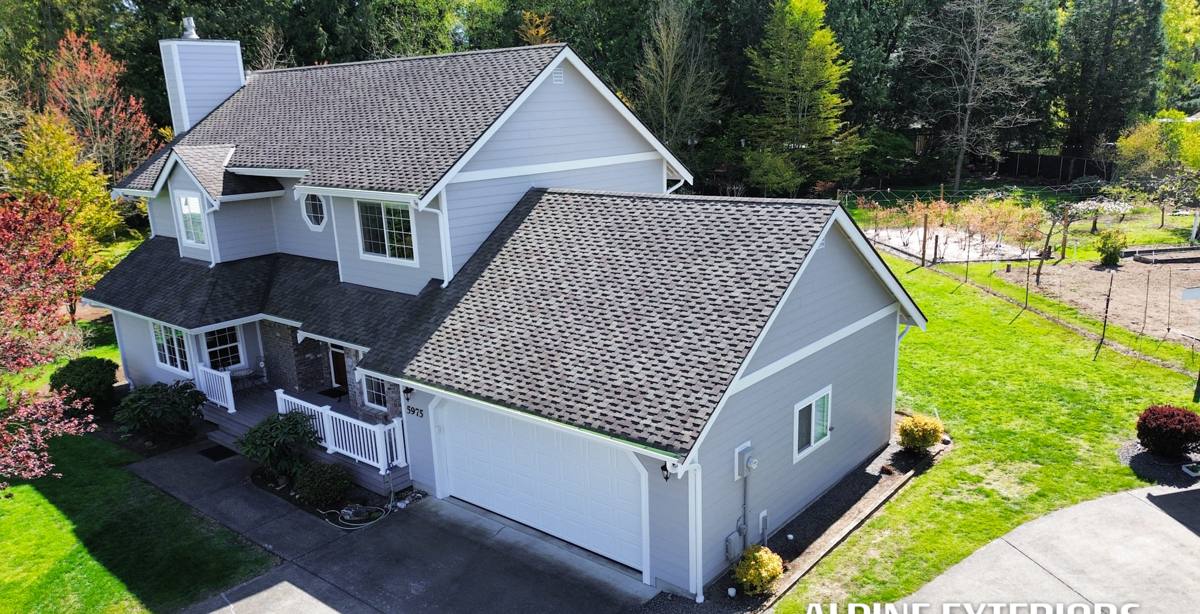
What Salt Air, Rain, and Moss Actually Do to Siding
Moss and Algae Growth
Moss doesn't just look bad — it holds water against the siding surface long after the rain has stopped. On north-facing walls and shaded areas near trees or fences, that constant dampness softens caulk, degrades paint film, and on wood-based or improperly sealed products, it can let moisture reach the substrate underneath. By the time moss is visible, it's usually been growing for a season or more, which means the wall behind it has been wetter than it should be for that same stretch of time.
Salt-Air Corrosion of Fasteners and Trim
Salt in the air accelerates corrosion on anything metal — nail heads, flashing, trim fasteners, even some lower-grade screws used in past repairs. Once a fastener starts rusting, it can streak the siding, lose its grip, or create a small gap where water gets behind the panel. This is a slow process, which is exactly why it's easy to miss until a section of siding is already loose or stained.
Wind-Driven Rain and Water Intrusion
Straight-down rain is manageable for almost any siding system installed to spec. Wind-driven rain is a different problem — it gets pushed sideways and upward into laps, joints, and trim intersections that were never designed to shed water from that angle. Homes on more exposed lots in the Blaine area, especially ones without much wind break, take the brunt of this during winter storm systems.
Signs Your Blaine Home Needs Siding Repair
Most siding problems give warning signs well before they become expensive. Homeowners in this area should watch for:
- Moss or dark green-black staining that keeps coming back after cleaning
- Soft or spongy spots when you press on the siding, especially near the bottom courses
- Paint that's bubbling, peeling, or chalking faster than the rest of the house
- Visible gaps, cracks, or separation at seams, corners, and trim joints
- Rust streaks running down from nail heads or metal flashing
- A musty smell or visible staining on interior walls that share an exterior with a problem area
- Siding that flexes or feels loose when you push on it by hand
Any one of these on its own might be minor. Two or three showing up in the same area of the house usually means water has been getting behind the siding for a while.
What a Correct Repair Actually Involves
Diagnosing the Real Cause
The most common mistake in siding repair isn't bad workmanship — it's fixing the symptom instead of the cause. Recaulking a gap without figuring out why it opened, or replacing a stained board without checking the flashing above it, just buys a homeowner a year or two before the same spot fails again. A correct repair starts with pulling back enough siding to see what's actually happening underneath: is the water barrier intact, is the flashing directing water where it should, is the framing showing any signs of moisture damage.
Matching Material and Finish
Repairs also need to match the performance of the surrounding siding, not just its appearance. A patch that looks close in color but behaves differently in moisture and temperature will age at a different rate, which shows up as a visible mismatch within a season or two — and worse, it can create a new point of stress at the seam between old and new material. This is part of why we're particular about what we use for repairs, not just what we use for full installs.
Repair or Replace? How to Think About It
Not every siding problem in Blaine calls for a full replacement, and not every problem should be patched. The right call usually comes down to how much of the house is affected and what's causing the damage.
| Factor | Leans Toward Repair | Leans Toward Replacement |
|---|---|---|
| Extent of damage | Isolated to one or two areas | Spread across multiple walls or elevations |
| Underlying cause | Localized flashing or caulk failure | Widespread moisture intrusion or rot in framing |
| Age of existing siding | Newer siding, otherwise in good condition | Original siding nearing or past its service life |
| Material on the house | James Hardie fiber cement, sound elsewhere | Products prone to widespread moisture failure (wood, some engineered woods, older vinyl) |
| Cost over time | Lower upfront cost, targeted fix | Higher upfront cost, resets the clock on the whole exterior |
We'll tell you honestly which side of that table your house falls on. A repair-first approach only makes sense when the underlying cause is actually fixed, not just covered up.
Why We Repair With James Hardie Fiber Cement — and Nothing Else
We install James Hardie fiber cement exclusively, and that carries into how we repair. We don't patch a Hardie wall with a different manufacturer's board, and we don't use vinyl, LP SmartSide, primed spruce, or cedar as stand-in repair material on any home we work on — even for a small section. Mixing products creates mismatched expansion and contraction rates, different moisture behavior, and a finish that won't age the same way as the rest of the wall.
Fiber cement itself is part of why Hardie repairs hold up so well in a place like Blaine. It's non-combustible, dimensionally stable in wet climates, and Hardie's ColorPlus factory finish resists the fading and peeling that field-applied paint struggles with under constant salt air and moisture. When we replace a damaged section, we're matching into a system engineered for Pacific Northwest coastal exposure — Hardie's HZ5 product line is built specifically for climates like this one — rather than patching with something that wasn't designed for the conditions Blaine actually sees.
Our Process for Blaine Siding Repairs
- Inspection: We look at the visible damage and pull back siding as needed to check what's happening behind it — flashing, water barrier, and framing condition.
- Honest diagnosis: We tell you what's actually causing the problem, not just what's visible on the surface, and whether repair or replacement makes more sense for that area.
- Written scope and estimate: You get a clear explanation of what we'll do, what materials we'll use, and what it costs — no vague line items.
- Correct repair: We fix the root cause first — flashing, sealant, water barrier — then replace damaged siding with matching James Hardie material and factory-finish color.
- Final check: We walk the repair with you before we consider the job done, so you know exactly what was fixed and why.
Why a Crew That Already Works in Blaine Matters
Siding repair in a coastal Whatcom County town is different from siding repair in a dry inland climate, and it shows in the details — how flashing is detailed at trim intersections, how much clearance is left for drainage, which walls need extra attention because of prevailing wind and rain direction. A crew that already works this area has already seen how salt air, driving rain, and moss season play out on homes like yours, instead of learning it on your project.
Being based nearby in Ferndale also means we can turn around inspections and repairs faster than a contractor traveling in from farther away, and we're not disappearing after the invoice is paid if a follow-up question comes up.
Get an Honest Look at Your Siding
If you're seeing moss that won't stay gone, soft spots, rust streaks, or gaps opening up around trim, it's worth having someone look before the next storm season adds to the damage. We offer free, no-pressure estimates for Blaine homeowners — we'll tell you plainly what we find, what it needs, and what it will cost to fix it right.