 Ferndale Siding
 Storm Damage Roof Repair for Marietta Homes
Marietta sits close to the water on the edge of Ferndale, and that location comes with a specific kind of weather exposure. Homes here take on salt-laden air, wind-driven rain off open water, and long stretches of damp, shaded conditions that keep moss and moisture active for most of the year. A roof that would hold up fine in a drier inland part of Whatcom County can wear out faster here, and storm damage that looks minor from the ground often isn't minor once you get up on the deck.
This page covers what storm damage roof repair actually means for a home in the Marietta area — what causes it, what a correct repair looks like, and how to tell the difference between a patch job and a repair that actually holds.
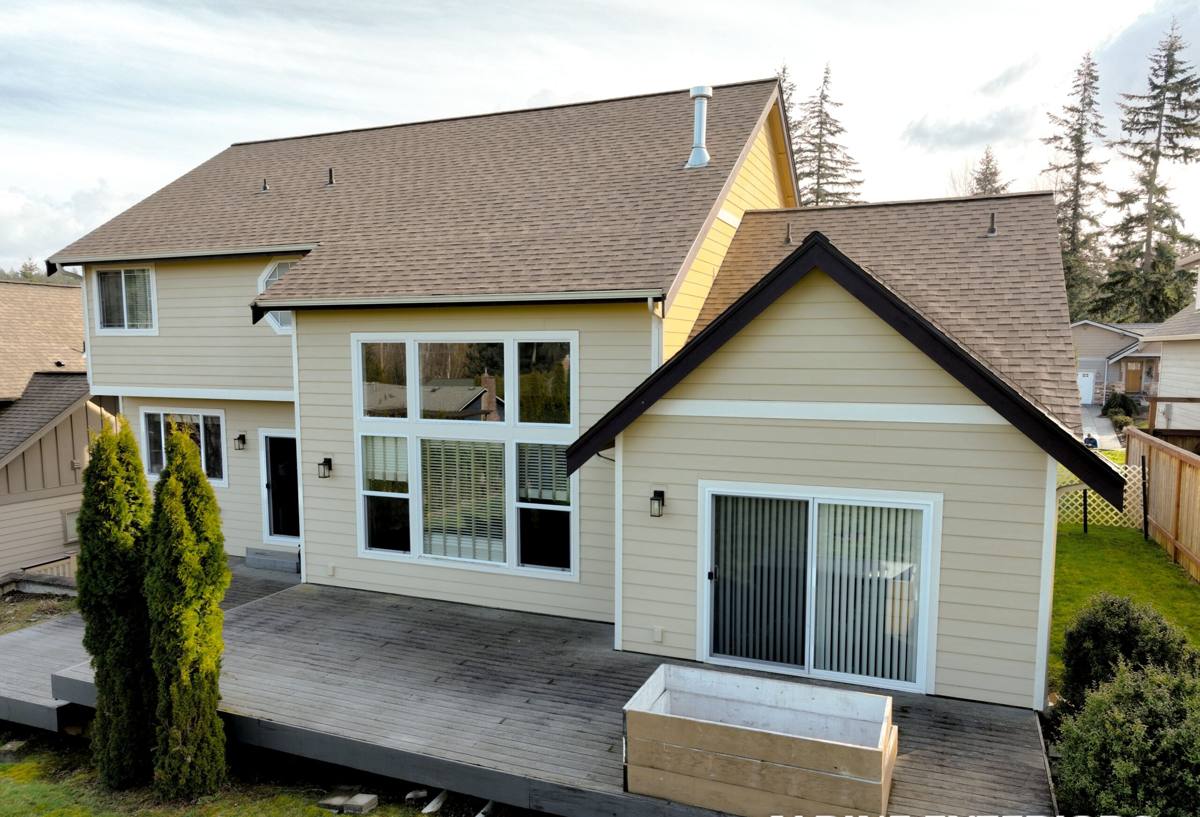
How Storms Actually Damage a Roof Here
Wind and Driving Rain
Most storm damage in this part of Whatcom County isn't a single dramatic event — it's wind-driven rain finding a weak point. Gusts off the water push rain sideways under shingle tabs, around flashing, and into any seam that's already loose from age or a prior repair. Once water gets under the roofing material, it doesn't necessarily show up as a leak right away. It can travel along the underlayment or decking for weeks before it finds a path into the attic or ceiling.
Salt Air and Metal Fasteners
Proximity to the water means more airborne salt than you'd get further inland. Salt air accelerates corrosion on exposed metal — nail heads, flashing, drip edge, and vent boots all age faster here than the manufacturer's general warranty assumptions account for. Corroded fasteners lose their grip on shingles and flashing, which is often the actual root cause behind a "storm damage" call that looks, at first glance, like simple wind lift.
Long Moss Season
Between the rainfall and the shaded, humid conditions common on this side of the county, moss has a long growing season on north-facing and tree-shaded roof slopes. Moss doesn't just look bad — it holds moisture against the shingle surface, lifts tabs as it grows under the edges, and works its way into any gap a storm has already opened up. A roof with active moss growth is more vulnerable to storm damage, not less, because the moss has already been prying at the seams before the wind ever shows up.
Signs Your Marietta Home May Have Storm Damage
Not all storm damage is obvious from the driveway. Here's what we tell homeowners to watch for after a windstorm or heavy rain event:
- Shingle tabs that look lifted, curled, or missing, especially on the side of the roof that faces prevailing wind
- Granules collecting in gutters or at downspout outlets after a storm
- New or worsening moss growth along a roof edge or valley
- Water stains or discoloration on ceilings, especially near exterior walls or chimneys
- Flashing around vents, chimneys, or skylights that looks bent, separated, or rusted
- A musty smell in the attic, which often shows up before a visible ceiling stain does
- Debris — branches, needles, moss clumps — built up in valleys where water is meant to flow freely
If you notice any of these after a storm, it's worth a look before the next one. Small gaps get bigger with every additional weather event, and repair costs go up accordingly.
What a Correct Storm Damage Repair Involves
Inspection First, Not a Guess
A proper repair starts with getting on the roof, not just looking at it from the ground. We check the shingles themselves, but also the flashing, the underlayment where it's exposed, the decking for soft spots, and the attic side for signs of moisture that haven't reached the ceiling yet. Storm damage is often worse — or sometimes less severe — than it looks from the yard, and you want an honest read before any work starts.
Emergency Mitigation When Needed
If a storm has opened up an active leak, the first priority is stopping water intrusion — tarping exposed decking, securing loose material, and protecting the interior of the home. This isn't the permanent fix; it's what keeps a bad situation from becoming a worse one while the real repair gets scheduled and done properly.
Matching the Repair to the Damage
A correct repair replaces damaged shingles, flashing, and underlayment with materials that match the surrounding roof as closely as possible, and reseats or replaces any corroded fasteners rather than just nailing back through the same compromised holes. Flashing gets particular attention here — given the salt air and rain exposure Marietta homes deal with, cutting corners on flashing is one of the most common reasons a "repaired" roof leaks again within a year or two.
Checking the Whole Roof, Not Just the Damaged Spot
Storm damage rarely limits itself to one neat area. If wind lifted shingles on one slope, we check the rest of the roof for early signs of the same wear — loose tabs, thinning granule coverage, moss encroachment — so you're not calling us back after the next storm for damage that was already developing.
Repair or Replace? Key Factors
Most storm damage calls end in a repair, not a full roof replacement. But there are cases where repair isn't the honest recommendation. Here's how we think through it:
| Factor | Points Toward Repair | Points Toward Replacement |
|---|---|---|
| Roof age | Roof is under 15-20 years old with healthy shingles elsewhere | Roof is near or past its expected service life |
| Extent of damage | Damage is localized to one area or slope | Damage is spread across multiple slopes or recurring in different spots each storm |
| Decking condition | Decking underneath is solid, dry wood | Decking shows soft spots, rot, or repeated moisture exposure |
| Moss and granule loss | Minor, surface-level moss with good granule coverage remaining | Heavy moss coverage with visible shingle wear underneath |
| Repair history | This is a first or infrequent repair | The roof has needed multiple storm repairs in recent years |
We'll walk you through which column your roof falls into and why — including telling you when a repair is the right, cost-effective call, which is the more common outcome.
Insurance and Storm Claims
Many storm damage repairs in this area do get covered, at least in part, by homeowners insurance — but coverage depends on your specific policy, the cause of damage, and your insurer's assessment, and we're not in a position to promise a claim outcome. What we can do is document the damage clearly with photos and a written description of what we found and why we believe it's storm-related, which gives you something solid to bring to your adjuster. If you're not sure whether damage is worth filing a claim over, we're happy to give you an honest read before you decide.
Our Process for Marietta Storm Repairs
- Call or request an estimate. Tell us what you noticed and when the storm hit — that helps us prioritize if there's an active leak.
- On-site inspection. We get on the roof and in the attic, not just a driveway assessment, and explain what we find in plain terms.
- Written estimate. You get a clear scope of work and cost range before anything is scheduled — no surprise add-ons mid-job.
- Mitigation if urgent. Active leaks get temporary protection first, so the interior of your home isn't at further risk while the repair is scheduled.
- The repair itself. Damaged materials are replaced, flashing and underlayment are addressed properly, and the surrounding area is checked for related wear.
- Final walkthrough. We show you what was done and flag anything worth keeping an eye on going forward.
Why a Crew That Already Works in Marietta Matters
A roof repair that's correct for a dry inland roof isn't automatically correct for a Marietta roof. A contractor who already works this part of Whatcom County knows to check flashing and fasteners more carefully because of the salt air, knows which slopes tend to hold moss because of the shade and moisture patterns common near the water, and isn't guessing at how the local wind and rain exposure will treat a given repair over the next few years. That local familiarity shows up in fewer callbacks and repairs that are built for the conditions your roof actually faces, not generic conditions.
It also matters for response time. Storm damage doesn't wait for a convenient week, and having a crew that's already local and already knows the area means a faster look when water is getting into your home.
Get an Honest Look at Your Roof
If a recent storm has you wondering about your roof — a stain on the ceiling, missing shingles, or just wanting to check before the next system rolls through — we're glad to come take a look. Reach out for a free, no-pressure estimate using the form below, and we'll give you a straight answer about what your roof actually needs.