 Ferndale Siding
 Windows Built for Sudden Valley's Weather, Not Just Its View
Sudden Valley homes sit close enough to Lake Whatcom and the surrounding tree cover that windows take on a different job than they would in a drier inland town. Between the moisture that rolls off the lake, the shade from mature trees that keeps siding and trim damp longer after a storm, and the driving rain that comes sideways off Bellingham Bay through much of the fall and winter, a window here isn't just glass in a frame — it's one of the main things standing between your living room and a slow, expensive moisture problem. We've replaced enough failed windows in this area to know the difference between a window that was installed correctly and one that was just installed.
This page is about one service, done right, in one area: custom window installation and replacement for homes in and around Sudden Valley. Not a general product catalog, not a national franchise pitch — just what actually matters when you're picking and installing windows on a Whatcom County home that sees this much rain, this much shade, and this much salt-laden air blowing in off the water.
What "Custom" Actually Means Here
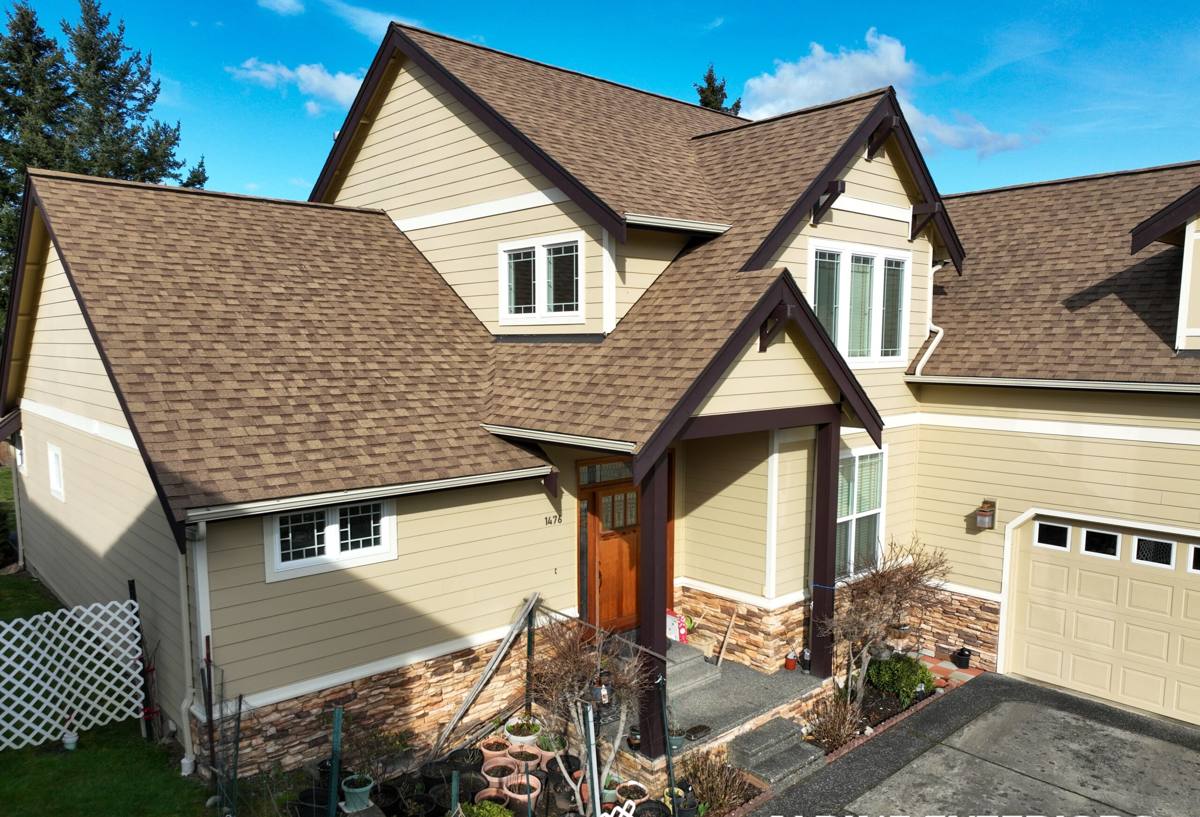
Custom windows aren't necessarily unusual shapes or premium upgrades — though we do those too. Most of the time, "custom" simply means the window is manufactured to the exact opening in your specific house, rather than forced to fit a standard size off a shelf. That distinction matters a lot on older Whatcom County homes, where openings have often settled, shifted, or been altered over the decades.
Common reasons Sudden Valley homeowners go custom
- Original openings are out of square from decades of settling on a wooded, sloped lot
- Replacing an odd shape — arched, angled, or a non-standard bay or bow window
- Upgrading from single-pane or early dual-pane units that are original to the house
- Matching a specific sightline or grid pattern to keep a home's original character
- Enlarging or reshaping an opening to bring in more light in a shaded, tree-covered lot
A stock window forced into a slightly-off opening gets shimmed, caulked, and hoped into place. That's exactly the kind of installation that starts leaking within a few wet seasons. A custom-measured window, by contrast, seats properly against a square frame with consistent reveal all the way around — which is what actually keeps water out over time, not just on install day.
Why Moisture Is the Real Enemy Here
Whatcom County doesn't get hurricanes or hail the way other regions do. What it gets is worse in a different way: sustained, low-grade moisture exposure for months at a stretch. Sudden Valley's proximity to Lake Whatcom and its tree canopy means shaded walls and window openings can stay damp long after a storm has passed elsewhere in Ferndale. That extended dry time is what causes real damage — not any single downpour.
What that means for a window installation
- Flashing has to be sequenced correctly. Water-resistive barrier, flashing tape, and the window's nailing fin all need to overlap in the right order (bottom to top, like shingles) so water sheds outward instead of behind the siding.
- Sill pans matter more here than in drier climates. A sloped sill pan under the window gives any water that does get past the exterior seal somewhere to go — out, not into the wall cavity.
- Sealant choice and placement counts. The wrong sealant, or sealant applied in the wrong spot (sealing the weep path shut, for example), traps moisture instead of letting it drain.
- Frame material has to tolerate sustained dampness, not just occasional rain — this is a year-round condition on shaded lots, not a seasonal one.
None of this shows up as a problem on install day. It shows up eighteen months to five years later as soft trim, a musty smell near the window, or paint that won't stop bubbling. By then the fix isn't caulk — it's opening the wall.
Salt Air and Moss: The Other Two Factors
Sudden Valley sits inland from Bellingham Bay, but this part of Whatcom County still gets marine air moving through, and it carries a fine salt content that affects exterior metal over the years — hardware, screen frames, and especially lower-quality window hinges and locks. It's a slower process than what you'd see on a beachfront property, but it's real, and it's why we pay attention to hardware finish and material when we spec windows for this area, not just the glass and frame.
Moss is the more visible issue. On shaded, north-facing walls and anywhere tree cover blocks direct sun, moss and algae can establish on sills, trim, and even on window screens within a couple of growing seasons. It's not just cosmetic — moss holds moisture against wood trim and caulk lines, which shortens their service life. Part of doing this job right in Sudden Valley is choosing trim materials and finishes that don't give moss an easy foothold, and making sure water has a clear path away from the window instead of pooling where moss likes to grow.
Frame Material Comparison for This Climate
There's no single "best" window material — it depends on your home's exposure, your maintenance appetite, and your budget. Here's how the common options actually perform under Whatcom County's specific conditions.
| Material | Moisture Tolerance | Maintenance | Notes for Sudden Valley |
|---|---|---|---|
| Vinyl | Good — won't rot | Low | Solid value option; check frame reinforcement on larger openings |
| Fiberglass | Excellent | Low | Dimensionally stable in temperature swings; handles sustained damp well |
| Aluminum-clad wood | Very good exterior, wood interior needs care | Moderate | Attractive option; exterior cladding must be sealed correctly at the frame joints |
| Bare wood | Requires diligent upkeep | High | We advise caution on heavily shaded walls unless upkeep is a firm commitment |
We're not going to tell you bare wood windows are "bad" — plenty of homeowners love the look and are willing to do the maintenance. Our professional standard is just to be upfront: on a shaded, damp Sudden Valley wall, wood trim and frames need real, recurring attention (refinishing, caulk inspection, moss removal) to hit their expected lifespan. If that's not something you want to sign up for, fiberglass or a quality vinyl unit will get you a similar look with a lot less ongoing work.
How We Approach a Sudden Valley Window Job
1. On-site assessment
We look at more than the window itself. We check the wall assembly, existing flashing (where visible), siding condition around the opening, and how much sun or shade that particular wall gets. A south-facing wall and a north-facing wall on the same house can have very different water histories.
2. Exact measurement and material selection
We measure each opening individually — Sudden Valley homes on sloped, wooded lots rarely have two openings that are perfectly identical, even when they look it. We'll walk you through frame material and glass options based on what that specific wall is dealing with, not a one-size answer for the whole house.
3. Proper removal
Old windows come out carefully so we can inspect the framing underneath for rot or prior water damage before anything new goes in. If we find damaged sheathing or framing, we flag it and address it — installing a new window over compromised framing just buries the problem.
4. Correct flashing and sealing sequence
This is the step that actually determines whether the window performs for the next 20+ years. Sill pan, flashing tape, and the water-resistive barrier get layered in the correct shingle-style order so water is always directed outward and down, never trapped behind the cladding.
5. Interior and exterior finish
Trim, caulking, and hardware go in last, with attention to keeping weep paths clear and finishes consistent with the rest of the home.
6. Final walkthrough
We check operation, seal, and appearance with you before we consider the job finished — not just a drive-by.
Signs Your Current Windows Are Losing the Battle
Sudden Valley's climate accelerates certain failure signs. Worth checking for:
- Fogging or a permanent haze between panes of double-glazed glass (seal failure)
- Soft or discolored trim, especially on shaded or north-facing walls
- Visible moss or persistent green staining on sills or lower trim
- Drafts you can feel even with the window fully latched
- Difficulty opening, closing, or locking — often a sign the frame has shifted
- A musty smell near the window that wasn't there before
Any one of these on its own isn't necessarily an emergency. Two or three together, especially on the same window, usually means it's time to have it looked at before the problem moves into the wall.
What Drives Cost
Every job is different, but the main cost factors on a Sudden Valley window project are generally the same:
| Factor | Why It Matters |
|---|---|
| Number and size of openings | Larger and more numerous openings mean more material and labor |
| Frame material | Vinyl, fiberglass, and clad-wood carry different material costs |
| Condition of existing framing | Rot or water damage found during removal adds repair scope |
| Custom shapes or sizes | Non-standard openings require custom manufacturing lead time and cost |
| Access and site conditions | Sloped lots and second-story openings can affect labor time |
We won't quote a number without seeing the actual openings — anyone who does is guessing. What we can tell you is that a proper installation with correct flashing and sealing costs a bit more upfront than a quick swap-and-caulk job, and it's the difference that shows up in whether you're dealing with a moisture problem five years from now.
Why Local Experience Matters for This Job
Window installation isn't identical everywhere. A crew that mostly works drier inland regions won't necessarily think twice about sill pan slope or weep path placement, because their homes don't punish that oversight the way a shaded, damp Sudden Valley wall will. We work throughout Whatcom County and have seen firsthand how moss, sustained dampness, and salt-tinged marine air affect windows here specifically — which is exactly the kind of detail that separates a window that lasts two decades from one that starts failing in three years.
If your windows are original to the house, showing wear, or you're planning a renovation that involves reshaping openings, we're happy to take a look and give you a straightforward assessment — no pressure, no sales script. Reach out for a free estimate and we'll walk your home with you and tell you honestly what we see.