 Ferndale Siding
 Why Sumas Decks Wear Out Faster Than Homeowners Expect
Sumas sits in a river valley at the base of Sumas Mountain, and that geography works against wood and composite decking in a few specific ways. Rain moves through the valley often and lingers — decks here don't just get wet, they stay damp for days at a stretch, especially on north- and east-facing sections that don't get direct afternoon sun. Add in the broader moisture pattern that touches all of Whatcom County, including the saltwater-influenced air that rolls in off Bellingham Bay and Georgia Strait during certain wind patterns, and you get a climate that's genuinely hard on exterior wood.
The bigger issue is moss and algae. Whatcom County's mild, wet fall-through-spring stretch gives moss months to establish itself on any horizontal surface that doesn't dry out quickly — deck boards, stair treads, and especially the shaded gaps between boards. Moss holds moisture against the wood surface long after the rain has stopped, which accelerates rot in exactly the spots homeowners don't check regularly: under railings, in board seams, and along the ledger board where the deck attaches to the house.
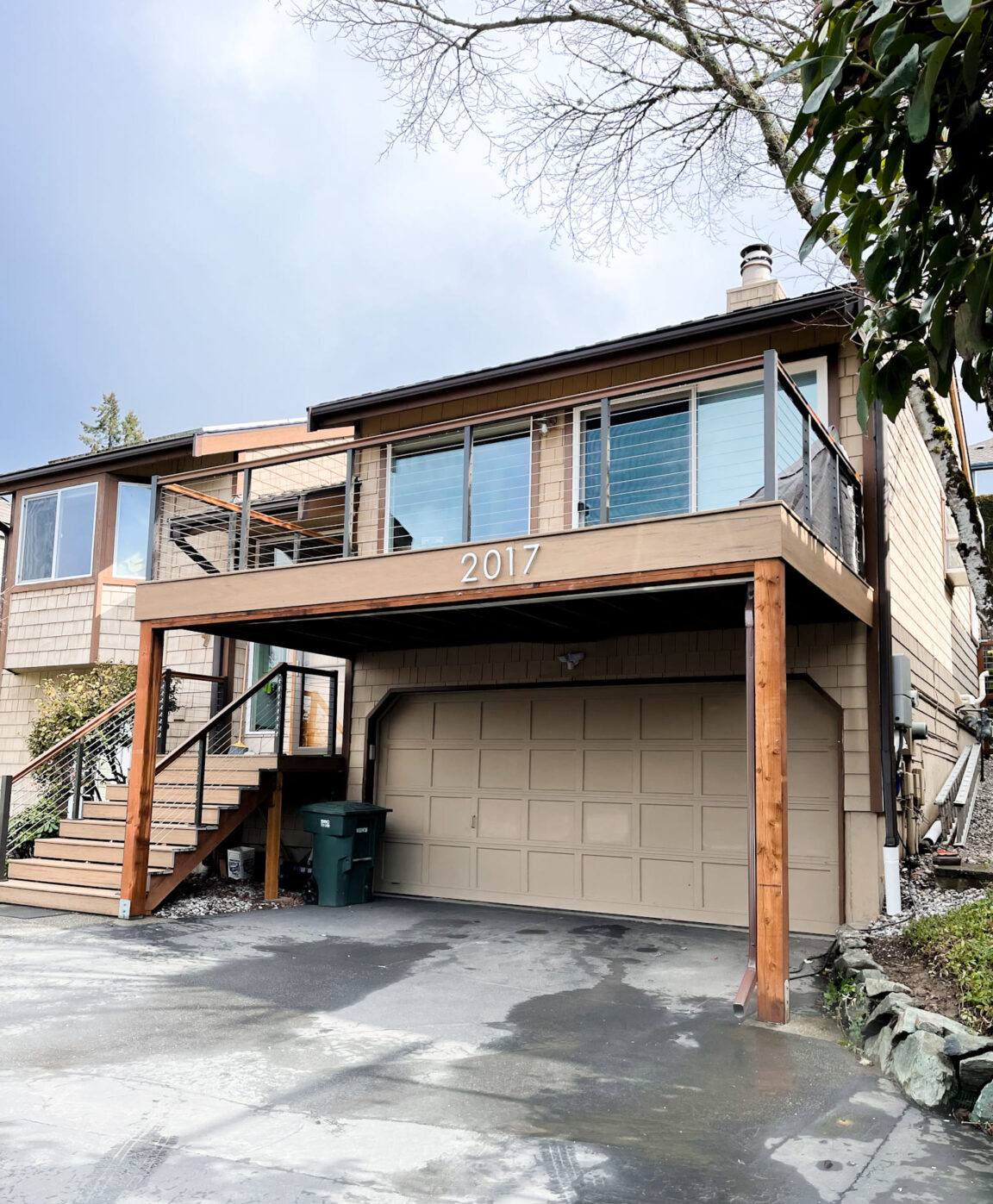
Signs a Sumas Deck Needs Repair — Not Just Cleaning
A pressure wash can make a tired deck look better without fixing what's actually wrong underneath. Before you decide a deck just needs a cleaning, look for these signs that point to real structural or material damage:
- Boards that feel spongy or flex more than neighboring boards when you step on them
- Visible gaps, cracking, or splintering along board edges, especially near fasteners
- Dark staining or soft wood at the ledger board where the deck meets the house wall
- Rust streaks around screws or nails, or fasteners that have started to back out
- Wobble in the railing posts or stair stringers when you push on them
- Moss or algae growth that returns within weeks of cleaning
- Gaps opening up between the deck and the house, which can signal ledger separation
Any one of these is worth a closer look. Several of them together usually mean the problem has moved past the surface and into the framing.
What an Honest Deck Repair Actually Involves
It starts underneath, not on top
The visible decking boards are the easiest part to fix and the least likely to fail structurally. The parts that actually keep a deck safe — the ledger board, joists, beams, and post footings — are hidden underneath, and they're where moisture damage does the most damage over time. A repair that only replaces a few obviously rotten boards without checking the framing underneath is addressing the symptom, not the cause.
The ledger board is the highest-risk connection point
Most deck failures trace back to the ledger board — the piece that bolts the deck to the house framing. In a wet climate like Whatcom County's, flashing at this joint is what keeps water from wicking into the house rim joist and the deck framing simultaneously. If a deck was built or repaired without proper flashing (a common shortcut on older or budget builds), water has likely been getting behind that connection for years even if the surface boards look fine.
Fasteners matter more than people think
Standard steel screws and nails corrode in damp, tannin-rich wood, especially with treated lumber. Corroding fasteners lose their grip strength long before they visibly fail, which is part of why a board that "looks fine" can still be loose. A correct repair uses fasteners rated for the specific decking material and treatment type, not whatever was on hand.
Decking Materials We Repair, and How They Age in This Climate
| Material | How It Ages Here | Typical Repair Needs |
|---|---|---|
| Pressure-treated wood | Prone to checking, splintering, and surface mold in shaded, damp areas; ledger and joist rot if flashing was skipped | Board replacement, framing repair, re-fastening, sealant refresh |
| Cedar | Naturally rot-resistant but still needs regular sealing; gray weathering is cosmetic, softening underneath is not | Spot board replacement, sanding, re-staining or sealing |
| Composite decking | Resists rot but can trap moisture at fastener points and show swelling at cut edges if not properly capped | Board replacement, fastener upgrades, edge sealing |
| Older or mixed-material decks | Frequently combine an aging structure with newer surface boards, hiding framing problems | Framing inspection, structural reinforcement, targeted board work |
We're straightforward about trade-offs rather than pushing one material over another. Composite decking resists rot better than wood but doesn't forgive poor installation — trapped moisture under improperly vented boards can cause its own problems. Wood is more repair-friendly in that individual boards are simple to replace, but it demands more upkeep to keep water out in the first place. What matters most is that whatever material is on your deck now was installed and is being repaired correctly for how it actually behaves.
How We Approach a Deck Repair in Sumas
- On-site inspection. We check the surface boards, but we also get underneath the deck to look at joists, beams, post footings, and the ledger connection — the parts that determine whether this is a repair or something bigger.
- Moisture and structural assessment. We identify soft or damaged wood by probing, not just looking, since surface staining doesn't always match how far rot has spread internally.
- Written scope before work starts. You get a clear picture of what's being replaced, what's being reinforced, and what's cosmetic versus structural — no surprise add-ons mid-job.
- Repair the framing first. Any compromised joists, ledger flashing, or footings get addressed before new decking goes down. Fixing the top layer over a bad frame just hides the problem again.
- Match or upgrade materials. Replacement boards are matched to your existing decking where possible, or we'll talk through an upgrade if the original material or installation was part of the problem.
- Final check and cleanup. We confirm boards are secure, railings are solid, and the site is cleared of old material and fasteners before we call it done.
What Deck Repair Costs Typically Depend On
| Factor | Why It Matters |
|---|---|
| Extent of framing damage | Surface-only repairs are far less involved than jobs requiring joist or ledger replacement |
| Deck size and board count | More square footage means more material and labor regardless of damage severity |
| Material type | Composite, cedar, and treated lumber carry different material costs and labor time |
| Accessibility | Decks with limited underside access or tricky grade changes take longer to inspect and repair |
| Railing and stair condition | Structural railing or stair work adds scope beyond flat decking repair |
We don't quote a number without seeing the deck — anyone who does is guessing. A small board-and-fastener repair might be a modest job measured in a few hours; a deck with ledger rot or failing footings is a different scope entirely. We'll tell you honestly which category yours falls into after the inspection, and if full replacement makes more financial sense than another round of patching, we'll say that too.
Keeping a Repaired Deck in Good Shape
A repair holds up much longer with a little regular attention, especially given how long Sumas stays damp through the fall and winter. A few habits go a long way:
- Sweep leaves and debris off the deck regularly — trapped organic matter feeds moss and holds moisture
- Check board gaps for buildup and clear them so water can drain through, not pool on top
- Re-seal or re-stain wood decking on the schedule recommended for your product, typically every one to three years
- Inspect the ledger board area once a year for staining, gaps, or soft wood
- Trim back vegetation that keeps sections of the deck shaded and slow to dry
- Address small issues — a loose board, a popped fastener — before the next wet season, not after
Why Hiring a Crew That Already Works in Sumas Matters
Deck problems in this part of Whatcom County follow patterns — where moss builds up fastest, which framing details tend to get skipped on older builds, how ledger flashing holds up after years of valley rain. A crew that repairs decks across the Ferndale and Sumas area regularly has seen those patterns enough times to know where to look first, rather than starting from scratch on every job. That familiarity translates into a faster, more accurate inspection and a repair that accounts for how your specific deck will keep aging in this climate, not a generic fix that ignores local conditions.
It also means being reachable and accountable locally — not a crew that did one job in the area and moved on. If a question comes up after the work is done, you're calling a contractor who knows the property and the county, not starting over with someone new.
If you're seeing soft spots, moss that won't quit, or a deck that just feels less solid than it used to, we're happy to take a look. Reach out for a free, no-pressure estimate using the form below — we'll tell you honestly what your deck needs.