 Ferndale Siding
 Siding in Sumas Has to Answer to Whatcom County Weather
Sumas sits close enough to the Nooksack Valley's damp, low-lying terrain and near enough to the water-influenced air moving up from the Salish Sea that homes here take a steady, year-round beating from moisture. It's not one dramatic storm that wears siding out in this part of Whatcom County — it's the accumulation. Salt-tinged air corrodes fasteners and finishes over time. Driving rain, often pushed sideways by wind off open fields, finds every gap in a poorly lapped or under-caulked wall system. And a moss season that can run eight or nine months out of the year keeps north-facing and shaded walls damp far longer than siding manufacturers assume in their generic warranty language.
None of this means Sumas is a bad place to own a home — it means the siding has to be chosen and installed with these conditions in mind, not against a national average. This page is specifically about installing James Hardie fiber cement siding on Sumas homes, what the climate demands of that installation, and how we approach the job differently than a crew passing through once.
Why Fiber Cement Makes Sense Here Before We Even Talk Installation
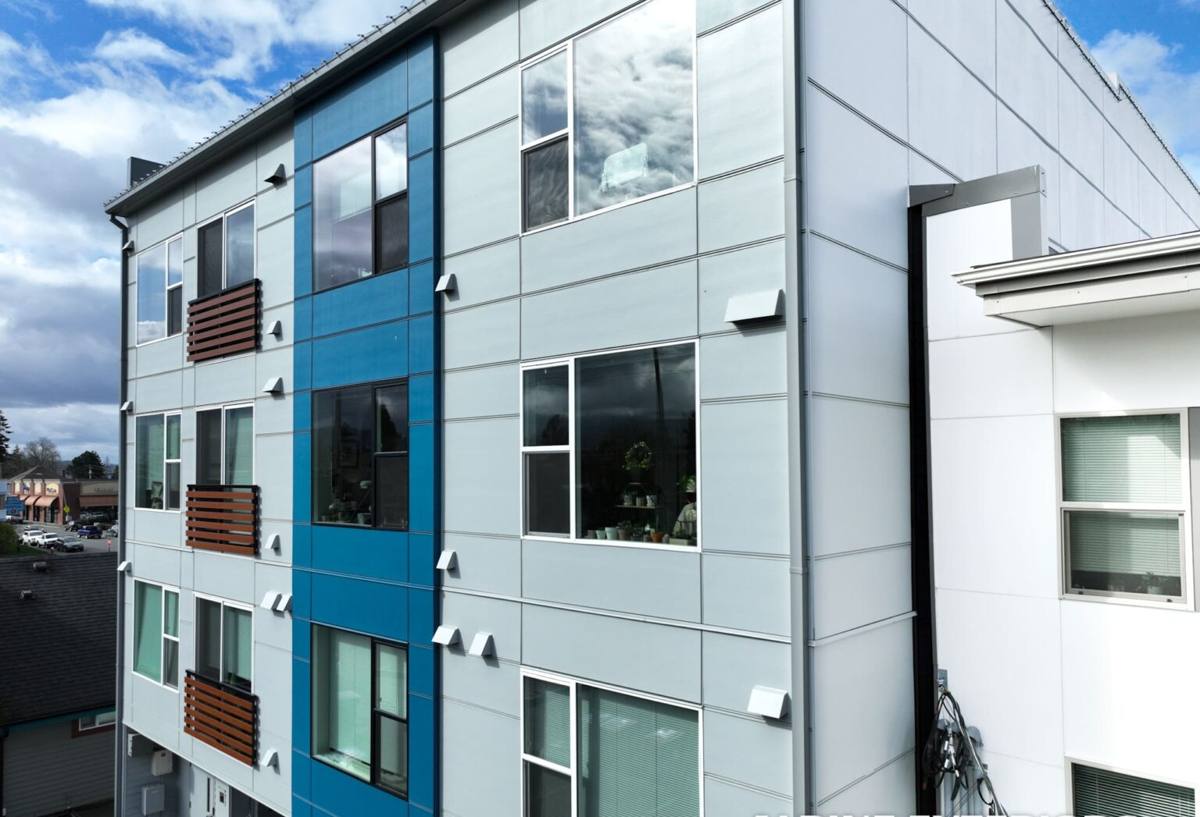
James Hardie siding is fiber cement — a mix of cellulose fiber, sand, and Portland cement pressed and cured into planks and panels. It doesn't rot, it doesn't feed moss the way wood fiber does, and it doesn't absorb water the way a wood-based composite can. For a town that sees extended damp stretches and shaded, slow-drying wall sections, that's the baseline requirement, not a bonus feature.
What Local Homes Are Actually Fighting
- Sustained moisture exposure: Long rainy stretches keep siding wet for days at a time, especially on north and east elevations that get less sun to dry out.
- Moss and algae growth: Shaded siding, especially under overhangs or near tree lines, stays damp long enough for moss to take hold if the material and finish don't resist it.
- Wind-driven rain: Open farmland and valley wind patterns push rain into laps and joints harder than in more sheltered neighborhoods.
- Freeze-thaw cycling: Whatcom County gets enough cold snaps that trapped moisture behind siding can freeze, expand, and accelerate damage to whatever's underneath.
What "Correct" James Hardie Installation Means in Sumas
Fiber cement is only as good as the water management system behind it. We've seen Hardie siding installed badly — face-nailed too tight, gaps caulked instead of flashed, laps under-lapped to save material — and it fails early for reasons that have nothing to do with the product itself. Here's what we consider non-negotiable on every Sumas installation.
Water Management Comes First
- A correctly lapped weather-resistive barrier (housewrap or building paper) installed shingle-style so water sheds down and out, never into a seam.
- Rigid flashing at every window, door, and horizontal trim transition — not caulk alone. Caulk is a backup seal, not a primary defense.
- Proper minimum lap on horizontal lap siding, which matters more in a high-rain area than it does somewhere drier.
- A drainage gap or rainscreen approach where wall assembly and budget allow, giving incidental moisture a path to escape instead of sitting against the sheathing.
Fastening and Clearances
James Hardie publishes specific nailing patterns, fastener types, and minimum clearances from grade, roofing, and decks — and those specs exist for a reason in a climate like this. Face nails driven too deep crack the board's edge and create a moisture entry point. Siding installed too close to grade or a roofline wicks up splash-back moisture, defeating the material's own resistance to it. We follow the manufacturer's installation instructions to the letter, because it's the difference between a 30-year performing wall and a callback in year four.
Caulking and Paint Lines
ColorPlus factory-finished Hardie boards need touch-up paint and sealant only at cut ends and specific joints — not a bead of caulk smeared down every seam out of habit. Over-caulking traps moisture behind the board instead of letting it dry, which is a common shortcut that actually works against the product's design.
Hardie Product Lines Suited to Sumas Conditions
| Product | Best Use on Sumas Homes | Climate Notes |
|---|---|---|
| HardiePlank Lap Siding (HZ10) | Primary wall cladding, most common choice | Engineered for cold, wet, moisture-prone regions like ours |
| HardiePanel Vertical Siding | Accent walls, gable ends, modern facades | Fewer horizontal laps means fewer water-entry points on exposed walls |
| HardieTrim Boards | Corners, fascia, window/door casing | Resists the swelling and rot that wood trim shows first in damp climates |
| HardieShingle Siding | Accent gables, dormers | Decorative detail without the moisture vulnerability of cedar shingle |
The HZ5 vs. HZ10 distinction matters: HZ10 is engineered specifically for cold and moist climate zones, which is what most of Whatcom County — including Sumas — falls into. We don't substitute HZ5 product to save a small margin; it's not what the climate here calls for.
Color and Finish Choices That Actually Hold Up
ColorPlus finish is baked on at the factory under controlled conditions, which gives it better fade and chip resistance than field-applied paint. In a town with this much damp weather, that matters twice over: less exposure to UV degradation on sunny days, and a factory bond that resists the moisture cycling that causes field-painted siding to peel at the laps first. Darker colors show less algae staining on shaded elevations; lighter colors show it faster, so we talk through placement and color choice with homeowners who have heavily shaded north walls or tree-lined lots — common around Sumas' more rural properties.
Our Process for a Sumas Siding Job
- On-site assessment: We walk the whole exterior, check for existing moisture damage, rot, or failed flashing behind the current siding before quoting anything.
- Tear-off and inspection: Once old siding is off, we inspect sheathing and framing for hidden water damage — a step that gets skipped by crews trying to move fast, and the step most likely to save a homeowner from a bigger problem down the road.
- Water management install: Housewrap, flashing, and any drainage plane details go in before a single piece of Hardie touches the wall.
- Siding installation to manufacturer spec: Correct laps, fastening, and clearances, following James Hardie's published installation guidelines for our climate zone.
- Trim, caulk, and touch-up: Finish details done sparingly and correctly, not as a cosmetic cover-up for gaps.
- Final walkthrough: We go over the finished job with the homeowner before calling it done.
Why a Crew That Already Works in Sumas Matters
A contractor who only occasionally passes through this part of Whatcom County doesn't build the pattern recognition that comes from working the same climate week after week — knowing which elevations moss first, which lots hold moisture longer because of tree cover or low drainage, and which installation shortcuts show up as callbacks two winters later. We install exclusively James Hardie fiber cement siding, on purpose. We don't offer vinyl, LP SmartSide, cedar, or other fiber cement brands, because spreading across multiple product lines means spreading installation expertise thin. Specializing in one product, installed correctly, in the climate we actually work in, is how we stand behind the work.
What a Siding Project Typically Involves Cost-Wise
| Cost Factor | Why It Moves the Price |
|---|---|
| Home size and wall complexity | More corners, gables, and dormers mean more cutting, trim, and labor time |
| Tear-off and substrate repair | Rotted sheathing found during tear-off adds material and labor before new siding goes up |
| Product line and profile | Vertical panel, shingle accents, and wider trim boards cost more than standard lap siding |
| Color and finish | ColorPlus factory finish costs more upfront than field-primed but saves repainting cycles |
| Access and site conditions | Steep lots, long driveways, or limited staging space affect labor time |
We give homeowners an honest, itemized estimate after seeing the home in person — not a ballpark over the phone based on square footage alone.
A Quick Checklist Before You Choose a Siding Contractor
- Ask whether they follow James Hardie's published fastening and clearance specifications, or their own shortcuts.
- Ask what weather-resistive barrier and flashing details they use — not just what siding brand they install.
- Ask if they inspect and repair sheathing found during tear-off, and how that's handled in the estimate.
- Ask how many product lines they install — a contractor specializing in one system tends to know its details better than one splitting attention across five.
- Ask for a written scope of work, not just a verbal quote, so lap dimensions, flashing details, and trim choices are documented.
If your Sumas-area home is due for new siding, or you're seeing early signs of moss, staining, or moisture damage on your current siding, we're happy to take a look and walk you through what correct James Hardie installation looks like for your specific home. Reach out for a free, no-pressure estimate using the form below.