 Ferndale Siding
 Windows Built for Sandy Point's Waterfront Exposure
Sandy Point sits close enough to the water that homes there take a different kind of beating than houses a few miles inland. Salt-laden air, wind-driven rain off the Strait, and a moss season that seems to stretch longer every year all work on window frames, sills, and hardware in ways that shorten the life of a poor installation. If you've noticed fogged glass, swollen sashes, or a window that whistles when the wind picks up, that's usually not a sign the window itself failed — it's a sign the installation wasn't matched to the exposure it was going to face.
We install windows throughout Whatcom County, and Sandy Point is one of the areas where we pay the closest attention to flashing detail and material choice. A window that performs fine in a sheltered subdivision inland can struggle here if it's installed the same way. Getting it right the first time matters more on a property like this, because callbacks for a leaking window mean cutting into siding and trim that's already been exposed to salt air for years.
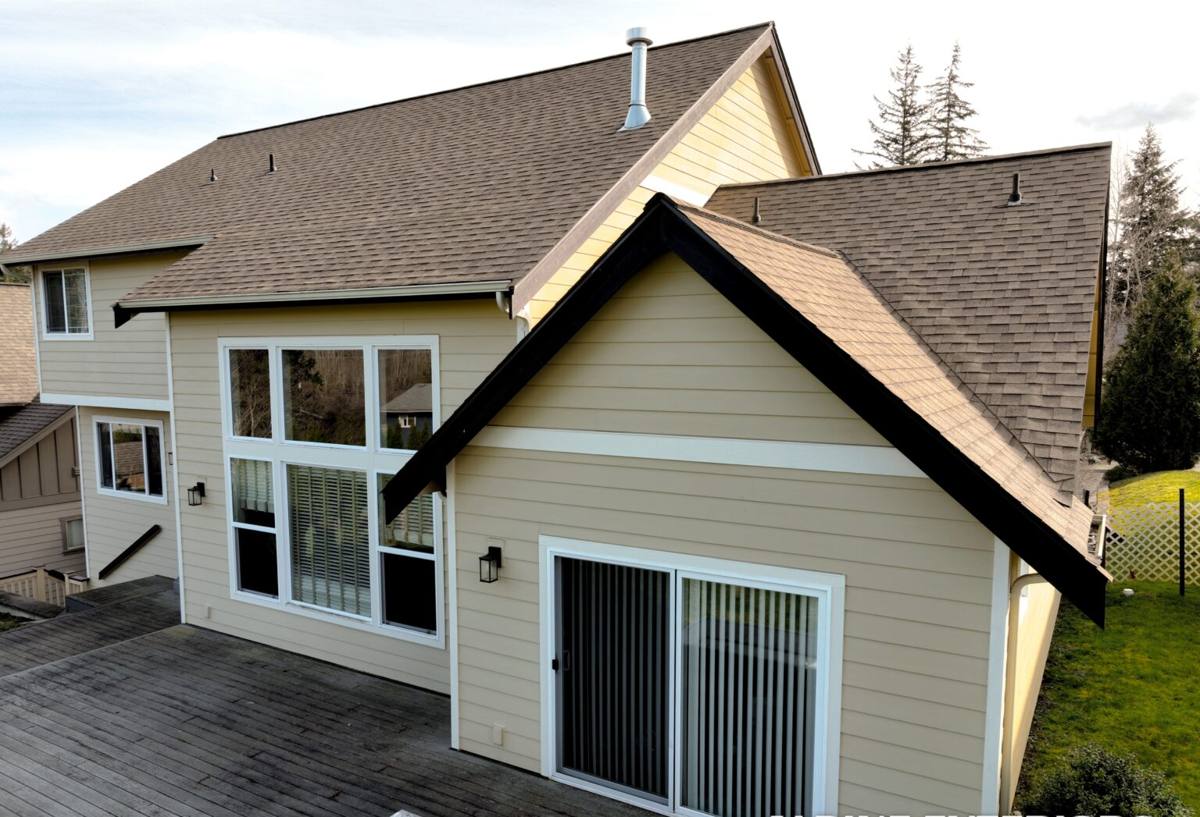
What Salt Air and Coastal Rain Actually Do to a Window
It helps to understand the specific mechanisms at work before talking about the fix.
Salt Air and Metal Components
Airborne salt accelerates corrosion on anything metal — hinges, cranks, screws, and especially the fasteners holding a window's nailing flange in place. Standard coated fasteners can start showing rust streaks within a few years this close to the water. We spec corrosion-resistant fasteners and hardware for coastal jobs, which costs a little more up front and saves a lot of grief later.
Driving Rain and Water Intrusion
Rain that falls straight down is one thing. Rain that's being pushed sideways by wind off the water is another — it finds gaps that would never leak in calmer conditions. This is why flashing sequence and sealant placement matter more here than almost anywhere else in the county. A window opening needs to be built so water that gets past the exterior cladding is directed back out, not trapped against the frame or the wall sheathing behind it.
Moss, Shade, and Moisture Retention
Long moss seasons mean more sustained moisture sitting against trim and sills, especially on north-facing or shaded elevations. Moisture that lingers instead of drying out is what eventually rots wood trim and delaminates poorly sealed sills. Good drainage detailing and the right sealant keep that moisture moving instead of sitting.
Signs a Sandy Point Window Needs Attention
- Fogging or condensation between the panes (failed seal, not a cleaning issue)
- Visible rust or staining around screws, hinges, or the nailing flange
- Soft or discolored trim/sill wood, especially on north or west-facing walls
- Drafts or whistling during windstorms off the water
- Sashes that stick, don't latch fully, or have swollen in their frames
- Peeling paint or bubbling caulk lines around the window perimeter
- A musty smell near a window after a stretch of wet weather
Any one of these is worth a look. Several together usually means the original flashing or sealant has failed and water has been getting behind the trim for a while.
What a Correct Coastal Window Installation Involves
The window unit itself is only part of the job. The install is what determines whether it holds up here.
Flashing Sequence
Every opening gets flashed in a specific order — sill pan first, then the sides, then the top — so that any water that does get behind the siding sheds down and out rather than pooling at the sill or working its way into the wall cavity. Skipping or shortcutting this sequence is the single most common cause of hidden water damage we find when we open up an older installation.
Sealant Selection and Placement
Not every exterior sealant handles UV, salt exposure, and temperature swings the same way. We use sealants rated for the exposure and apply them where they actually do their job — around the frame perimeter and at flashing laps — not as a substitute for proper flashing. Caulk is a backup layer, not the primary defense.
Fastener and Hardware Choice
As mentioned above, coastal-grade fasteners and hardware cost more but resist the corrosion that standard-grade parts show within just a few seasons this close to the water.
Insulation and Air Sealing
The gap between the window frame and the rough opening gets properly insulated and air-sealed — not stuffed with excess fiberglass, which can actually hold moisture. This also affects comfort and energy bills, since a poorly sealed gap is a direct path for drafts.
Choosing the Right Frame Material for This Exposure
Frame material matters more here than it does a few miles inland. Here's how the common options hold up against salt air, driving rain, and sustained moisture:
| Frame Material | Coastal Durability | Maintenance | Trade-offs |
|---|---|---|---|
| Vinyl | Good — won't rust or rot | Low | Can expand/contract with temperature swings; hardware quality varies by manufacturer |
| Fiberglass | Very good — stable and corrosion-resistant | Low | Higher upfront cost than vinyl |
| Wood-clad | Depends entirely on the cladding and seal quality | Higher — cladding seams need monitoring | Best appearance option for some homeowners, but the highest sensitivity to installation quality in this climate |
| Aluminum | Prone to corrosion in salt air unless specifically coated | Moderate to high | Conducts heat/cold readily; not our first recommendation for direct waterfront exposure |
We don't push one brand or material on every job — the right choice depends on your home's exposure, your budget, and how much long-term maintenance you're willing to take on. What we won't do is install a frame material in a full-exposure spot on Sandy Point without being upfront about the maintenance it'll need to hold up.
Our Process, Start to Finish
- On-site assessment — we look at each opening's exposure (sun, wind direction, shade, proximity to the water) since not every wall on the same house faces the same conditions.
- Product recommendation — based on that assessment, your budget, and your maintenance preferences, not a one-size-fits-all pitch.
- Removal and opening inspection — when we pull the old window, we check the sheathing and framing underneath for hidden rot or past water damage before anything new goes in.
- Sill pan and flashing installation — the step most often skipped or shortcut elsewhere, done in the correct sequence every time.
- Window set, shimmed, and secured — with coastal-grade fasteners and hardware.
- Insulation, air sealing, and interior/exterior trim — finished to match your home.
- Final inspection and walkthrough — we check operation, seals, and finish work with you before we call it done.
Why Local Experience on Sandy Point Specifically Matters
A crew that mostly works inland subdivisions can install a technically correct window that still underperforms on a waterfront property, simply because they're not used to building in the extra margin coastal exposure demands. We work across Ferndale and Whatcom County, including Sandy Point, and we adjust flashing detail, sealant choice, and hardware spec based on what a given wall actually faces — not a generic checklist. That's the difference between a window that needs attention again in five years and one that doesn't.
We're also familiar with the practical side of working in this area — narrower access on some lots, the value of protecting existing landscaping and hardscape during removal, and scheduling around the wetter stretches of the year when driving rain makes an open wall opening a real risk if a job isn't planned well.
Cost Factors to Expect
Every home is different, but a few things reliably move the price on a Sandy Point window project:
| Factor | Why It Matters |
|---|---|
| Frame material | Vinyl, fiberglass, and wood-clad carry different material costs and labor requirements |
| Number of openings | Per-window costs typically drop somewhat as the job scales, since site setup is shared |
| Condition of the existing opening | Hidden rot or past water damage found during removal adds repair scope |
| Exposure level | Full-exposure, west or north-facing walls often call for extra flashing and sealant detailing |
| Trim and finish work | Matching existing interior/exterior trim profiles adds time versus a standard finish |
We give straightforward, itemized quotes so you know what you're paying for and why — no vague lump-sum numbers that hide where the money's going.
Get an Honest Look at Your Windows
If your Sandy Point home has windows showing any of the wear signs above, or you're planning ahead for a remodel, we're happy to come take a look. We'll give you a straight read on what's going on, what it'll take to fix it right for this exposure, and a free, no-pressure estimate — fill out the form below and we'll get in touch.