 Ferndale Siding
 Windows Near Semiahmoo Work Harder Than Windows Inland
Homes around Semiahmoo sit close enough to salt water that the air itself becomes part of the maintenance problem. Salt-laden moisture rides in on the wind, settles on glass and metal, and slowly works on anything that isn't built to shed it. Add Whatcom County's long wet season — months of driving rain followed by a moss season that never really ends — and you've got a climate that's tough on window frames, seals, and finishes in ways a homeowner further inland never has to think about.
We're a Ferndale-based crew, and Semiahmoo is inside our regular service area, not a special trip. That matters more than it sounds like it should when the job is windows, because the failure patterns out here are specific: corroded aluminum hardware, black streaking in the corners of vinyl frames, fogged double-panes from broken seals, and wood sills that have gone soft from years of standing moisture. If we've replaced windows on the street behind yours, we already know what we're walking into before we open the toolbox.
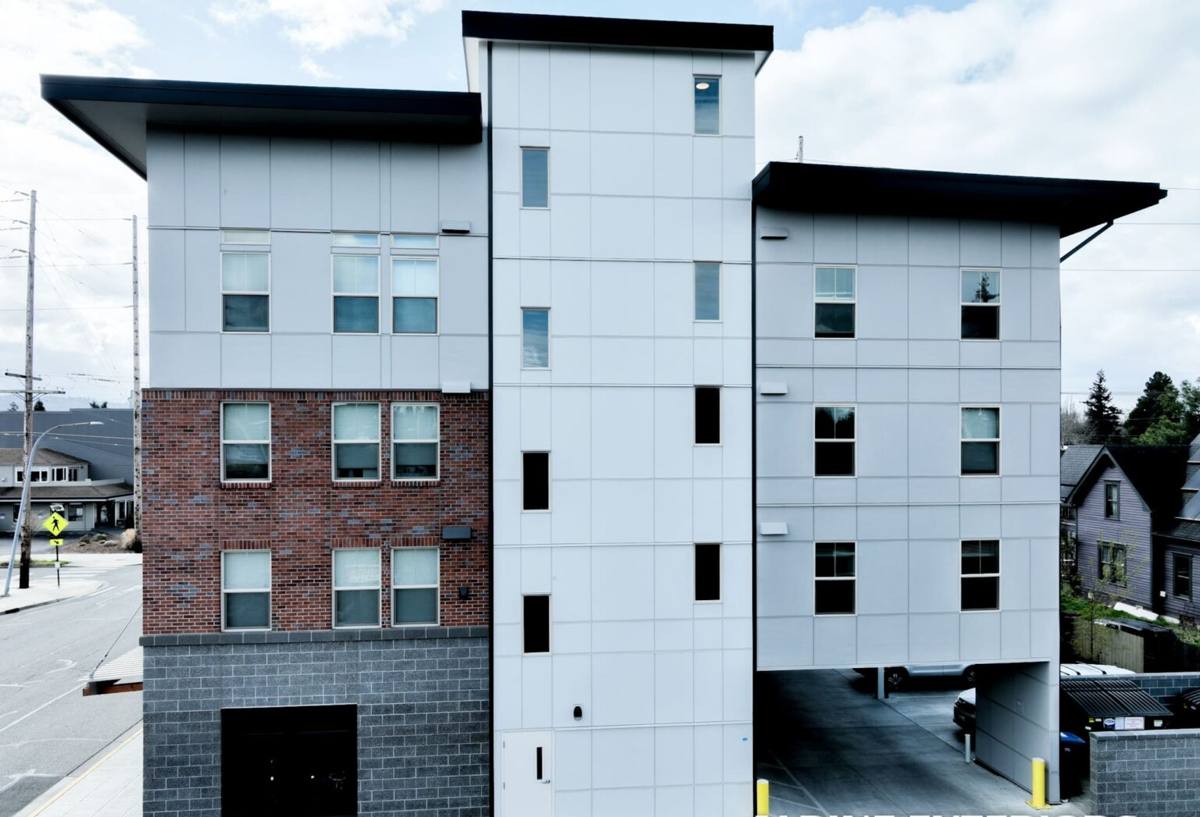
How Salt Air and Coastal Rain Actually Damage Windows
It helps to understand the mechanism, not just the symptom, because it changes what a correct repair or replacement actually looks like.
Salt Air
Airborne salt is hygroscopic — it pulls moisture out of the air and holds it against whatever surface it lands on. On older aluminum frames and hardware, that means slow, steady corrosion: pitting, white oxidation, locks and cranks that seize up years before they should. On vinyl, salt residue mixed with grime can accelerate UV breakdown of the surface finish, leading to chalking and brittleness at the frame corners first.
Driving Rain
Wind-driven rain off the water doesn't just hit glass — it gets pushed sideways and upward into gaps that would never see water in a calm rain. This is where poor flashing and old caulk-only installs fail. Water finds the path of least resistance, tracks behind the trim, and shows up later as a soft spot in the sill or a stain on the interior wall below the window, often long after the original leak started.
Moss and Prolonged Damp
Whatcom County's moss season means shaded, north-facing walls and window trim stay damp for extended stretches. Wood trim and sills that aren't properly primed and sealed on all sides — including the back, which most people never think to check — hold that moisture and start to rot from the inside out, well before the surface paint shows a problem.
Signs a Semiahmoo Home's Windows Need Attention
Some of these are obvious. Others get written off as "just an old house" for years before the real cost shows up.
- Foggy or hazy glass — the seal between panes has failed and the insulating gas or air gap is gone
- Visible white powder or pitting on aluminum frames or hardware (salt corrosion)
- Windows that are hard to open, close, or lock — often a sign of frame swelling or hardware corrosion
- Soft, spongy, or discolored wood at the sill or bottom corners of the frame
- Drafts you can feel with a hand near the frame on a windy day
- Peeling or bubbling paint on interior trim below a window — usually a moisture sign, not just a paint issue
- Visible daylight or gaps between the frame and the siding or trim
- A noticeably higher heating bill in a home that hasn't changed its use pattern
Any one of these on its own might just mean a repair. Two or three together, especially on the weather-facing side of the house, usually means the window and its flashing have been letting water in for a while.
What a Correct Window Replacement Actually Involves
Swapping the sash for a new one and caulking around the edges is the fastest way to get a callback in a year. A proper job in this climate goes further, and it's worth knowing what to expect so you can tell a rushed install from a correct one.
- Full removal, not a retrofit over old rot. We pull the old window down to the rough opening and inspect the framing, sill, and sheathing underneath. If there's hidden water damage, it gets addressed before anything new goes in — covering it up just moves the problem down the road.
- Correct flashing sequence. Flashing tape and pan flashing get installed in the right order — bottom, sides, top — so water is always directed outward and down, never trapped behind the new window.
- A proper weather-resistive barrier tie-in. The house wrap or building paper gets integrated with the new window's flashing, not just taped over as an afterthought. This is the detail that separates a window that survives driving rain from one that doesn't.
- Backer rod and quality sealant, not just a bead of caulk. Gaps get filled properly so the seal has depth and flexibility instead of a thin surface skin that cracks in a season or two.
- Level, plumb, and square set. A window that's out of square binds, doesn't seal evenly, and wears its weatherstripping unevenly — problems that show up months later, not on install day.
- Interior and exterior trim finished correctly. Including sealing the backside of wood trim where it meets the frame, which is the spot most commonly missed and most commonly where rot starts in a damp climate.
Choosing a Frame Material for a Salt-Air, High-Rain Climate
There's no single "best" window for every house — it depends on your home's exposure, your budget, and how much upkeep you want to sign up for. Here's how the common frame materials actually perform in this specific environment.
| Frame Material | Salt Air / Corrosion Resistance | Moisture Behavior | Maintenance |
|---|---|---|---|
| Vinyl | Good — won't corrode or rust | Doesn't absorb water; seams and welds are the weak point over time | Low — occasional cleaning, no painting |
| Fiberglass | Excellent — very stable, low expansion/contraction | Doesn't absorb water; holds paint well if color changes are wanted later | Low to moderate |
| Aluminum | Poor without factory coatings — prone to pitting and corrosion in salt air | Conducts cold and can condense moisture at the frame | Higher — coatings need monitoring |
| Wood (clad exterior) | Good on the clad side; interior wood needs protection from any water intrusion | Most vulnerable if a seal fails and water reaches raw wood | Highest — exterior clad still needs joints monitored |
For most Semiahmoo-area homes exposed to direct wind off the water, we steer people toward vinyl or fiberglass for the lower long-term maintenance burden — not because aluminum or wood-clad products are bad, but because a west- or north-facing exposure here punishes any material that depends on an intact coating or finish to stay ahead of corrosion and rot. If you love the look of real wood interiors, that's still very doable — it's the exterior-facing material and the installation detailing around it that need to match the climate.
Glass Packages Worth Considering
The frame gets most of the attention, but the glass package matters just as much for comfort and condensation control in a marine climate.
- Double-pane with Low-E coating and argon fill — the standard baseline for this region; good insulating value and reduces summer heat gain
- Triple-pane — worth considering on north- or west-facing walls that catch the most wind and weather, or for rooms where noise from wind and rain is noticeable
- Warm-edge spacer systems — reduce condensation risk at the glass edge, which matters more here than in a drier climate because of how much moisture is in the air most of the year
Our Process, Start to Finish
We keep this simple and don't like surprises any more than you do.
- Free on-site estimate. We look at every window being considered, check the condition of the framing and trim while we're there, and give you an honest read on what's actually needed versus what can wait.
- Straightforward, written quote. Frame material, glass package, and scope of work spelled out — no vague line items.
- Scheduled install with a defined timeline. We plan around weather where we can, since driving rain during an open wall cavity is exactly what we're trying to avoid causing.
- Removal, inspection, and repair of any hidden damage found once the old window is out — you're told before we proceed, not after the invoice.
- Full flashing, sealing, and finish work done to the standard described above, not shortcut for speed.
- Final walkthrough so you can see and test every window before we consider the job done.
Why a Crew That Already Works Semiahmoo Makes a Difference
A contractor who mostly works dry, inland jobs can still do fine work — but the details that matter most here are exactly the ones that don't come up on a typical inland job: flashing sequences that account for wind-driven rain, frame material choices that hold up against salt exposure, and knowing which sides of a house in this specific area take the worst weather. We're not guessing at any of that. Working Ferndale, Blaine, and the Semiahmoo area regularly means we've already seen how these homes age and what fails first, which means fewer surprises during the job and fewer callbacks after it.
Being local also means we're accountable in a way a drive-in crew isn't. If something needs a follow-up look after a hard winter storm, we're not three counties away.
Ready for a Straightforward Estimate?
If your windows near Semiahmoo are showing any of the wear signs above — or you're just planning ahead before another wet Whatcom County winter — we're happy to take a look and give you a clear, no-pressure estimate. Use the form below to get started.