 Ferndale Siding
 Why Birch Bay Roofs Wear Differently Than Roofs Farther Inland
Birch Bay sits right on the water, and that changes what a roof has to deal with year after year. Homes just a few miles inland in Ferndale or Lynden get plenty of Whatcom County rain, but Birch Bay adds salt-laden air, near-constant onshore wind, and long stretches of shade and dampness that keep roofs wet longer than the sun can dry them out. None of that means a roof is doomed to fail early — it means the materials and details have to be chosen and installed with that exposure in mind, not just installed the same way you'd do a roof in a drier, more sheltered part of the county.
Salt Air and Metal Components
Salt air accelerates corrosion on anything metal — nails, flashing, vent boots, and drip edge. On a standard asphalt shingle roof, the fasteners and flashing are doing as much of the waterproofing work as the shingles themselves. In a coastal setting like Birch Bay, we pay closer attention to fastener and flashing material than we would on a roof set back from the water, because corroded fasteners are one of the more common hidden causes of leaks that show up years before the shingles themselves are worn out.
Wind-Driven Rain
Rain that comes in sideways off the water behaves differently than rain falling straight down. It can work its way up under shingle tabs, around chimneys and skylights, and into valleys if the underlayment and flashing details aren't done correctly. A roof that would be perfectly fine in a calmer setting can develop leaks in Birch Bay simply because the wind pushes water into gaps that would otherwise stay dry.
Moss and a Long Damp Season
Whatcom County's wet season runs long, and shaded, north-facing, or tree-covered roof sections in Birch Bay often stay damp for months at a stretch. That's exactly what moss and algae need to take hold. Left alone, moss lifts shingle edges, holds moisture against the roof deck, and shortens the life of an otherwise sound roof.
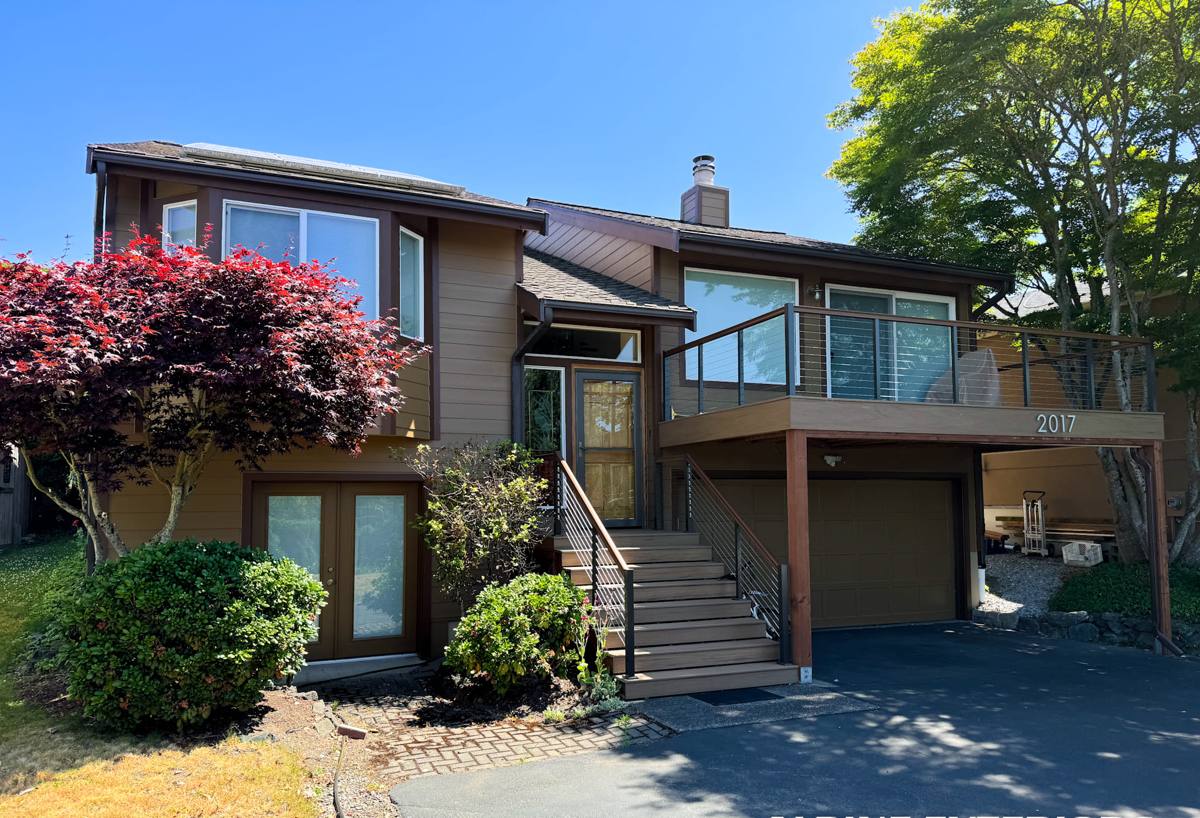
What a Correctly Installed Shingle Roof Needs Here
A roof built for Birch Bay isn't a different product line — it's the same asphalt shingle system done with more attention to the details that matter in this environment.
Underlayment That Can Handle Extra Moisture Exposure
We install synthetic underlayment as a full moisture barrier, not just a placeholder under the shingles, and we add self-adhered ice-and-water membrane at eaves, valleys, and any low-slope transitions — the spots where wind-driven rain and standing water are most likely to find a way in.
Flashing Done Right, Every Time
Chimneys, skylights, sidewalls, and roof-to-wall transitions are where most shingle roof leaks actually start, regardless of the shingle brand overhead. Corrosion-resistant flashing, properly lapped and sealed, matters more here than in a drier inland setting.
Ventilation That Matches the Climate
Balanced intake and exhaust ventilation keeps the attic and roof deck at a stable temperature and moisture level. In a damp coastal climate, poor ventilation traps moisture under the deck, which shows up later as premature shingle aging, sheathing rot, or mold — problems that have nothing to do with the shingles themselves but get blamed on them anyway.
Wind-Rated Installation
Every asphalt shingle has a manufacturer wind rating, but that rating only holds up if the nailing pattern and fastener count match the manufacturer's specification for the site's exposure. We install to the rating the shingle is actually built for, which matters more on an open, wind-exposed lot near the water than it does a few miles inland.
Signs a Birch Bay Roof Needs a Closer Look
Because coastal exposure hides some problems longer than it should, it helps to know what to watch for between inspections:
- Granules collecting in gutters or at downspout outlets
- Moss or dark green growth on shaded or north-facing slopes
- Shingle edges curling, cupping, or lifting
- Dark streaking across the roof surface
- Missing or torn shingles after a windstorm
- Rusty streaks near nail heads, vents, or flashing
- Soft spots or sagging when walked on
- Water stains on interior ceilings or in the attic
- Daylight visible through the roof deck from inside the attic
Any one of these on its own isn't necessarily an emergency, but ignoring several at once usually turns a repair into a full replacement.
Choosing the Right Shingle for a Coastal Whatcom County Home
Not every asphalt shingle is worth putting on a Birch Bay roof, and the differences aren't just about looks.
Algae-Resistant Granules
Given the moss and algae pressure in this area, we recommend shingles with algae-resistant (copper-infused) granules on most Birch Bay homes, especially on shaded slopes. It's a modest upgrade in material cost that meaningfully slows the growth that otherwise shortens shingle life.
Wind Rating
Standard shingles are rated for a range of wind speeds depending on their construction and how they're fastened. On open, water-exposed lots, we default to shingles and installation methods rated for the higher end of that range rather than the minimum.
| Shingle Type | Typical Lifespan | Wind Rating Range | Best Fit for Birch Bay |
|---|---|---|---|
| 3-tab (standard) | 15-20 years | Lower end of the range | Budget projects on sheltered lots |
| Architectural / laminate | 25-30 years | Mid to upper range | Most Birch Bay homes; better wind and moisture performance |
| Impact-resistant / premium laminate | 30+ years | Upper range | Exposed, waterfront, or high-wind-exposure lots |
We don't push the most expensive option on every roof — a well-installed mid-range architectural shingle with algae-resistant granules is the right call for most homes in this area. Where a lot is unusually exposed to wind off the water, we'll say so and explain why the upgrade is worth considering.
Repair, or Full Replacement?
Not every damaged or aging roof needs to come off. The honest answer depends on a few factors we walk through during an inspection rather than a fixed age or a sales script.
| Factor | Repair Often Makes Sense | Replacement Usually Makes Sense |
|---|---|---|
| Age | Under roughly 12-15 years | Approaching or past manufacturer's expected life |
| Damage extent | Isolated to one slope or a small area | Spread across multiple slopes |
| Underlying deck | Solid, no soft spots | Soft spots, rot, or repeated leak history |
| Granule loss | Light, localized | Widespread, shingles look bare |
| Moss/algae | Surface growth, treatable | Growth has lifted shingles or damaged the mat |
We'll always tell you when a repair is the right call, even if that means a smaller job. A roof that just needs a section of flashing redone or a handful of storm-damaged shingles replaced doesn't need a full tear-off.
Our Asphalt Shingle Roofing Process
- Inspection and honest assessment — we get on the roof (or use other means when conditions call for it), check the deck, flashing, ventilation, and shingle condition, and explain what we find in plain terms.
- Written scope and estimate — what's being replaced, what materials are specified, and what it costs, before any work starts.
- Tear-off and deck inspection — old roofing removed down to the deck so we can actually see the sheathing condition rather than guessing what's underneath.
- Deck repair as needed — any soft or damaged sheathing gets replaced before anything new goes down.
- Underlayment and flashing installation — synthetic underlayment plus ice-and-water membrane at vulnerable areas, new corrosion-resistant flashing throughout.
- Shingle installation to manufacturer and wind-rating specification — correct nailing pattern and fastener count for the site's exposure.
- Ventilation check — intake and exhaust confirmed to be balanced for the attic space.
- Cleanup and final walkthrough — magnetic sweep for stray fasteners, debris hauled off, and a final look at the finished roof together.
Keeping a New Roof Performing in This Climate
A correctly installed shingle roof in Birch Bay should need very little attention, but a little goes a long way given the local conditions.
Keep Gutters and Valleys Clear
Debris that dams water in a valley or at a gutter line is one of the more common causes of leaks that have nothing to do with the shingles' age.
Address Moss Early
Light moss growth is far easier to manage than moss that's had a season or two to establish itself under shingle edges. A soft wash or approved treatment on shaded slopes every year or two prevents most moss-related shingle damage before it starts.
Periodic Inspection
A quick check after major windstorms, and a more thorough look every couple of years, catches small issues — a lifted shingle, a cracked pipe boot — while they're still small.
Why Local Experience in Birch Bay Matters
A roofing crew that regularly works this stretch of Whatcom County coastline already knows which slopes tend to hold moss, how much wind exposure a given lot actually sees, and which flashing and fastener choices hold up here versus a drier, more sheltered part of the county. That's not something you get from a generic install checklist — it comes from doing the work here repeatedly and seeing what actually fails and what doesn't. It also means straightforward answers about permitting, realistic scheduling around this area's weather patterns, and being reachable afterward if a question comes up, rather than a crew that did one job in the area and moved on.
If you're dealing with an aging roof, storm damage, or just want an honest read on what your Birch Bay home's roof actually needs, we're glad to take a look. Estimates are free, there's no pressure to move forward, and you'll get a straight answer either way — use the form below to get started.