 Ferndale Siding
 Roof Replacement for Lummi Island's Marine Climate
Lummi Island sits out in the salt water of Whatcom County, and that changes what a roof has to deal with compared to a house a few miles inland in Ferndale or Bellingham. The air carries salt. The rain comes in sideways off the water more often than it falls straight down. And the shaded, damp conditions that build up under evergreen cover keep moss growing for a good chunk of the year. None of that is exotic or rare — it's just the baseline conditions any roof on the island has to survive, year after year. A roof replacement done right here accounts for all three from the start, instead of treating the island as just another stop on a mainland route.
This page covers roof replacement specifically — what island homes need from it, what a correct job actually includes, and how we handle the logistics of working on a place you can't just drive straight to.
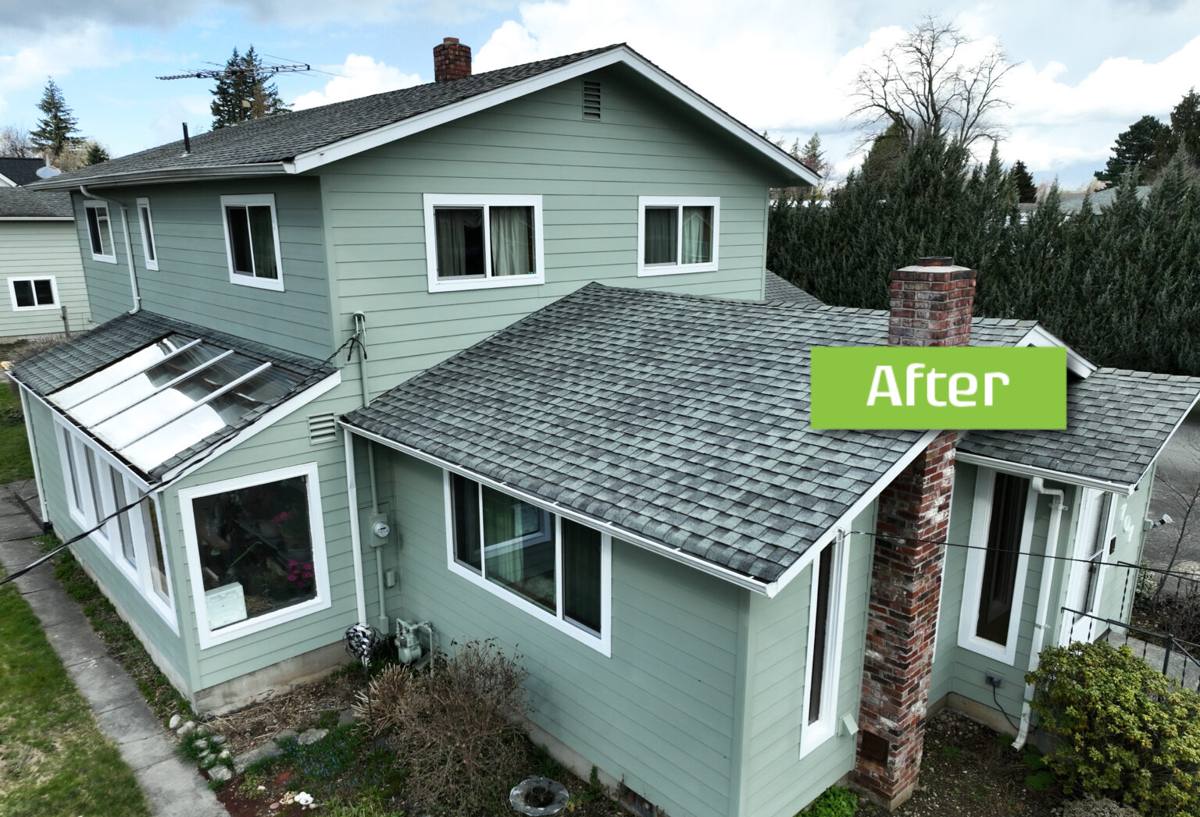
What Salt Air, Driving Rain, and Moss Actually Do to a Roof
Salt Air and Metal Corrosion
Airborne salt doesn't just affect boats and dock hardware — it settles on roofing metal too. Nails, flashing, drip edge, and any exposed fasteners are the first things to show it, usually as rust bleed streaks or early pitting well before the field of the roof looks worn. Cheap or under-spec fasteners and flashing are a common reason a roof on the water side of the island fails at the edges and penetrations long before the shingles themselves are actually worn out.
Wind-Driven Rain
An open water exposure means rain frequently arrives at an angle instead of falling straight down. That pushes water sideways under shingle tabs, into loose flashing laps, and up under ridge caps that would stay dry in a more sheltered inland yard. A roof built for average rainfall, without extra attention to lap direction, fastener count, and flashing overlap, is more likely to develop hidden leaks at valleys, chimneys, and skylights — the water finds the path of least resistance, and on an exposed roof that path is often sideways, not down.
Moss and a Long Wet Season
Tree cover, shade, and a long stretch of damp months give moss plenty of time to establish itself, especially on north-facing slopes and anywhere debris collects. Moss isn't just cosmetic — its root structure lifts shingle edges, holds moisture against the roof deck, and accelerates granule loss on asphalt shingles. A roof that's shed, cleaned, or treated regularly lasts appreciably longer than one that isn't, and the products and ventilation choices made during replacement affect how fast moss comes back afterward.
Signs a Roof Needs Replacing, Not Just Another Repair
Every roof reaches a point where patching stops making financial sense. On the island, we look for a specific set of signs, since the combination of salt exposure and moss can mask or accelerate normal wear:
- Granule loss heavy enough that you can see bare asphalt mat in multiple spots, not just one worn patch
- Soft or spongy decking felt underfoot in the attic or from a ladder inspection
- Rusted, cracked, or lifting flashing around chimneys, skylights, and roof-to-wall transitions
- Daylight visible through the roof deck from inside the attic
- Moss growth thick enough that shingle tabs are visibly lifted, not just discolored
- Multiple past repairs in different locations rather than one contained problem area
- Shingles curling, cupping, or cracking across a large portion of the roof rather than isolated spots
- Interior staining on ceilings or in the attic that reappears after repairs
One or two of these can often be repaired. Several at once, especially on a roof already past its expected service life, usually means replacement is the more honest recommendation — and the more cost-effective one over time.
What a Correct Roof Replacement Involves Here
A roof replacement is more than swapping old shingles for new ones. On an exposed, moss-prone, salt-air site, the details underneath the visible surface matter as much as the shingle itself.
Tear-Off and Deck Inspection
We remove the existing roofing down to the deck rather than layering over it. That's the only way to actually see the plywood or plank decking underneath, check for soft spots or rot from long-term moisture intrusion, and replace any damaged sections before new material goes down. Covering over a compromised deck just hides a problem that will resurface.
Underlayment and Water Barrier
Given the wind-driven rain exposure, we pay close attention to underlayment coverage and lap direction, with extra water barrier protection at eaves, valleys, and any low-slope transitions where wind-driven water is most likely to work its way underneath the shingle field.
Flashing Details
Flashing at chimneys, skylights, sidewalls, and valleys is where salt-air corrosion and wind-driven rain do the most damage over time. We use corrosion-resistant flashing material and proper step-and-counter flashing techniques at wall intersections rather than relying on sealant alone, since sealant is a maintenance item, not a permanent fix.
Ventilation
Balanced intake and exhaust ventilation keeps the attic dry and temperature-regulated, which reduces condensation buildup on the underside of the deck and helps shingles hold up longer in a damp climate. Poor ventilation is a quiet contributor to premature shingle failure and hidden deck rot that has nothing to do with the roofing material itself.
Fasteners and Metal Components
We use corrosion-resistant fasteners and metal components throughout, not just at the most visible points. On a standard inland roof this is a minor spec choice; on an island roof exposed to salt air, it's one of the bigger factors in how long the edges and penetrations last compared to the field of the roof.
Comparing Roofing Materials for an Island Property
There's no single "best" roofing material for every home — the right choice depends on budget, roof pitch, how much moss and salt exposure the specific site gets, and how the homeowner wants to handle long-term maintenance. Here's an honest comparison of the options most commonly considered for this area:
| Material | Salt-air durability | Moss resistance | Typical lifespan | Relative cost |
|---|---|---|---|---|
| Architectural asphalt shingle | Good, with proper corrosion-resistant fasteners/flashing | Moderate — benefits from algae/moss-resistant granules | 25–30 years | Lower |
| Standard 3-tab asphalt shingle | Fair — more sensitive to fastener/flashing quality | Lower — less granule reserve to resist moss root damage | 15–20 years | Lowest |
| Metal (standing seam) | Very good with correct coated/coastal-rated panels | Good — sheds moisture, harder for moss to root | 40–50+ years | Higher |
| Synthetic/composite shingle | Good — resists corrosion since it's not metal-fastener-dependent at the surface | Moderate to good depending on product | 30–50 years | Higher |
Our professional standard is to steer homeowners away from bargain-grade materials and generic fasteners on this kind of site — not because a product is inherently bad, but because the maintenance burden and early-failure risk that a marginal product carries gets magnified by salt air and a long moss season. That's a trade-off worth being upfront about before you commit to a material.
Our Roof Replacement Process
- On-site inspection — we walk the roof and attic, check the deck condition, flashing, and ventilation, and give you a straight assessment of repair versus replacement.
- Written estimate — material options, scope of work, and pricing laid out clearly, with no vague allowances.
- Scheduling around weather and access — we plan the job for a stretch of dry weather and account for island logistics (more on that below).
- Tear-off and deck repair — full removal of old roofing, deck inspected and repaired as needed before anything new goes down.
- Installation — underlayment, flashing, ventilation components, and the roofing material installed to manufacturer specification and local code.
- Cleanup and haul-off — old material and debris removed from the property, yard and gutters cleared.
- Final walkthrough — we go over the finished roof with you before considering the job done.
Working Around Ferry Access and Island Logistics
Lummi Island is reached only by a short ferry crossing, which means a roofing job here isn't run the same way as one on a mainland street in Ferndale. Crew, equipment, and material deliveries all have to be staged around ferry schedules and load limits, and dumpster or debris haul-off timing needs to be planned in advance rather than arranged last-minute. A crew that hasn't worked the island before can lose real time — and add real cost — just figuring this out on the fly. We build the ferry crossing and loading logistics into the schedule up front, so the job runs at the same pace it would on the mainland instead of getting stretched out by avoidable delays.
Weather timing matters more here too. Because the island sees more direct wind and rain exposure, we're more conservative about scheduling tear-off days for stretches of settled weather, since an open roof deck caught by a sudden squall off the water is a bigger risk on an exposed site than it would be somewhere more sheltered.
Why a Crew That Already Works Lummi Island Matters
Roofing crews that only occasionally take island jobs tend to underestimate two things: the logistics of getting there, and how much harder the local conditions are on materials and fasteners compared to a typical inland job. A crew that already knows the ferry schedule, has a system for staging material and debris haul-off, and specs fasteners and flashing for salt exposure as standard practice — not as an upsell — tends to deliver a roof that holds up better with fewer surprises. It also means fewer scheduling delays and a more accurate estimate from the start, since the logistics aren't being priced in blind.
Maintenance After Replacement
A new roof still needs some upkeep in this climate to reach its full expected lifespan. We recommend:
- Gutter cleaning at least twice a year, more often under heavy tree cover
- Periodic moss treatment or gentle removal, especially on shaded, north-facing slopes
- A visual check of flashing and fasteners every year or two, particularly after a rough winter
- Prompt attention to any interior staining or leak signs rather than waiting for the next dry season
- Keeping overhanging branches trimmed back to reduce shade, debris buildup, and physical wear on the roof surface
None of this is a heavy commitment, but skipping it is one of the more common reasons a roof underperforms its expected lifespan in a climate like this one.
What Affects the Cost of a Roof Replacement
Every roof is priced on its own specifics, but the factors that tend to move the number most on an island job are consistent:
| Cost factor | Why it matters |
|---|---|
| Roof size and pitch | More square footage and steeper pitches mean more material, labor, and safety setup |
| Number of existing layers | Tearing off multiple layers of old roofing takes more labor and disposal capacity than one layer |
| Deck condition | Rotted or soft decking sections need to be replaced before new roofing goes down |
| Material choice | Asphalt, metal, and synthetic/composite options carry different material and installation costs |
| Flashing and ventilation upgrades | Bringing older flashing or ventilation up to current standards adds labor but reduces future problems |
| Access and logistics | Ferry scheduling, staging, and debris haul-off add planning time compared to a straightforward mainland job |
We lay all of this out in the written estimate so there's no guessing about where the money is going.
Get a Straight Answer for Your Roof
If your roof is showing wear, you're weighing repair against replacement, or you just want an honest read on how much life it has left, we're glad to take a look. The estimate is free, there's no pressure attached to it, and you'll get a clear explanation of what we find — use the form below to get started.