 Ferndale Siding
 Custer's Roofs Fight a Different Battle Than Most of the Country
Custer sits in the stretch of Whatcom County between Ferndale and Blaine, close enough to the water that salt air is a daily fact of life, not an occasional nuisance. Combine that with the driving, wind-pushed rain that comes off the Strait during fall and winter storms, and a moss season that can run eight or nine months out of the year, and you get a roofing environment that's genuinely harder on asphalt shingles than what you'd find twenty miles inland. We work on roofs in this area regularly, and the failure patterns we see are consistent — they're not random bad luck, they're what this climate does to a roof that wasn't detailed for it.
This page is specifically about asphalt shingle roofing for Custer properties. If you're comparing materials or just want the general basics, that's a broader conversation — here we're focused on what actually matters for a shingle roof going on a house in this particular pocket of the county.
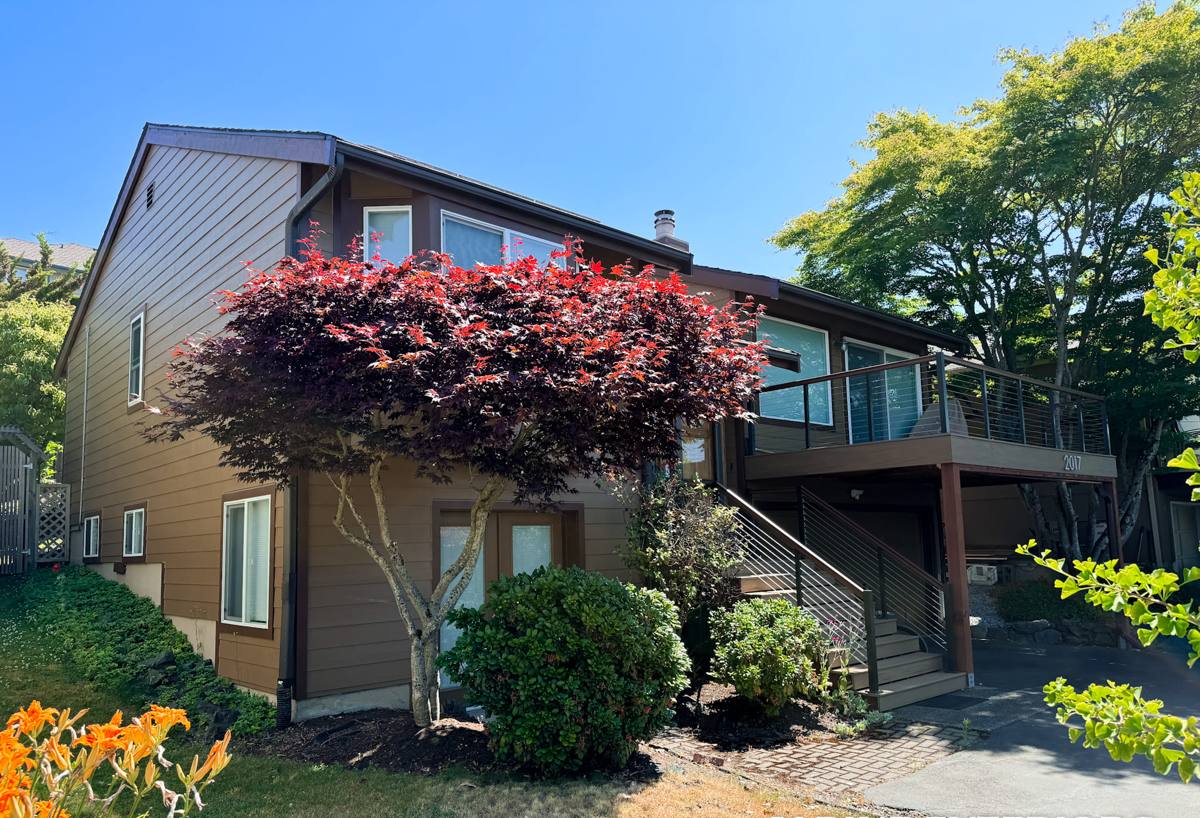
What Salt Air, Rain, and Moss Actually Do to a Shingle Roof
Salt Air
Airborne salt doesn't rot asphalt shingles directly, but it accelerates corrosion on every metal component of the roof system — nails, flashing, drip edge, vent stacks, and any exposed fasteners. A roof detailed with standard hardware in a coastal-adjacent area like Custer will show rust streaks and fastener failure well before the shingles themselves are worn out. The fix isn't complicated, but it does mean using corrosion-resistant materials from the start rather than whatever's cheapest at the yard.
Driving Rain
Whatcom County storms rarely fall straight down. Wind-driven rain gets pushed sideways and upward under shingle tabs, into valleys, and around penetrations — anywhere the install relies on gravity alone instead of a sealed, layered water path. This is why underlayment choice and flashing detail matter more here than in drier, calmer climates.
Long Moss Season
Shade, moisture, and mild temperatures are exactly what moss wants, and Custer offers all three for most of the year. Moss holds water against the shingle surface, lifts tabs as it grows, and works its way under the granule layer. Left unaddressed, it shortens shingle life significantly and can trap enough moisture to cause deck rot underneath.
What a Correctly Installed Roof Needs in This Climate
A shingle roof built for Custer isn't a different product than one built for eastern Washington — it's the same materials installed with different priorities. The details that matter most here:
- Synthetic or high-quality underlayment as full secondary water protection, not just a formality under the shingles
- Ice-and-water shield membrane at eaves, valleys, and around all penetrations, since these are the spots wind-driven rain exploits first
- Stainless or hot-dip galvanized fasteners and flashing to resist salt-air corrosion, rather than standard mill-finish hardware
- Balanced intake and exhaust ventilation so the attic doesn't trap moisture that condenses under a cold, damp roof deck
- Zinc or copper strips near the ridge where moss growth is worst, giving the roof ongoing, low-effort moss suppression
- Properly lapped and sealed valley and step flashing, since valleys are where most storm-driven leaks actually originate
None of this is exotic. It's standard trade knowledge applied consistently, which is exactly the part that gets skipped when a crew is moving fast or unfamiliar with how this specific climate behaves.
Signs Your Custer Roof Needs Attention
Most shingle roof failures out here don't start as a dramatic leak — they start small and get ignored because the symptoms look cosmetic. Worth checking for:
- Dark streaking or green-black patches on north-facing or shaded slopes (early moss and algae growth)
- Granules collecting in gutters or at downspout outlets
- Curling, cupping, or lifted shingle tabs, especially on the roof's windward side
- Rust staining running down from nail heads, flashing, or vent stacks
- Soft or spongy spots when walked on, which can indicate deck moisture underneath
- Daylight visible through the attic at eaves, ridges, or penetrations
- Missing or lifted shingles after a windstorm, even if no leak has shown up yet
Any one of these on its own might be minor. Two or three together usually means it's time for an inspection before the next round of storms turns a maintenance item into a repair bill.
Choosing the Right Shingle for Coastal Whatcom County
Not every asphalt shingle product performs the same way in a wet, salty, moss-prone climate. The three-tab economy shingle still shows up on a lot of older Custer homes, but it's the least tolerant of wind uplift and the fastest to show algae staining. Here's how the common tiers compare for this specific environment:
| Shingle Type | Wind Resistance | Algae/Moss Resistance | Typical Lifespan Here |
|---|---|---|---|
| 3-Tab Economy | Lower (60–70 mph rated) | Standard granules only | 12–18 years |
| Architectural / Laminate | Good (110–130 mph rated) | Often available with algae-resistant granules | 20–25 years |
| Premium Laminate | Best (up to 150 mph rated) | Algae-resistant granules standard on most lines | 25–30+ years |
For most Custer homes, we recommend an architectural shingle with algae-resistant (copper-infused) granules as the practical minimum. The upcharge over economy shingles is modest, and the payoff in reduced moss staining and longer real-world lifespan is significant given how much of the year this area stays damp.
Our Installation Process
1. On-Site Assessment
We start by getting on the roof, not just estimating from the ground. We check deck condition, existing ventilation, flashing points, and how the roof's orientation and tree cover set it up for moss and moisture.
2. Tear-Off and Deck Inspection
Old roofing comes off down to the deck so we can actually see what's underneath — soft spots, old leaks, or rot that a re-roof over top of would just seal in.
3. Deck Repair
Any compromised sheathing gets replaced before anything new goes down. Skipping this step is the single most common shortcut that leads to early roof failure.
4. Underlayment and Membrane
Synthetic underlayment across the field, with ice-and-water membrane at eaves, valleys, and penetrations — the layer that actually stops wind-driven rain from becoming an interior leak.
5. Flashing and Metal Work
Corrosion-resistant flashing at every valley, wall intersection, and penetration, plus new drip edge where the old material has started to rust or pull away.
6. Shingle Installation
Shingles installed to manufacturer nailing pattern and exposure specs, which matters more than people assume — improper nailing is a leading cause of wind-related shingle loss.
7. Ventilation Check
We confirm intake and exhaust are balanced so the new roof isn't fighting trapped attic moisture from day one.
8. Final Walkthrough
We walk the finished roof and the site cleanup with the homeowner before calling the job done.
Ventilation and Attic Moisture: The Part Most Homeowners Never See
A shingle roof doesn't fail in isolation — it fails as part of a system that includes the attic underneath it. In a climate like Custer's, an attic that's poorly ventilated traps warm, moist air against a roof deck that's already cold and damp from the outside. That combination causes condensation on the underside of the sheathing, which over time leads to rot, mold, and reduced shingle life from the inside out — often long before anything looks wrong from the ground. Balanced ventilation, meaning enough intake at the eaves and exhaust at the ridge, keeps air moving through the attic space so it doesn't become a moisture trap. This is a detail that's invisible in a photo of a finished roof but has a direct effect on how many years you actually get out of it.
Maintenance That Actually Extends Roof Life Here
A well-installed roof still needs upkeep in this climate — the moss season alone makes that unavoidable. A practical maintenance routine:
- Clear gutters and downspouts at least twice a year, more often under overhanging trees
- Have moss physically removed (not just chemically treated) before it works under the shingle tabs
- Trim back branches that keep a section of roof shaded and slow to dry
- Check zinc or copper strips periodically — they lose effectiveness over time and can be renewed
- After major windstorms, do a visual check for lifted or missing shingles rather than waiting for a leak to show up inside
- Schedule a professional inspection every few years, even with no visible problems
What Drives the Cost of a Custer Re-Roof
| Factor | Why It Matters Here |
|---|---|
| Roof pitch and complexity | Steeper or multi-plane roofs take longer to tear off, flash, and install safely |
| Existing deck condition | Rot from years of moisture exposure means more sheathing replacement |
| Shingle tier chosen | Algae-resistant and premium laminate shingles cost more upfront but last longer in this climate |
| Access and site conditions | Tree cover, driveway access, and staging space affect labor time |
| Ventilation upgrades needed | Older homes often need intake or exhaust vents added or corrected |
| Layers of existing roofing | Multiple old layers add tear-off time and disposal cost |
We give straight, itemized estimates rather than a single vague number, so you can see exactly what you're paying for and where the money's going.
Why Hiring a Crew That Already Works Custer Matters
A roofing crew that's worked around Ferndale and Custer regularly already knows which details this climate punishes if you skip them — the corrosion-resistant fasteners, the extra membrane at valleys, the ventilation balance. That's the difference between a roof that's technically installed and one that's actually built for where it sits. We're a Ferndale-based crew, and this part of Whatcom County — including Custer — is our regular service area, not an occasional trip. That means we're not guessing at what the salt air and rain do to a roof out here; we see it, and we build around it.
If you're weighing a repair against a full replacement, or just want an honest read on where your current roof stands, we're happy to take a look. Reach out for a free, no-pressure estimate using the form below.