 Ferndale Siding
 Deck Repair Built for Sudden Valley's Climate
A deck in Sudden Valley works harder than it looks. Sitting near Lake Whatcom, homes here get shaded, damp mornings for a good chunk of the year, long stretches of driving rain off and on from fall through spring, and a moss season that can run six months or more depending on how much sun a given deck actually sees. Add in the marine-influenced air that moves through Whatcom County off the Sound, and you've got a climate that's genuinely tough on exterior wood and fasteners — even when a deck looks fine from a distance.
We're a Ferndale-based siding and exterior crew that also handles deck repair, and Sudden Valley is part of our regular service area. That matters more than it sounds like it should. A deck built or repaired without accounting for this specific microclimate — heavy shade pockets, slow-drying lumber, moss that traps moisture against the boards — tends to fail again in the same spots within a few years. Ours are built to hold up to what actually happens here, not to a generic set of specs.
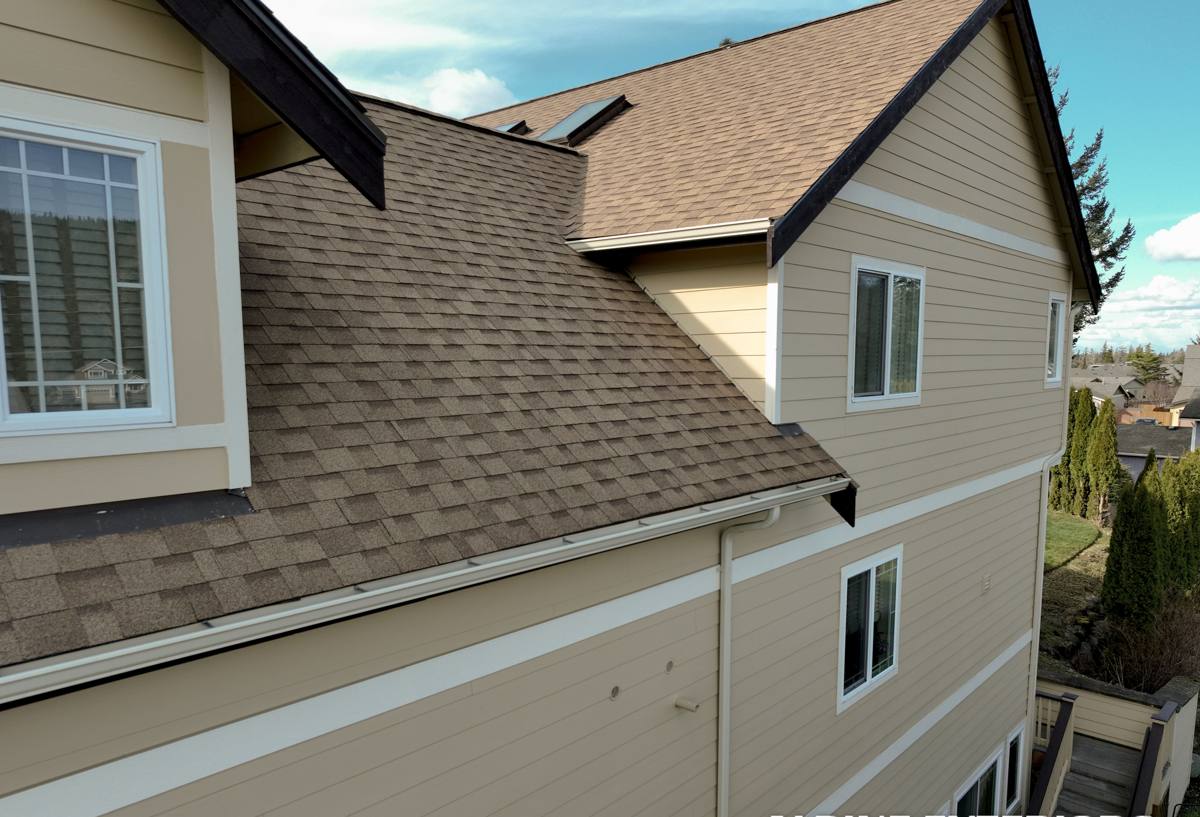
What This Climate Does to a Deck Over Time
Moisture That Doesn't Leave
Decks near the lake, under tree cover, or on the shaded side of a house dry out slower than decks in open sun. That extra drying time is exactly what wood rot and mold need. Water sits in the joints between boards, soaks into end grain, and works its way into any spot where the finish has worn thin.
Moss as a Moisture Trap
Moss isn't just cosmetic. Once it establishes on decking or on a shaded substructure, it holds water against the wood constantly, long after the surrounding surface has dried. A board that looks merely dirty under a moss patch is very often soft or delaminating underneath once you scrape it back.
Fastener and Hardware Corrosion
Screws, nails, joist hangers, and post bases that aren't rated for wet, marine-influenced exposure corrode faster here than they would in a drier inland climate. Corroding fasteners lose their grip long before the wood around them looks obviously damaged, which is why a deck can feel "loose" before anything looks visibly wrong.
Freeze and Thaw Cycling
Whatcom County doesn't get brutal winters, but it gets enough freeze-thaw swings to open up small cracks in wood and concrete footings that started as hairline damage. Water gets into a crack, freezes, expands it a little, and repeats — a slow process that turns a minor issue into a structural one over a few seasons.
Signs Your Deck Needs Attention
Most deck failures don't happen suddenly — they show warning signs for a season or two first. Worth checking for, especially before hosting anyone or letting kids run around on it:
- Boards that feel spongy, bouncy, or noticeably softer underfoot in one area
- Railings or posts that wiggle or flex when you push on them
- Visible gaps opening up where the deck ledger meets the house
- Rust streaks bleeding out from screw heads or joist hangers
- Moss or dark staining that keeps coming back in the same spots after cleaning
- Stair stringers that feel less solid than the rest of the deck
- Any daylight or gapping visible between deck boards and the framing below
- A musty smell coming from underneath the deck, especially after rain
Any one of these on its own might be minor. Two or three together, especially involving the ledger board or the posts, usually means it's time for a proper inspection rather than a wait-and-see approach.
Common Problems We Find on Sudden Valley Decks
Ledger Board and Flashing Failures
The ledger board — where the deck attaches to the house — is the single most safety-critical connection on most decks, and it's also the spot most likely to have hidden water damage. Older decks in this region were often built without proper flashing between the ledger and the house wall, which lets water track behind the board for years without any visible sign until the wood underneath is compromised.
Post Bases and Footings
Wood posts set directly in or near soil, or sitting on footings without proper standoff hardware, absorb ground moisture from below in addition to rain from above. This is one of the more common places we find rot that isn't visible from a casual look at the deck.
Decking Boards
Cupping, splitting, and soft spots concentrate in shaded areas and around fastener holes, where water collects and the finish wears through fastest.
Railings and Guards
Loose railing posts are a safety issue, not just a cosmetic one. On older decks the posts are sometimes attached in ways that don't meet current code, which we flag even when the fix is outside the original scope of the repair.
Repair or Replace? How We Actually Decide
Not every damaged deck needs to be torn out. The honest answer depends on how much of the structure — versus just the surface — is affected. Here's the general framework we use when we're out looking at a deck:
| Condition Found | Usually Means | Typical Approach |
|---|---|---|
| Surface graying, minor cupping, worn finish | Weathering, no structural loss | Clean, sand/repair as needed, refinish |
| A few soft or split boards, rest of deck solid | Localized board failure | Spot replace decking boards |
| Soft ledger board or missing/failed flashing | Structural moisture intrusion at the house connection | Ledger repair or rebuild with proper flashing |
| Rotted post bases, footings intact | Localized structural failure | Post and hardware replacement |
| Widespread rot across framing and decking | Structure has aged out | Full or substantial rebuild |
| Deck under 10 years old with isolated issues | Usually a build or flashing defect, not general aging | Targeted repair, address root cause |
Age alone isn't the deciding factor — a 20-year-old deck built with good flashing and drainage can be in better shape than a 6-year-old deck that trapped water from day one. We look at the framing, not just the calendar.
How Our Deck Repair Process Works
- On-site inspection. We check the decking surface, but also get underneath to look at joists, ledger, posts, and footings — that's where the real answers usually are.
- Probe testing. We test suspect wood with an awl or screwdriver rather than guessing from appearance, since rot often runs deeper than the surface shows.
- Written scope and honest options. We tell you what's structural and needs attention versus what's cosmetic and can wait, so you're not paying to fix something that isn't actually a problem yet.
- Repair with proper flashing and hardware. Any ledger or framing work gets correct flashing and corrosion-resistant fasteners rated for wet exposure — not just a like-for-like patch.
- Final check for level, secure railings, and drainage. A deck that sheds water properly is a deck that doesn't need the same repair again in three years.
Materials: What We Use and Why
Material choice matters more on a deck exposed to this much moisture than it does almost anywhere else on a house. A few of the trade-offs we walk homeowners through:
Pressure-Treated Framing
For structural framing — joists, ledger, posts — we use pressure-treated lumber rated for ground contact where applicable, paired with fasteners and hardware specifically rated for treated wood, since standard fasteners corrode fast in contact with modern treatment chemicals.
Decking Surface: Wood vs. Composite
Both have a place. Wood decking is more affordable up front and can be refinished, but it needs regular cleaning and sealing to hold up to this climate's moss and moisture. Composite costs more initially and doesn't need refinishing, but it still needs proper drainage and airflow underneath — composite over poor framing just hides a moisture problem instead of fixing it. We'll give you a straight opinion on which fits your deck and your maintenance appetite, not a sales pitch for whichever we'd rather install.
Flashing and Fasteners
This is where a lot of deck failures actually start, and it's the least visible part of the job. Proper ledger flashing and corrosion-rated fasteners cost more than the shortcuts, but they're the difference between a repair that lasts and one you're paying for again in five years.
Keeping a Deck Healthy Between Repairs
A little seasonal upkeep goes a long way in a climate like this:
- Sweep leaves and debris out of board gaps regularly — trapped organic matter holds moisture and feeds moss
- Clean moss and algae off the surface before it spreads, rather than after
- Keep gutters and downspouts near the deck clear so runoff isn't draining directly onto or under it
- Check railings and stair posts for movement once or twice a year
- Re-seal or re-stain wood decking on the schedule the finish manufacturer recommends for this climate, not a generic interval
Why It Matters to Hire a Crew That Already Works This Area
Deck repair advice that works in a dry inland climate doesn't automatically work in Whatcom County. A crew that regularly works Sudden Valley and the surrounding Ferndale area already knows which details — ledger flashing, hardware selection, drainage under the decking — actually matter here, because they're the ones that fail first in this climate when they're skipped. That's not a marketing point, it's just what repeat exposure to the same weather teaches a crew over time.
If you've got a deck showing any of the signs above, or you just want an honest read on where it stands, we're glad to take a look. Reach out for a free, no-pressure estimate using the form below.