 Ferndale Siding
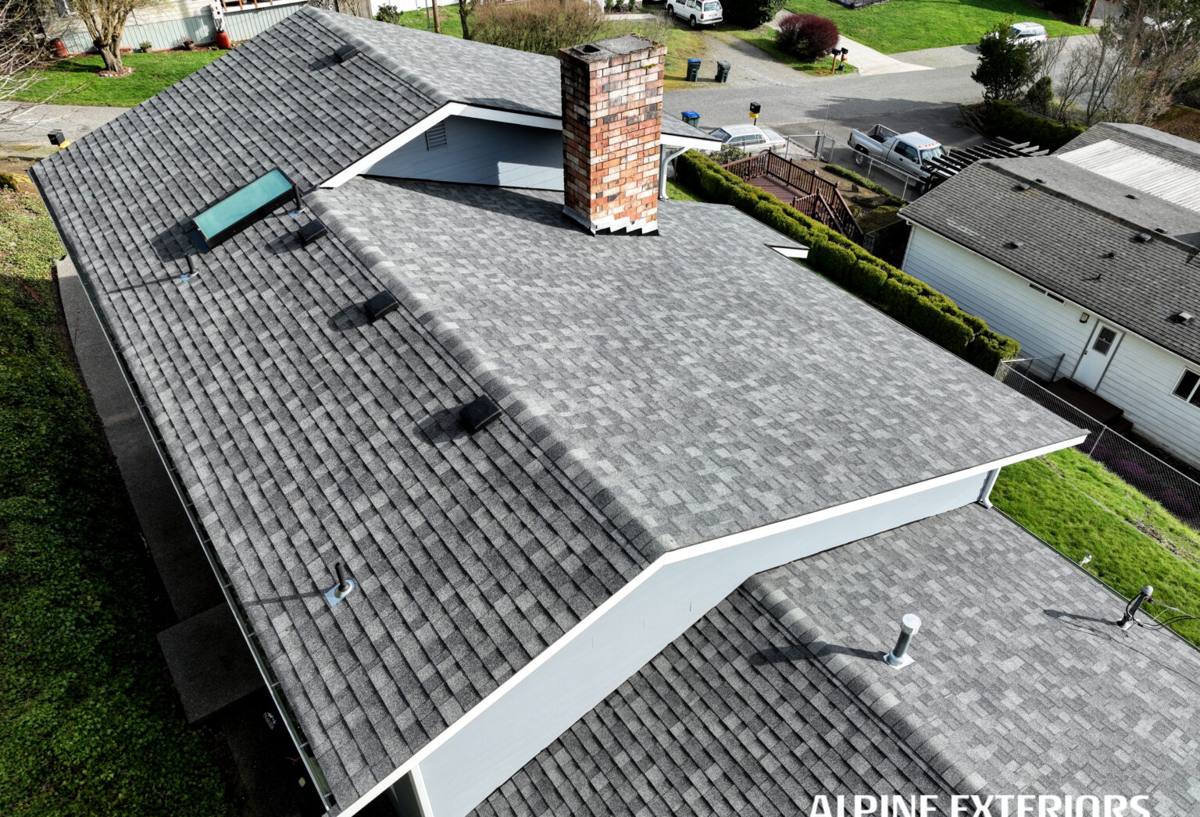
 Asphalt Shingle Roofing Built for Semiahmoo's Coastline
Semiahmoo sits right up against the water, and that changes what a roof has to deal with compared to a home a few miles inland in Ferndale or elsewhere in Whatcom County. Salt-laden air, wind-driven rain off the bay, and a long wet season that lets moss and moisture sit on a roof for months at a time all work against ordinary shingle installations. An asphalt shingle roof can absolutely hold up here for decades, but only if it's specified and installed with those conditions in mind from the start. That's the difference between a roof that needs attention every couple of years and one you can forget about.
We work asphalt shingle roofs throughout the Semiahmoo area regularly, and most of what we see go wrong isn't the shingle brand — it's shortcuts in the details underneath and around it: underlayment choices, flashing, ventilation, and fastening that weren't matched to a marine environment.
Why Semiahmoo's Climate Is Harder on a Roof Than It Looks
Salt Air and Metal Components
Salt air accelerates corrosion on any exposed metal — nails, flashing, vents, and drip edge. Standard electro-galvanized fasteners can start showing rust streaks on shingles years before the shingles themselves are due for replacement. That staining isn't just cosmetic; it's often a sign the fastener underneath is degrading faster than it should.
Driving Rain and Wind Exposure
Water near the water isn't just falling straight down. Wind off the bay pushes rain sideways and up under shingle tabs and along ridge lines, which is exactly the kind of exposure that finds weak seals, under-lapped courses, and thin underlayment. A shingle roof rated for a calmer inland lot can still leak here if the install didn't account for wind-driven moisture at edges, valleys, and penetrations.
Moss Season and Moisture Retention
Whatcom County's wet season runs long, and shaded or north-facing slopes in Semiahmoo can stay damp for weeks between dry spells. That's ideal moss and algae territory. Moss holds water against the shingle surface, works its way under tabs as it grows, and can lift shingles enough to let water in — long before the shingles themselves have worn out.
What a Correctly Installed Shingle Roof Needs Here
- Corrosion-resistant fasteners and flashing (stainless or heavy-coated) instead of standard galvanized, especially within the first few hundred feet of open water
- Fully-adhered, high-quality synthetic or ice-and-water underlayment at eaves, valleys, and around all penetrations — not just where code requires it
- Proper attic and roof ventilation so moisture from inside the home doesn't add to what's already coming from outside
- Wider nailing patterns and correct fastener placement to meet wind exposure, not just minimum manufacturer spec
- Metal step and counter-flashing at every wall intersection, chimney, and skylight — sealant alone doesn't hold up long-term in this exposure
- A shingle product rated for higher wind and algae resistance, not the base-grade option
Choosing the Right Shingle for a Waterfront-Adjacent Property
Not every asphalt shingle line is built the same, and for a Semiahmoo home the differences matter more than they would a few miles inland. We generally steer homeowners toward architectural (laminated) shingles over basic three-tab for anything with real wind and moisture exposure — the extra layer and adhesive pattern give better wind uplift resistance and a longer service life in wet, breezy conditions.
Algae and Moss Resistance
Many manufacturers now offer shingles with copper or ceramic granules built in specifically to resist algae growth, which also helps slow moss colonization. Given how long moss season runs here, this is one upgrade that pays for itself in reduced maintenance rather than curb appeal alone.
Wind Rating
Check the shingle's rated wind speed, not just its warranty length. A shingle with a higher wind rating and the correct fastening pattern is the actual defense against blow-off in an exposed location — the brand name on the wrapper matters far less than the rating and how it's installed.
| Factor | Standard 3-Tab Shingle | Architectural Shingle (Coastal-Rated) |
|---|---|---|
| Typical wind rating | 60-70 mph | 110-130 mph |
| Algae/moss resistant granules | Sometimes available | Commonly available |
| Expected lifespan in marine exposure | 12-18 years | 20-30 years |
| Upfront material cost | Lower | Moderately higher |
| Long-term maintenance need | Higher | Lower |
Our Process for a Semiahmoo Roofing Job
1. On-Site Assessment
We walk the roof and attic, not just look at it from the ground. That means checking existing ventilation, decking condition, flashing at every wall and penetration, and any signs of moss, algae, or trapped moisture that point to a bigger problem than surface wear.
2. Honest Scope and Estimate
You get a written scope that spells out underlayment type, flashing approach, fastener spec, and shingle product — not just a total price. If your roof only needs targeted repair rather than a full tear-off, we'll say so.
3. Tear-Off and Deck Inspection
Full replacements include stripping to the deck so we can check for soft spots, rot, or prior water damage that's invisible from above. Any damaged decking gets replaced before a single new shingle goes down — covering over bad decking is how roofs fail early.
4. Underlayment, Flashing, and Ventilation First
This is where a coastal roof earns its lifespan. We install upgraded underlayment at vulnerable areas, correct any flashing that was undersized or sealant-dependent, and confirm intake and exhaust ventilation are balanced before shingles go on.
5. Shingle Installation to Spec
Shingles go down with the fastening pattern and exposure appropriate for wind-driven rain conditions, not a generic inland layout.
6. Final Walkthrough
We review the finished roof with you, including what maintenance (if any) it'll need going forward and what to watch for seasonally.
Maintenance That Actually Matters in a Salt-Air, High-Moss Environment
- Have gutters and downspouts cleared before the wet season builds up — clogged gutters back water up under the shingle edge
- Have moss physically removed rather than just treated, since chemical treatments alone don't stop it from lifting shingles as it grows
- Check flashing around chimneys, skylights, and wall intersections annually — these are the first places salt-air corrosion shows up
- Watch for granule loss in gutters, which signals the shingle surface is wearing faster than expected
- Keep an eye on attic ventilation — blocked vents trap moisture that accelerates deck and shingle deterioration from underneath
Why It Matters to Hire a Crew That Already Works Semiahmoo
A roofing crew that mostly works drier, inland jobs will often use the same underlayment, flashing, and fastening spec everywhere, because it's what passes code and satisfies most manufacturer warranties. That's not wrong for most of Whatcom County, but it under-builds a roof that's going to take direct salt air and wind-driven rain for years. Crews familiar with Semiahmoo and similar waterfront-adjacent Ferndale-area properties already know to upgrade flashing hardware, push for algae-resistant shingles, and pay closer attention to ventilation balance without being asked — because they've seen what happens when those details get skipped.
It also matters for warranty claims. Manufacturers can and do deny coverage when installation didn't match their specification for wind zone or ventilation. A crew that installs to the correct standard the first time protects both the roof and the paperwork behind it.
What to Ask Before Hiring for a Coastal Re-Roof
- What underlayment do you use at eaves, valleys, and penetrations, and is it upgraded for wind-driven rain?
- What fastener and flashing material do you use, and is it corrosion-resistant for salt-air exposure?
- Will you inspect and, if needed, replace roof decking, not just install over it?
- Is attic ventilation part of the scope, or only the shingle layer?
- What shingle wind rating and algae resistance level are included in the quote?
- Is the estimate itemized so you can see what's driving the cost?
Cost Factors for a Semiahmoo Shingle Roof
Pricing depends on roof size and pitch, current decking condition, how much flashing and ventilation work is needed, and which shingle line you choose. A roof with straightforward access and sound decking will cost less than one requiring deck replacement, complex flashing at multiple walls, or a steep, hard-to-access pitch. We don't publish blanket per-square pricing because those variables genuinely change the number — but we'll walk you through exactly what's driving your specific estimate before any work starts.
If you're weighing a repair, a full replacement, or just want a straight answer on what your roof actually needs, we're happy to take a look. Request a free, no-pressure estimate using the form below and we'll get back to you with honest options for your Semiahmoo home.