 Ferndale Siding
 Fiber Cement Siding for Bellingham Homes
Bellingham sits in a tough spot for exterior siding. You've got Bellingham Bay pushing salt-laden air inland, storms rolling off the Strait of Georgia that drive rain sideways into wall assemblies, and a wet season that stretches long enough to give moss and algae months to take hold on anything that stays damp. A siding product that works fine in a dry inland climate can struggle here. That's the reason we install James Hardie fiber cement siding exclusively, and it's why we want Bellingham homeowners to understand what their siding is actually up against before they pick a product or a contractor.
This page focuses on one service, in one area: fiber cement siding installed correctly for Bellingham conditions. Not a general siding overview, not a sales pitch — just what your home needs and what a proper installation looks like.
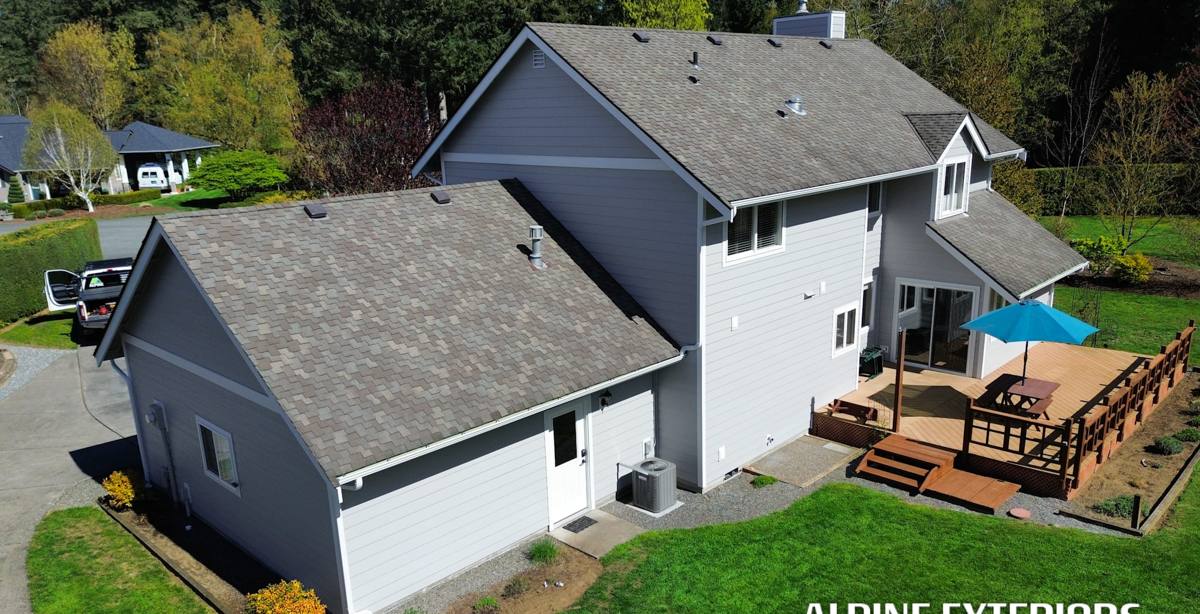
What Bellingham's Climate Does to Siding
Salt Air and Corrosion
Homes closer to the bay deal with airborne salt that accelerates corrosion on fasteners, flashing, and any metal trim components. Over years, this can undermine even well-installed siding if the wrong materials were used underneath it. Fiber cement itself doesn't corrode — it's a cement, sand, and cellulose fiber composite — but the fasteners and flashing details around it matter just as much as the panel itself.
Driving Rain and Wind-Driven Moisture
Storms coming off the water don't just drop rain straight down — they push it horizontally into wall surfaces, seams, and penetrations (hose bibs, light fixtures, vents). Siding that isn't installed with the right laps, gaps, and flashing will let that moisture find a way behind the cladding, where it can sit against sheathing and framing for weeks at a time in our wet season.
Moss, Algae, and a Long Wet Season
Whatcom County's wet months run long, and north-facing or shaded wall sections that don't get much sun exposure can stay damp for extended stretches. That's exactly the environment moss and algae like. Siding material that absorbs moisture gives organic growth something to root into over time; siding that resists moisture penetration gives it far less to work with.
Why We Install Only James Hardie Fiber Cement
We made a decision a long time ago to standardize on one product system rather than offer a menu of siding materials. James Hardie fiber cement is engineered specifically for the kind of moisture cycling and coastal exposure Bellingham gets every year. A few things about it matter directly for this climate:
- Non-combustible core — cement-based, not wood or vinyl, so it doesn't feed a fire the way some alternative claddings can.
- HZ5 and HZ10 product engineering — Hardie makes climate-specific formulations designed for high-moisture, freeze-cycle regions; the Pacific Northwest falls into that engineering category.
- ColorPlus factory finish — a baked-on finish applied under controlled conditions, which holds up better against UV and moisture than field-applied paint and reduces how often repainting is needed.
- Dimensional stability — fiber cement doesn't swell, warp, or rot the way wood-based products can when they take on repeated moisture.
- A strong transferable warranty — meaningful if you sell the home, since siding age and condition come up in every inspection.
We don't install LP SmartSide, vinyl, Cemplank, Allura, or bare cedar or primed spruce. Some of those products have real strengths in the right application, but none of them match fiber cement's moisture behavior and longevity profile for a bay-adjacent, high-rainfall climate, and we'd rather stand behind one system we trust completely than offer options we wouldn't put on our own homes.
What a Correct Installation Involves in This Climate
Fiber cement siding is only as good as the installation behind it. This is where most siding problems in this region actually originate — not from the panel material, but from shortcuts taken underneath it.
Weather-Resistive Barrier and Drainage Plane
Every installation starts with a proper weather-resistive barrier over the sheathing, with all seams and penetrations sealed. In a driving-rain climate, we also build in a drainage plane — a small gap behind the siding — so any moisture that does get past the cladding has somewhere to go instead of sitting against the wall.
Flashing at Every Penetration
Windows, doors, hose bibs, light fixtures, vents — every single penetration through the siding is a potential entry point for wind-driven rain. Correct flashing, installed in the right sequence (integrated with the weather barrier, not just caulked over the top), is non-negotiable in a climate like ours.
Fastener Selection
Given the salt exposure near the bay, fastener corrosion resistance matters more here than in inland areas. We use fasteners rated for the exposure the specific wall will see, and we follow Hardie's fastening specifications exactly — spacing, embedment, and placement all affect how the siding performs over decades, not just how it looks on install day.
Clearances and Ground Contact
Fiber cement should never sit directly on grade, decking, or roofing — Hardie specifies minimum clearances for a reason. In a wet climate, siding installed too close to the ground or a roof line wicks moisture and stays damp far longer than it should, which is exactly the condition that invites moss and mildew.
Caulking and Joint Treatment
Joints and butt seams get sealed with the right sealant, applied correctly, not just run along a visible gap. Poor joint treatment is one of the most common failure points we see on siding that wasn't installed to spec, and it's usually invisible until moisture damage shows up years later.
Our Process for Bellingham Projects
| Step | What Happens |
|---|---|
| Site walk and assessment | We look at wall exposure, sun/shade patterns, existing moisture damage, and any problem areas specific to the property. |
| Product and color selection | We help you choose the right Hardie line and ColorPlus finish for the home's exposure and your preferences. |
| Tear-off and sheathing check | Old siding comes off and we inspect sheathing for hidden moisture damage before anything new goes up. |
| Weather barrier and drainage plane install | Proper barrier, sealed seams, and a drainage gap built in for this climate. |
| Flashing and trim | Every penetration and transition flashed correctly before siding panels go on. |
| Siding installation | Panels installed to Hardie's fastening and clearance specifications. |
| Final walkthrough | We review the completed job with you and cover care and maintenance basics. |
Cost Factors for Bellingham Homes
Every home is different, so we won't quote a number without seeing the property, but these are the factors that typically move a fiber cement project's cost up or down:
| Factor | Why It Matters |
|---|---|
| Home size and wall complexity | More corners, gables, and dormers mean more cutting, flashing, and labor time. |
| Existing siding condition | If sheathing needs repair from prior moisture damage, that adds scope before new siding goes up. |
| Siding profile and Hardie line selected | Lap width, shingle-style panels, and trim details all affect material and labor cost. |
| Trim and accent work | Fascia, soffit, and trim board scope adds to the overall project. |
| Access and site conditions | Steep lots, tight setbacks, or limited staging area can affect labor time. |
Maintenance in a Wet, Salty Climate
Fiber cement is low-maintenance compared to wood or vinyl, but "low-maintenance" doesn't mean "no maintenance" — especially here. A few habits go a long way:
- Rinse siding periodically to clear salt residue and organic buildup, particularly on shaded or north-facing walls.
- Keep gutters clear so overflow doesn't run down the siding face repeatedly.
- Trim back vegetation and tree cover that keeps wall sections shaded and damp.
- Inspect caulking at joints and trim every year or two, and have any cracked sealant redone before wet season.
- Address any moss or algae growth early with a gentle wash rather than letting it establish.
Why Hire a Crew That Already Works This Area
Installation details that are optional in a dry climate are mandatory here. A crew that mostly works inland or in milder conditions may not think twice about drainage planes, fastener corrosion resistance, or flashing sequencing at every penetration — and on a Bellingham or Ferndale home, those are exactly the details that determine whether the siding lasts twenty years or needs rework in five. We work Whatcom County regularly, we know which wall orientations in this area take the worst weather, and we install to the same standard on every job because we've seen what happens when someone doesn't.
If you're weighing a siding replacement or new construction siding for a home in the Bellingham area, we're happy to walk the property, look at what your walls are actually facing, and give you a straightforward, no-pressure estimate using the form below.