 Ferndale Siding
 Window Replacement for Bellingham Homes, Done by a Crew That Works Here Every Week
If you own a home in or around Bellingham, you already know what the marine layer does to a house over time. Salt-tinged air rolling in off Bellingham Bay, driving rain that comes in sideways more often than straight down, and a moss season that seems to stretch longer every year — all of it works on your windows whether you notice it or not. We're a Ferndale-based crew, and Bellingham is part of our regular service area, not a once-in-a-while drive. That matters for window replacement specifically, because the right approach here isn't identical to what a contractor in a drier inland climate would recommend.
This page is about one job: replacing windows on Bellingham homes, done right for this climate. Not a general overview of window brands, not a sales pitch — just what actually matters when you're deciding whether it's time, what a correct installation looks like, and what to expect from us if you move forward.
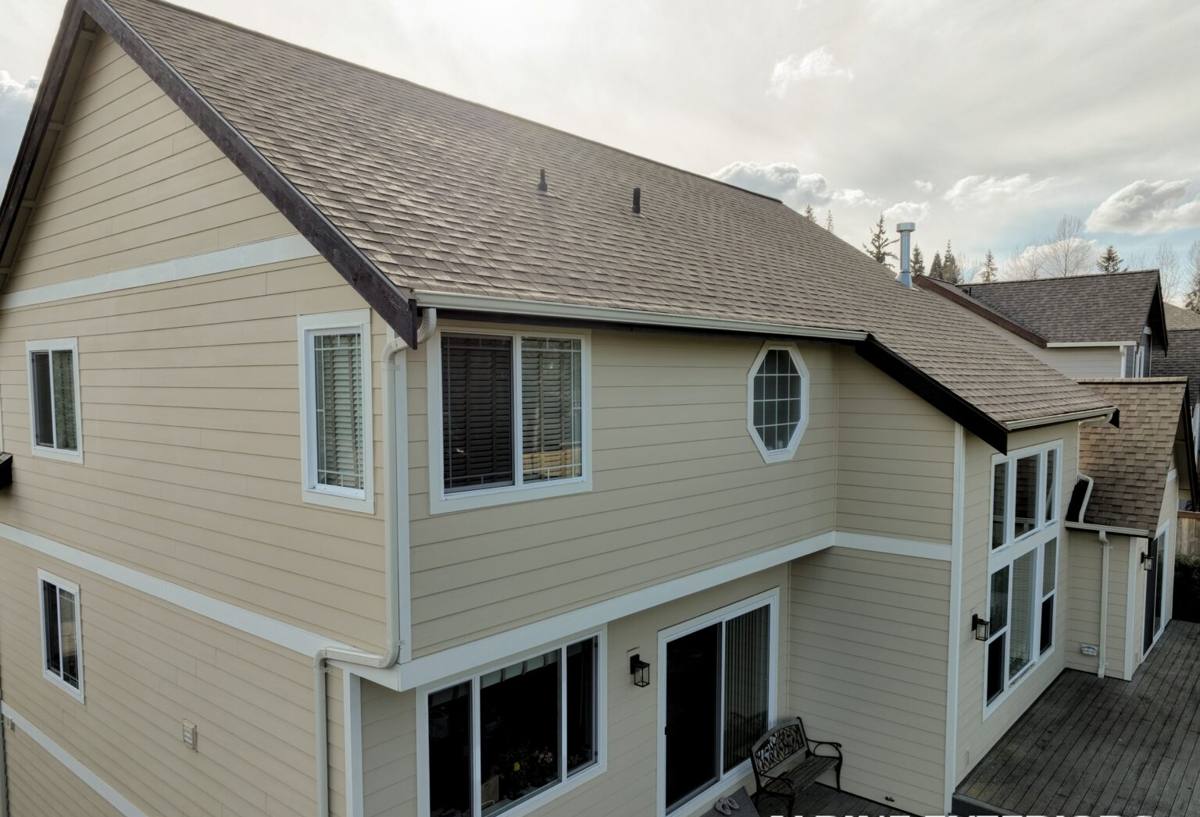
Why Whatcom County Weather Changes the Calculation
Windows fail in this region differently than they do in drier parts of the country. A few things we see consistently on Bellingham-area homes:
- Moisture intrusion around frames — years of wind-driven rain finding its way past aging caulk and worn weatherstripping, leading to soft trim, stained drywall, or a musty smell near the window that homeowners often blame on something else.
- Seal failure in double-pane units — fogging or a hazy look between the panes, which means the insulating gas has escaped and the glass is no longer doing its job, even if the frame still looks fine from the outside.
- Moss and organic growth on horizontal surfaces — sills, brick mold, and the tops of trim pieces collect moss and algae in our long wet stretches, which holds moisture against wood and paint far longer than a quick rinse suggests.
- Salt-air corrosion on hardware — locks, cranks, and metal frame components closer to the water can stiffen up or corrode years before a homeowner further inland would see the same wear.
None of this means every Bellingham home needs new windows on some fixed schedule. It means the signs of trouble often show up as moisture and hardware problems first, before the glass itself looks obviously bad — so it's worth knowing what to actually check.
Signs It's Time to Look Closer
- Condensation forming between the panes (not just on the inside surface in cold weather — that's a fogged seal, and it's permanent)
- Windows that are hard to open, close, or lock, especially after a wet week
- Visible rot or soft spots in the wood frame or sill, even small ones
- A noticeable draft you can feel with your hand near the frame on a windy day
- Rising heating bills with no other obvious explanation
- Paint that keeps failing on the exterior trim around the window no matter how often it's redone
What a Correct Window Replacement Involves
Window replacement isn't just swapping the glass unit and calling it done. For Bellingham's climate, the flashing and sealing details around the window matter as much as the window itself — arguably more, since a good window installed badly will still leak, and a modest window installed correctly will hold up for decades.
The Parts Homeowners Don't See But Should Ask About
- Flashing integration — the window needs to be tied into the wall's water management system (whatever siding or house wrap is behind it) so water is directed out and down, not trapped behind the frame.
- Sill pan installation — a proper sloped sill pan under the window gives any water that does get past the outer seal somewhere to go, instead of soaking into the framing below.
- Backer rod and sealant, not just caulk over a gap — gaps around the frame need to be sized and filled correctly, with sealant rated for this climate's temperature swings and UV exposure.
- Insulation in the rough opening — low-expansion foam or batt insulation packed correctly around the frame, without over-filling in a way that bows the frame and causes the window to bind.
This is the part of the job that's invisible once the trim goes back on — and it's exactly the part that determines whether you get five years or twenty-five years out of the installation. We'd rather explain this upfront than have a customer find out later, from a leak, that a step got skipped.
Choosing Materials for a Marine Climate
There's no single "best" window material for every home — it depends on your home's age, your budget, and how much upkeep you want to take on. Here's how the common options actually compare for a house exposed to Bellingham's rain and salt air:
| Frame Material | How It Handles This Climate | Maintenance | Typical Trade-off |
|---|---|---|---|
| Vinyl | Doesn't rot or corrode; handles moisture well | Low — occasional cleaning | Fewer color/finish options than fiberglass or wood |
| Fiberglass | Very stable in temperature and moisture swings; strong | Low | Higher upfront cost than vinyl |
| Wood (clad or unclad) | Classic look, but exposed wood is vulnerable to our wet season | High if unclad — regular painting/sealing needed | Best suited to homes where original wood character matters and upkeep is planned for |
| Aluminum | Prone to condensation and corrosion near salt air without a thermal break | Moderate to high | We generally steer homeowners toward newer thermally-broken designs if aluminum is a must |
Our default recommendation for most Bellingham-area homes is vinyl or fiberglass with a fusion-welded frame, simply because they hold up with the least maintenance in a climate that punishes anything requiring regular repainting or resealing. If your home's style calls for a wood look, clad options give you that appearance with a lower-maintenance exterior shell — we'll walk through what fits your specific house rather than pushing one product line.
Glass Packages Worth Considering Here
Beyond the frame, the glass package itself affects comfort and condensation control — especially relevant given how much of the year this area spends damp and cool.
- Double-pane, low-E glass — the standard baseline for this climate; helps with both summer heat gain (less of a factor here, but still relevant) and winter heat loss.
- Argon or krypton gas fill — improves insulating performance without changing the look of the window; a reasonable upgrade for most budgets.
- Warm-edge spacers — reduce the cold spot at the edge of the glass, which cuts down on interior condensation forming on the glass itself during cold, damp mornings — a common complaint we hear from homeowners near the water.
Our Process, Start to Finish
1. On-Site Assessment
We look at each window individually — not every window on a home needs replacing at the same time, and we'll tell you honestly if some can wait. We check the frame, sill, and surrounding wall for moisture damage that needs to be addressed as part of the job, not discovered mid-install.
2. Straightforward Quote
You get a written quote broken out by window, so you can see what you're paying for and make decisions about which windows to prioritize if budget is a factor.
3. Correct Removal and Prep
Old windows come out carefully to avoid damaging the surrounding siding or trim more than necessary. Any rot or moisture damage we find in the framing gets flagged and addressed before a new window goes in — installing a new window into a compromised opening just hides a problem instead of fixing it.
4. Installation with Proper Flashing and Sealing
This is the step described above — sill pans, flashing tied into the wall system, correct sealant, proper insulation. We don't shortcut this to move faster.
5. Interior and Exterior Finish Work
Trim is reinstalled or replaced as needed, caulking lines are clean, and the site is left as close to how we found it as possible.
6. Walkthrough
We check every window operates smoothly — opens, closes, locks — before we consider the job finished, and walk through anything you should know about care going forward.
Why a Local Crew Matters for This Job
Window replacement is one of those projects where local experience actually changes outcomes, not just convenience. A crew that works Whatcom County regularly knows:
- Which older Bellingham-area home styles tend to have specific framing quirks around window openings
- How to size flashing and sealant choices for a climate that's wet for a большая part of the year, rather than defaulting to specs written for a drier region
- What moss and algae buildup on sills usually means underneath, versus what's just cosmetic
- Realistic timelines around our wet season, so your project isn't left exposed mid-install when a weather window is needed for the work
Being based in Ferndale, a short drive from Bellingham, also means we're available for a follow-up check without it being a special trip — that's part of standing behind the work rather than just showing up once.
What Homeowners Should Check Before Hiring Anyone
- Ask specifically how they handle flashing and sill pan installation — a vague answer is a red flag
- Get the quote broken out per window, not as one lump number
- Ask what warranty covers the installation itself, separate from the manufacturer's product warranty
- Confirm they're licensed and insured for work in Washington State, and ask to see proof
- Ask how they handle rot or hidden damage found once old windows come out — this should be discussed before the job starts, not sprung on you as a surprise change order
Cost Factors Worth Understanding
| Factor | Why It Affects Price |
|---|---|
| Frame material | Vinyl typically costs less upfront than fiberglass or clad wood |
| Window size and style | Larger openings, custom shapes, or operable styles like casements cost more than standard double-hung |
| Hidden damage | Rotted framing found during removal adds labor and material not visible in an initial quote |
| Number of windows | Doing a whole house at once is usually more cost-efficient per window than one at a time |
| Access and story height | Second-story or hard-to-access windows take more time and equipment |
We're not going to quote a number here that doesn't mean anything without seeing your actual windows — but we will tell you upfront if something looks like it's going to run higher than average, and why, before any work starts.
If you're weighing whether your windows need attention, or you already know they do and just want a straight answer on what it'll take, we're glad to come take a look. The estimate is free, there's no pressure attached to it, and you'll get an honest read on what your home actually needs — just fill out the form below to get started.