 Ferndale Siding
 Why a Birch Bay Roof Ages Differently Than One Inland
A roof in Birch Bay does the same job as a roof anywhere else, but it does that job under harder conditions. Sitting right on the water, homes here take on salt-laden air that speeds up corrosion on exposed fasteners, flashing, and any metal component that isn't rated for it. Add wind-driven rain coming straight off the water during winter storms, and you have moisture being pushed sideways under laps and around penetrations that a calmer, inland roof would never see. Then there's the moss. Whatcom County's long, wet, mild winters give moss months to establish itself on any shaded or north-facing slope, and once it takes hold it holds water against the roofing material far longer than rain alone ever would.
None of these factors are dramatic on their own. Together, over ten or fifteen years, they're why we see roofs in Birch Bay showing granule loss, soft decking, and flashing failure well before a textbook shingle lifespan would predict. A new roof installed for this specific combination of salt, wind-driven rain, and moss lasts longer and needs less babying than one installed the same way you'd install it fifty miles inland.
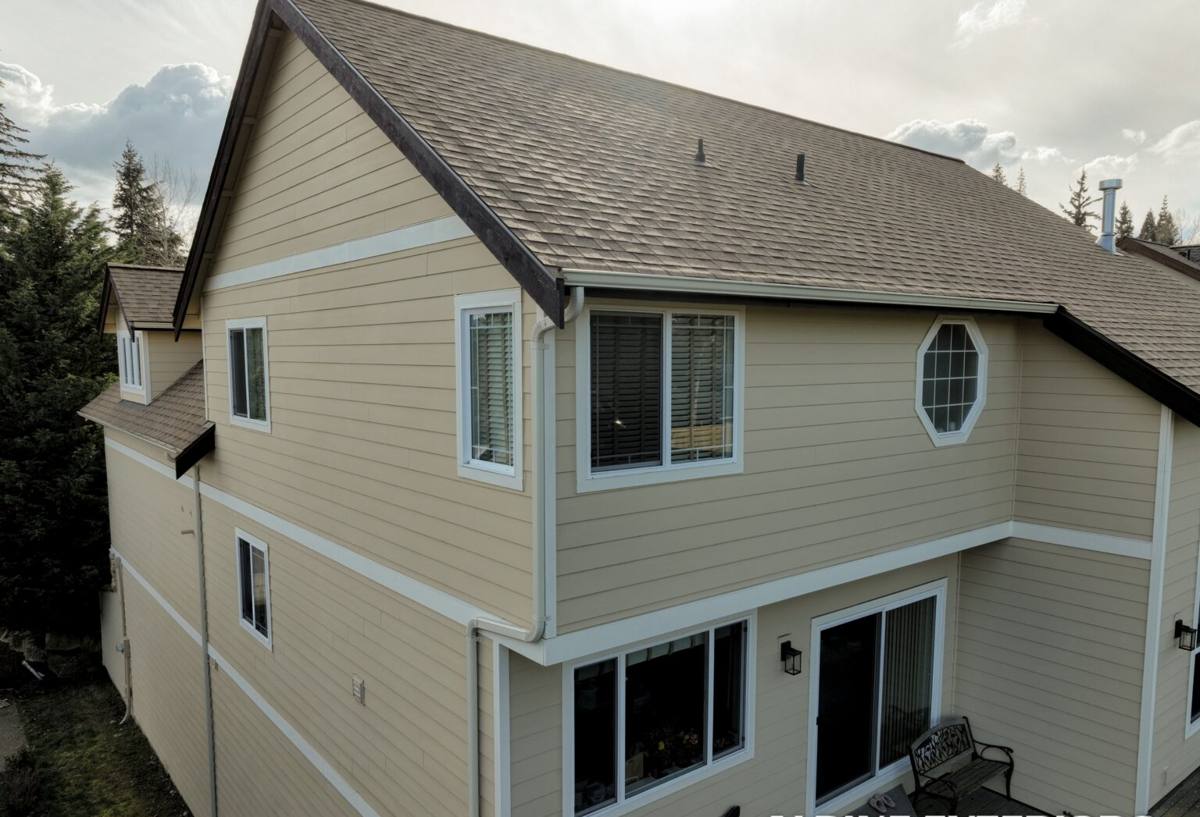
Signs It's Time for a New Roof, Not Another Repair
Homeowners often ask us to patch a leak, and sometimes a patch is genuinely the right call. Other times the roof is past the point where patching makes financial sense. Here's how we tell the difference during an inspection:
- Granules collecting in gutters and downspouts, or bald patches visible on south- and west-facing slopes
- Shingles that are curling, cupping, or cracking, especially at the edges
- Moss beds thick enough to lift shingle tabs or hold visible moisture after a dry week
- Soft or spongy spots when walking the roof, which usually means the decking underneath is compromised
- Two or more unrelated leaks showing up in a single winter
- Interior water staining on ceilings or in the attic that wasn't there the year before
- A roof that's already had multiple repairs and is approaching or past its expected service life
If you're only seeing one or two minor items on that list, a repair may still buy you time. If you're seeing several at once, or the decking has started to fail, a repair is usually just delaying a full replacement while more water gets into the structure underneath.
What a Correct Installation Actually Involves
A new roof is more than laying down new shingles over what's already there. Done right, it starts with a full tear-off down to the decking, because you can't evaluate or fix what's underneath the old roofing while it's still covered up. From there, the work that actually determines how the roof performs in Birch Bay's climate happens in this order:
Deck Inspection and Repair
Every section of exposed decking gets inspected for rot, delamination, and soft spots, particularly around old flashing lines and valleys where water has had the most opportunity to sit. Any compromised sheathing gets replaced before anything new goes down. Skipping this step is the single most common reason a new roof fails early.
Ice-and-Water Shield in the Vulnerable Zones
Self-adhering ice-and-water membrane goes down at eaves, valleys, and around every penetration — vent pipes, chimneys, skylights. These are the exact spots where wind-driven rain gets pushed uphill under the shingle line, and it's the detail that separates a roof built for a coastal climate from one built for a calmer one.
Synthetic Underlayment
Over the rest of the deck, synthetic underlayment provides a second line of defense and holds up far better than old-style felt paper under repeated wet-dry cycling.
Flashing
New flashing at every wall intersection, chimney, and valley — not reused old flashing tucked under new shingles. Corrosion-resistant metal matters here specifically because of the salt air.
Ventilation and Fastening
Balanced intake and exhaust ventilation, and shingles fastened to the manufacturer's specified pattern and nail count, not however is fastest. Under-fastened shingles are one of the first things to fail in sustained coastal wind.
Choosing a Roofing Material for Coastal Whatcom County Conditions
There's no single "best" roofing material for every home — the right choice depends on your budget, your roof's exposure, and how much long-term maintenance you're willing to take on. Here's how the common options actually compare for a property near the water in Birch Bay:
| Material | Moss Resistance | Salt Air / Corrosion | Typical Lifespan | Relative Cost |
|---|---|---|---|---|
| Architectural asphalt shingle | Moderate — improves with algae-resistant granules | Good if flashing and fasteners are corrosion-rated | 20–30 years | Lower |
| Standing seam metal | Very good — sheds moss more easily due to smooth surface | Depends heavily on coating/finish quality | 40–50+ years | Higher |
| Synthetic/composite shingle | Good — resists moisture absorption better than wood | Good, minimal exposed metal | 30–50 years | Mid to higher |
| Cedar shake | Poor without diligent upkeep — retains moisture | Not a concern, but decay risk rises near the water | 15–25 years with upkeep | Higher, plus ongoing maintenance |
We'll be direct about where cedar shake fits in this list: it's a beautiful, traditional look, but in a shaded, damp, waterfront setting it takes on and holds moisture more readily than the alternatives, and that moisture is exactly what feeds moss and accelerates rot underneath. That's a maintenance and moisture-behavior trade-off, not a knock on the product itself — plenty of homeowners accept that trade-off for the appearance and are diligent about upkeep. We just want you making that call with the real numbers in front of you, not after the fact.
Ventilation and Moisture Control Matter More Here Than Most Places
Attic ventilation gets treated as an afterthought on a lot of roofing jobs, but in Birch Bay it's one of the details that most affects how fast moss comes back and how long the deck underneath stays sound. A roof that's poorly ventilated traps warm, moist air against the underside of the decking, which cools the roof surface unevenly, encourages condensation, and creates exactly the damp microclimate moss thrives in. Balanced intake at the eaves and exhaust at the ridge keeps air actually moving through the attic space instead of stagnating — and it has to be balanced, because exhaust vents installed without matching intake can pull conditioned air out of the living space instead of venting the attic. We size and place ventilation based on your specific roof, not a one-size formula.
Our Installation Process
- On-site inspection of the current roof, decking, flashing, and ventilation, with photos and a plain-English explanation of what we find
- A written estimate covering material options, scope of work, and a realistic timeline
- Permitting handled on our end where required by the county or your local jurisdiction
- Full tear-off to bare decking, with disposal of the old roofing
- Deck inspection and repair of any compromised sheathing before anything new is installed
- Ice-and-water membrane at eaves, valleys, and penetrations, then synthetic underlayment across the field
- New flashing, drip edge, and ventilation components installed to spec
- Roofing material installed per manufacturer fastening requirements
- Full site cleanup, including a magnetic sweep for stray nails, and a final walkthrough with you
- Warranty paperwork provided so you know exactly what's covered and for how long
What Drives the Cost of a New Roof
We don't quote prices without seeing the roof, because the variables below can move a project's cost more than the material choice alone. What we can do is tell you honestly what those variables are so an estimate makes sense when you get one:
| Cost Factor | Why It Matters |
|---|---|
| Roof size and pitch | More square footage and steeper pitches mean more material, more labor time, and more safety setup |
| Number of existing layers | Tear-off of multiple old layers takes longer and costs more in disposal |
| Decking condition | Rotted sheathing found during tear-off has to be replaced before installation continues |
| Material choice | Asphalt, metal, and composite options differ significantly in material cost and installation labor |
| Ventilation upgrades | Adding or correcting intake/exhaust ventilation is worth doing during a full replacement |
| Roof complexity | Valleys, dormers, skylights, and chimneys each add flashing work and time |
Keeping Moss From Taking Over Again
A new roof gives you a clean start, but Birch Bay's climate doesn't stop working on it the day it's installed. A little regular upkeep goes a long way toward protecting your investment:
- Keep gutters and valleys clear so water isn't backing up under the shingle line
- Have moss treated or removed at the first sign of regrowth rather than letting it establish
- Trim back overhanging branches to reduce shade and let the roof dry out between rains
- Schedule a roof check after major fall or winter storms, not just when a leak shows up
- Avoid pressure washing shingles — it strips granules and does more harm than good
Why a Crew That Already Works Birch Bay Makes a Difference
Roofing crews who mostly work drier, inland areas can install a technically fine roof and still miss the details that matter here — under-flashing exposed penetrations, skipping ice-and-water shield in a valley because "it doesn't rain that much," or spec'ing ventilation that doesn't account for how much moisture this climate actually pushes at a roof. We work in Ferndale and throughout Whatcom County's coastal communities regularly, so the extra detailing for salt air, wind-driven rain, and a long moss season isn't a special add-on for us — it's just how we build a roof here. That also means if something needs attention under warranty, you're calling a crew that's a short drive away and already knows your roof, not chasing down a company that did one job in the area and moved on.
If your roof is showing its age or you're just weighing your options for a Birch Bay property, we're happy to take a look and give you a straight answer — no pressure, no obligation. Fill out the form below for a free estimate and we'll walk the roof with you in person.