 Ferndale Siding
 Roofing on an Island Changes the Math
Lummi Island sits right in the path of everything Whatcom County's weather throws at the coast: salt-laden air off the water, driving rain that comes in sideways during winter storms, and a moss season that can run most of the year in the shaded, damp spots under fir and cedar canopy. Asphalt shingle roofing can absolutely hold up here — it's still one of the most cost-effective, proven roofing systems available — but only when it's specified and installed with this specific environment in mind. A roof detailed the same way you'd detail one in a dry inland subdivision will not perform the same way on Lummi Island, and homeowners often don't find that out until a roof that "should have" lasted 25 years starts failing at year twelve.
Because the island is ferry-access only, roofing here also comes with logistics that don't exist on the mainland. Material deliveries, crew scheduling, and even something as simple as a same-day repair all have to work around ferry sailings. A crew that already works Lummi Island on a regular basis has that logistics problem solved before your job ever starts. A crew that doesn't will either pass the inefficiency on to you in time and cost, or cut corners to avoid it.
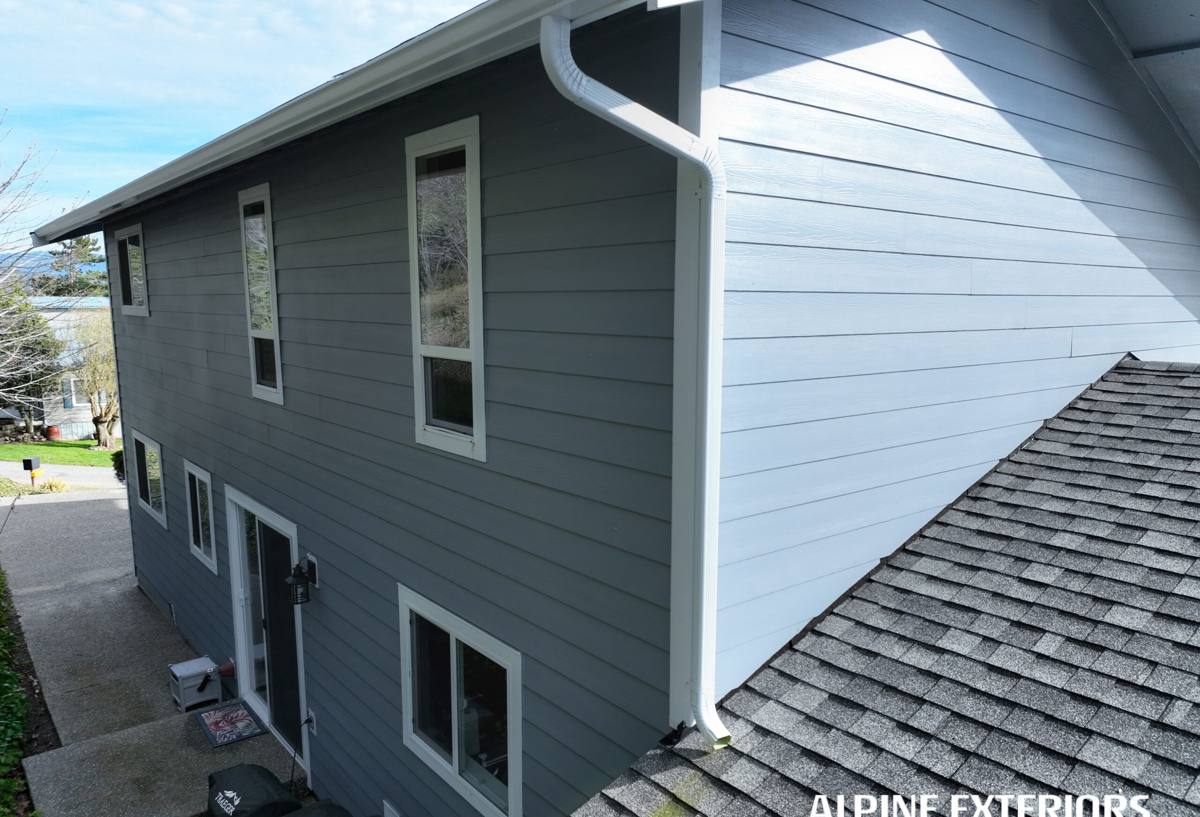
What Salt Air, Rain, and Moss Actually Do to a Shingle Roof
Salt Air
Airborne salt doesn't rot asphalt shingles directly, but it accelerates corrosion on every metal component of the roof system — nails, flashing, drip edge, valley metal, and vent stacks. Once corrosion starts on fasteners or flashing, water finds a way in long before the shingles themselves are worn out. This is why fastener and flashing material choice matters more on Lummi Island than it does a few miles inland.
Driving Rain
Storms coming off the water tend to push rain at an angle instead of straight down, which puts a lot more stress on laps, seams, and flashing details than rain falling vertically. Underlayment coverage, shingle nailing pattern, and flashing at every penetration and transition all need to be done to a standard that assumes wind-driven rain, not just gravity-fed drainage.
Moss
Shaded, damp roof sections on the island can stay wet for days after a storm, which is exactly what moss needs to establish. Moss doesn't just look bad — its root structure lifts shingle edges and holds moisture directly against the shingle mat, which speeds up granule loss and, over time, leads to soft decking underneath. Roofs on heavily treed lots need moss prevention built into the plan from day one, not treated as an afterthought once it's already growing.
What a Correctly Installed Roof Looks Like Here
A shingle roof that's built for this environment isn't a different product — it's the same asphalt shingle system installed with a few details that matter more locally than they do elsewhere:
- Full synthetic underlayment coverage, not spot coverage, so wind-driven rain that gets past a shingle lap still hits a continuous water barrier.
- Ice-and-water shield at eaves, valleys, and around penetrations — the highest-stress, highest-leak areas on any roof, and worse here with driving rain.
- Corrosion-resistant fasteners and flashing rated for coastal exposure, so salt air doesn't quietly eat away the parts holding the roof together.
- Correct nailing pattern and fastener count for the wind exposure of the site, not the manufacturer's bare minimum.
- Balanced attic ventilation so moisture from inside the home isn't adding to the moisture load the roof is already dealing with from outside.
- Algae-resistant shingle granules on shaded or north-facing sections where moss and algae pressure is highest.
None of this is exotic. It's standard practice done correctly and consistently, which is a lower bar to describe than it is to actually deliver on every square of a roof.
Shingle Options for Lummi Island Homes
Most homeowners are choosing between a handful of asphalt shingle tiers. Here's how they compare for a home dealing with salt air, wind-driven rain, and moss pressure:
| Shingle Type | Wind Rating | Moss/Algae Resistance | Typical Lifespan Here |
|---|---|---|---|
| Standard 3-tab | Lower | Only with AR granule upgrade | 15-20 years |
| Architectural/laminate | Higher | Usually available with AR granules | 25-30 years |
| Impact-resistant laminate | Higher | Usually available with AR granules | 25-30+ years, best fastener/flashing performance |
Algae-resistant (AR) granules are worth the modest upcharge on almost every Lummi Island roof, especially on shaded slopes. Standard granules will eventually show dark streaking from algae and moss buildup regardless of how often you clean the roof; AR granules slow that process considerably. We treat this as a standard recommendation for this area, not an upsell — it's a case where the extra cost genuinely pays for itself in reduced maintenance and cleaner long-term appearance.
Signs Your Roof Needs Attention
A lot of roof problems on the island show up gradually, and it's easy to write off early signs as cosmetic. Worth checking for, especially after a windy winter:
- Moss growth along ridges, valleys, or shaded slopes
- Granules collecting in gutters or at downspout outlets
- Shingles that look cupped, curled, or lifted at the edges
- Dark streaking or discoloration across a slope
- Missing or torn shingles after a storm
- Rust staining around flashing, vents, or valleys
- Soft or spongy spots when walking the roof (best assessed by a professional)
- Water stains or musty smell in the attic
Any one of these on its own isn't necessarily an emergency, but a roof showing several of them at once is telling you it's past due for a real inspection, not just a rinse-off.
Our Process for a Lummi Island Roofing Job
Inspection and Estimate
We start with a full roof inspection — not just a look from the ground — covering shingle condition, flashing, ventilation, and decking where accessible. You get a written estimate that explains what's actually needed and why, not just a total.
Scheduling Around the Ferry
Because we already work on Lummi Island regularly, material deliveries and crew days are planned around ferry sailings ahead of time. That means fewer wasted trips, materials staged and ready when the crew arrives, and a job timeline that isn't quietly padded to cover logistics we haven't planned for.
Tear-Off and Deck Inspection
Old roofing comes off down to the deck so we can actually see what's underneath — soft or damaged sheathing gets identified and addressed before a new roof goes over it, not hidden beneath it.
Installation
Underlayment, ice-and-water shield, flashing, and shingles go on to the standard described above, with attention to the details that matter most in a coastal, high-rain, moss-prone environment.
Cleanup and Walkthrough
Job site and yard are cleared of debris and nails, and we walk the finished roof with you before we consider the job done.
What Affects the Cost of a Lummi Island Roof
| Factor | Why It Matters Here |
|---|---|
| Roof size and pitch | Steeper or more complex rooflines take more material and labor time |
| Number of existing layers | Tear-off of multiple old layers adds labor and disposal cost |
| Decking condition | Moisture and moss damage found during tear-off may require deck repair |
| Shingle tier chosen | Standard vs. architectural vs. impact-resistant, and AR granules |
| Flashing and ventilation scope | Corrosion-resistant materials and proper venting cost more upfront but reduce future leaks |
| Access and logistics | Ferry scheduling and site access can affect crew and delivery timing |
We don't publish a flat price because these factors genuinely change the number from one roof to the next — but every estimate breaks the cost down by these factors so you can see what you're actually paying for.
Maintaining a Shingle Roof in a Moss and Salt Climate
A correctly installed roof still benefits from basic upkeep in this environment:
- Keep gutters and valleys clear so water isn't sitting against shingle edges.
- Trim back overhanging branches to reduce shade and debris buildup, which slows moss growth.
- Have moss growth removed properly rather than pressure-washed, which can strip granules and shorten shingle life.
- Get a roof looked at after any major windstorm, even if nothing looks obviously wrong from the ground.
- Check attic ventilation periodically — blocked vents trap moisture and shorten roof life from the inside out.
Why a Crew That Already Works Lummi Island Matters
Roofing quality comes down to details most homeowners never see once the shingles are down — nailing pattern, flashing laps, underlayment coverage, fastener choice. A crew that regularly works Lummi Island homes has already adjusted its standard practices for salt exposure, wind-driven rain, and moss pressure, because they've seen what happens when those details get skipped here. That's different from a crew doing an occasional island job who's applying mainland habits to a coastal environment. It also means fewer logistics surprises, because ferry scheduling and material staging are already part of how the job gets planned, not something figured out after the crew is already on-site.
If you're weighing a roof replacement, a repair, or just want an honest read on how much life is left in your current roof, we're glad to come take a look. The estimate is free, there's no pressure attached to it, and you'll get a straight answer either way — just use the form below to get started.