 Ferndale Siding
 Deck Repair Built for Blaine's Coastal Conditions
Blaine sits right on the water at the northern edge of Whatcom County, and that location shapes what a deck goes through every year. Salt-laden air off the Salish Sea, long stretches of driving rain, and a moss season that can run from fall through spring all put steady stress on the ledger board, framing, fasteners, and decking surface. A deck that would hold up fine forty miles inland can show rot, corrosion, or slip hazards well ahead of schedule out here. Deck repair in Blaine isn't just about patching what's visible — it's about understanding which parts of the structure take the worst of the coastal exposure and fixing those correctly the first time.
We work on decks throughout the Blaine area regularly, and the failure patterns repeat: fasteners corroding faster than the wood around them, moss holding moisture against boards that never fully dry out, and ledger connections that were fine when installed but have since loosened or begun to rot where the deck meets the house.
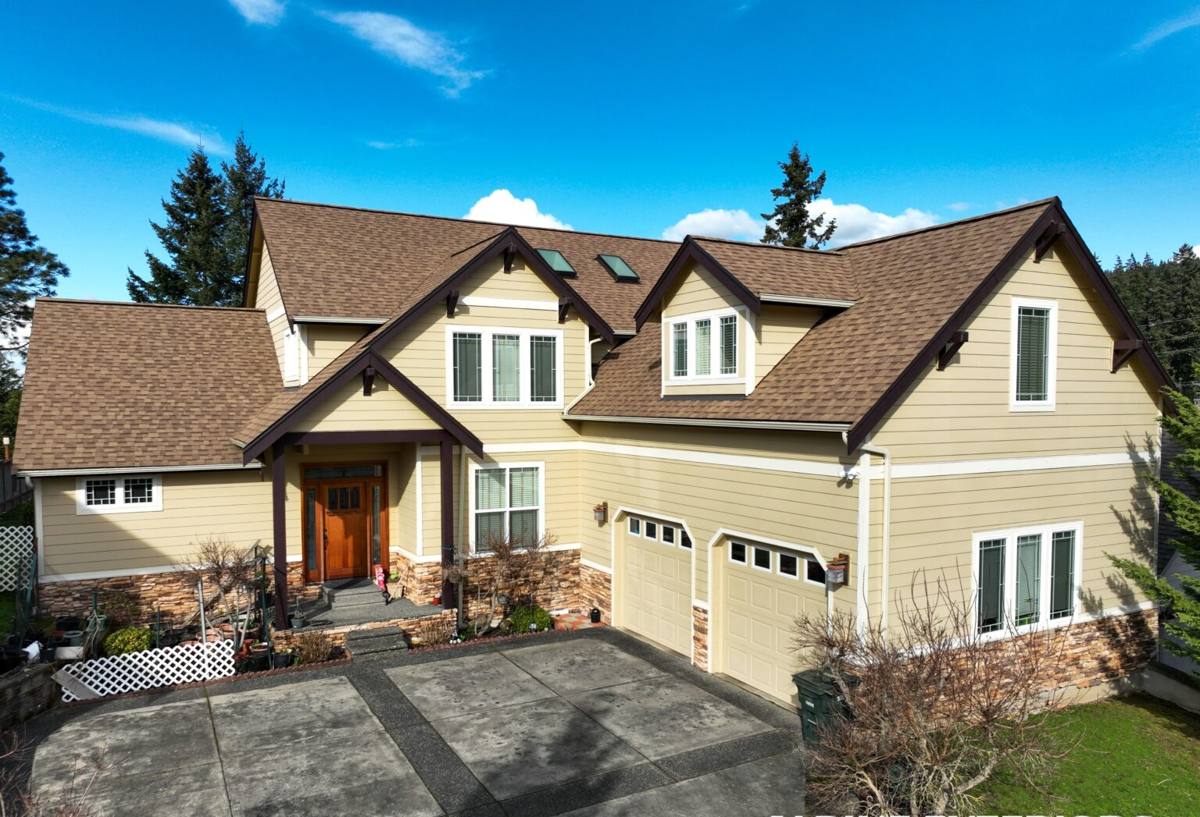
What Salt Air and Moisture Do to a Deck Over Time
Corrosion Beyond What You'd Expect Inland
Salt air accelerates corrosion on any exposed metal — nails, screws, joist hangers, bolts, and railing hardware. Standard galvanized fasteners that would last decades in a drier, inland part of Whatcom County can start rusting and weakening years earlier this close to the water. Once a fastener corrodes, it loses grip strength, and that's when boards start to feel loose or springy underfoot even though the wood itself looks fine.
Moisture That Never Fully Leaves
Blaine's rain isn't unusual for this part of Washington, but the combination of frequent rain, marine humidity, and shaded or north-facing decks means wood surfaces often don't get a real chance to dry out between storms. That constant dampness is what drives rot in ledger boards, joists, and post bases — the structural members you can't see just by looking at the deck surface.
Moss as a Moisture Trap, Not Just an Eyesore
Moss doesn't just look bad and make a deck slippery. Once it establishes on boards or in the gaps between them, it holds water against the wood continuously, which is exactly the condition that accelerates decay. A deck with heavy moss buildup is very often hiding softer wood underneath, and that's something we check for directly rather than assuming the surface tells the whole story.
Signs Your Blaine Deck Needs Repair
Most deck problems give warning signs before they become safety issues. Homeowners in Blaine should watch for:
- Soft or spongy spots on the deck surface, especially near the house or in shaded areas
- Visible rust streaking around fasteners or hardware
- Railings or posts that flex or wiggle more than they used to
- Gaps or separation where the deck meets the house (the ledger connection)
- Persistent moss or algae that comes back quickly after cleaning
- Boards that have cupped, split, or pulled away from their fasteners
- Stairs that feel less solid or show wear on the stringers
Any one of these on its own might just need a targeted repair. Several of them together, especially involving the ledger board or support posts, usually mean it's worth having someone look at the structure underneath, not just the visible decking.
Repair or Replace? How We Make That Call
Not every deck problem calls for tearing the whole thing out, and we don't default to recommending replacement just because a deck has issues. The honest answer depends on what's actually failing and how much of the structure it affects.
| Situation | Usually Repair | Usually Replace or Rebuild |
|---|---|---|
| A handful of rotted or cracked boards | Yes — spot replacement | No |
| Corroded fasteners, framing still sound | Yes — re-fasten with better hardware | No |
| Rot at the ledger-to-house connection | Sometimes, if caught early | Often, if it's spread into the rim joist |
| Widespread rot across multiple joists or posts | No | Yes |
| Deck is structurally sound but surface is worn or mossy | Yes — cleaning, sanding, refinishing, board swaps | No |
| Original construction has code or design issues (undersized footings, missing hardware) | No | Yes — rebuild to code |
Repairs on a Blaine deck typically run from a few hundred dollars for isolated board or fastener work up to a few thousand for more involved structural repair — full replacement is a separate conversation and depends heavily on size and materials. We'll always tell you plainly which category your deck falls into before any work starts.
What a Correct Deck Repair Actually Involves
Starting Underneath, Not Just on the Surface
A repair that only addresses the top boards without checking the framing, ledger, and post bases underneath is a repair that's likely to need doing again soon. Before we touch decking material, we check the structural connections — especially the ledger board, since that's the point where rot from trapped moisture does the most damage and where a failure has the highest consequence.
Matching the Fix to Coastal Exposure
Given Blaine's location, we use fasteners and hardware rated for corrosion resistance appropriate to marine or near-marine exposure, not just standard interior-grade hardware. This matters more here than it would for a deck in a drier, inland part of the county — cutting corners on hardware is one of the most common reasons a "repaired" deck develops the same problem again within a couple of years.
Addressing Drainage and Airflow
A lot of moisture-related deck damage traces back to poor drainage or airflow underneath the structure — water pooling against ledger boards, debris blocking gaps between boards, or vegetation growing up against the framing. Where it makes sense, we address these conditions as part of the repair, not just the damaged material itself, because fixing the boards without fixing the moisture source just delays the next repair.
Our Deck Repair Process in Blaine
- On-site assessment. We walk the full deck, check the surface, probe suspect boards, and inspect the ledger, framing, and post bases where accessible.
- Honest scope and estimate. We explain what's actually wrong, what it will take to fix correctly, and give you a clear estimate before any work begins — no pressure, no upsell to a full rebuild unless the structure genuinely calls for it.
- Repair the structure first. Any compromised framing, connections, or hardware gets addressed before cosmetic work, using fasteners and materials suited to coastal exposure.
- Replace or restore decking material. Damaged boards are replaced to match existing material where possible; surfaces are cleaned and treated as needed.
- Final check. We walk the deck with you, point out what was done, and flag anything worth watching going forward.
Wood, Composite, and What We'll Tell You Honestly
Both wood and composite decking show up throughout Blaine, and each has different maintenance needs in this climate. Wood decks need more regular attention — cleaning, sealing, and moss control — but individual boards are usually straightforward to repair or replace. Composite decking resists rot and moss better on the surface, but repairs can be more visible if the exact product or color isn't still available, and moisture problems in the framing underneath a composite deck are just as serious since they're hidden by a surface that looks fine. Whichever material you have, we'll tell you plainly what upkeep it actually needs in a marine climate like Blaine's rather than overselling either option.
Why Hire a Crew That Already Works in Blaine
Deck problems caused by salt air, coastal rain, and moss aren't the same as deck problems in a drier inland climate, and a crew that mostly works other conditions can miss what's specific to this area — under-specifying hardware, missing early ledger rot because it doesn't look as bad here as it would elsewhere, or recommending fixes that don't account for how fast moisture and moss come back in this environment. We work throughout Whatcom County, including Blaine and the surrounding coastal areas, and we bring that pattern recognition to every assessment: what fails first here, what's worth repairing versus rebuilding, and what actually holds up against this specific climate rather than a generic one.
Simple Deck Maintenance That Extends Its Life
Between repairs, a few habits go a long way toward slowing down the damage Blaine's climate causes:
- Sweep off debris and standing water regularly, especially in shaded corners
- Clean moss and algae as soon as it appears rather than letting it establish
- Keep vegetation trimmed back from the deck edges and underneath framing
- Check fasteners and hardware for rust or looseness once or twice a year
- Reseal or refinish wood decking on the schedule the product calls for — don't stretch it out in a climate this wet
- Look closely at the ledger board area during your seasonal walkaround; it's the connection most likely to hide rot
If you're seeing soft boards, rust, persistent moss, or anything that just doesn't feel as solid as it used to, we're glad to come take a look. The estimate is free, there's no pressure to do more than the deck actually needs, and you'll get a straight answer about what's going on and what it'll take to fix it.