 Ferndale Siding
 Storm Damage Roof Repair for Fairhaven Homes
Fairhaven sits close enough to Bellingham Bay that its roofs take a different kind of beating than homes further inland in Whatcom County. Salt-laden air, wind-driven rain off the water, and a moss season that can stretch from October well into spring all work against asphalt shingles, flashing, and fasteners in ways that are easy to underestimate until a storm exposes the weak point. We repair storm-damaged roofs in Fairhaven and the surrounding Ferndale area, and we've built our process around what actually fails here, not a generic checklist written for a drier climate.
Storm damage isn't always dramatic. Sometimes it's a handful of lifted shingles after a windstorm. Sometimes it's a slow leak that started months ago when wind-driven rain found a gap in the flashing and has been working its way into the attic ever since. Our job is to find the actual cause, not just patch the symptom, and to repair it in a way that holds up through the next storm season.
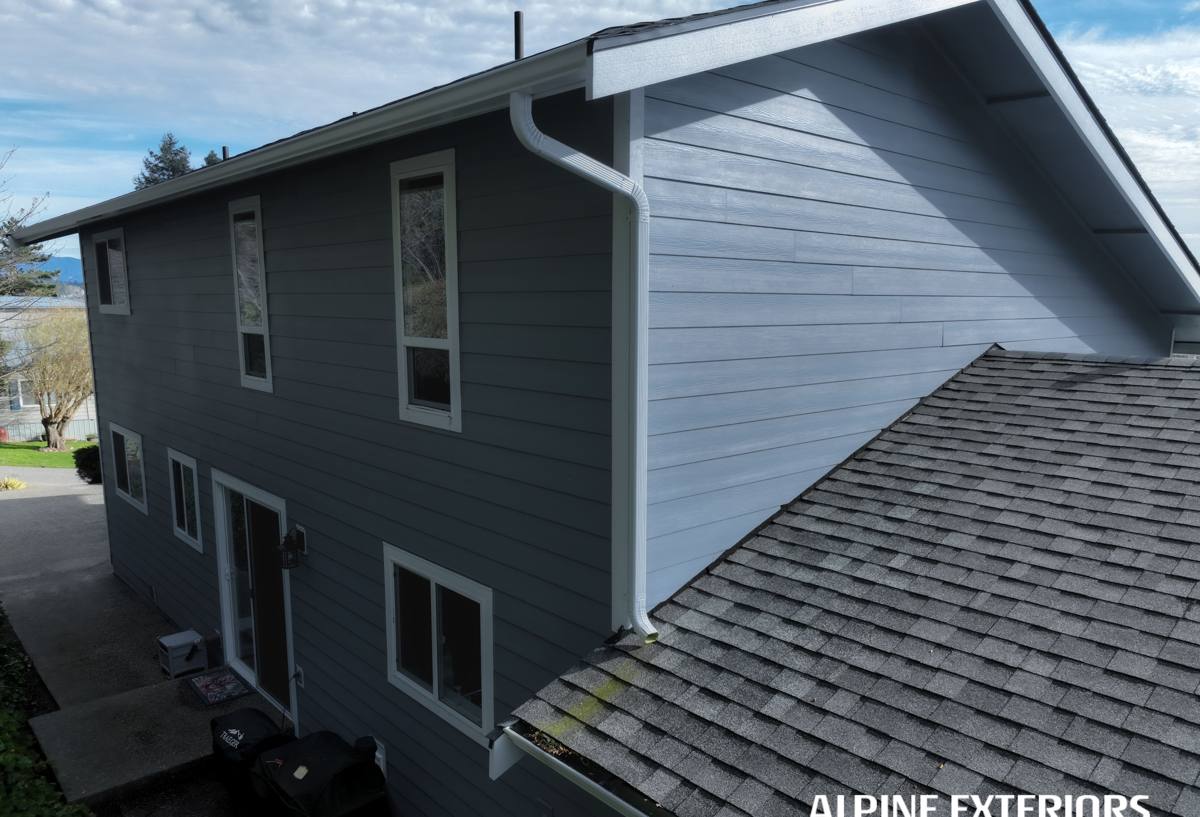
Why Fairhaven's Location Makes Storm Damage Different
Fairhaven's proximity to the water changes the math on roof damage in a few specific ways.
Salt Air and Metal Fatigue
Salt in the air accelerates corrosion on exposed metal — flashing, nail heads, gutter fasteners, and vent caps. A fastener that would last decades inland can start rusting and losing its grip years earlier this close to the bay. Once a fastener backs out or a flashing seam corrodes through, that's the entry point a storm needs to push water underneath the roofing material.
Wind-Driven Rain
Rain that comes in sideways behaves differently than rain that falls straight down. It gets pushed up under shingle tabs, into vent flashing, and along ridge caps in ways that standard nail patterns and sealant lines aren't always built to resist if they were installed to a bare-minimum standard. Fairhaven's exposure to storms coming off the water means wind-driven rain is a regular event here, not an occasional one.
Extended Moss Season
Whatcom County's damp, mild climate keeps roofs wet for long stretches, and moss takes hold anywhere debris collects or sunlight is limited — north-facing slopes, valleys, and areas under tree cover. Moss holds moisture against the shingle surface and can lift edges as it grows, which weakens the roof's defenses right before a storm hits. A roof that's carrying a heavy moss load going into storm season is already compromised before the wind even picks up.
What Storm Damage Actually Looks Like
Homeowners often expect storm damage to be obvious — a missing shingle, a hole, a tree limb through the roof. Sometimes it is. More often, it's subtler, and the damage that causes the most long-term harm is the kind that doesn't show up from the ground.
- Shingles that are lifted, curled, or cracked but still in place
- Granule loss showing up in gutters or downspouts after a storm
- Flashing around chimneys, skylights, or vent pipes that's bent, separated, or corroded
- Soft spots or discoloration on interior ceilings that appear days or weeks after a storm
- Gutters pulled loose or sagging from wind load or debris weight
- Moss mats that have lifted shingle edges, creating channels for water to travel under the roofing
- Nail pops or exposed fasteners where sealant has failed
Because a lot of this damage is only visible up close or from inside the attic, a roof that "looks fine" from the driveway can still be actively leaking. That's a big part of why we recommend a proper inspection after any significant wind or rain event, not just a visual check from the ground.
Our Storm Damage Repair Process
We approach every storm damage call the same way, whether it's a single missing shingle or a repair involving multiple roof planes.
1. Assessment
We inspect the roof surface, flashing points, attic (where accessible), and gutters. We're looking for the source of the problem, not just the visible symptom — a stain on the ceiling can trace back to a flashing failure three feet away from where the water actually entered.
2. Documentation
We document what we find with photos and a written summary of the damage and its likely cause. This is useful for your own records and, if you're filing an insurance claim, gives you something concrete to work from.
3. Repair Plan
We explain what needs to happen, why, and what the options are if there's more than one reasonable way to fix it. If the damage is isolated, we'll say so — we're not going to recommend a larger job than the roof actually needs.
4. The Repair Itself
Depending on the damage, this can mean replacing individual shingles, resealing and re-securing flashing, rebuilding a section of ridge or valley, or addressing moss damage and re-treating the surface to slow regrowth. We match materials as closely as possible so repairs blend in rather than standing out as an obvious patch.
5. Follow-Up Check
For anything involving a leak, we recommend a follow-up look after the next significant rain to confirm the fix held, especially during Whatcom County's wetter months.
Repair vs. Replacement: How We Decide
Not every storm-damaged roof needs a full replacement, and not every repair is a good long-term answer. The right call depends on the roof's age, how widespread the damage is, and what condition the rest of the roofing is in.
| Factor | Leans Toward Repair | Leans Toward Replacement |
|---|---|---|
| Roof age | Under 15 years, or newer than expected service life | Near or past typical asphalt shingle lifespan |
| Damage extent | Isolated to one area or slope | Spread across multiple slopes or recurring in the same spots |
| Underlying condition | Decking and structure sound, surrounding shingles still flexible | Widespread granule loss, brittle shingles, or soft decking found during inspection |
| History | First storm event causing noticeable damage | Repeated storm damage or ongoing leaks despite past repairs |
| Moss/moisture | Light to moderate, treatable | Heavy, long-term moss growth with visible material degradation underneath |
We'll tell you honestly which side of that table your roof falls on. A roof that only needs a repair doesn't need a sales pitch for a replacement, and a roof that's genuinely at the end of its service life doesn't do you any favors if we just patch it and send you on your way.
What a Correct Repair Actually Involves
A storm damage repair that's done right isn't just about swapping out the shingles you can see are missing. It should account for the conditions that caused the damage in the first place.
- Fasteners appropriate for coastal exposure, set correctly rather than over- or under-driven
- Flashing reinstalled or replaced with attention to how it sheds wind-driven rain, not just straight-down rain
- Underlayment checked and repaired where the roofing was removed, since a damaged underlayment defeats the point of new shingles on top
- Matching shingle color and style where possible so the repair doesn't stand out
- Moss and debris cleared from the repair area and surrounding roof before closing anything up
- Attic ventilation checked if moisture damage suggests a broader airflow issue, not just a roof-surface issue
Skipping any of these steps might make a repair look finished, but it leaves the same vulnerability in place for the next storm.
Insurance and Storm Damage Claims
Many storm damage repairs in this area go through homeowners insurance, particularly after a named windstorm or a claim tied to a specific date. We're not an insurance company and don't handle claims for you, but we do provide the kind of documentation — photos, damage descriptions, and repair scope — that adjusters need to see. If you're not sure whether your damage is claim-worthy, that's a conversation worth having before repairs start, since some fixes are simple enough to handle directly and others are significant enough that a claim makes sense.
Why Local Experience in Fairhaven Matters
A roofing crew that works Fairhaven regularly already knows what to expect before they climb the ladder. They know which roof orientations tend to carry the heaviest moss, how far wind-driven rain typically travels up under a shingle tab in this exposure, and which flashing details tend to fail first given the salt air. That's not something you get from a general roofing background — it comes from repairing roofs in this specific stretch of Whatcom County, season after season.
It also means faster response. After a storm, timing matters — a small leak left unaddressed for a few weeks in a wet climate can turn into insulation damage, mold risk, or a bigger repair than it needed to be. A crew already working in and around Ferndale can get to a storm-damaged roof faster than one dispatching from further away.
Simple Storm Prep and Post-Storm Checklist
A few habits can catch problems early, before a storm turns a small weakness into real damage.
- Clear gutters and downspouts before the fall storm season starts
- Trim back branches that overhang the roof, since falling limbs and debris buildup both contribute to damage
- Walk the yard and check gutters after any major windstorm for granules, shingle pieces, or bent flashing
- Check the attic (if accessible) for damp insulation, staining, or daylight showing through the roof deck
- Note the date of any major storm — useful if a leak shows up later and you need to establish when the damage likely occurred
- Don't ignore a small, slow drip — in this climate it rarely stays small for long
Get an Honest Look Before Small Damage Becomes a Bigger Repair
If a recent storm has you wondering whether your roof took damage, or you've noticed a stain, a draft, or shingles in the yard after high wind, it's worth having it looked at before the next round of Whatcom County rain finds the same weak spot. We'll give you a straightforward assessment, tell you honestly what needs to happen, and provide a free, no-pressure estimate — just fill out the form below to get started.