 Ferndale Siding
 Roofing in Cordata: A Different Set of Problems Than Most of the Country
Cordata sits close enough to the water and far enough into the Pacific Northwest weather pattern that roofs here age differently than they do almost anywhere else. It isn't hail, it isn't extreme heat, and it isn't hurricane wind. It's the slow, patient combination of salt-tinged air drifting in off the Strait, rain that can fall for weeks without a real break, and a moss season that seems to start earlier every year. None of those factors destroy a roof overnight. They wear it down quietly, one wet winter at a time, until a homeowner is dealing with soft decking, stained ceilings, or granule loss they never noticed happening.
A new roof installation in this neighborhood has to be built with that reality in mind from the first layer of felt to the last course of shingles. A roof that would perform fine in a drier climate can underperform here simply because it wasn't detailed for constant moisture exposure. This page walks through what that actually means for a Cordata home, and what a correctly installed roof looks like when it's built for Whatcom County conditions instead of a generic install.
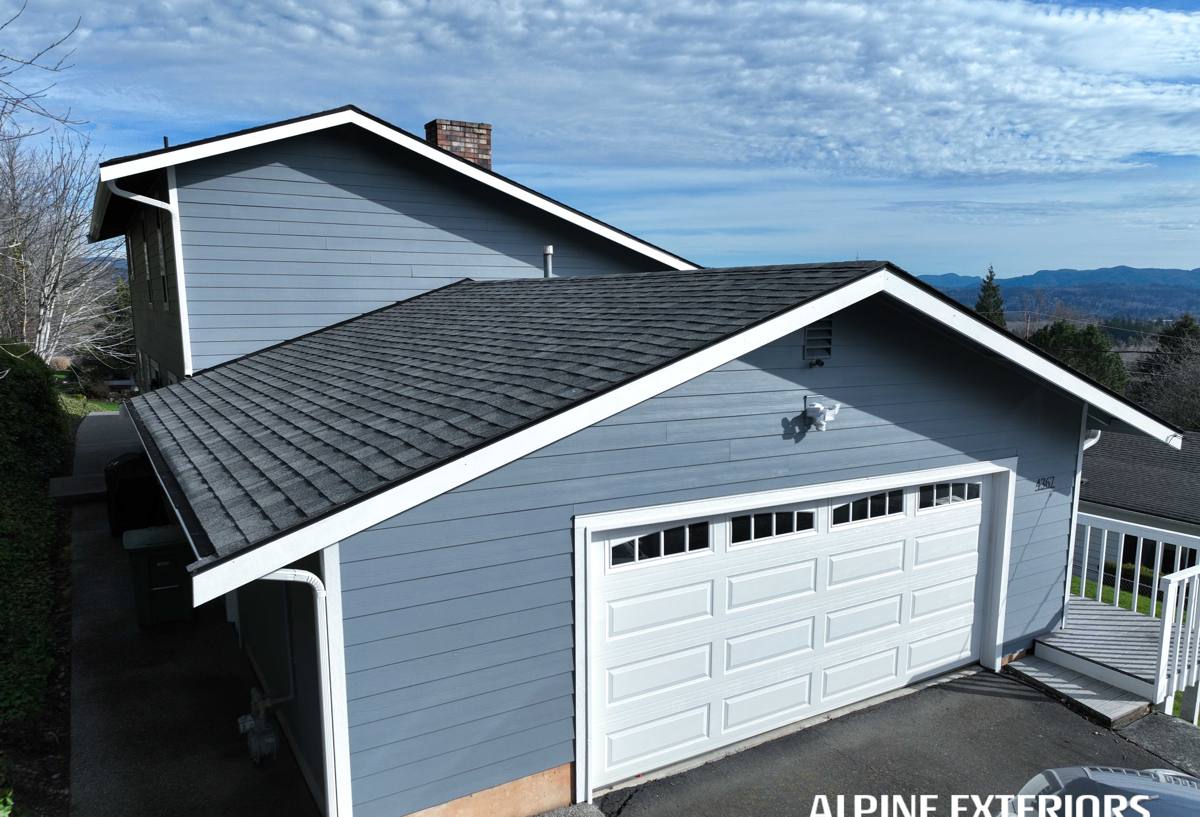
What Driving Rain and Moss Do to a Roof Over Time
Whatcom County doesn't usually get dramatic storms, but it gets sustained, wind-driven rain that finds every weak seam, every under-lapped flashing detail, and every spot where a roofer cut a corner. Water doesn't need a big opening to get in — it needs time and repetition, and this climate provides plenty of both.
Moss is the other half of the equation. North-facing slopes, roofs shaded by mature trees, and anything with reduced sun exposure will grow moss here, often within a year or two of installation if the roof isn't set up to resist it. Moss isn't just cosmetic. It holds moisture against the roofing material, lifts shingle edges as it grows, and over years can work its way under the surface layer, which is exactly where you don't want standing moisture.
- Wind-driven rain pushes water uphill under improperly lapped shingles and flashing
- Moss retains moisture against the roof surface long after the rest of the roof has dried
- Shaded and north-facing slopes need different material and ventilation choices than sun-exposed slopes
- Salt air accelerates corrosion on unprotected fasteners, flashing, and metal components
- Freeze-thaw cycles, though mild here compared to inland areas, still stress trapped moisture in decking
Signs a Cordata Roof Is Due for Replacement
Roof replacement decisions in this climate often come down to reading the signs correctly rather than just counting years. A roof can look fine from the ground and still be failing underneath, especially where moss has been established for a while.
- Granules collecting in gutters or downspouts, especially after heavy rain
- Shingles that are curling, cupping, or visibly lifting at the edges
- Moss or dark streaking covering a significant portion of the roof surface
- Soft or spongy spots when walking the roof during inspection
- Daylight visible through the attic decking, or damp insulation below the roof line
- Rising energy bills tied to poor attic ventilation or insulation loss
- A roof approaching or past the 20-25 year mark on standard asphalt shingles in this climate
Any one of these on its own might just mean a repair. Several together, or a roof already past its expected service life, usually means it's time to talk about full replacement instead of continuing to patch a system that's failing from underneath.
What a Correct New Roof Installation Actually Involves
A new roof is more than laying down new shingles over what's there. In a climate like this, the layers underneath the visible surface matter as much as the material on top — arguably more, since they're what determine whether water actually stays out.
Tear-Off and Deck Inspection
We remove the old roofing down to the deck rather than layering over it. That's the only way to actually see the condition of the plywood or OSB underneath, which is where hidden moisture damage from years of moss and slow leaks tends to show up. Any soft, delaminated, or rotted decking gets replaced before anything new goes down — installing a new roof over bad decking just guarantees an early failure.
Ice and Water Barrier at Vulnerable Points
Eaves, valleys, and areas around penetrations get a self-adhering waterproof membrane underneath the underlayment. These are the spots where wind-driven rain is most likely to work its way backward under the shingles, and they're worth the extra material and labor in a climate that sees this much sustained precipitation.
Underlayment Across the Full Deck
A synthetic underlayment provides a secondary water barrier across the entire roof, not just the high-risk zones. In a region where roofs can stay wet for days at a stretch, this layer is what buys time if the primary surface ever gets compromised.
Flashing Done Right
Flashing around chimneys, skylights, walls, and roof-to-roof transitions is where most leaks in this area actually originate — not the field of the roof itself. We use new flashing rather than reusing old pieces, and it gets properly integrated with the underlayment and shingle courses, not just caulked over.
Ventilation Balanced Intake and Exhaust
Proper attic ventilation pulls damp, warm air out before it can condense against the underside of the deck. In a wet climate, poor ventilation is one of the fastest ways to rot a roof deck from the inside, independent of anything happening on the surface. We size and balance intake and exhaust ventilation to the specific attic, not a one-size-fits-all vent count.
Material Installation to Manufacturer Spec
Nail placement, exposure, and fastening patterns matter for wind resistance and warranty coverage. Cutting corners here is invisible on install day and shows up years later as blow-offs or premature wear.
Roofing Material Options for This Climate
There's no single "best" roofing material for every home — the right choice depends on the roof's slope, sun exposure, budget, and how much long-term maintenance a homeowner wants to take on. Here's how the common options compare for a Cordata property.
| Material | Typical Lifespan Here | Moss Resistance | Maintenance Needs |
|---|---|---|---|
| Asphalt composition shingle | 20-25 years | Moderate; algae-resistant granules help | Periodic moss removal on shaded slopes |
| Architectural/dimensional shingle | 25-30 years | Moderate to good | Similar to standard shingle, better wind rating |
| Standing seam metal | 40-50+ years | Very good; moss struggles to root on metal | Low; occasional fastener and seam checks |
| Cedar shake | 20-30 years with upkeep | Poor without regular treatment | High; needs regular moss and moisture management |
Most Cordata homeowners land on a quality architectural shingle for the balance of cost, appearance, and performance, while homeowners planning to stay long-term or dealing with heavily shaded roofs sometimes move toward metal for the lower long-term maintenance. We'll walk through the honest trade-offs of each for your specific roof rather than pushing one option across the board.
Our Installation Process, Start to Finish
- On-site inspection and estimate — we look at the current roof, attic ventilation, decking condition where visible, and slope exposure before quoting anything
- Material selection — we go over options and honest trade-offs based on your roof's specific exposure and your budget
- Scheduling around weather — in this climate, timing matters; we plan installs to minimize the number of days the deck is exposed to open weather
- Tear-off and deck inspection — full removal of old material, with any compromised decking flagged and replaced
- Waterproofing layers installed — ice and water barrier at vulnerable points, underlayment across the full deck
- Flashing and ventilation work — new flashing set, intake and exhaust ventilation balanced
- Roofing material installed to spec — proper nailing pattern, exposure, and fastening for the chosen material
- Final walkthrough — cleanup, debris check with a magnetic sweep for nails, and a review of the finished roof with the homeowner
Cost Factors Homeowners Should Understand
Every roof is priced individually, but the variables that move a quote up or down are consistent. Understanding them helps make sense of why two roofs of similar square footage can come in at different prices.
| Factor | Why It Matters |
|---|---|
| Roof size and number of stories | More surface area and steeper access both add labor time |
| Roof pitch and complexity | Steep or multi-plane roofs with many valleys and hips take longer and require more flashing detail |
| Deck condition | Rotted or delaminated decking found during tear-off adds material and labor |
| Material choice | Standard shingle, architectural shingle, and metal carry different material costs |
| Ventilation upgrades | Adding or rebalancing intake/exhaust vents adds cost but pays off in roof longevity |
| Layers of existing roofing | Multiple old layers mean more tear-off labor and disposal |
We break all of this down in writing before any work starts, so there are no surprises once the tear-off reveals what's actually under the old roofing.
Why a Crew That Works Cordata Specifically Makes a Difference
A roofing crew that regularly works Whatcom County properties already knows which details actually matter here versus which manufacturer instructions were written for a drier climate. That shows up in small decisions — how much ice and water barrier to use at eaves and valleys, how aggressively to ventilate a shaded attic, which flashing details hold up against sustained wind-driven rain. It also means a crew that understands how local permitting works, is used to scheduling around this area's weather windows, and isn't learning the region's quirks on your roof.
Local presence also matters after the job is done. A roofing company based near Ferndale is available for warranty questions, storm follow-ups, or a maintenance check a few years down the road — not a crew that installed the roof and then moved on to a different region.
Protecting the Investment After Installation
A correctly installed roof still benefits from basic upkeep in this climate. A few habits go a long way toward getting the full expected lifespan out of a new roof:
- Keep gutters clear so water isn't backing up against the roof edge
- Trim overhanging branches that keep sections of the roof shaded and damp
- Address moss growth early with proper treatment rather than letting it establish
- Have the roof checked after major windstorms for lifted shingles or flashing damage
- Schedule a periodic inspection every few years, even without visible problems
If your Cordata roof is showing its age, or you just want an honest opinion on whether it's a repair or a replacement situation, we're happy to take a look. The form below gets you a free, no-pressure estimate with a straightforward explanation of what your roof actually needs.