 Ferndale Siding
 Why Birch Bay Decks Wear Differently Than Decks Inland
Birch Bay sits right on the water, and that changes what a deck has to put up with year-round. Salt-laden air drifts in off the bay and settles on every exposed surface, wood fasteners, and railing post. Add Whatcom County's long wet season, driving rain that comes in sideways off the water, and months where north-facing decking never really dries out, and you've got conditions that are harder on outdoor structures than almost anywhere else in the county. Moss doesn't just grow on roofs out here — it takes hold on shaded, damp decking too, and once it's established it holds moisture against the surface and turns boards slick.
None of this means a deck can't last in Birch Bay. It means the material, the fasteners, the substructure, and the build details all need to be chosen with salt exposure and moisture in mind, not just picked off a lumber yard shelf because it's what's on sale. That's the lens we bring to every composite decking job in this neighborhood.
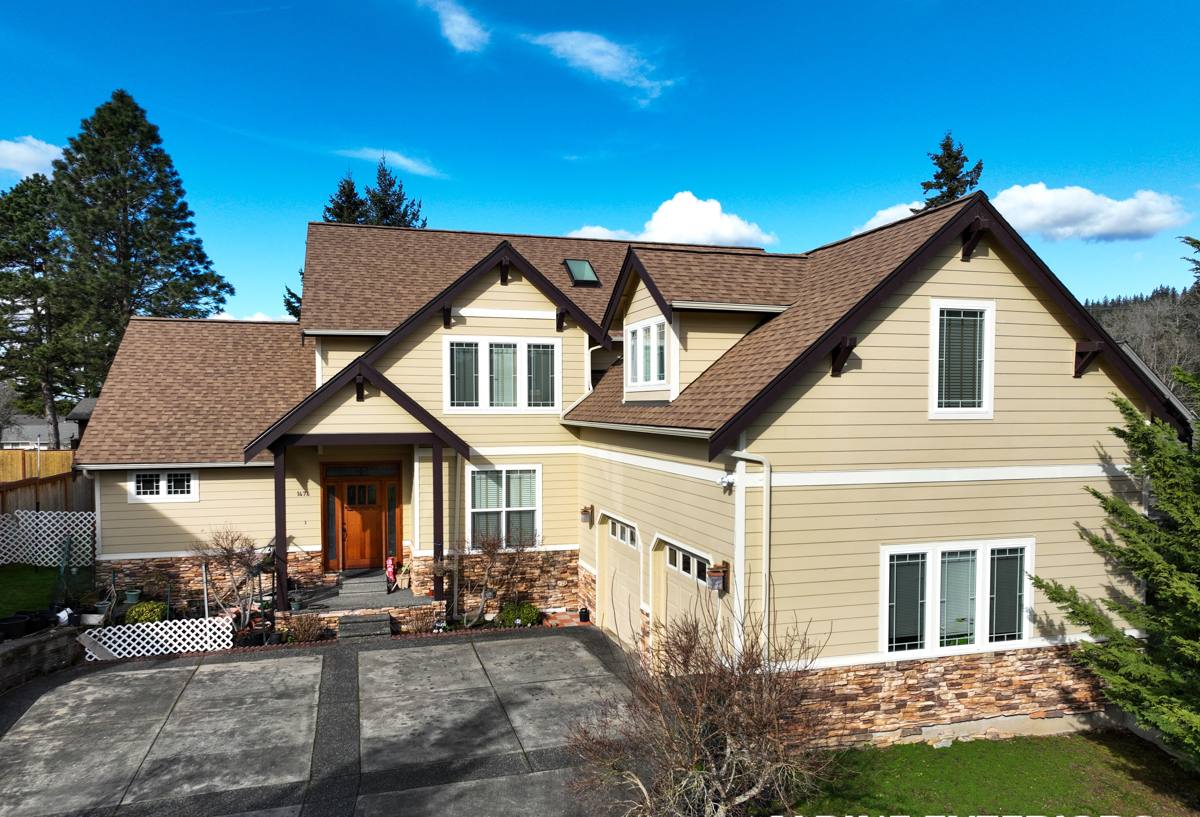
What Birch Bay Homes Actually Need From a Deck
Salt Air Resistance
Airborne salt corrodes exposed metal fasteners, hinges, and railing hardware faster near the water than it does even a few miles inland. Standard galvanized screws and brackets can start showing rust streaks within a couple seasons in a bay-front or near-bay yard. We spec stainless steel or coated fasteners rated for coastal exposure on every Birch Bay job, and we pay attention to which hardware actually touches the elements versus what's protected underneath the decking.
Moisture Management, Not Just Moisture Resistance
A lot of composite decking marketing focuses on the board itself resisting rot — which it does, far better than untreated wood. But the bigger issue in a climate like this is what happens underneath and between the boards: trapped moisture, poor drainage off the substructure, and airflow that never quite dries things out between rain events. A deck can have premium boards on top and still fail early if the framing and drainage underneath weren't built for a wet climate.
Moss and Algae Control
Shaded decks, north-facing decks, and anything tucked under mature trees in Birch Bay will grow moss if the surface texture and drainage don't discourage it. Board selection and gap spacing matter here — a deck built for a dry inland yard doesn't always translate directly to a shaded, damp Birch Bay lot.
Composite vs. Wood: The Honest Trade-offs for This Climate
We install both, and we tell homeowners the truth about each rather than pushing whatever's more profitable that month. Here's how they actually compare for a Birch Bay setting specifically:
| Factor | Composite Decking | Pressure-Treated Wood |
|---|---|---|
| Salt air / coastal exposure | Board material doesn't corrode or absorb salt; hardware still needs coastal-rated fasteners | More prone to accelerated weathering and fastener corrosion near the water |
| Moisture / rot resistance | Won't rot from standing water, though moisture management underneath still matters | Can rot at fastener points and board ends if maintenance lapses even one season |
| Moss and algae | Textured caps still need airflow and gap spacing to prevent buildup | Rougher grain holds moisture longer, often grows moss faster in shade |
| Maintenance routine | Periodic washing, no staining or sealing required | Annual or biannual sealing/staining to hold up in this climate |
| Upfront cost | Higher material cost | Lower material cost, higher lifetime maintenance cost |
| Long-term cost in this climate | Lower over 15-20 years given reduced upkeep | Can be competitive if maintenance is kept up consistently, rarely is |
For most Birch Bay homeowners, composite wins out because it removes the maintenance burden that this climate makes especially punishing — nobody wants to be re-sealing a deck every year when the rainy season barely gives it time to dry between coats. But if a homeowner wants a specific wood look and is committed to the upkeep, we'll say so honestly rather than talk them out of it with exaggerated claims.
What a Correct Composite Deck Build Involves Here
Substructure and Framing
The framing underneath is where most premature deck failures actually start, composite or wood. In a wet climate, that means proper ledger flashing where the deck ties into the house, joist tape or a moisture barrier on top of the framing, and post footings set below frost depth and sized for our soil conditions. None of this is visible once the deck is finished, which is exactly why it's the part that gets skipped by crews trying to save time.
Drainage and Ventilation Underneath
Composite boards need airflow underneath to shed the moisture that inevitably gets between and under them during our wet months. We grade and gap the substructure so water moves off the site instead of pooling under the deck, especially important on the flatter lots common around Birch Bay where standing water doesn't always have an obvious place to go.
Fastening and Hardware
Hidden fastener systems keep the deck surface clean and reduce the number of exposed metal points that salt air can attack. Where fasteners are exposed — railing posts, stair stringers, structural connections — we use stainless or coastal-rated hardware, not standard galvanized.
Board Selection for Sun, Shade, and Salt
Not every composite board line handles coastal UV and salt exposure the same way, and board color affects heat retention on the sunnier, more exposed lots near the water. We walk through the realistic options with each homeowner based on where the deck sits — full sun near the water, shaded under trees, or somewhere in between.
Our Process for a Birch Bay Composite Deck Project
- On-site assessment. We look at sun and shade exposure, proximity to the water, drainage on the lot, and the condition of any existing deck or ledger connection.
- Honest scope and estimate. We walk through board options, substructure needs, and realistic costs before any work starts — no upsell pressure, no vague allowances.
- Permitting. Deck projects in Whatcom County typically require a permit depending on height and attachment to the house; we handle that process rather than leaving it to the homeowner.
- Demo and substructure build. Old decking removed, framing inspected or rebuilt, flashing and moisture barriers installed correctly the first time.
- Composite installation. Boards, hidden fasteners, and coastal-rated hardware installed to spec, with attention to gap spacing for drainage and moss resistance.
- Final walkthrough. We go over basic care with the homeowner — what it needs, how often, and what to watch for given the local climate.
Maintenance That Actually Fits This Climate
One of the real advantages of composite in a place like Birch Bay is how little upkeep it needs compared to wood, but "low maintenance" isn't "no maintenance." A basic seasonal routine keeps a composite deck performing well for decades:
- Rinse or wash the deck surface periodically to clear salt residue and organic debris before it can feed moss growth
- Clear leaves and debris from gaps between boards so water keeps draining instead of pooling
- Check railing hardware and fasteners annually for any early corrosion, especially on decks close to the water
- Keep gutters and downspouts near the deck clear so runoff isn't dumping extra water onto the structure
- Address moss at the first sign of it rather than waiting for it to spread across shaded boards
Why Local Experience in Birch Bay Matters
A crew that mostly builds decks in drier inland climates will make different assumptions than one that works this stretch of Whatcom County regularly. We know which lots near the water need extra attention to fastener corrosion, which shaded yards need wider board gaps to fight moss, and how the driving rain off the bay behaves differently than a straight-down rainstorm inland. That's not something you can pick up from a spec sheet — it comes from building and maintaining decks in this exact environment.
We also know the practical side: permitting expectations in Whatcom County, typical lot conditions around Birch Bay, and what tends to go wrong on decks that were built by out-of-area crews without accounting for the salt air and moisture here. Hiring a contractor who already knows this neighborhood means fewer surprises and a deck that's actually built for where it sits, not a generic install dropped into a coastal climate.
Get a Straightforward Estimate
If you're weighing composite decking for a Birch Bay property, we're glad to come take a look, talk through what your specific lot and sun exposure call for, and give you a clear, no-pressure estimate. There's a form below — reach out and we'll get you scheduled.