 Ferndale Siding
 Composite Decking in Cordata: Built for What This Climate Actually Does to a Deck
Cordata sits close enough to the water that homes here deal with a steady mix of salt-laden air, long stretches of driving rain, and a moss season that can run from late fall well into spring. None of that is unusual for Whatcom County, but it's exactly the combination that wears out a poorly built deck years before it should. A deck that looks fine going in can start showing soft boards, green film, or loose fasteners within a couple of wet seasons if the substructure, drainage, and hardware weren't matched to this climate from the start.
Composite decking has become the default choice for a lot of Cordata homeowners for good reason — it doesn't absorb moisture the way wood does, it won't need refinishing every year, and it resists the moss and algae growth that's constant here. But composite is not maintenance-free, and it is not installer-proof. The material forgives some things wood won't, and punishes other mistakes wood tolerates. Getting a composite deck right in this neighborhood means building for standing water, not just rain that falls and runs off.
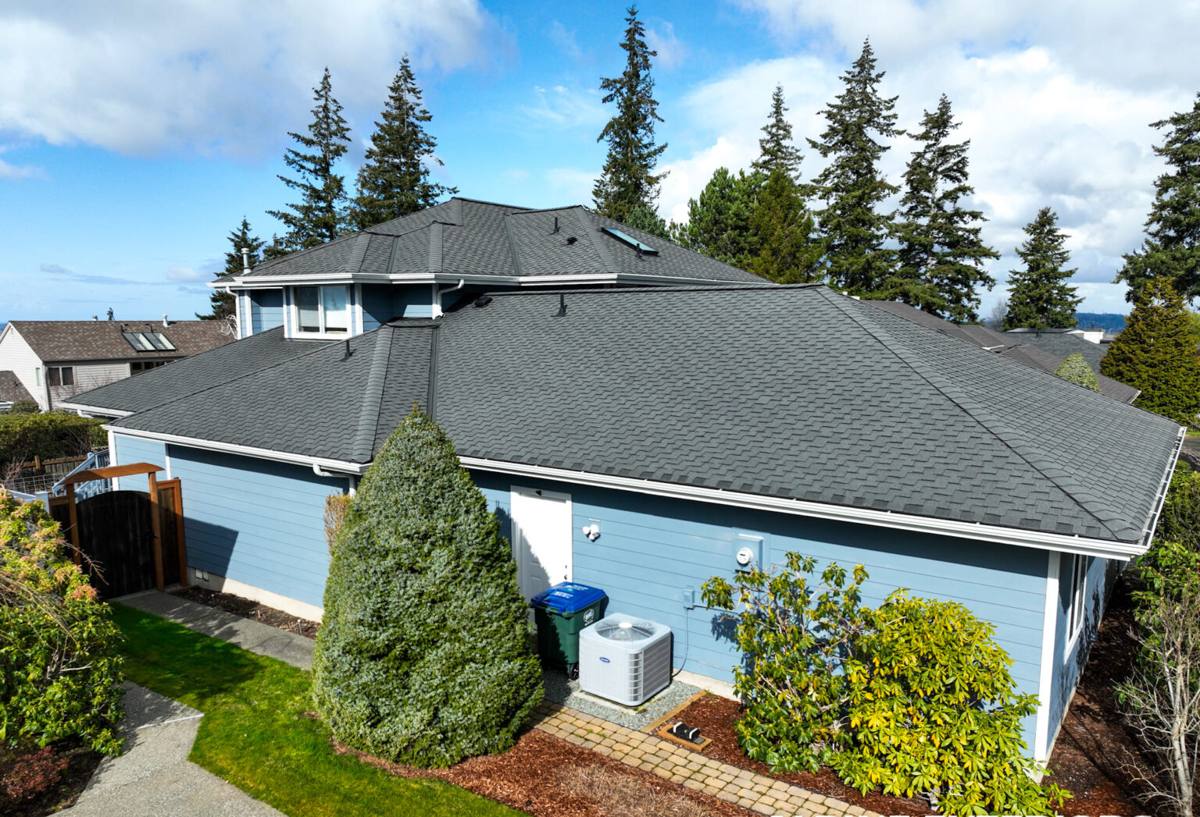
What Cordata's Weather Actually Does to a Deck Over Time
Salt Air and Metal Hardware
Being this close to Bellingham Bay, homes in and around Cordata get a low but constant dose of salt in the air. It's not the same exposure as a beachfront property, but it's enough to accelerate corrosion on the wrong grade of fasteners, joist hangers, and post hardware over a decade or more. Composite boards themselves don't care about salt air, but the structure underneath them absolutely does.
Driving Rain and Standing Water
Rain in this part of Whatcom County doesn't just fall straight down — wind-driven rain gets underneath rail caps, into fastener holes, and between boards that are spaced too tight. A deck built without enough gap between boards, or without a slight pitch to shed water, will hold puddles that never fully dry out between storms. That trapped moisture is where problems start, even with a material that's rated to handle it.
Moss and Algae Season
Shaded decks and north-facing decks in Cordata can stay damp for weeks at a stretch during the wet months. That's ideal growing conditions for moss and algae, which take hold in the surface texture of some composite boards faster than homeowners expect. The board's cap technology and surface finish make a real difference in how much moss actually gets a foothold, and how easily it comes off when it does.
What a Correctly Built Composite Deck Involves Here
A composite deck that holds up in this climate is really three systems working together: the framing underneath, the fastening method, and the board itself. Skimping on any one of the three shows up as a problem within a few years, even if the composite boards are top quality.
Framing and Substructure
- Joists sized and spaced for the specific composite product being installed — composite spans differently than dimensional lumber, and manufacturer spec sheets vary by brand.
- Ledger board flashed and sealed properly where the deck meets the house, so wind-driven rain can't work its way behind the siding.
- Adequate airflow underneath the deck to let the framing dry out between rain events instead of staying damp all winter.
- Pressure-treated or coated framing lumber rated for ground contact where posts and beams sit close to grade.
Fastening and Hardware
This is where salt air matters most. Stainless steel or coated, corrosion-resistant fasteners and structural connectors cost more up front but are the difference between hardware that's still solid in fifteen years and hardware that's rusting through in eight. We treat this as a standard, not an upgrade, for anything within a mile or two of the water.
Board Spacing and Drainage
Composite boards need consistent gapping — tight enough to look clean, wide enough to let water and debris pass through instead of collecting on the surface. A deck built too tight looks great the first summer and holds standing water by the second winter.
Composite vs. the Alternatives for a Cordata Deck
| Decking Type | How It Handles Rain and Damp Shade | Typical Upkeep | Moss Resistance |
|---|---|---|---|
| Cedar or fir (untreated wood) | Absorbs moisture, prone to cupping and rot without diligent upkeep | Annual cleaning, periodic staining or sealing | Low — moss takes hold quickly in shaded areas |
| Pressure-treated wood | Better rot resistance than untreated wood, still absorbs surface moisture | Regular cleaning, sealing every 1–2 years | Low to moderate |
| Uncapped composite | Won't rot, but surface can absorb moisture and stain over time | Occasional cleaning | Moderate — older composite formulations can hold moss in the texture |
| Capped composite | Sealed outer layer sheds water and resists staining | Low — periodic rinsing | Good — smooth cap sheds moss and algae more easily |
We install capped composite almost exclusively for decks in this area. The extra cost over uncapped composite is modest relative to the lifespan of the deck, and the cap layer is what actually resists the moss and staining that this climate causes. We'll walk through the specific product lines and their warranty terms during your estimate rather than guessing at brand-specific numbers here — those details change year to year.
Our Installation Process
- On-site evaluation. We look at drainage patterns, sun and shade exposure, proximity to the water, and the condition of any existing structure before recommending a decking system.
- Framing plan. We size and space the substructure to the specific composite product's span rating, not a generic wood-framing spec.
- Ledger and flashing work. Where the deck attaches to the house, we flash and seal the connection to keep wind-driven rain out of the wall assembly.
- Fastener and hardware selection. Corrosion-resistant hardware throughout, sized for the loads the deck will actually see.
- Board installation. Consistent spacing, hidden or face fastening depending on the product and the homeowner's preference, and attention to drainage at the perimeter.
- Final walkthrough. We go over basic care for the specific product installed, including what to expect during moss season.
Fastening Method: Hidden Clips vs. Face Screws
Most composite boards today are grooved for hidden fastener clips, which give a clean surface with no visible screw heads. That's usually the better choice for a Cordata deck because it eliminates one of the more common failure points — water sitting in a screw head recess and slowly staining or degrading the area around it. Face-screwed boards are still appropriate in certain situations, like stair treads or picture-framed border boards, and we'll spec the right method board by board rather than defaulting to one approach for the whole deck.
Cost Factors for a Composite Deck in This Area
| Factor | Why It Moves the Price |
|---|---|
| Substructure condition | New framing costs more than reusing sound existing framing, but damp-rotted joists have to be replaced regardless of the decking material chosen |
| Deck size and shape | More cuts, borders, and picture-framing detail add labor time |
| Height and railing requirements | Elevated decks need code-compliant railing and stair systems, which adds material and labor |
| Board tier and cap type | Capped composite costs more per square foot than uncapped, but performs better against moisture and moss in this climate |
| Hardware grade | Corrosion-resistant fasteners and connectors cost more than standard galvanized hardware, and are worth it this close to the water |
We give a written, itemized quote after the on-site evaluation rather than a phone estimate, because the framing condition underneath an existing deck often changes the scope once we're actually looking at it.
Living With a Composite Deck Through a Whatcom County Winter
Composite decking cuts down on maintenance significantly compared to wood, but "low maintenance" isn't "no maintenance" — especially through a wet Whatcom County winter. A little seasonal attention keeps the surface looking right and keeps moss from getting established in the first place.
- Rinse or sweep debris off the deck regularly through fall, before wet leaves sit long enough to stain the surface or feed moss growth.
- Clean the deck surface with a soft-bristle brush and a composite-safe cleaner once or twice a year — pressure washers can be used carefully but the wrong nozzle or distance can damage the cap layer.
- Check and clear gaps between boards periodically so drainage paths don't clog with needles, seed pods, or dirt.
- Inspect railing posts and stair connections annually for any looseness, which is often the first sign of a fastening issue rather than a decking issue.
- Keep planters and rugs from sitting in one spot for extended periods, since trapped moisture underneath them is exactly the environment moss needs.
Why It Matters That We Already Work in Cordata
A lot of what makes a composite deck last here isn't on the spec sheet — it's knowing how a particular lot drains after a heavy storm, which sides of a house stay shaded long enough to grow moss, and which hardware actually holds up after years of Whatcom County damp and salt air. A crew that's worked decks throughout Ferndale and the surrounding neighborhoods brings that judgment to your framing and drainage decisions instead of building to a generic spec and hoping it holds up.
If you're weighing composite decking for a home in Cordata, we're glad to come take a look, walk the site, and put together a straightforward, no-pressure estimate — just fill out the form below to get started.