 Ferndale Siding
 Composite Decking Built for Sumas, Not for a Showroom
Sumas sits close enough to the coast to catch salt-laden air off the Strait, but far enough inland and up against the foothills that it also gets its own share of driving rain and long, gray stretches where nothing on a deck really dries out for days at a time. That combination is harder on outdoor living spaces than either condition alone. A deck built for a dry inland climate struggles here, and a deck built purely for coastal spray misses the standing-water and moss problems that come with Whatcom County's wet season. Composite decking, installed correctly for this specific mix of conditions, holds up to both without asking the homeowner to spend every spring re-staining, sanding, or replacing boards that cupped over the winter.
This page is about composite decking specifically for Sumas properties — what the local climate demands from the material and the installation, what a correct job actually looks like underneath the boards, and why the substructure matters more than the decking brand printed on the box.
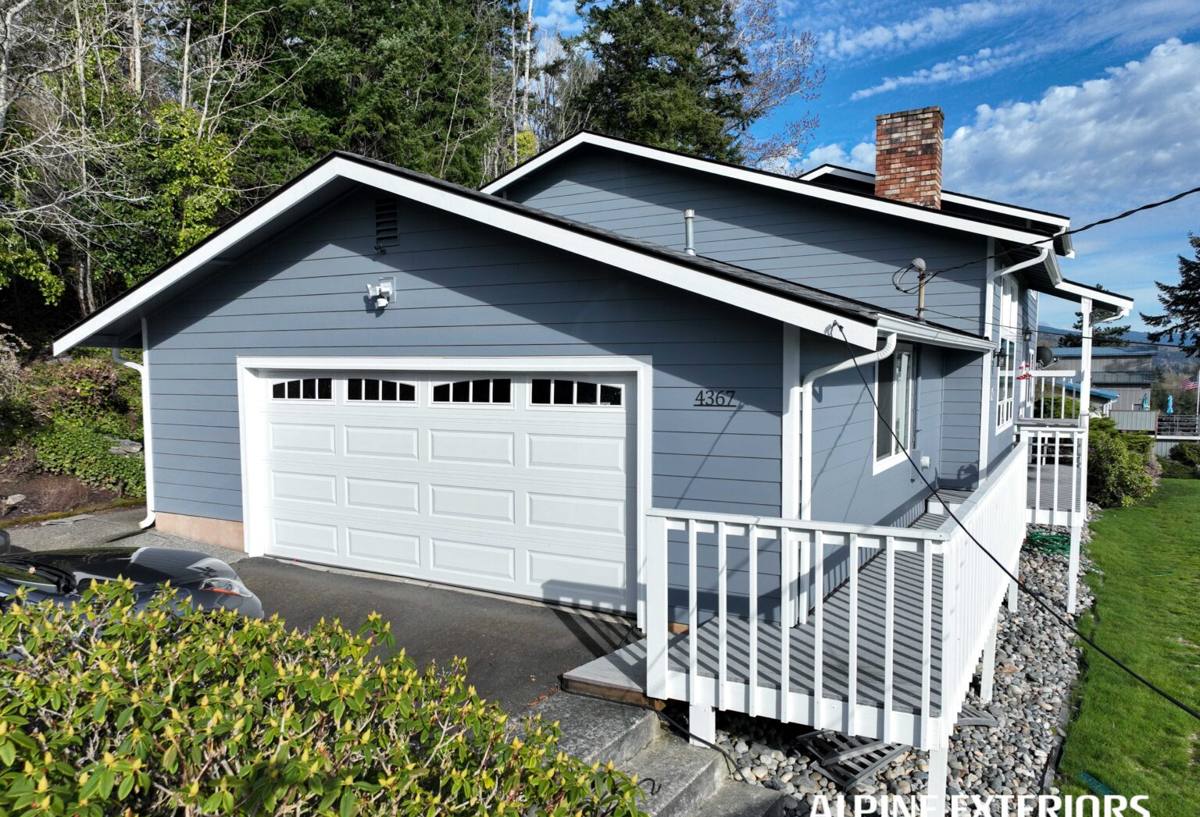
What Whatcom County Weather Actually Does to a Deck
Three things define deck wear in this part of the county, and each one attacks a different part of the structure:
- Driving rain — wind-driven rain doesn't just fall on a deck surface, it gets pushed sideways into ledger connections, under rail posts, and into any gap where end-grain is exposed. Over years, that's where rot and fastener corrosion start, not on the open field of the deck.
- Salt air — even well inland from the water, salt-bearing air corrodes unprotected fasteners and hardware faster than people expect. Cheap coated screws and generic joist hangers are usually the first thing to fail on an older deck, long before the decking itself looks bad.
- Extended moss and algae season — Whatcom County's wet months stretch long enough that any deck surface holding moisture, shade, or organic debris will grow moss or algae film. On wood, that moisture gets absorbed into the fibers. On lower-quality composite, it can sit on the surface and stain a board that never actually rotted.
None of this means composite decking is a cure-all. It means the installation has to be designed around drainage, airflow, and corrosion-resistant hardware — not just around getting boards screwed down in a straight line.
Where Older Decks in the Area Usually Fail First
On repair and replacement calls in this area, the failure point is almost never the decking boards themselves. It's the framing underneath: undersized or unflashed ledger boards, joists that were never coated or wrapped, and post bases sitting in standing water because the original grading sloped the wrong way. A new composite deck installed on top of a compromised or poorly protected substructure will look great for a season or two and then develop the exact same problems the old deck had.
What a Correct Composite Deck Installation Involves
Composite boards are only as good as what's underneath them. For a Sumas property, that means paying close attention to a handful of details that don't show up in a showroom sample but matter a great deal after five Whatcom County winters:
Ledger and Ledger Flashing
Where the deck attaches to the house is the single most common point of water intrusion on any deck in a wet climate. Correct flashing — installed so water sheds away from the house rather than behind the ledger board — is non-negotiable, regardless of what decking material sits on top.
Joist Protection and Spacing
Composite decking is heavier and behaves differently under load and temperature change than solid wood. Manufacturers publish minimum joist spacing for a reason, and in a climate with sustained moisture, we also treat or wrap joist tops so the framing isn't absorbing water every time it rains, even if it's hidden under the boards.
Ventilation Underneath
A deck built low to the ground or over a partially enclosed space needs airflow underneath it. Without it, moisture gets trapped, and that's exactly the environment that grows mold and speeds up hardware corrosion — even under composite boards that are themselves moisture-resistant.
Fasteners and Hardware
In salt-influenced air, we use stainless or coated fasteners and hangers rated for the exposure, not whatever is cheapest at the yard. This is one of the least visible parts of a deck build and one of the most common places corners get cut.
Board Gapping and Picture-Framing
Composite boards expand and contract with temperature more than most homeowners expect. Gapping has to account for our seasonal swings, and cut ends — especially at picture-frame borders — need to be capped or sealed per the manufacturer's method so exposed core material isn't sitting open to constant rain.
Composite vs. Wood vs. PVC: An Honest Comparison for This Climate
There's no single "best" decking material for every home — there's a best fit for a given budget, maintenance appetite, and exposure. Here's how the three common options actually compare under Whatcom County conditions:
| Material | Moisture Behavior | Maintenance | Typical Lifespan Here |
|---|---|---|---|
| Pressure-treated wood | Absorbs water; prone to cupping, splitting, and splinter-raise in sustained wet weather | Annual cleaning, periodic staining/sealing | 10-15 years before major repair or replacement |
| Capped composite | Resists moisture absorption in the board core; surface can still hold moss/algae film if not cleaned | Occasional wash-down; no staining or sealing | 25-30+ years, manufacturer-dependent warranty |
| PVC / all-polymer | Fully moisture-resistant; can be more sensitive to installation temperature and expansion | Lowest maintenance; occasional wash-down | 25-30+ years, higher upfront cost |
For most Sumas homeowners, capped composite is the sweet spot: it holds up to our wet season far better than wood without the tighter installation tolerances and higher price point of full PVC. We'll walk through the honest trade-offs for your specific project rather than push whichever product carries the best margin.
Our Process for a Sumas Composite Deck Project
- Site visit and assessment — we look at drainage, grade, existing structure (if replacing a deck), sun/shade exposure, and how the deck ties into the house.
- Design and material selection — board style, color, and railing choices, with the trade-offs of each explained plainly, not upsold.
- Substructure build or repair — footings, framing, ledger flashing, and hardware sized and rated for our climate, not just code minimums.
- Decking installation — proper gapping, fastening method, and edge treatment per manufacturer specification.
- Final walkthrough — we go over basic care with you so the deck actually reaches the lifespan it's rated for.
Managing Moss and Algae in a Damp Climate
Even the best-installed composite deck in this part of Washington will see some moss or algae film during the wet months, especially in shaded corners or under overhangs. That's a climate reality, not a product defect. The difference between composite and wood is that on composite, it's almost always a surface issue that rinses off, rather than something that's worked its way into the fiber of the board. Keeping gutters and downspouts clear so they aren't dumping extra water onto the deck, and keeping leaves and debris from piling in corners, does more to control moss than any cleaning product.
Simple Maintenance Checklist for Composite Decks in This Area
- Sweep debris and leaves off the deck regularly through fall and into winter, especially in shaded areas.
- Rinse the deck surface a few times a year with plain water and a soft-bristle brush to keep moss and algae from establishing.
- Check that deck drainage isn't being fed by a misdirected downspout or gutter overflow.
- Inspect railing posts and stair connections once a year for movement or loose hardware.
- Keep planters and rugs from sitting in one spot for months at a time — trapped moisture under an object is the most common cause of surface staining on composite.
- Avoid pressure-washing on high settings directly into board seams; a wide fan tip and moderate pressure is enough.
Cost Factors for a Composite Deck in Sumas
Every project is different, but the same handful of factors drive most of the price difference between jobs in this area:
| Factor | Why It Matters Here |
|---|---|
| Deck height and railing requirements | Taller decks need code-compliant railing and often more substantial footings |
| Substructure condition | Replacing rotted or corroded framing adds cost but is what actually determines how long the new deck lasts |
| Board tier (capped composite vs. PVC) | Material cost per square foot varies significantly between product tiers |
| Site access and grade | Steep or tight-access lots common in this area can add labor time |
| Drainage and grading work | Correcting poor water flow around the deck footprint prevents future problems |
We provide a written estimate that breaks these out so you know what you're actually paying for, rather than a single lump number.
Why Hire a Crew That Already Works in Sumas
Building codes, typical soil and drainage conditions, and the specific way Whatcom County weather wears on outdoor structures aren't the same everywhere. A crew that regularly works in and around Ferndale and Sumas already knows which framing details hold up here, which product lines perform well in sustained damp conditions, and what local permitting expects for deck height and railing. That local familiarity shows up less in the sales pitch and more in the parts of the job nobody sees once the boards are down — the flashing, the hardware, the drainage path. That's where a deck actually earns its lifespan or falls short of it.
Get a Straight Answer for Your Sumas Property
If you're weighing a new composite deck or replacing an aging one, we're happy to take a look, walk you through what your specific site needs, and give you an honest, no-pressure estimate — no upsell, just what the job actually requires. Use the form below to get started.