 Ferndale Siding
 Why Cordata Decks Wear Out Faster Than Homeowners Expect
Cordata sits close enough to the water and to open farmland that its homes take a steady beating from moisture year-round, even though the storms themselves are rarely dramatic. Most of the deck failures we find here aren't from one bad event — they're from years of a deck staying damp longer than it should between rains. A deck built to a minimum standard fifteen or twenty years ago is usually the one showing soft boards, rusted hardware, and a slick green film underfoot today. Replacing a deck the right way in this area means building it to shed water fast and dry out completely, not just meeting the code minimum that was written for a drier climate.
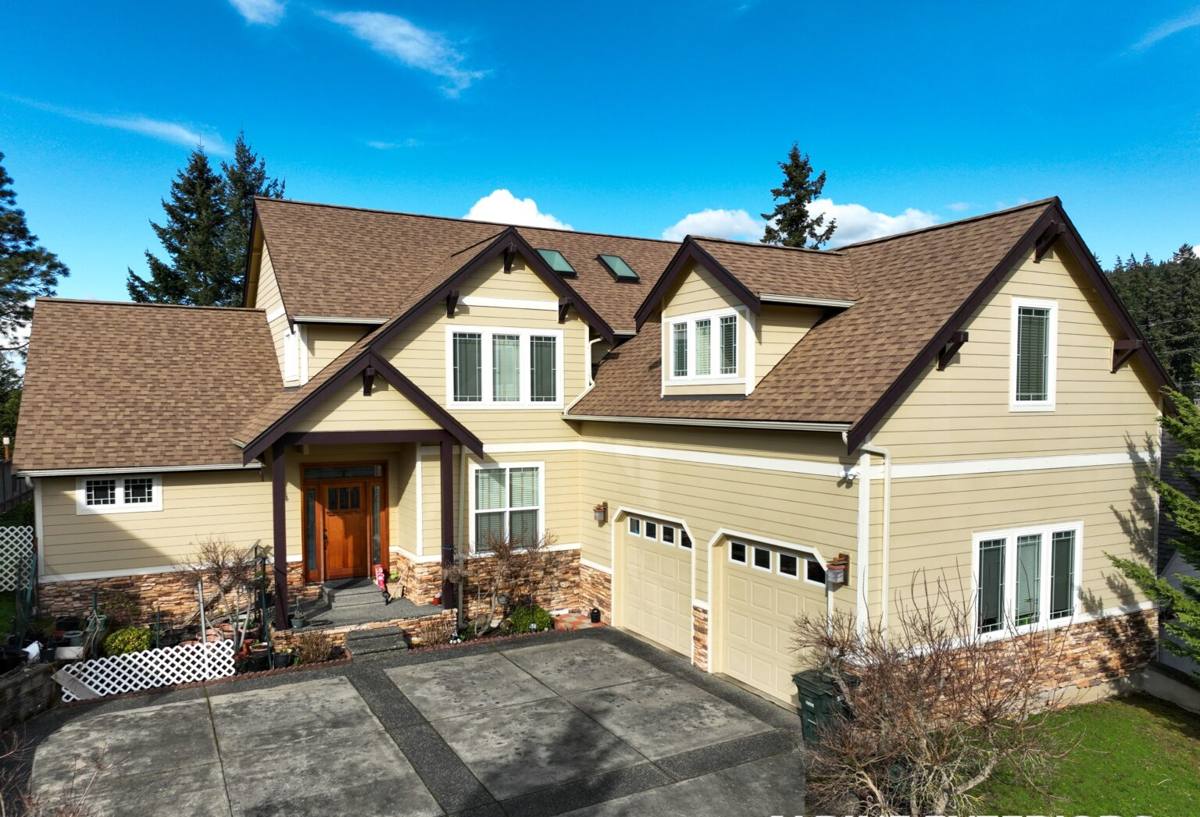
The Whatcom County Climate Factor
Three conditions do most of the damage to decks in and around Ferndale and Whatcom County, and any replacement plan needs to answer all three, not just the one that's most visible.
Salt Air and Fastener Corrosion
Proximity to Puget Sound means a steady low-level salt content in the air, even well inland. Salt accelerates corrosion in standard fasteners, joist hangers, and screws — often from the inside out, so the first sign is a rust bleed stain on the decking long before any structural hardware actually fails. Once we're inside an old deck, it's common to find hangers and ledger bolts that are far more compromised than their surface appearance suggested.
Driving Rain and Ledger Rot
Wind-driven rain doesn't fall straight down here — it gets pushed sideways into the house-to-deck connection, which is exactly the joint most decks depend on for structural support. Where flashing was skipped or installed loosely, water tracks behind the ledger board and into the rim joist, and that rot is invisible from the top of the deck for years.
Moss Season and Slick, Soft Boards
Whatcom County's moss season runs long — shaded decks under trees or on the north side of a house can stay damp from fall through spring. Moss and algae hold moisture against the board surface, which softens wood fiber, degrades composite capstock over time, and turns a deck into a slip hazard well before it looks obviously worn.
Repair or Replace? Signs to Look For
Not every aging deck needs a full replacement, but in this climate, surface problems are more likely to point to structural ones underneath than homeowners expect. Before we quote a job, we check for these:
- Soft or spongy spots when you walk the deck, especially near the house or stair landings
- Rust streaking around fastener heads or where joist hangers meet the framing
- Gaps opening up between boards, or boards that have visibly cupped or crowned
- Persistent moss or black staining that comes back within weeks of cleaning
- Railings or posts that feel loose or flex under hand pressure
- Visible daylight gaps or missing flashing where the deck meets the siding
- A deck older than 15–20 years that has never had the framing inspected
If the framing underneath is sound and it's really just the decking surface that's failed, a resurface can make sense. Once ledger rot, hanger corrosion, or post-base decay show up, replacement is the honest answer — patching those issues doesn't hold up long in this climate.
What a Correct Deck Replacement Actually Involves
A deck replacement that's actually built for Whatcom County weather goes several steps past "tear off the old boards and screw down new ones." The parts nobody sees are the parts that determine whether the next deck lasts twenty years or five.
Ledger Board and Flashing Details
The ledger connection is the single most important — and most commonly under-built — part of any deck attached to a house. We install proper flashing that layers correctly with the house's water-resistive barrier, use structural fasteners rated for the load, and confirm there's a drainage gap so any water that does reach that joint has somewhere to go besides into the wall assembly.
Joist and Beam Protection
Untreated cut ends and joist tops are where rot starts even on treated lumber, since the treatment doesn't penetrate a fresh cut. We seal cut ends, use joist tape or a comparable barrier on joist tops before decking goes down, and use corrosion-resistant, coated fasteners and hangers throughout — not just at the ledger — given the salt-air exposure typical of this area.
Decking Material Options
Material choice matters more here than in a drier inland climate, because whatever you choose is going to sit damp for extended stretches during moss season. Here's how the common options actually perform under those conditions:
| Material | Moisture Behavior | Maintenance Needed | Typical Lifespan Here |
|---|---|---|---|
| Cedar | Naturally rot-resistant but still needs sealing to shed water | Annual cleaning and periodic sealing/staining | 15–20 years with upkeep |
| Pressure-treated pine | Treated for rot resistance; can still cup or check if not sealed | Cleaning plus sealant every 1–2 years | 15–20 years with upkeep |
| Composite | Won't rot, but lower-grade boards can absorb moisture at cut edges | Periodic washing; capped boards need little else | 20–30 years depending on grade |
| PVC | Fully moisture-resistant, sheds water and resists moss growth well | Occasional washing only | 25–30+ years |
We'll walk through these trade-offs with you rather than push one product — a homeowner who's fine with an annual weekend of sealing gets real value out of cedar or treated wood, while someone who wants to stop thinking about the deck once it's done is usually happier with a quality capped composite or PVC board.
Our Deck Replacement Process, Step by Step
- On-site inspection: We check the ledger, framing, posts, and footings before quoting anything, so the estimate reflects what's actually under the old decking, not just its surface condition.
- Full tear-off: Old decking, railings, and any compromised framing are removed and hauled off.
- Framing repair or rebuild: Any rotted joists, beams, or posts are replaced; footings are checked for adequate bearing.
- Ledger and flashing correction: This is where most of our attention goes, since it's the connection most likely to have been under-built originally.
- Decking installation: Boards are installed with correct spacing for drainage and material-specific expansion.
- Railings and guardrails: Installed to current code height and baluster spacing requirements.
- Final walkthrough: We go over the finished deck with you, including what maintenance it will and won't need going forward.
Permits and Code Requirements for Whatcom County Decks
Most deck replacements — especially anything involving new framing, footings, or a change in size or height — require a building permit locally, and guardrails, baluster spacing, and stair geometry all have to meet current code even if the old deck predates those rules. Reusing an old deck's footprint doesn't automatically exempt a replacement from permitting once the framing is being rebuilt. We handle the permit application and inspection scheduling as part of the job, so you're not the one tracking down what the local building department needs.
What Affects the Cost of a Deck Replacement in Cordata
Every deck is different, so we won't quote a number without seeing the site, but these are the factors that move the price up or down on most jobs in this area:
| Factor | Why It Matters |
|---|---|
| Deck size and shape | Square footage and the number of angles/cuts directly drive material and labor time |
| Decking material chosen | Wood, composite, and PVC span a wide cost range and affect long-term maintenance costs too |
| Condition of existing framing | Hidden rot at the ledger or posts adds repair scope once the old decking is off |
| Height and stair requirements | Elevated decks need more substantial framing, footings, and guardrail work |
| Railing style | Basic wood balusters cost less than cable, glass, or composite rail systems |
| Demo and disposal | Multiple layers of old decking or a full structure removal adds haul-away cost |
Why Hiring a Crew That Already Works in Cordata Matters
A deck built for Whatcom County's specific mix of salt air, driving rain, and moss season looks different from one built to a generic national spec sheet — the flashing details, fastener grade, and drainage gaps we build in aren't optional upgrades here, they're what keeps a deck from needing another replacement in ten years instead of twenty-five. Working regularly in this area also means we already have a working relationship with the local permitting process, know what inspectors are checking for on ledger connections, and aren't learning the local soil and drainage conditions on your job for the first time. That familiarity shows up as fewer surprises mid-project and a deck that's actually built for the climate it has to survive, not just the climate the material's spec sheet was written for.
Keeping Your New Deck Ready for Another Whatcom County Winter
A properly built deck still needs some basic upkeep to get its full lifespan out of this climate. Here's what we recommend to every Cordata-area homeowner after installation:
- Sweep debris off the deck regularly, especially in fall when leaves trap moisture against the boards
- Treat moss and algae early each season rather than waiting until it's visibly thick
- Check and re-seal wood decking on the schedule appropriate to that product — don't wait for visible graying to start
- Keep gutters and downspouts near the deck clear so runoff isn't draining directly onto or under it
- Inspect railings and stair connections once a year for looseness
- Confirm gaps between boards stay clear so water keeps draining through rather than pooling
If you're weighing whether your current deck needs a resurface, a rebuild, or just a smarter maintenance schedule, we're happy to take a look and give you an honest answer either way. Reach out for a free, no-pressure estimate using the form below.