 Ferndale Siding
 Why Storm Damage Looks Different on a Cordata Roof
Homes in the Cordata area near Ferndale sit close enough to the water that every roof on the street deals with the same three-part problem: salt-laden air, driving rain that comes in sideways during winter storms, and a moss season that runs longer here than it does almost anywhere else in the country. None of these three things is dramatic on its own. Together, over years, they're what turns a small storm event into a roof that's quietly failing underneath.
When a windstorm rolls through Whatcom County, most homeowners check for the obvious signs — missing shingles, a dented vent cap, a branch on the lawn. That's a good start, but it's not the whole picture. The damage that actually costs money later is usually the damage you can't see from the driveway: lifted shingle tabs that reseal crooked, flashing that's been nudged just enough to let water track sideways, underlayment that's been wetted repeatedly but never quite fails all at once.
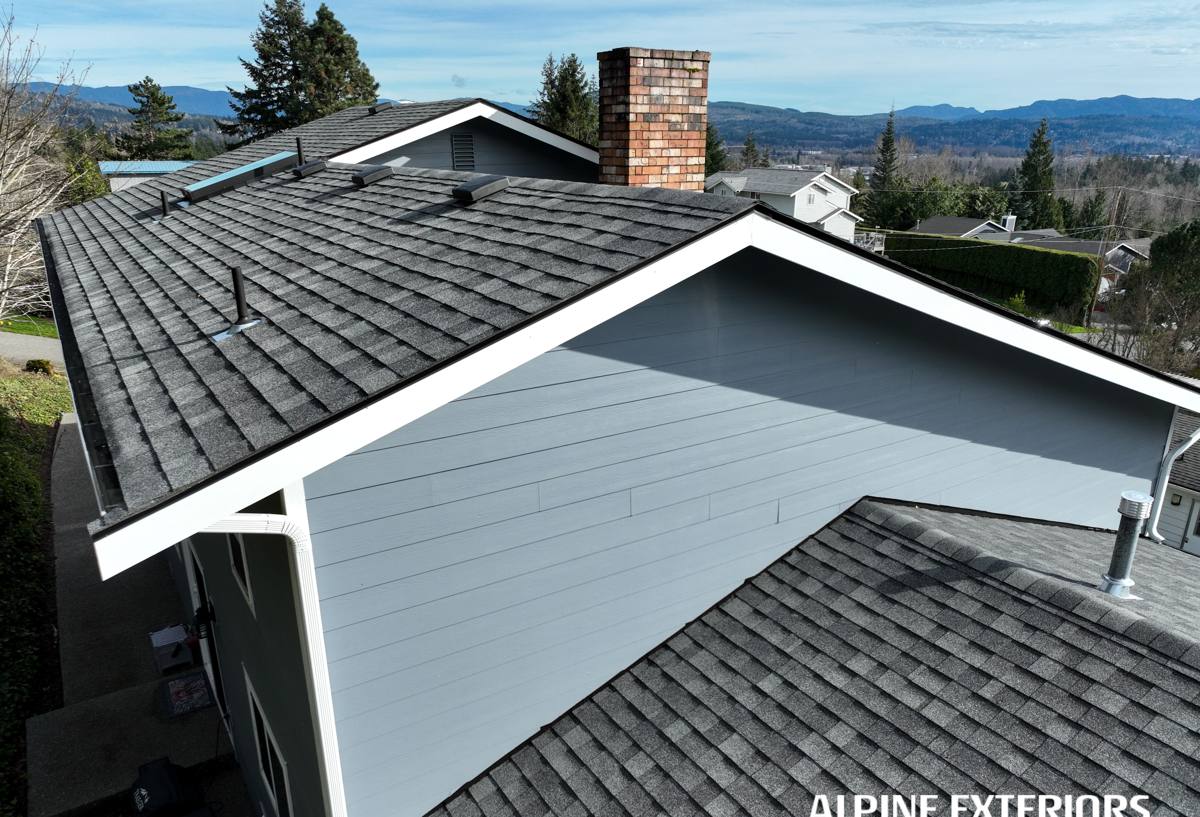
What We Mean by "Storm Damage" in This Area
Storm damage isn't just one thing, and treating it as one thing is how repairs get missed. On roofs we inspect in the Cordata area, storm damage generally falls into a few categories:
- Wind uplift: Shingle tabs pried loose or torn at the sealant strip, often on the windward slope and around ridge lines
- Wind-driven rain intrusion: Water pushed uphill under shingles or through vents and flashing during sustained horizontal rain, rather than dripping straight down
- Impact damage: Bruised or cracked shingles, dented metal flashing, or punctures from falling branches and debris
- Moss-related deterioration: Not caused by a single storm, but storms are usually what exposes it — moss holds moisture against the roof deck long enough to soften wood and lift shingle edges, so a storm finds the weak spot moss already created
That last category matters more here than in drier parts of the state. A long, wet moss season doesn't just look bad — it sets up the roof to fail during the next storm instead of surviving it.
The Damage Homeowners Usually Don't See
A roof can take a real hit and still look fine from the ground. That's normal, not a sign that anything was missed on a visual walk-by — it's a sign the damage needs a closer look. Things we check for that aren't visible from the yard:
Underlayment saturation
Repeated wind-driven rain can push moisture past the shingle layer and into the underlayment without ever showing up as an interior leak right away. The underlayment can hold that moisture for a long time before it finally lets go, usually during a heavier storm months later.
Flashing movement
Flashing around chimneys, skylights, and roof-to-wall transitions doesn't have to tear to fail — it just has to shift a quarter inch. Once it's shifted, it can look intact from a distance while actively channeling water into the wall assembly.
Fastener back-out
Wind uplift stresses nails and staples even when it doesn't fully remove a shingle. Fasteners can back out slightly, which loosens the shingle's grip without any visible gap — until the next windstorm finishes the job.
How We Approach a Storm Damage Inspection Here
We don't run a generic checklist and call it done. Because we work roofs in this specific area regularly, we know which failure points show up first on local homes, and we check those first.
- Ground-level and drone/ladder survey — overall condition, obvious impact points, gutter and downspout debris that hints at where debris landed
- Slope-by-slope shingle check — focusing on the windward exposure and ridge/hip lines where uplift concentrates
- Flashing and penetration check — chimneys, vents, skylights, and wall transitions, since these are where wind-driven rain finds its way in
- Attic or interior check where accessible — staining, damp insulation, or soft decking that indicates moisture has already gotten past the roof plane
- Moss and debris assessment — because untreated moss growth is often what turned a minor storm event into a repair job
We document what we find with clear notes and photos before we ever talk about repair scope, so you know exactly what's damaged, what's just cosmetic, and what can wait.
Repair or Replace? How We Make That Call
Not every storm-damaged roof needs a full replacement, and we're not going to tell you it does. The honest answer depends on the roof's age, how widespread the damage is, and whether the underlying decking is still sound.
| Situation | Repair usually makes sense | Replacement usually makes sense |
|---|---|---|
| Roof age | Under 12-15 years, otherwise in good condition | Nearing or past its expected service life |
| Damage scope | Isolated to one slope or a few dozen shingles | Spread across multiple slopes or the whole roof |
| Decking condition | Solid, no soft spots when walked | Soft or spongy decking found during inspection |
| Moss history | Light growth, treatable and manageable going forward | Heavy, long-term moss with visible shingle granule loss underneath |
| Prior repairs | Roof has no history of repeated patch jobs in the same area | Same section has already been patched more than once |
We'll walk you through where your roof falls on this table before we recommend anything, and we'll always show you the reasoning, not just the number.
What a Correct Storm Repair Actually Involves
A quick patch that stops today's leak but ignores why it happened isn't a repair we're willing to put our name on. A correct storm damage repair in this area typically includes:
- Removing and replacing any shingle that's cracked, torn, or has a broken seal — not just the ones that are visibly missing
- Re-securing or replacing flashing at every penetration in the repair zone, not just the point of the original leak
- Checking and replacing underlayment where it's been saturated, not just where the shingle above it is damaged
- Inspecting decking in the repair area for soft spots before new material goes down over it
- Re-sealing shingle tabs properly so the repaired section can actually withstand the next wind event, rather than lifting again at the first storm
- Clearing moss and debris from the repair area and surrounding roof so trapped moisture isn't undoing the repair from underneath
Skipping any of these steps is how a "fixed" roof ends up leaking again during the next storm — often in a slightly different spot, which makes it look like a new problem instead of the same one done halfway.
Working With Your Insurance Adjuster
Most storm damage repairs in this area go through homeowners insurance, and the process goes more smoothly when the documentation is thorough from the start. We provide detailed photos, measurements, and a written scope of damage that an adjuster can act on directly, rather than a vague description that leads to back-and-forth delays. We're not a public adjuster and we don't negotiate your claim for you, but we make sure the physical evidence of the damage is documented clearly and accurately before repairs begin, which is usually the single biggest factor in how smoothly a claim moves.
Why It Matters That We Already Work in Cordata
A crew that's worked roofs across the Ferndale and greater Whatcom County area knows things a first-time visitor doesn't: which roof styles and slopes in this area tend to hold moss the longest, how far wind-driven rain typically pushes under shingles on homes exposed to the prevailing weather off the water, and which flashing details tend to be original builder-grade versus already upgraded. That local pattern recognition shortens the inspection, sharpens the diagnosis, and means fewer surprises once repair work is underway.
It also means we're not disappearing after the invoice. If a repaired section needs a follow-up look after the next big storm, we're still local and still reachable — not a storm-chasing crew that worked the area for one season and moved on.
Protecting the Repair Through the Next Moss Season
A storm repair is only as good as the maintenance that follows it, especially with a moss season as long as this region's. After a repair, we recommend:
- Keeping gutters and valleys clear of needles and debris so water has a clean path off the roof
- Scheduling moss treatment before it re-establishes in the repaired area, not after it's already visible
- Trimming back overhanging branches near the repair zone to reduce both future impact risk and shade that feeds moss growth
- Doing a quick visual check after any major windstorm, focused on the repaired slope and its flashing
- Scheduling a professional roof check every year or two, even when nothing looks wrong from the ground
If a recent storm has you wondering whether your roof took damage, or you've noticed a stain, a soft spot, or shingles that don't look quite right after a windy night, we're happy to take a look. Fill out the form below for a free, no-pressure estimate — we'll tell you honestly what we find, what it needs, and what it doesn't.