 Ferndale Siding
 Windows Built for the Cordata Area's Weather
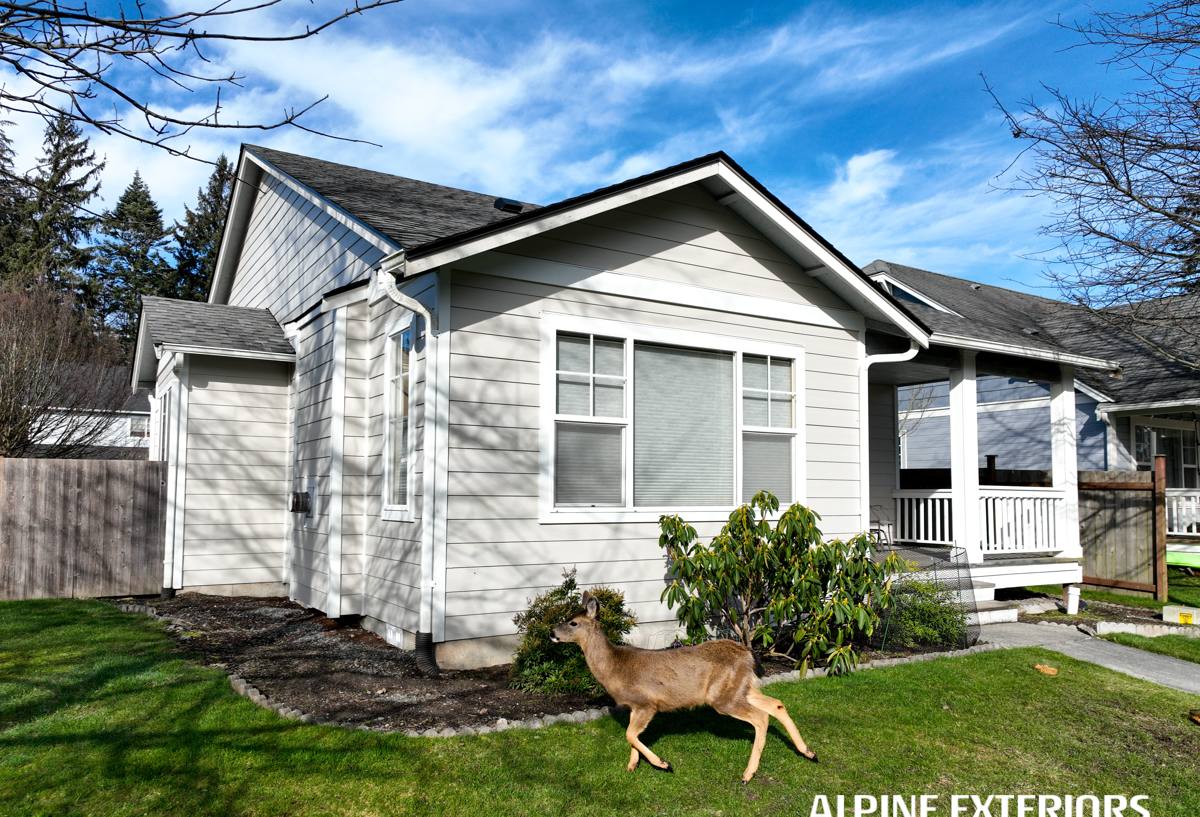
Homes in the Cordata area near Ferndale sit in one of the more punishing microclimates in Whatcom County for exterior building products. It's not one big storm that wears out a window — it's the daily grind of salt-laden air off the Puget Sound corridor, wind-driven rain that hits siding and trim sideways instead of straight down, and a moss season that can run eight months out of the year under the tree cover common in this part of the county. A window that's a good fit for a dry inland climate is often the wrong choice here, and a window that's installed correctly for a dry climate can still fail here if the flashing and sealing details aren't done for wet-region conditions.
We install windows throughout the Ferndale area, and Cordata is one of the neighborhoods where we see the clearest pattern: the window unit itself is rarely the problem. It's almost always the installation — flashing, sequencing, and sealing done for a climate that doesn't get this much sideways rain.
What Whatcom County Weather Does to Windows Over Time
Wind-Driven Rain and Water Intrusion
Straight-down rain is easy to manage. Wind-driven rain isn't — it gets pushed up and under trim, behind flanges, and into any gap that wasn't properly flashed. Over years, that moisture works its way into the wall cavity around the window opening, not just the window itself. By the time a homeowner notices staining on interior trim or a soft spot in the sill, the damage usually goes well past the window frame.
Salt Air and Hardware Fatigue
Proximity to the water means airborne salt settles on everything, including window hardware, screen frames, and exposed fasteners. Cheaper hinges, locks, and cranks corrode faster here than they would twenty miles inland. This doesn't mean every window needs marine-grade hardware — it means hardware quality is a real decision point in this climate, not an afterthought.
Moss, Shade, and Trapped Moisture
A long moss season isn't just a roof and siding issue. On windows, moss and algae growth around sills and lower trim holds moisture against the frame far longer than it would in full sun. In shaded lots — common around Cordata — window sills and lower corners can stay damp for days after a storm has passed, which is exactly the condition that rots wood trim and degrades poorly sealed frames.
Signs Cordata Homeowners Ask Us About
These are the issues that most often bring homeowners in this area to call for a window inspection or estimate:
- Visible moss or dark staining building up on the sill or lower corners of the frame
- Soft or spongy wood trim around the window, especially on the bottom rail
- Condensation forming between panes (a sign the seal has failed on an older insulated unit)
- Drafts felt near the frame edges even when the window is fully latched
- Windows that are noticeably harder to open, close, or lock than they used to be
- Paint or caulk that's cracking and pulling away from the frame within a year or two of being redone
- Interior sill discoloration or a musty smell near the window during wet months
Any one of these is worth a look. Several at once usually means the original installation, not just the window unit, needs to be corrected.
What a Correct Window Installation Actually Involves
Flashing and Water Management
Proper flashing directs any water that gets past the window back out of the wall, rather than letting it collect. That means flashing tape or pan flashing at the sill, correctly lapped house wrap at the sides and head, and a drainage path that assumes water will reach the opening at some point — because in this climate, it will. Skipping or shortcutting this step is the single most common cause of hidden rot we find behind older windows in this area.
Air Sealing and Insulation
The gap between the window frame and the rough opening needs to be sealed and insulated correctly — not overpacked with expanding foam, which can bow the frame, and not left with gaps, which lets in drafts and moisture-laden air. Done right, this step also cuts down on the condensation issues that show up on interior trim during cold, wet stretches.
Fastening, Shimming, and a Square Fit
A window that isn't shimmed level and square will bind, won't seal evenly against its own weatherstripping, and will put uneven stress on the frame over time. This is a slower, more careful step than it looks like from the outside, and it's where rushed installs tend to cut corners.
Full-Frame Replacement vs. Insert Replacement
One of the first decisions on any window project is whether to do a full-frame replacement (removing the old window down to the rough opening) or an insert replacement (fitting a new window into the existing frame). Both are legitimate approaches — the right one depends on the condition of what's already there.
| Factor | Insert (Pocket) Replacement | Full-Frame Replacement |
|---|---|---|
| Best when | Existing frame and sill are still solid and dry | Frame or sill shows rot, water damage, or was poorly flashed originally |
| Labor and disruption | Faster, less disturbance to interior trim and exterior siding | More labor; siding and trim around the opening are opened up |
| Ability to fix flashing issues | Limited — you're building on what's already there | Full access to correct flashing, sheathing, and framing problems |
| Glass area | Slightly smaller opening, since it fits inside the old frame | Can match or restore full original glass area |
| Typical fit for Cordata-area homes | Good option on newer or well-maintained homes with no hidden damage | Often the better call on older homes with a history of moisture exposure |
We don't default to one method. Part of the estimate visit is opening up enough to actually see the condition of the existing frame and sill before recommending which approach fits the home.
Material and Glass Choices for This Climate
Frame Materials
Vinyl and fiberglass frames are the most common choices we install in this area, largely because they hold up to sustained moisture exposure with minimal maintenance. Wood-clad windows can look great and perform well, but they demand more upkeep — regular inspection and refinishing of any exposed wood — which is a bigger commitment given how much of the year this area spends wet. We'll walk through the maintenance trade-offs honestly rather than just steering toward whatever's easiest to sell.
Glass Packages
Double-pane, low-E glass is the standard baseline for this region and performs well for both energy efficiency and moisture control. Triple-pane adds further insulation value and sound dampening, which some homeowners want on rooms facing a busy road, but it comes at a real cost premium and added window weight. For most homes in the Cordata area, a quality double-pane low-E unit with correct installation outperforms a cheaper triple-pane unit installed poorly — the install quality matters more than the glass spec.
Our Process, Start to Finish
- Free on-site estimate — we look at the actual windows and openings, not just take measurements off a form, and check for existing moisture or rot.
- Written scope and pricing — you get a clear breakdown of what's being replaced, insert vs. full-frame, materials, and cost, with no vague allowances.
- Scheduling around the weather — openings are only exposed for as long as necessary, and we plan around forecasted rain where possible.
- Removal and inspection — once the old window is out, we inspect the sill and framing before anything new goes in. If we find hidden damage, we show you before proceeding.
- Flashing, sealing, and setting the new window — done to the standard this climate requires, not the minimum a manufacturer's install guide allows.
- Interior and exterior trim finish — matched to the home and sealed against the weather patterns specific to this area.
- Final walkthrough — every window is opened, closed, and checked for a square, even operation before we consider the job done.
Why a Crew That Already Works Cordata Matters
Window installation isn't a one-size-fits-all trade. A crew that mostly works drier inland regions will often install to a code-minimum standard that's genuinely fine there and genuinely insufficient here. Working regularly in and around Ferndale and the greater Whatcom County area means we've seen how homes in this specific belt of weather actually fail over time — where moss builds up first, which sills stay damp longest, which flashing shortcuts show up as rot five years later instead of five months later.
That local pattern recognition shapes how we flash, seal, and detail every installation, not just the ones where a problem is already visible. It also means we're not learning on your home — the moisture management steps that matter most in this climate are routine for us, not a special case.
Maintaining Your Windows After Installation
A correct installation is the foundation, but a bit of seasonal upkeep extends the life of any window in this climate significantly:
- Clear moss and debris from sills and tracks before it has a chance to hold moisture
- Rinse salt residue off frames and hardware periodically, especially after storms
- Check exterior caulk lines once a year and touch up any cracking before wet season
- Keep gutters and downspouts clear so runoff isn't sheeting directly across window openings
- Test locks and cranks seasonally — stiff hardware is easier to fix early than after it seizes
Cost Factors to Expect
Every home is different, but these are the main drivers behind window installation pricing in this area:
| Factor | Why It Affects Cost |
|---|---|
| Insert vs. full-frame replacement | Full-frame involves more labor and material to rebuild the opening correctly |
| Frame material | Vinyl, fiberglass, and wood-clad carry different material costs and labor needs |
| Glass package | Double-pane low-E vs. triple-pane changes both material cost and window weight/handling |
| Hidden damage found at removal | Rotted sills or sheathing add repair scope beyond the window itself |
| Number and size of openings | Larger or custom-sized windows cost more than standard stock sizes |
| Trim and finish work | Matching existing interior/exterior trim can add finish labor |
We'd rather walk you through these factors on-site and give you real numbers for your home than quote a broad range that doesn't mean much either way.
If you're noticing drafts, moss buildup, sticking sashes, or just want a straight answer on whether your current windows are holding up the way they should, we're happy to take a look. Reach out for a free, no-pressure estimate using the form below — we'll give you an honest read on what your Cordata-area home actually needs.