 Ferndale Siding
 Why Custer Homes Wear Out Siding Faster Than You'd Expect
Custer sits close enough to Puget Sound and Birch Bay that salt-laden air is a constant presence on exterior surfaces, not an occasional visitor. Add Whatcom County's long, wet winters and the moss and algae growth that comes with months of shade and moisture, and you've got a climate that's genuinely hard on siding. Homes here don't fail because owners neglected them — they fail because the wrong material was asked to do a job it was never built for.
Salt air is corrosive to fasteners and metal trim, and it accelerates the breakdown of paint films and caulk joints. Combine that with driving rain that comes in sideways off the water during winter storms, and you get moisture finding its way into every gap, seam, and nail hole a product wasn't designed to handle. Then spring and fall bring the shaded, damp conditions moss and algae need to take hold on north-facing walls and anything under tree cover.
We install James Hardie fiber cement siding exclusively, and Custer is one of the areas where that choice makes the clearest difference. This page walks through what that actually means for a home in this specific location.
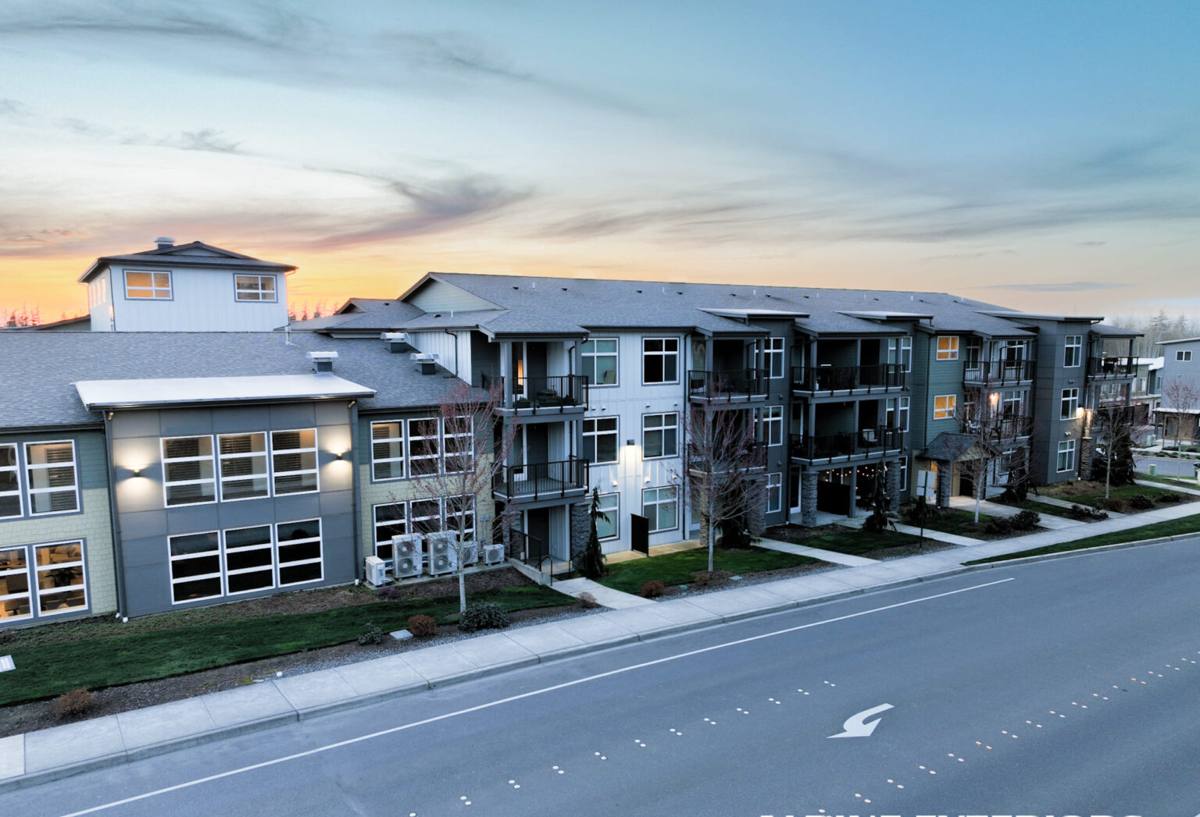
What Custer's Climate Demands From a Siding System
Salt Air and Corrosion
Salt air doesn't just sit on the surface of siding — it works its way into fasteners, trim screws, and any exposed metal flashing. Over years, that corrosion can loosen fastener holds and stain surfaces around every screw and nail head. A siding product's resistance to this isn't about the face material alone; it's about how the whole system — panels, fasteners, flashing, and finish — holds up together.
Driving Rain and Wind-Driven Moisture
Rain that falls straight down is one problem. Rain that's pushed sideways by wind off the water is a different, harder problem, because it tests every horizontal joint, window and door transition, and butt seam on a wall. A siding system's water-management details — how panels overlap, how joints are flashed, how trim sheds water away from the wall assembly — matter more here than in drier, calmer inland areas.
Moss, Algae, and Prolonged Dampness
Whatcom County's wet season runs long, and shaded or north-facing walls can stay damp for weeks at a stretch. Moss and algae need exactly that: moisture and shade. A siding material that absorbs water readily gives organic growth something to root into. A material that resists moisture absorption in the first place simply gives moss less to hold onto.
Why We Standardized on James Hardie for This Climate
James Hardie fiber cement is engineered from cement, sand, and cellulose fibers — a composition that doesn't absorb and swell with moisture the way wood-based products can, and doesn't degrade under sustained damp conditions the way some alternatives do. Hardie also builds region-specific HZ formulations, and the HZ5 product line is engineered for the kind of freeze-thaw and moisture exposure the Pacific Northwest sees. That's not a marketing detail — it's the actual engineering difference that matters in a place like Custer.
The factory-applied ColorPlus finish is baked on under controlled conditions rather than brushed or sprayed on-site, which gives it stronger, more even adhesion and better resistance to fading and peeling than field-applied paint. In a salt-air environment where paint films take a beating, that factory finish is doing real work over the life of the siding.
Fiber cement is also non-combustible, which matters given Washington's increasing wildfire seasons even on the wetter west side of the state. It's one more reason we don't hedge between multiple siding brands — we install one product because we trust the engineering behind it for this specific climate.
What We Don't Install, and Why
We get asked about vinyl, LP SmartSide, and other fiber cement brands regularly. Vinyl can crack in cold snaps and fades unevenly over time, with no factory-baked finish to fall back on. Engineered wood products, even treated ones, are more vulnerable to moisture intrusion at cut edges and seams than true fiber cement — a real concern given how much sustained dampness Custer sees. Other fiber cement brands exist, but we've standardized on James Hardie's specific HZ engineering and ColorPlus finish because we've found the consistency and warranty backing to be the strongest fit for this region. That's our professional judgment, not a knock on every alternative — it's why we only put one product on Custer homes.
What Correct Installation Looks Like Here
James Hardie siding is only as good as its installation. The product is engineered to perform, but if it's hung wrong, none of that engineering matters. In a high-moisture, salt-air area like Custer, a few details carry extra weight:
- Proper water-resistive barrier and rainscreen gap behind the siding, so any moisture that does get past the face material can drain and dry out instead of sitting against the sheathing
- Correct fastener type and spacing — stainless or coated fasteners rated for coastal exposure, driven to Hardie's specified pattern, not just "close enough"
- Proper flashing at every window, door, and horizontal trim transition, since these are the spots where wind-driven rain finds its way in
- Correct joint treatment at panel seams, with factory-recommended caulking or H-channel rather than gaps that invite water intrusion
- Maintaining manufacturer-specified clearance from grade, decks, and roof lines, since ground-level moisture and splash-back are common failure points
- Field-touching cut edges with Hardie-approved product so raw cut cement isn't left exposed to weather
Skip any one of these and you can end up with the same moisture problems the material was chosen to avoid — just hidden behind a nicer-looking wall for a few years before they surface.
Our Process for a Custer Project
1. On-Site Assessment
We walk the home and look specifically at the sides most exposed to prevailing wind and rain, any shaded or damp zones prone to moss, and the condition of existing trim, flashing, and sheathing. Salt-air corrosion and moisture damage aren't always visible from the ground, so we look closely at fastener lines and joints.
2. Scope and Product Selection
We walk through the appropriate Hardie product line and ColorPlus color options for the home, and explain the reasoning — not just what looks good, but what holds up given the home's exposure.
3. Tear-Off and Sheathing Check
Old siding comes off and we inspect the sheathing underneath for any moisture damage before anything new goes up. This step is not optional — installing new siding over a compromised wall assembly just hides the problem.
4. Weather Barrier and Rainscreen Installation
We install the water-resistive barrier and rainscreen system correctly before a single Hardie panel goes up, since this layer is what actually protects the home if any moisture gets past the face material.
5. Hardie Installation to Manufacturer Spec
Panels, fasteners, flashing, and joint treatment are all installed to James Hardie's published specifications — not shortcuts, not "how we've always done it."
6. Final Walkthrough
We walk the finished job with the homeowner, cover basic care and maintenance expectations, and answer questions about the warranty coverage.
Why Hiring Local Experience Matters in Custer
A crew that regularly works Custer and the surrounding Ferndale area already understands which walls take the worst of the weather, how far salt air reaches inland from the water, and where moss problems tend to concentrate. That's the kind of judgment that doesn't come from a spec sheet — it comes from having done the work in this exact climate repeatedly. A contractor unfamiliar with coastal Whatcom County conditions may install a technically correct product with details that don't account for what this specific area throws at a wall.
Cost Factors for a Custer James Hardie Project
Every home is different, but the factors that typically move a project's scope and cost are consistent. We won't quote a number without seeing the home, but here's what tends to matter most:
| Factor | Why It Affects Scope |
|---|---|
| Home size and wall complexity | More corners, dormers, and trim transitions mean more labor and flashing detail |
| Existing sheathing condition | Moisture-damaged sheathing found during tear-off may need repair before siding goes on |
| Product line and profile | Lap siding, shingle-style panels, and board-and-batten carry different material and labor costs |
| Trim and accessory scope | Corner boards, window trim, and fascia work add to the total project |
| Site access | Tight lots, fencing, or landscaping near the home can add setup time |
| Existing siding removal | Multiple layers of old siding or hidden damage can extend tear-off time |
Maintenance Expectations After Installation
James Hardie siding is low-maintenance, not no-maintenance. A yearly rinse-down helps keep salt residue and early moss growth from building up, especially on shaded or water-facing walls. Caulking at trim joints should be checked periodically, since caulk has a shorter service life than the siding itself. Beyond that, correctly installed Hardie siding in this climate is built to go a long time between any real attention.
If you're weighing siding options for a home in Custer, we're happy to take a look and walk you through what we'd actually recommend for your specific walls and exposure — no pressure, no upsell to a product we don't believe in. Request a free estimate using the form below.