 Ferndale Siding
 Building Decks for Cordata's Climate, Not a Catalog Photo
Cordata sits close enough to Bellingham Bay and the Whatcom County lowlands that a deck here lives a different life than one built inland or in a drier climate. The moisture doesn't come in one dramatic storm — it comes in months of low gray drizzle, morning dew that never quite burns off, and a moss season that can run from October into May. Add in the salt-tinged air that drifts up from the Sound on a west wind, and you've got a combination that will find every weak point in a deck's design within a few winters. We build decks for this specific set of conditions, not for a national average climate.
A deck that looks right for a magazine spread in Arizona or inland Idaho often fails quietly here — trapped moisture under boards, fasteners that weep rust stains, framing that stays damp long after a storm has passed. Our approach starts with the assumption that this structure will be wet more often than it's dry, and every material and detail choice gets filtered through that reality.
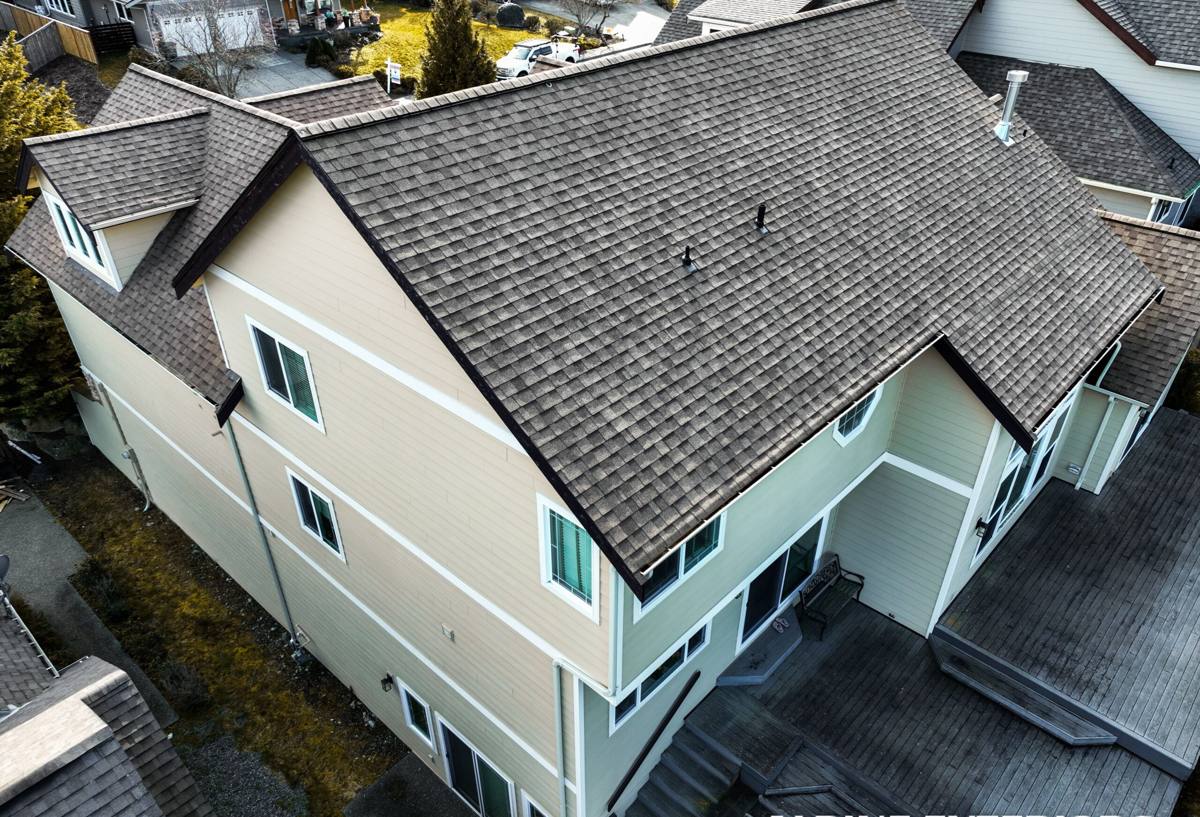
What Cordata Homes Actually Need From a Deck
Most of the homes we work on in and around Cordata were built for a rain-heavy climate to begin with, which means the good ones already have decent roof overhangs and drainage planning. A deck addition or rebuild needs to respect that same logic rather than fight it.
Drainage Is the First Design Decision
Before we talk decking material or railing style, we look at where the water goes. A deck attached to the house needs a ledger detail that sheds water away from the siding and framing, not one that lets it wick back into the wall assembly. Post bases need to sit above grade and above standing water, not buried in soil that stays saturated through the winter. Any deck built low to the ground in this area needs real airflow underneath it, or the framing will stay damp indefinitely and rot from below before the surface ever shows a problem.
Moss and Algae Are a Design Problem, Not Just a Cleaning Problem
Homeowners often ask us how to keep moss off a new deck. The honest answer is that the deck itself should be built to resist it in the first place — proper board spacing for airflow, a surface texture and material that doesn't hold a film of moisture, and shaded, low-sun areas planned with drainage and gapping in mind. A deck that's designed only around appearance, without thinking about the shaded north side or the corner that never gets direct sun, ends up green within a year or two no matter how often it's cleaned.
Salt Air and Metal Hardware
Being near the water means fasteners, brackets, and connectors matter more than they would further inland. Standard hardware can start showing surface corrosion within a couple of seasons in this environment, and once a fastener starts to go, it stains the surrounding wood or composite and weakens the connection it's holding. We spec hardware rated for coastal exposure as a baseline, not an upgrade.
Decking Material: What Actually Holds Up Here
There's no single "best" decking material for every Cordata project — it depends on budget, how much sun exposure the deck gets, and how much maintenance the homeowner actually wants to do. Here's how the common options compare under this region's specific conditions.
| Material | Moisture/Moss Behavior | Maintenance | Typical Lifespan Here |
|---|---|---|---|
| Pressure-treated fir/hem-fir | Absorbs moisture readily; needs good airflow and sealing to resist moss and rot | Annual cleaning, re-sealing every 1-2 years | 10-15 years with upkeep |
| Cedar | Naturally moisture- and insect-resistant, but still needs finish to hold color and resist moss film | Cleaning and finish renewal every 1-2 years | 15-20 years with upkeep |
| Composite decking | Doesn't absorb moisture into the board itself, but can still grow surface algae/moss film if shaded and not cleaned | Periodic washing, no sealing or staining | 25+ years, backed by manufacturer warranty |
| PVC/capped polymer | Fully moisture-sealed surface; best resistance to staining and moss adhesion | Lowest — occasional washing | 25-30+ years, backed by manufacturer warranty |
We're upfront with homeowners about trade-offs rather than pushing one product. Real wood costs less up front and can look excellent, but it asks for consistent upkeep in a climate that doesn't give you many dry weeks to do that upkeep in. Composite and PVC decking cost more initially but remove a recurring maintenance burden that a lot of Cordata homeowners are simply tired of taking on every spring.
Framing and Structure: Where Decks Actually Fail
Almost every deck failure we get called out to inspect in this area traces back to the framing, not the surface boards. The decking is what people see, but the substructure is what determines whether the deck is safe and long-lived.
- Ledger board flashing that properly sheds water away from the house rim joist
- Joist tape or a moisture barrier on top of framing lumber, so fasteners don't sit in a wet joint
- Post-to-footing connections rated for wet-use and set on footings poured below frost depth and above grade water
- Adequate under-deck clearance and cross-ventilation, especially on decks built close to grade
- Beam and joist spans sized correctly for the actual decking material and spacing chosen — composite and PVC often carry different span tables than wood
- Stairs and landings graded so water runs off rather than pooling on treads
A deck can look finished and solid for a couple of dry summers even with shortcuts in the framing. The problems tend to show up in year three or four, once moisture has had time to work into unprotected joints — which is exactly why we don't shortcut this stage, even though none of it is visible in the finished photo.
Railings, Fasteners, and Finish Details
Railing systems and hardware are where a lot of decks in wetter coastal climates start to look tired years before the deck itself needs replacing. Aluminum and coated composite railing systems resist the moisture and salt exposure far better than untreated wood balusters, which tend to swell, check, and eventually crack. Stainless or coated coastal-rated fasteners cost more per piece than standard deck screws, but the alternative is rust streaking down composite or cedar boards within a couple of winters — a cosmetic problem that's difficult to fully undo once it's set into the material.
Finish details matter too: end-grain cuts on wood decking should be sealed at installation, not left raw, since end grain absorbs moisture many times faster than the face of the board. It's a small step that gets skipped often and shows up later as cupping or splitting right at the cut ends.
Our Process, Start to Finish
1. On-Site Assessment
We walk the site with you, looking at sun exposure, drainage slope, existing structure (if it's a rebuild), and how the deck will connect to the house. This is where we flag anything — a low spot, a shaded corner, an existing rot issue — that will shape material and design decisions later.
2. Design and Material Selection
We go over decking material options, railing systems, and layout with real numbers, not a generic brochure. You'll know the maintenance commitment and expected lifespan of what you're choosing before you commit to it.
3. Permitting
Most deck projects of meaningful size require a permit through the local jurisdiction. We handle that process so the structure is inspected and up to code — this also protects you at resale, since an unpermitted deck can become a negotiating problem later.
4. Framing and Structural Build
This is where the moisture-management details above get built in: flashing, footings, ventilation, hardware. It's the least photogenic part of the job and the most important.
5. Decking, Railing, and Finish
Surface material goes down, railings are installed, and all cut ends and fastener points are sealed or capped as appropriate to the material.
6. Final Walkthrough
We walk the finished deck with you, cover basic maintenance expectations for the material you chose, and answer questions before we consider the job done.
Cost Factors Worth Understanding Upfront
Deck pricing varies a lot based on size, height off grade, material, and site access, so we won't put a number here that wouldn't hold up for your specific project. What we can tell you is what tends to move the price:
| Factor | Why It Matters |
|---|---|
| Decking material | Pressure-treated lumber costs the least upfront; PVC and premium composite cost more but reduce long-term maintenance |
| Height and stairs | Elevated decks need engineered footings, railings by code, and often multiple stair runs |
| Site access | Sloped lots or limited equipment access around Cordata's mature-tree lots can add labor time |
| Ledger/attachment condition | If existing siding or rim joist has hidden moisture damage, that repair gets addressed before the deck attaches |
| Railing system | Basic wood balusters cost less than aluminum, cable, or glass-panel systems |
Why a Crew That Already Works Cordata Matters
A deck built by a crew that only occasionally works in Whatcom County can still be built competently — but a crew that works this specific area regularly has already seen how moss, salt air, and long wet winters affect decks over years, not just at handoff. That shows up in small decisions: which corner of a lot tends to stay shaded and damp longer, how a particular slope drains after a heavy rain, which hardware has held up and which hasn't after a few seasons of exposure near the water. None of that is guesswork when you've built and maintained decks in the same conditions repeatedly.
It also matters for follow-up. If a question comes up two or three years after the build — a board that's cupping, a railing bracket that needs a look — a local crew is easy to reach and already has your project on file.
Signs an Existing Cordata Deck Needs Attention
- Soft or spongy spots underfoot, especially near the house connection
- Persistent green or black film that returns quickly after cleaning
- Rust streaking below fasteners or brackets
- Gaps or separation where the deck meets the house siding
- Wobble in railings or posts
- Standing water that doesn't drain within an hour or two after rain stops
Any of these are worth a look before they turn into a full rebuild. Sometimes it's a targeted repair — a rotted ledger board, a few failed joists — rather than starting over.
If you're planning a new deck or dealing with an aging one in the Cordata area, we're happy to come take a look and give you a straightforward, no-pressure estimate. There's a form below to get that scheduled.