 Ferndale Siding
 Custom Windows Built for Nooksack's Weather, Not Just Its Openings
"Custom" windows get talked about like they're a luxury upgrade, but in the Nooksack area they're often just the honest answer to a house that doesn't match a big-box size chart. Older farmhouses, additions built decades apart, barns converted to living space, and homes with settled or out-of-square openings all need windows measured and built to fit what's actually there — not what a standard order sheet assumes. Add in the climate this part of Whatcom County deals with, and "custom" starts to mean something more: windows and installation details specifically chosen to handle salt-laden marine air, long stretches of driving rain, and the slow, steady moss growth that comes with never fully drying out for months at a time.
We install and replace windows across Ferndale and the surrounding Nooksack-area properties regularly, which means we're not guessing at what holds up here. We're working from what we've already seen fail, and what we've seen last.
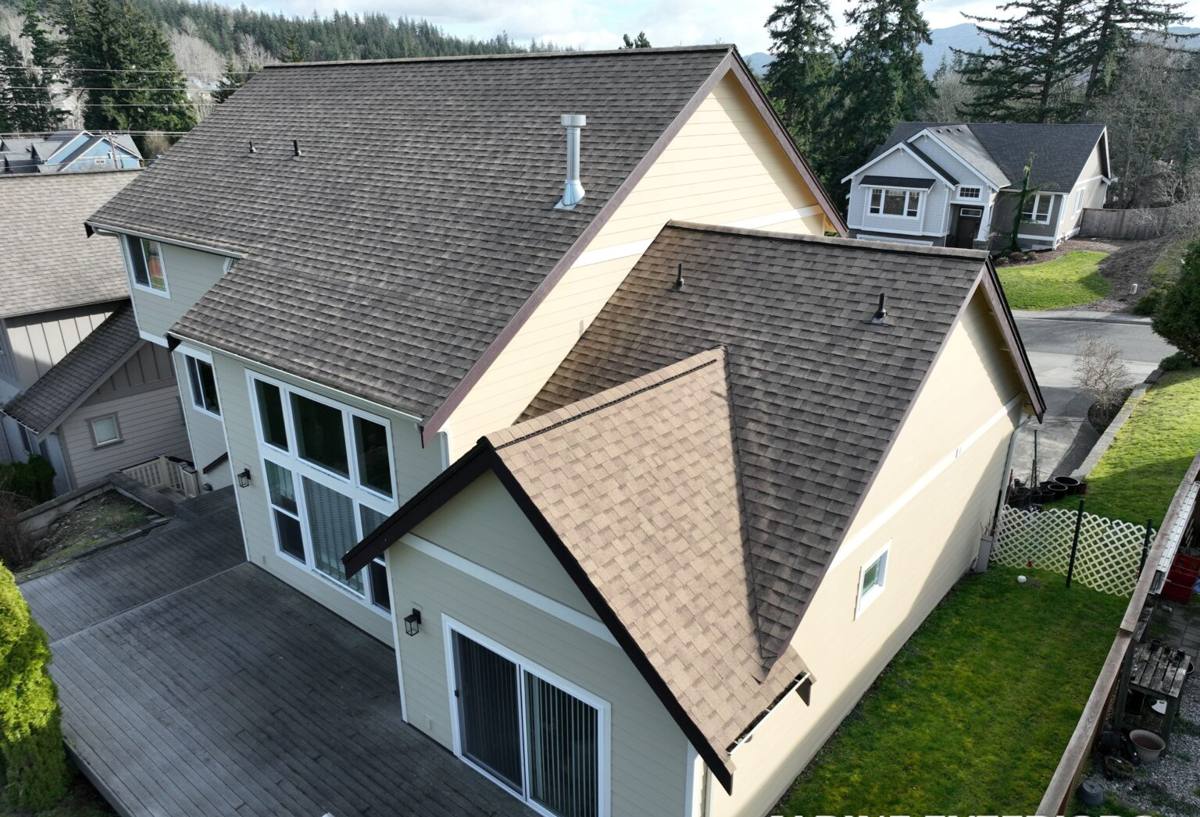
What Nooksack-Area Homes Are Up Against
Salt Air and Metal Fatigue
Properties in this part of the county get a steady dose of moist, salt-tinged air moving in off the water and up the valley. That air is hard on unprotected fasteners, aluminum components, and any window hardware that isn't rated for a coastal-adjacent environment. Over years, it accelerates corrosion on cheaper hinges, cranks, and screen frames long before the glass or sash itself gives out.
Driving Rain, Not Just Rain
Whatcom County doesn't just get rain — it gets rain pushed sideways by wind off the water, which finds every gap a calm-weather installation would get away with. Windows here need proper flashing, sloped sills, and weep paths that actually move water back out, not just a bead of caulk around the trim. This is one of the most common places we find shortcuts on older installs.
Moss Season and Prolonged Dampness
Between fall and spring, surfaces around here can stay damp for weeks at a stretch. That's exactly what moss needs, and it doesn't stop at the roofline — it creeps into window sills, trim joints, and anywhere wood is exposed and not draining well. Left alone, trapped moisture behind trim leads to soft wood, stuck sashes, and eventually rot you can't see until it's expensive.
What "Correct" Actually Means for a Window Job Here
A window replacement done right in this climate isn't just about the window unit itself — it's about everything around it. That includes:
- Accurate field measurements of the actual opening, including any out-of-square condition, before anything is ordered
- Removal of old flashing, sealant, and any hidden rot in the framing before a new unit goes in
- Proper weather-resistive barrier integration so the window ties into the wall's drainage plane, not just sits in front of it
- Sloped sill pans that direct water outward instead of letting it pool
- Corrosion-resistant fasteners and hardware suited to marine-influenced air
- Exterior trim and caulking details that shed water rather than trap it against wood
Skip any one of these and you can still end up with a window that looks fine on install day and causes problems two or three wet seasons later.
Why Custom Sizing Matters More on Older and Rural Properties
A lot of homes in and around Nooksack were built or added onto well before modern standard window sizes existed, and rural properties often have hand-framed openings that were never perfectly square to begin with. Trying to force a stock-size replacement window into one of these openings usually means one of two bad outcomes: shimming and gapping that undermines the seal, or cutting into the framing in a way that weakens the wall and creates new water paths.
Custom-sized units — built to the actual, measured dimensions of your opening — avoid both problems. They cost a bit more up front than an off-the-shelf size, but they install tighter, seal better, and don't require compromising the structure around them to make them fit.
Common Situations Where Custom Sizing Comes Up
- Farmhouses or older homes with non-standard or settled openings
- Additions or bump-outs where the framing doesn't match the original structure
- Barns, shops, or outbuildings converted into living or working space
- Bay, bow, or angled window configurations
- Homes where you're changing the window's shape or size, not just replacing like-for-like
Choosing Frame Materials for This Climate
Frame material affects how a window handles the constant damp and occasional salt exposure typical of this area. There's no single "best" material for every home — it depends on your budget, how much upkeep you want to do, and the look you're going for.
| Material | Moisture Behavior | Maintenance | Best Fit |
|---|---|---|---|
| Vinyl | Won't rot or corrode; performs well in damp, salt-influenced air | Low — occasional cleaning, no painting | Most homes prioritizing value and low upkeep |
| Fiberglass | Very stable in temperature swings and moisture; resists warping | Low to moderate | Homes wanting durability with a higher-end finish |
| Wood-clad | Interior wood needs protection from interior moisture; exterior cladding shields from weather | Higher — trim and clad joints need periodic inspection | Homes prioritizing a traditional wood-frame interior look |
| Aluminum | Prone to corrosion in salt-influenced air unless heavily coated | Moderate to high | Generally not our first recommendation for this specific climate |
We don't install aluminum-frame windows as a standard offering in this area — not because it's a bad material everywhere, but because untreated or lightly coated aluminum has a track record of corroding faster than vinyl or fiberglass once it's exposed to years of Whatcom County's marine air. That's a maintenance and longevity call, not a knock on any particular manufacturer.
Glass and Energy Performance for a Marine Climate
Western Washington's climate is milder than most of the country, but the constant humidity and frequent overcast skies mean condensation and heat loss show up differently here than they would in a dry climate. A few things matter more locally:
- Double or triple glazing with a quality low-E coating helps reduce interior condensation on cold, damp mornings — a common complaint we hear about older single-pane or early dual-pane windows.
- Argon or krypton gas fills between panes improve insulation value without adding bulk to the frame.
- Warm-edge spacers around the glass reduce the cold spot at the edge of the pane where condensation and eventual seal failure tend to start first.
None of this needs to be complicated — it just needs to be matched to how your specific home is oriented, how exposed it is to wind-driven rain, and what your existing windows are already struggling with.
Our Process for a Nooksack-Area Window Project
1. On-Site Assessment
We walk the property, inspect existing window conditions, check for hidden rot or flashing failures around current openings, and take precise measurements of every opening involved.
2. Product Selection
We go over frame material, glazing, and configuration options based on your home's exposure, your budget, and what you want the finished look to be — no pressure toward the most expensive option.
3. Ordering and Lead Time
Custom-sized units take longer to manufacture than stock sizes. We'll give you an honest lead time estimate up front so there are no surprises.
4. Removal and Prep
Old windows come out carefully, and we inspect the framing underneath for rot or moisture damage before anything new goes in. Any damaged framing gets addressed at this stage, not covered over.
5. Installation and Flashing
New units are set, leveled, and integrated into the wall's water management system with proper flashing and sill pan details — the part of the job that determines whether you have problems in five years or in twenty.
6. Trim, Seal, and Walkthrough
Exterior trim and sealant are finished to shed water, interior trim is completed to your preference, and we walk the job with you before we consider it done.
Checklist: Signs Your Current Windows May Need Attention
- Visible moss or dark staining building up on sills or trim
- Difficulty opening, closing, or latching a window that used to operate smoothly
- Fogging or moisture trapped between panes on dual-pane units
- Soft or spongy wood trim around the window frame
- Noticeable drafts or cold spots near the window during windy, wet weather
- Visible gaps between the window frame and siding or trim
If you're seeing more than one of these, it's usually worth having someone look before it turns into a framing repair on top of a window replacement.
Why It Matters to Hire a Crew That Already Works This Area
Window installation isn't uniform across climates, and a crew that mostly works drier inland regions may not default to the flashing and drainage details that matter most here. A crew that regularly works Ferndale and the surrounding Whatcom County communities already knows which details fail first in this weather, which materials hold up, and how to sequence a job so it isn't left exposed to the next round of driving rain. That local track record is worth more than a lower bid from someone unfamiliar with what this climate actually does to a window installation over time.
Get a Straight Answer for Your Home
Every property around Nooksack is a little different — different age, different exposure, different framing quirks. Rather than guessing at what your home needs from a distance, we'd rather come take a look. If you're weighing a window replacement or just want an honest read on what condition your current windows are in, request a free, no-pressure estimate using the form below.