 Ferndale Siding
 Deck Building in Everson's Wet, Mossy Climate
Everson sits along the Nooksack River corridor in Whatcom County, where the weather pattern is defined by long, wet winters, a short but genuine summer, and marine air pushing inland off the Salish Sea for most of the year. That combination means any deck built here spends more of its life damp than dry. Rain sits on horizontal surfaces, shade from mature trees and nearby structures keeps boards from drying out fast, and moss finds a foothold anywhere organic debris collects. A deck that isn't built and maintained with that reality in mind will show rot, mildew staining, and loose fasteners years before a well-built one in a drier climate would.
We build decks for homes throughout Ferndale and the surrounding Whatcom County communities, including Everson, and the approach doesn't change by neighborhood — it changes by site. A deck facing prevailing wet-weather patterns, tucked under tree cover, or sitting low to grade needs different detailing than one in full sun and open air. Part of doing this job right is reading the site before we ever cut a board.
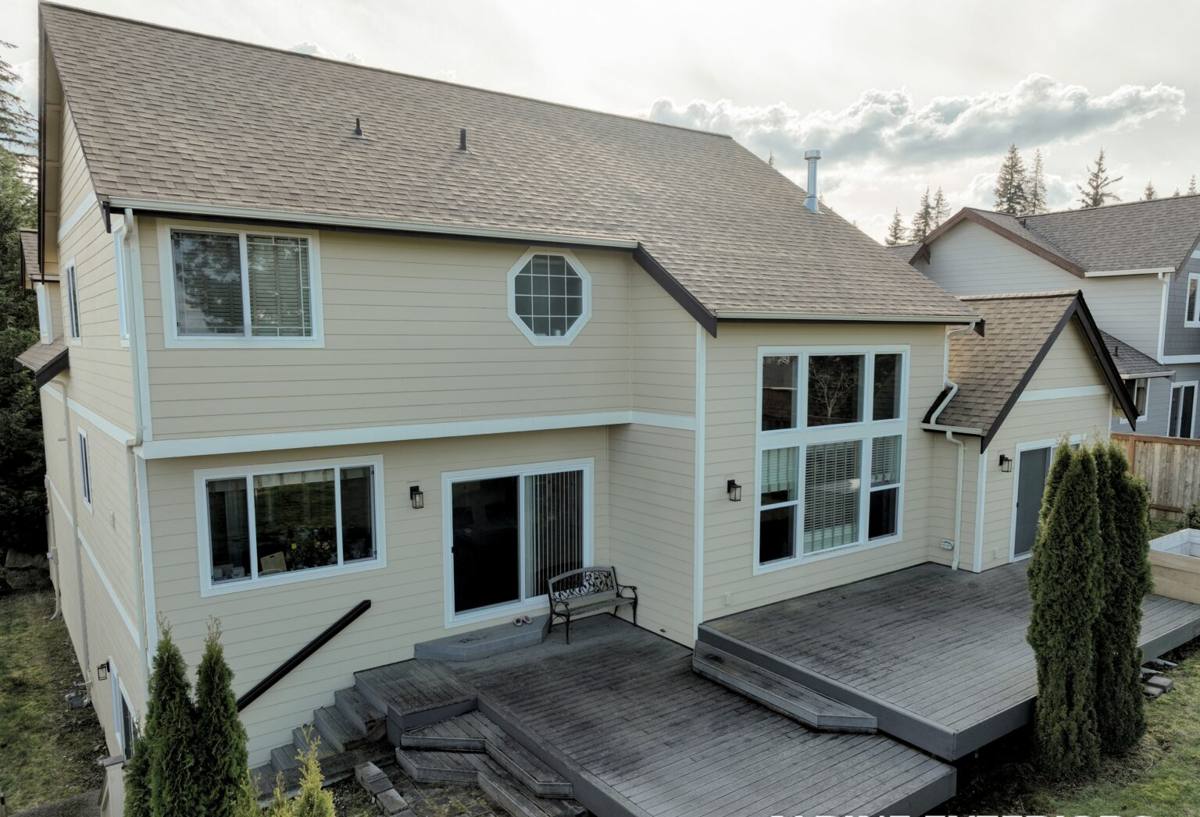
What a Deck Actually Needs to Survive Here
A deck failing early almost never fails because of one big mistake. It fails from several small ones stacking up: a ledger board without proper flashing, joists with no drainage gap, decking laid tight with no room to shed water, or fasteners that aren't rated for treated lumber's chemical makeup. In a climate that stays damp as long as Whatcom County's does, those small gaps in the build become the difference between a deck that lasts fifteen years and one that lasts thirty or more.
The Non-Negotiables
- Ledger board flashing that actually sheds water away from the house rim joist, not just a bead of caulk
- A drainage gap and slope built into the framing so water doesn't pool against the house
- Joist tape or a comparable barrier on top of framing lumber to slow moisture absorption at the fastener points
- Correct board spacing for the decking material chosen — too tight and water and debris get trapped; too wide and it feels unfinished
- Stainless or coated fasteners rated for ACQ-treated lumber, so hardware doesn't corrode and streak the wood
- Footings set below frost depth and sized for the actual load, not guessed at
None of this is exotic. It's standard good practice — but it's exactly the kind of detail that gets skipped when a crew is moving fast or unfamiliar with how wet this region actually gets.
Footings and Framing: Getting the Foundation Right
Everson's soil and drainage conditions vary block to block depending on proximity to the river and how the lot was graded. Before we set footings, we check what we're actually building on — soggy, poorly draining ground needs different footing depth and drainage planning than well-drained soil. Undersized or shallow footings are one of the more common problems we find when repairing or replacing older decks in this area: frost heave and saturated soil shift them over time, and the whole structure starts to rack.
Framing lumber gets treated for ground contact where it's within a few inches of soil or in constant shade, and every ledger connection gets flashed and sealed before the first deck board goes down. This is the part of the job nobody sees once it's finished, which is exactly why it matters — it's not something you can fix later without tearing the deck apart.
Choosing the Right Decking Material
Material choice matters more here than in a dry climate, because every option behaves differently under sustained moisture and shade. There's no single "best" material — it depends on your budget, how much upkeep you want to do, and how much sun the deck actually gets.
| Material | Moisture & Moss Behavior | Maintenance | Typical Lifespan Here |
|---|---|---|---|
| Pressure-treated lumber | Absorbs and releases moisture readily; needs airflow to dry between rain events | Annual cleaning and periodic sealing or staining | 10-20 years with upkeep |
| Cedar | Naturally rot-resistant but still needs to dry out; shaded cedar greys and can hold moss | Regular cleaning, occasional oiling to slow greying | 15-25 years with upkeep |
| Composite decking | Doesn't absorb water like wood, but can still grow surface mildew/moss film in shade | Periodic washing; no staining or sealing needed | 25-30+ years, manufacturer-dependent |
| PVC/capped polymer | Fully moisture-resistant surface; least hospitable to moss growth | Occasional washing only | 25-30+ years, manufacturer-dependent |
For decks that sit in shade for a good part of the day — common on lots with mature trees, which describes a lot of Everson properties — we'll often steer homeowners toward composite or capped polymer boards specifically because they don't wick and hold moisture the way solid wood does. That's not a knock on wood decking; a well-built cedar or treated deck in a sunnier spot with good airflow can look great and hold up fine for decades. It's about matching the material to the actual site conditions, not defaulting to whatever's cheapest or most familiar.
Our Deck Building Process
1. Site Walk and Design
We look at drainage, sun exposure, tree cover, grade, and how the deck will connect to the house before drawing anything up. This is also when we talk through material options honestly, including trade-offs in cost, maintenance, and appearance.
2. Permitting
Most deck projects in Whatcom County require a building permit, particularly if the deck is attached to the house, elevated, or over a certain size. We handle the permit process as part of the job so you're not stuck navigating county requirements yourself.
3. Footings and Framing
Footings are dug to proper depth, framing is built square and level with correct joist spacing for the decking material chosen, and every ledger connection is flashed before it's covered.
4. Decking, Railing, and Fasteners
Boards are laid with proper spacing and fastener choice for the material. Railings are built to current code height and baluster spacing requirements — not just what looks right, but what passes inspection and holds up structurally.
5. Final Walkthrough
We walk the finished deck with you, point out anything you should know about maintenance for the specific material installed, and make sure everything meets what was agreed on before we call it done.
Moss, Mildew, and Long-Term Maintenance
Even a well-built deck needs upkeep in this climate, and the maintenance schedule depends heavily on the material and how much sun the deck gets. Moss and mildew aren't signs of a bad build — they're a normal byproduct of a wet climate with plenty of shade, and they're manageable with regular attention rather than expensive repair.
- Sweep debris regularly. Leaves and needles trap moisture against the decking surface and are the number one cause of moss getting a foothold.
- Wash annually, more often in heavy shade. A deck brush and mild cleaner (or a gentle pressure wash for composite/PVC) keeps moss and algae film from building up.
- Re-seal or re-stain wood decking every 1-3 years depending on sun exposure and the product used — this is the single biggest factor in how long wood decking lasts here.
- Check railings and fasteners annually for looseness, especially after the wettest months of the year.
- Keep gutters and downspouts clear near the deck so runoff isn't dumping extra water onto or under the structure.
Permits, Code, and Doing It the Right Way
Deck permitting in Whatcom County exists for real reasons — an improperly built elevated deck is a genuine safety issue, and inspectors are checking footing depth, ledger attachment, railing height, and structural spans for a reason. Skipping the permit process might save a little time upfront, but it creates real problems later: unpermitted structures can complicate home sales, insurance claims, and future renovations. We pull permits and build to code as standard practice, not an upsell.
What to Ask Before Hiring a Deck Builder
- Will you pull the permit, and is that included in the quote?
- What flashing and drainage detailing do you use at the ledger board?
- What fastener type do you use with treated lumber, and why?
- Can you explain the maintenance schedule for the material you're recommending?
- Do you carry current liability insurance and are you licensed to work in Washington?
- Will footings be sized and set to local frost depth and soil conditions, not a standard guess?
If a contractor can't answer these clearly, that's worth noting before you sign anything.
Why a Crew That Already Works in Everson Matters
Building codes, permit requirements, and soil and drainage conditions vary by jurisdiction and by lot. A crew that regularly works Whatcom County jobs — Everson included — already knows the county's permitting process, has a feel for how the local ground drains, and has seen firsthand how different decking materials hold up through a full wet season here rather than going off a manufacturer's brochure written for a different climate. That familiarity shows up in fewer surprises during the build and a deck that's actually detailed for the conditions it'll sit in for the next few decades.
If you're planning a new deck or replacing an aging one in Everson, we're happy to come look at the site, walk through material options honestly, and put together a straightforward estimate — no pressure, no hard sell. Use the form below to get started.