 Ferndale Siding
 Deck Repair Built for Marietta's Coastal Conditions
Marietta sits close enough to the water that homes here deal with a combination most inland Whatcom County properties don't: salt-laden air off Bellingham Bay, driving rain that comes in sideways during fall and winter storms, and a moss season that can stretch from October through April. A deck built or maintained the way you'd build one in Spokane or even east Ferndale doesn't hold up the same way out here. We've repaired decks throughout the Marietta area long enough to know exactly where they fail first and why.
Salt air accelerates corrosion on fasteners, joist hangers, and any exposed metal hardware. Combine that with near-constant moisture for half the year, and you get a specific failure pattern: rusted-through hardware before the wood itself is compromised, ledger board rot where the deck meets the house, and moss buildup that holds water against the decking surface far longer than it should sit there. Repairing a Marietta deck correctly means addressing all three, not just patching the boards you can see are bad.
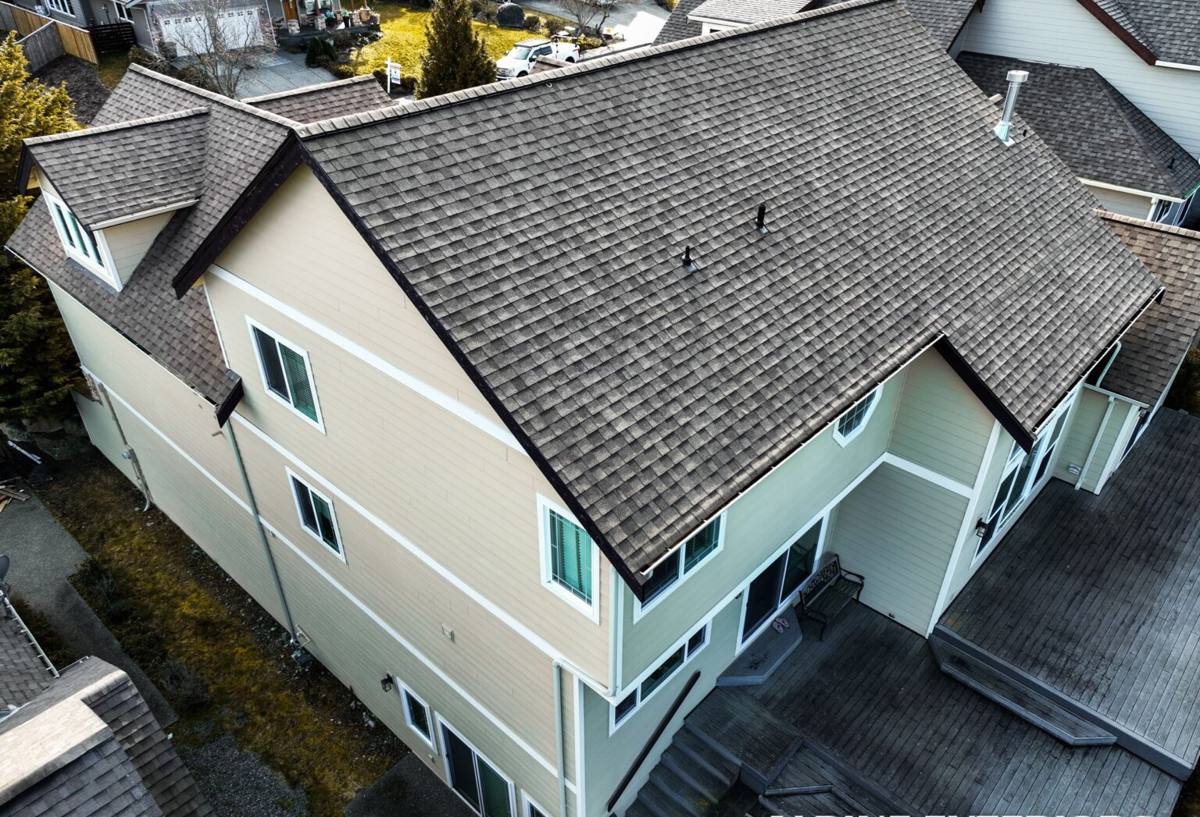
Why Decks Fail Differently Near the Water
Salt Air and Hardware Corrosion
Standard galvanized fasteners and connectors are rated for general exterior use, but they degrade faster within a mile or two of saltwater. We regularly find decks in the Marietta area where the visible decking boards still look serviceable, but the joist hangers, structural screws, or ledger bolts underneath have corroded to the point of failure. This is a safety issue, not just a cosmetic one — a deck can look fine from the top and still be structurally unsound underneath.
Moss, Moisture, and Trapped Water
Whatcom County's long wet season means moss doesn't just grow on roofs — it takes hold on decks too, especially in shaded areas or on the north side of a house. Moss holds moisture against the wood surface, which accelerates rot in a way that plain rainfall alone doesn't. If a deck isn't cleaned and kept free of moss buildup for months at a stretch, you end up with soft, spongy boards well before the wood's expected lifespan.
Driving Rain and Ledger Board Vulnerability
The ledger board — where the deck attaches to the house — is the single most common point of hidden rot we find on repair calls in this area. Wind-driven rain gets pushed up under flashing that was installed without enough slope or overlap, and water tracks behind the ledger for months before anyone notices a problem. By the time a homeowner sees sagging or spots soft wood near the house wall, there's often been water intrusion happening for a season or more.
What a Correct Deck Repair Actually Involves
A lot of "deck repair" in this region amounts to swapping out a few obviously rotten boards and calling it done. That approach doesn't address the underlying moisture or corrosion problem, so the same spot fails again within a year or two. Our process starts with a full structural check, not just a visual scan of the decking surface.
- Inspect the ledger board connection and flashing for hidden water intrusion behind the siding
- Check all joist hangers, structural screws, and post connections for corrosion — especially anything original to an older build
- Probe deck boards, beams, and posts for soft spots, not just obvious discoloration
- Assess drainage and grading underneath the deck, since standing water under a low deck accelerates rot from below
- Confirm railings and stair stringers are still structurally sound, since these get overlooked in cosmetic-only repairs
- Evaluate moss and algae buildup on the surface and any shaded sections prone to staying damp
- Pressure-treated wood: Lower upfront cost, but requires regular sealing and moss removal to perform well in this climate — skipping maintenance shortens its life significantly here more than in drier regions.
- Cedar: Naturally more rot-resistant and a good look for this area, but still needs periodic maintenance and isn't immune to moss staining.
- Composite decking: Higher upfront cost, minimal maintenance, and much better moss and moisture resistance — often the better long-term choice for shaded or low-airflow deck areas common in Marietta lots.
- Clear moss and debris from the deck surface at least once before winter and once in early spring
- Keep gutters and downspouts near the deck clear so runoff isn't draining directly onto or under it
- Check railings and stair connections annually for looseness, especially after a hard winter
- Reseal or restain wood decking on the manufacturer's recommended schedule — don't stretch it out in this climate
- Look underneath the deck occasionally for standing water or soft framing, not just at the visible surface
Only after that full check do we scope the actual repair — whether that's replacing a section of decking, rebuilding a ledger connection with proper flashing, swapping corroded hardware for hardware rated for coastal exposure, or in some cases recommending a partial rebuild if the structural members are too far gone to patch safely.
Repair vs. Replacement: How We Make the Call
| Condition | Typical Fix | When Replacement Makes More Sense |
|---|---|---|
| A few soft or discolored boards, structure sound | Board-by-board replacement | Rarely needed unless boards are widespread |
| Rusted hardware, wood still solid | Hardware swap with coastal-rated fasteners | Not usually — this is a repair, not a rebuild trigger |
| Ledger rot from long-term water intrusion | Cut out and rebuild ledger connection with correct flashing | If rot has spread into the house rim joist |
| Widespread soft framing under the decking | Not repairable as a spot fix | Full or partial rebuild of the substructure |
| Railings loose or stringers cracked | Rebuild railing/stair section | If posts show rot at the base as well |
We'll always tell you honestly which category your deck falls into. A deck with a sound structural frame almost never needs full replacement — it needs the right repair, done with materials that account for the salt air and moisture here. A deck with compromised framing is a safety issue, and patching it cosmetically just delays a bigger problem.
Materials That Hold Up in Marietta's Climate
Material choice matters more here than in drier parts of the state. For structural hardware and fasteners, we use connectors and screws rated for coastal or high-moisture exposure rather than standard-grade galvanized hardware, since the price difference is small compared to the cost of tearing the deck open again in a few years. For decking material itself, whether we're replacing sections of an existing wood deck or discussing a composite upgrade, we walk through the real trade-offs with you:
We're not going to push composite on you if a wood deck repair is the right call for your budget and situation — but we will tell you honestly when a shaded, moisture-prone section of decking is going to keep giving you trouble regardless of how many times you patch it in wood.
Our Deck Repair Process
1. On-Site Assessment
We inspect the full deck structure — not just the surface — including hardware, ledger connection, and framing, and give you a straight explanation of what's failing and why.
2. Clear Scope and Pricing
You get a written scope before any work starts, broken into what's necessary now versus what can reasonably wait. No surprise add-ons once we open things up, unless we find something hidden that changes the safety picture — and if that happens, we stop and talk to you before proceeding.
3. The Repair Itself
We match materials and hardware to what the location actually needs, address the moisture source (not just the symptom), and make sure flashing and drainage details are correct so the same failure doesn't recur in a year or two.
4. Cleanup and Walkthrough
We walk the finished repair with you, point out anything worth keeping an eye on going forward, and leave the site clean.
Maintenance That Extends Your Deck's Life Here
Given Whatcom County's long wet season, a little seasonal upkeep goes a long way toward avoiding another repair call in a few years:
Why Local Experience with Marietta Homes Matters
A contractor who mainly works drier inland areas can miss the specific failure patterns that show up on decks this close to Bellingham Bay — corroded hardware under sound-looking boards, ledger rot that's been developing quietly behind flashing, moss holding moisture against the decking longer than it should. We work in Ferndale and the surrounding Whatcom County communities regularly, including Marietta, so we're diagnosing these same conditions on a routine basis rather than guessing at them. That local pattern recognition is what keeps a repair from being a temporary patch.
If you've got a deck in the Marietta area that's showing soft spots, rusted hardware, sagging near the house, or just hasn't been looked at structurally in a few years, we're happy to come take a look. Reach out for a free, no-pressure estimate using the form below.