 Ferndale Siding
 Decks at Sandy Point Wear Differently Than Decks Inland
Sandy Point sits close enough to the water that homes there deal with a combination most inland Whatcom County properties don't: near-constant salt-laden air, wind-driven rain that gets pushed sideways into ledger boards and railing posts, and a moss season that can stretch from fall through spring. Any one of those on its own is manageable. Together, they shorten the useful life of a deck faster than most homeowners expect, especially if the deck was built with standard inland assumptions about drainage, fastener choice, or ventilation underneath.
We work on decks throughout the Ferndale area, and the ones we see fail early at Sandy Point almost always have the same root causes: fasteners that weren't rated for a marine-influenced environment, framing that never got enough airflow underneath to dry out between storms, or decking material that looks fine on top while the structure underneath has been quietly losing integrity for years.
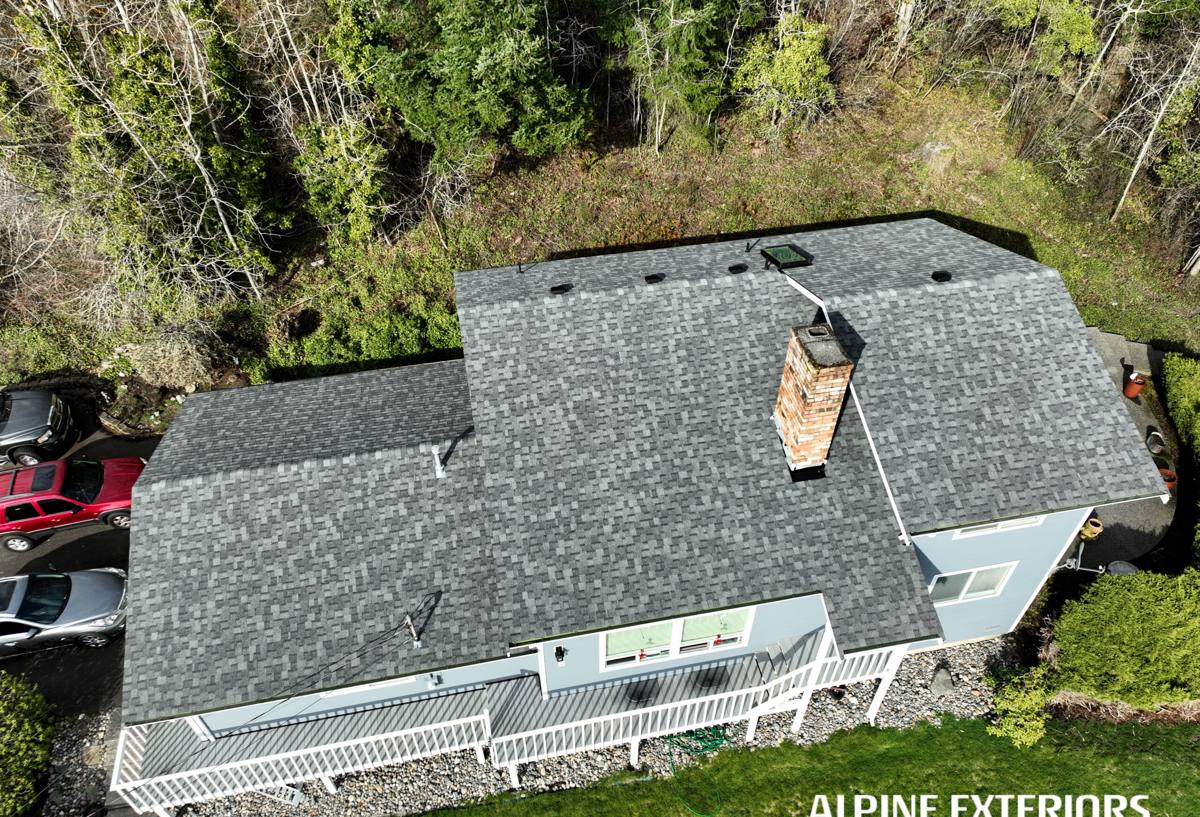
Signs a Sandy Point Deck Needs Replacing, Not Patching
Not every tired-looking deck needs a full teardown. But there's a point where patching individual boards or re-staining is just delaying a bigger problem, and in a salt-air environment that point tends to arrive sooner than homeowners expect.
Structural red flags
- Soft, spongy, or springy spots when you walk across the deck
- Rust streaking or corrosion visible around fasteners, brackets, or post bases
- Ledger board separation or gaps where the deck meets the house
- Posts or railing that feel loose or move under moderate pressure
- Visible rot, especially near ground contact posts or joist ends
Cosmetic issues that usually don't require replacement
- Faded or graying wood with no soft spots
- Surface moss or algae film that hasn't penetrated the wood
- Minor board cupping without structural movement
The honest answer, most of the time, is that we won't know for certain until we get underneath the deck and check the framing, ledger connection, and post bases directly. A visual inspection from the top can miss a lot.
What a Correct Deck Replacement Actually Involves
A deck replacement done right is more than swapping old boards for new ones. In a climate like Ferndale's, the parts you don't see matter more than the decking surface itself.
Substructure and framing
This is where most long-term failures start. We check that footings and posts are sound, that joists are spaced and sized correctly for the load and span, and that any framing in contact with the ground or concrete is properly separated and treated. Undersized or waterlogged framing is a common find on older Sandy Point decks that were never built with this level of salt and moisture exposure in mind.
Ledger attachment and flashing
The ledger board — where the deck attaches to the house — is one of the most failure-prone connections on any deck, and driving rain off the water makes it worse here than in more sheltered parts of Ferndale. Proper flashing, correct fastener spacing, and a real gap for water to drain rather than pool against the house are non-negotiable on every replacement we do.
Fasteners and hardware
Standard galvanized fasteners can corrode faster in salt-influenced air than they would a few miles inland. We use fasteners and connectors rated for the exposure the deck will actually see, not just what's rated for a generic exterior application.
Ventilation and drainage underneath
A deck that can't dry out between rain events stays damp longer, which speeds up rot and gives moss and mildew a head start. Proper joist spacing, gapping between boards, and grading underneath the deck all affect how quickly it dries after weather moves through.
Decking Material Options for a Salt Air, High-Moss Environment
There's no single "correct" decking material for every home — it depends on budget, maintenance appetite, and how close the deck sits to salt spray and shade. Here's how the common options compare for a property like the ones near Sandy Point.
| Material | Moisture / Salt Air Behavior | Moss & Mildew Resistance | Maintenance Needed | Relative Cost |
|---|---|---|---|---|
| Pressure-treated wood | Performs well if properly sealed and re-sealed on schedule; end grain and fastener holes are the weak points | Needs regular cleaning and treatment to resist moss buildup | Highest — annual inspection, periodic sealing/staining | Lowest upfront |
| Cedar or other natural wood | Naturally moisture-resistant but still needs sealing near salt air | Moderate — better than treated pine but still needs upkeep | High — sealing and cleaning on a regular cycle | Mid |
| Capped composite | Very good — the cap layer resists moisture absorption and salt residue | Good — smooth cap sheds moss spores more easily than wood grain | Low — periodic washing, no sealing or staining | Mid to high |
| PVC/cellular decking | Excellent — doesn't absorb moisture, unaffected by salt exposure | Best of the group — dense, non-porous surface | Lowest — occasional washing | Highest upfront |
We don't push one material on every homeowner. Wood costs less upfront but asks for more of your time every year; composite and PVC cost more to install but ask almost nothing of you afterward. In a moss-heavy, salt-air spot like Sandy Point, that maintenance gap tends to matter more than it would on a sheltered inland lot, which is why we walk through the real trade-offs with every homeowner before recommending anything.
Our Deck Replacement Process
1. On-site assessment
We inspect the existing deck from underneath as well as on top — footings, ledger connection, framing condition, and any visible moisture or rot damage. This is also when we talk through material options based on how exposed your specific lot is to wind, salt spray, and shade.
2. Straightforward proposal
You get a written scope covering demolition, framing repair or replacement, decking material, railing, and any permit work involved — no vague allowances that turn into surprise change orders later.
3. Permitting
Deck replacement in Whatcom County typically requires permitting depending on the deck's size, height, and attachment to the structure. We handle the permit process as part of the job rather than leaving it on the homeowner's plate.
4. Teardown and rebuild
Old decking, and any framing that doesn't pass inspection, comes out. We rebuild the substructure to current code and to standards appropriate for the site's exposure, then install the new decking, railing, and stairs.
5. Final walkthrough
We walk the finished deck with you, check fastener lines, railing security, and drainage, and answer any questions about care going forward before we consider the job done.
Permits and Local Considerations
Ferndale and Whatcom County have specific requirements around deck height, guardrail spacing, footing depth, and ledger attachment, and those requirements can shift depending on the deck's size and how it's attached to the house. Properties close to the water may also have additional considerations depending on setback and shoreline-related rules. We check what applies to your specific lot rather than assuming a one-size-fits-all approach, and we pull the appropriate permits as part of the project rather than treating that step as optional.
Maintaining a New Deck in Ferndale's Climate
Whatever material you choose, a few habits make a real difference in how long a Sandy Point deck stays solid:
- Sweep or rinse off salt residue and debris regularly, especially after storms
- Keep gutters and downspouts clear so runoff isn't dumping extra water onto the deck
- Trim back vegetation that's shading the deck and keeping it damp longer than it needs to be
- Check fasteners and railing connections once or twice a year for corrosion or looseness
- For wood decks, stay on top of your sealing schedule rather than waiting until it's visibly worn
- Clear moss promptly rather than letting it establish — it's much easier to remove early
None of this requires a major time investment, but skipping it is how a well-built deck ends up needing early repairs anyway.
Why a Crew That Already Works Sandy Point Matters
A deck built to a generic regional standard and a deck built for a specific lot near the water aren't the same project, even if they look identical when finished. Knowing how much salt exposure, wind-driven rain, and moss pressure a given stretch of Sandy Point actually sees changes decisions about fastener grade, ventilation, and how conservative to be with framing — decisions that don't show up on a materials list but show up ten years later in how the deck is holding up. A crew that's replaced decks in this specific area already knows which shortcuts don't hold up here, so you're not the one finding that out the hard way.
If you're weighing repair against replacement, or just want an honest read on the condition of your current deck, we're happy to take a look. There's a free, no-pressure estimate form below whenever you're ready.