 Ferndale Siding
 Energy-Efficient Windows Built for Kendall's Climate
Kendall sits inland from the coast, out in the wooded, rural stretches east of Ferndale toward the Mount Baker foothills. It's a different world from a beachfront lot, but the windows on a Kendall home still take a beating year-round: heavy tree cover holds moisture against the house, temperature swings between valley cold snaps and summer heat put real stress on seals, and a long, damp season means windows that trap condensation or leak air get punished for months at a time. Add in the driving rain and moss growth that define Whatcom County's wet season, and it's clear that "energy-efficient" here has to mean more than a sticker on the glass — it has to mean a window and an installation that actually hold up.
This page covers what we look at when we replace or upgrade windows specifically for homes in and around Kendall — what the climate demands, what a correct installation looks like, and how our process works from the first look at your house to the final walkthrough.
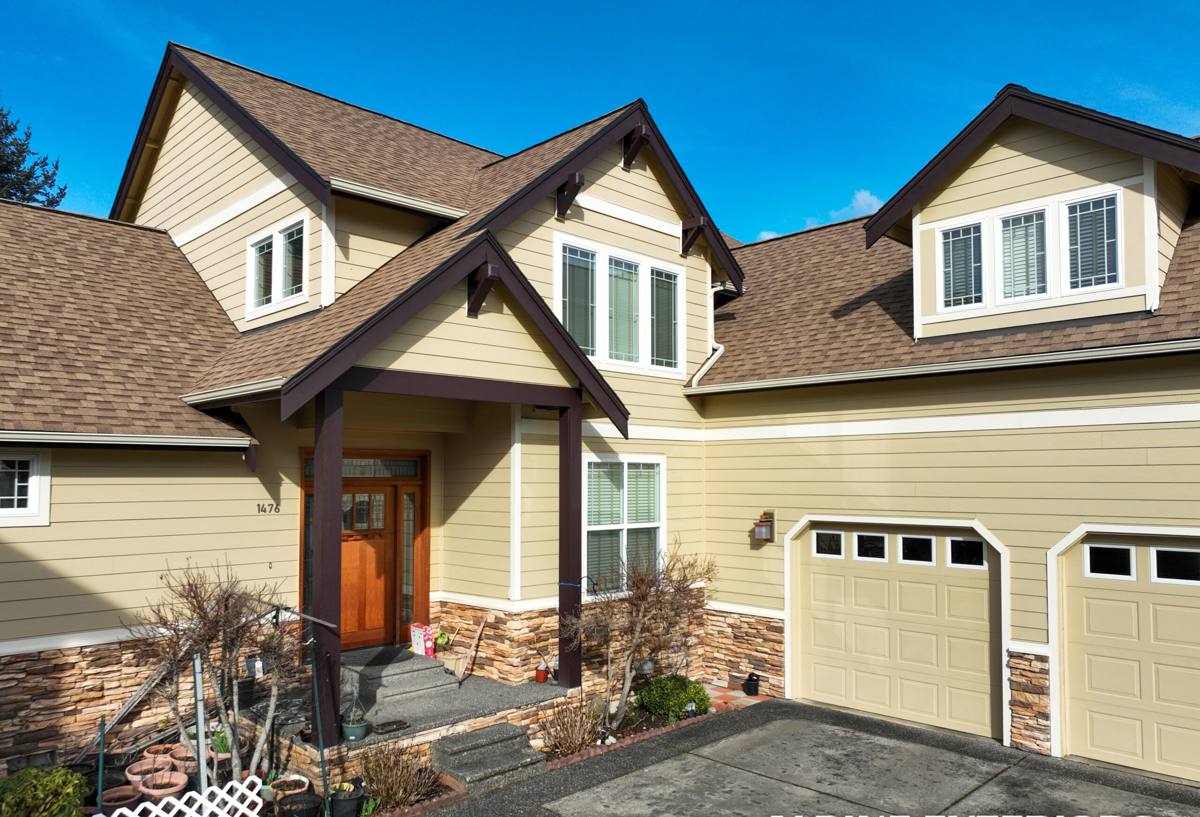
What Whatcom County's Weather Does to Windows Over Time
Moisture Is the Real Enemy
Whatcom County doesn't get brutal winters, but it does get long, wet stretches — driving rain that comes in sideways during storms, persistent humidity, and enough shade in tree-covered areas like Kendall that surfaces stay damp longer than they would on an open lot. Older or poorly-sealed windows respond to that moisture in predictable ways: fogging between panes (a sign the seal has failed), soft or swelling wood at the sill, and black mildew or moss creeping into corners and tracks that never fully dry out.
Salt Air and Regional Exposure
Closer to the water, salt-laden air accelerates corrosion on hardware and finishes across this region — it's one of the reasons we pay attention to what metals and coatings go into a window assembly, not just the glass. Kendall's inland position means less direct salt exposure than homes right on Bellingham Bay, but the same general moisture-and-corrosion pressure that defines this part of Washington still applies, just at a slower pace.
Moss Season Isn't Just a Roof Problem
People think of moss as a roofing issue, but it colonizes window sills, exterior trim, and anywhere water sits without draining. A window with poor drainage weeps or track design becomes a moss magnet, and moss holding moisture against wood trim or a compromised frame speeds up rot underneath it.
What "Energy-Efficient" Actually Means Here
In a climate like this, energy efficiency is less about blocking summer sun and more about controlling heat loss, air infiltration, and condensation. The ratings that matter most are U-factor (how well the window resists heat flow — lower is better for our winters) and air leakage rating (lower is better). Solar heat gain coefficient matters less here than in a hot, sunny climate, though it's still worth considering on south-facing rooms.
Frame Material Trade-Offs
We install several frame materials depending on the home, budget, and how exposed the window is to weather. Each has real trade-offs — we'll walk you through what fits your house rather than push one option across the board.
| Frame Material | Moisture Performance | Maintenance | Typical Fit for Kendall |
|---|---|---|---|
| Vinyl | Good — won't rot, handles humidity well | Low; occasional cleaning | Strong value option for most homes |
| Fiberglass | Excellent — very stable in wet/dry cycles | Low | Good for exposed or shaded, damp-prone walls |
| Wood-clad | Depends heavily on cladding integrity and installation | Higher; needs monitoring at joints and sills | Best where appearance matters and upkeep is expected |
| Aluminum | Conducts cold, prone to condensation without thermal breaks | Low, but corrosion risk near coastal exposure | Limited use; mainly commercial or specialty applications |
We're honest about wood-clad windows in this climate: they can look great, but the cladding has to be installed and flashed correctly, and any gap or failure point becomes a moisture entry route that's harder to catch early than it is on vinyl or fiberglass. That's a maintenance and installation-sensitivity conversation, not a knock on the product — plenty of wood-clad windows perform fine here when they're detailed correctly and someone keeps an eye on them.
What a Correct Installation Actually Involves
The window unit itself is maybe half the job. The other half — the part that determines whether you get 20+ years of dry, draft-free performance or a callback in three years — is the installation.
- Removing the old window without damaging the rough opening or hidden framing
- Checking the sheathing and framing underneath for hidden rot or moisture damage before the new unit goes in
- Integrating new flashing correctly with the existing weather-resistive barrier, so water sheds outward and down, never behind the siding
- Proper shimming and squaring so the window operates smoothly and seals evenly for its full life
- Sealing with the right materials at the right layers — not just a bead of caulk on the outside
- Insulating the gap between the frame and rough opening without overpacking, which can bow the frame
- Reinstalling or repairing trim and siding tie-ins so water management continues uninterrupted around the opening
That flashing and integration step is where we see the most damage from past work — a window that leaks isn't usually a bad window, it's a window installed without proper attention to how water moves around it.
Signs Your Current Windows Are Underperforming
Before assuming full replacement is the answer, it's worth knowing what to look for. Some of these point to a simple repair or reseal; others mean the window has reached the end of its useful life.
- Fogging or a milky haze between panes of double- or triple-pane glass (failed seal, not cleanable)
- Visible condensation on the inside of the glass during cold, damp weeks
- Drafts you can feel by hand near the frame on a windy day
- Soft, discolored, or swelling wood at the sill or lower corners
- Moss or black growth building up in tracks or exterior trim that never fully dries
- Windows that are difficult to open, close, or lock — often a sign the frame has shifted or swelled
- A noticeable rise in heating costs without another clear cause
Our Process for Kendall Window Projects
- On-site assessment. We look at each window individually — orientation, exposure to weather, tree cover, and current condition — because a shaded, moisture-prone wall needs different attention than a sheltered one.
- Honest recommendation. We tell you which windows genuinely need replacement, which could be repaired or resealed, and why — no upselling a full-house job when it isn't needed.
- Product selection. We go over frame material, glass package, and performance ratings against your budget and how exposed that part of the house is.
- Careful removal and inspection. Old units come out without tearing up surrounding siding or trim more than necessary, and we check the framing underneath before anything new goes in.
- Correct flashing and sealing. This is the step that determines long-term performance, and it's where we spend the most care.
- Final check and walkthrough. Every window gets tested for smooth operation and a tight seal before we call the job done.
Why Working With a Crew That Already Knows Kendall Matters
Rural and semi-rural properties around Kendall come with their own logistics — longer driveways, tree-lined lots, septic and well setups to work around, and often older homes where the rough openings behind the siding aren't exactly what a spec sheet assumes. A crew that regularly works this part of Whatcom County knows to expect that variation and plans for it, instead of discovering it mid-job. It also means we're familiar with how the local moisture and moss patterns actually play out over a full year, not just how a product performs on paper.
Being local also means accountability. If a seal needs adjusting or a question comes up six months after the install, we're not driving in from out of the area — we're already working in this community.
Protecting Your Investment After Installation
Energy-efficient windows are a long-term investment, and a little upkeep protects that investment in this climate:
- Clear debris and moss buildup from tracks and sills each fall before the wet season sets in
- Check exterior caulking annually and touch up any cracked or shrinking beads
- Keep gutters and downspouts clear so water isn't sheeting down across window heads
- Trim back vegetation that keeps a window shaded and damp longer than the rest of the house
- Address any new drafts or moisture signs early rather than waiting for them to worsen
If your Kendall home has windows that fog, draft, or just feel past their prime, we're happy to take a look and give you a straight answer — no pressure, no obligation. Fill out the form below for a free estimate and we'll walk through your options in person.