 Ferndale Siding
 Building New in Everson Means Getting the Windows Right the First Time
When you're framing a new home in Everson or anywhere in the Ferndale service area, the windows are one of the few components that have to perform correctly for decades without anyone opening up the wall to check on them. Whatcom County's weather doesn't forgive a bad flashing detail. Driving rain off the Strait, a long wet season that keeps siding and trim damp for months at a stretch, and the moss and mildew that come with all that moisture put real, ongoing pressure on every seam around every window opening. On a remodel, a failing window announces itself with a stain on the drywall. On new construction, if the install is wrong, you often don't find out until the damage is already inside the wall cavity.
That's the case for treating new-construction windows as a system, not a product. The window unit itself matters, but the flashing, the water-resistive barrier integration, the sill pan, and the sealant details around it matter just as much — arguably more, since a mediocre window installed correctly will usually outlast a great window installed carelessly.
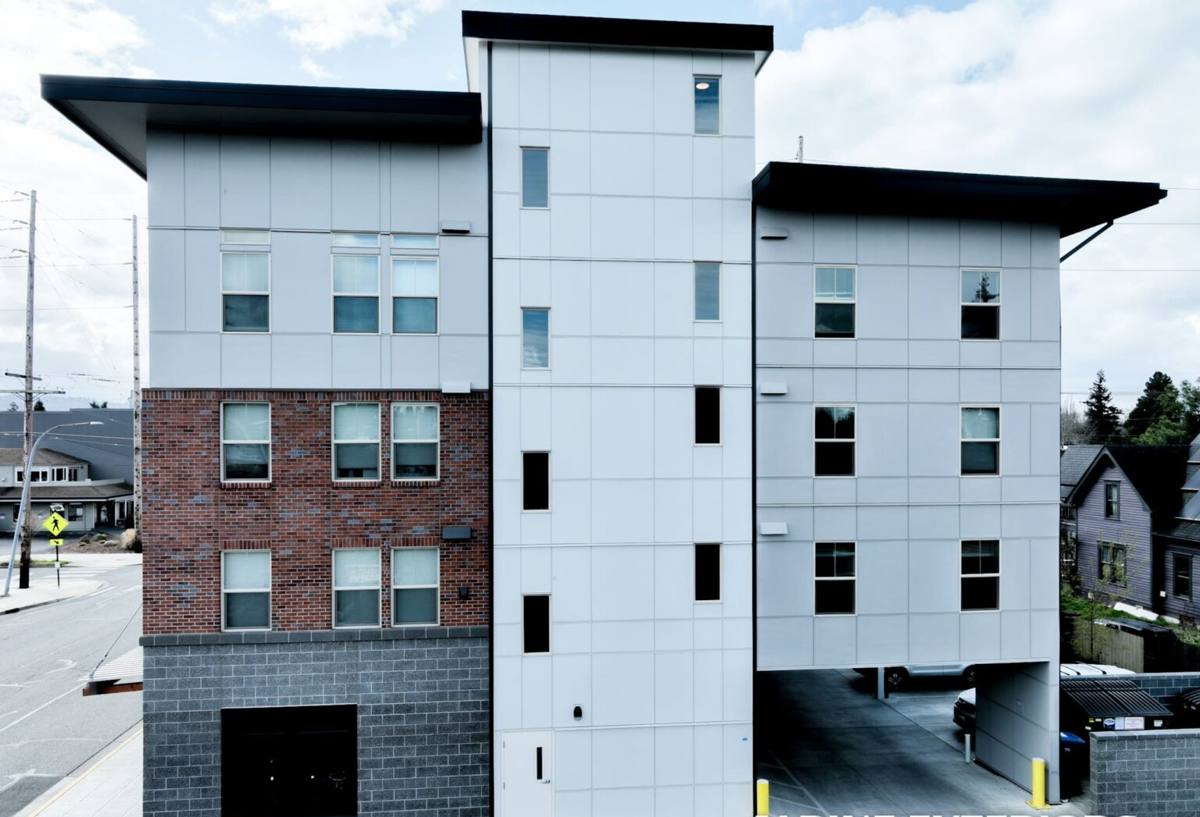
What "New-Construction Window" Actually Means
In the trade, "new-construction" or "nail-fin" windows are different from the "replacement" or "flush-fin" windows used when swapping units into an existing wall. The distinction matters for how the job gets built, not just which window gets ordered.
Nail-Fin Windows
These have an integrated flange around the perimeter that gets fastened directly to the sheathing before siding goes on. The flange is what the flashing tape and water-resistive barrier lap over, creating a shingled, gravity-fed drainage path. This is the standard approach for new builds because it gives the crew full access to the rough opening and lets flashing get built in correctly from the framing stage, rather than retrofitted around an existing window.
Why This Matters More in Whatcom County
Because nail-fin installation happens before the exterior is closed up, it's the one chance to get the water management layers right. Once siding is on, any mistake in that flashing sequence is hidden until moisture finds its way in — and in a climate with as much sustained rain as this one, that's not a hypothetical.
What the Local Climate Asks of a New Window Installation
Everson and the surrounding Ferndale area sit in a genuinely wet part of the state. It's not just the volume of rain — it's the duration. Long stretches of drizzle and driving rain, short dry windows to actually build in, and a moss season that keeps roofs, trim, and north-facing walls damp well after the rain itself has stopped. That combination shapes a few real installation priorities:
- Flashing has to be sequenced correctly (shingle-lapped, bottom to top) so water is directed out and down, never trapped behind the window.
- Sill pans are worth the extra step on every opening, not just the ones facing prevailing weather — wind-driven rain in this region doesn't always come from the same direction.
- Sealants and tapes need to be rated for the temperature swings and sustained damp conditions common here, not just fair-weather installs.
- Drainage planes behind siding need a clear path for any incidental moisture to exit at the base of the wall.
- Window selection should account for condensation resistance, since damp, cooler air sitting against glass and frames for months at a time is a moss-and-mildew invitation if the unit isn't performing well thermally.
None of this is exotic. It's careful, unglamorous work — but it's the difference between a window that's still tight in fifteen years and one that starts showing rot at the sill in five.
Choosing a Frame Material for a New Build Here
For new construction, you have more freedom to choose frame material than you would on a retrofit, since the opening is being built around the window rather than the other way around. Here's how the common options compare for a Whatcom County build:
| Frame Material | Moisture Behavior | Maintenance | Typical Fit for This Climate |
|---|---|---|---|
| Vinyl | Does not absorb water or rot; won't corrode from salt-influenced marine air | Low — occasional cleaning | Strong all-around choice for budget-conscious new builds |
| Fiberglass | Very stable dimensionally in wet/dry and hot/cold cycling; excellent moisture resistance | Low | Good upgrade where long-term stability and slimmer sightlines matter |
| Wood-clad | Interior wood needs to stay conditioned; exterior cladding protects from rain but seams need attention | Higher — interior finish upkeep | Workable for interior aesthetic goals, but adds a maintenance obligation in a wet climate |
| Bare wood exterior | Most exposed to rot and repeated wet/dry cycling without diligent upkeep | Highest | We don't recommend it for exterior-facing new-construction openings in this region — the maintenance burden is steep given how much rain the exterior sees |
We're not against wood windows as a category — they have real appeal — but for exterior exposure in a climate that stays wet as long as this one does, we steer new-construction clients toward vinyl or fiberglass unless there's a strong design reason to do otherwise, and we say so plainly during the estimate rather than letting a client find out the hard way five winters in.
The Installation Sequence That Actually Prevents Failures
Most window problems we get called out to investigate trace back to one of a handful of sequencing mistakes, not the window product itself. On a new build in Everson, the correct order looks like this:
- Rough opening is checked for square, level, and correct dimensions before the window ever arrives on site.
- Water-resistive barrier is run and integrated with the opening, with the bottom flap folded into the opening ahead of the sill pan.
- Sill pan flashing is installed to catch and direct any water that gets past the window itself, sloped outward.
- Window is set, shimmed level and plumb, and fastened per the manufacturer's schedule — not just at the corners.
- Side flashing goes on next, then head flashing last, each lapping over the layer below it so water always sheds outward and down.
- Sealant is applied at specified gaps only — sealing the entire perimeter solid can actually trap water rather than let it drain, which is a mistake we still see on new builds done by crews who don't do a lot of exterior water-management work.
Skip a step, or do them out of order, and you've built a wall that looks finished but is designed to fail quietly.
Mistakes We See Most Often on New-Construction Openings
Some of these are subtle, and none of them show up on a punch-list walkthrough — they show up years later.
- Flashing installed in the wrong order (head flashing under the WRB instead of over it, for example), which reverses the intended drainage path.
- No sill pan, relying on sealant alone to keep water out of the rough opening.
- Continuous bead of sealant around the entire window perimeter, blocking the weep path built into the window itself.
- Fasteners skipped along the sides of the nail fin because siding will "hold the window in place anyway."
- Window ordered to the wrong rough-opening size, leading to oversized shim gaps that get filled with expanding foam instead of proper backer rod and sealant.
- Mismatched flashing tape that isn't compatible with the WRB, causing poor adhesion over time in cold, damp conditions.
Our Process for a New-Construction Project in Everson
We treat new-construction window work as a coordination job as much as an installation job, since it touches framing, the WRB, and siding trades. On a typical project:
Before the Windows Arrive
We verify rough openings against the actual window schedule, confirm flashing materials are compatible with the WRB the builder is using, and plan the install sequence around the siding trade's timeline so openings aren't left exposed to weather longer than necessary.
During Installation
Each opening gets the full sequence — WRB integration, sill pan, window set and shimmed, then flashing lapped correctly and sealant applied at the specified gaps only. We check level and plumb on every unit rather than sampling a few and assuming the rest match.
Before We Leave the Site
We walk every opening, confirm operation on every operable unit, and check that flashing laps are visible and correct before siding closes them in — because that's the last point where a mistake can be caught cheaply.
Cost Factors on a New-Construction Window Project
Costs vary by project scope, window count, frame material, and how many openings involve special sizing or configurations. Rather than quote a number that won't match your specific plan, here's what actually moves the price:
| Factor | Effect on Cost |
|---|---|
| Frame material (vinyl vs. fiberglass vs. wood-clad) | Fiberglass and wood-clad typically run higher than vinyl for comparable performance |
| Number and size of openings | More openings and larger units increase both material and labor |
| Glass package (standard vs. upgraded low-E, gas fill) | Upgraded glass packages add cost but improve comfort and condensation resistance |
| Special shapes or oversized units | Custom sizing and shapes add lead time and cost over stock sizes |
| Coordination with framing/siding schedule | Tight scheduling with other trades can affect labor efficiency |
We give straight numbers once we've seen the plans and window schedule — not a rough guess pulled from a square-footage formula that ignores what's actually being built.
Why It Matters to Hire a Crew That Already Works in Everson
A lot of window installation problems aren't about skill in the abstract — they're about not adjusting for the specific climate a house sits in. A crew used to installing in a dry region can do everything "by the book" for that region and still leave a Whatcom County home under-protected, because the book they're used to didn't account for months of sustained rain and a moss season that keeps everything damp long after the sky clears. Working new-construction jobs regularly in and around Everson and Ferndale means we're not guessing at how this region's weather behaves — we're building around what it actually does, opening after opening, season after season.
If you've got a new build underway or coming up in Everson or the Ferndale area, we're happy to walk the plans with you, talk through frame material and flashing details for your specific site, and put together a free, no-pressure estimate — no obligation, just a straight look at what your project needs.