 Ferndale Siding
 Windows Built for Fairhaven's Coastal Conditions
Homes near Fairhaven sit close enough to the water that the weather is different from what you'd deal with further inland in Whatcom County. Salt-laden air off the Salish Sea, long stretches of wind-driven rain, and a moss season that seems to start earlier and last longer every year all put extra stress on a home's exterior. Windows take more of that abuse than most homeowners realize, because they're one of the few places in a wall assembly with moving parts, seals, and seams that have to keep working year after year.
An energy-efficient window replacement in this area isn't just about lowering a heating bill. It's about choosing glass, frame materials, and hardware that can stand up to salt exposure and constant moisture without warping, fogging, or failing at the seals within a few years. Get that part wrong and you've paid for an upgrade that underperforms almost immediately. Get it right and you've got windows that stay tight, clear, and efficient for decades.
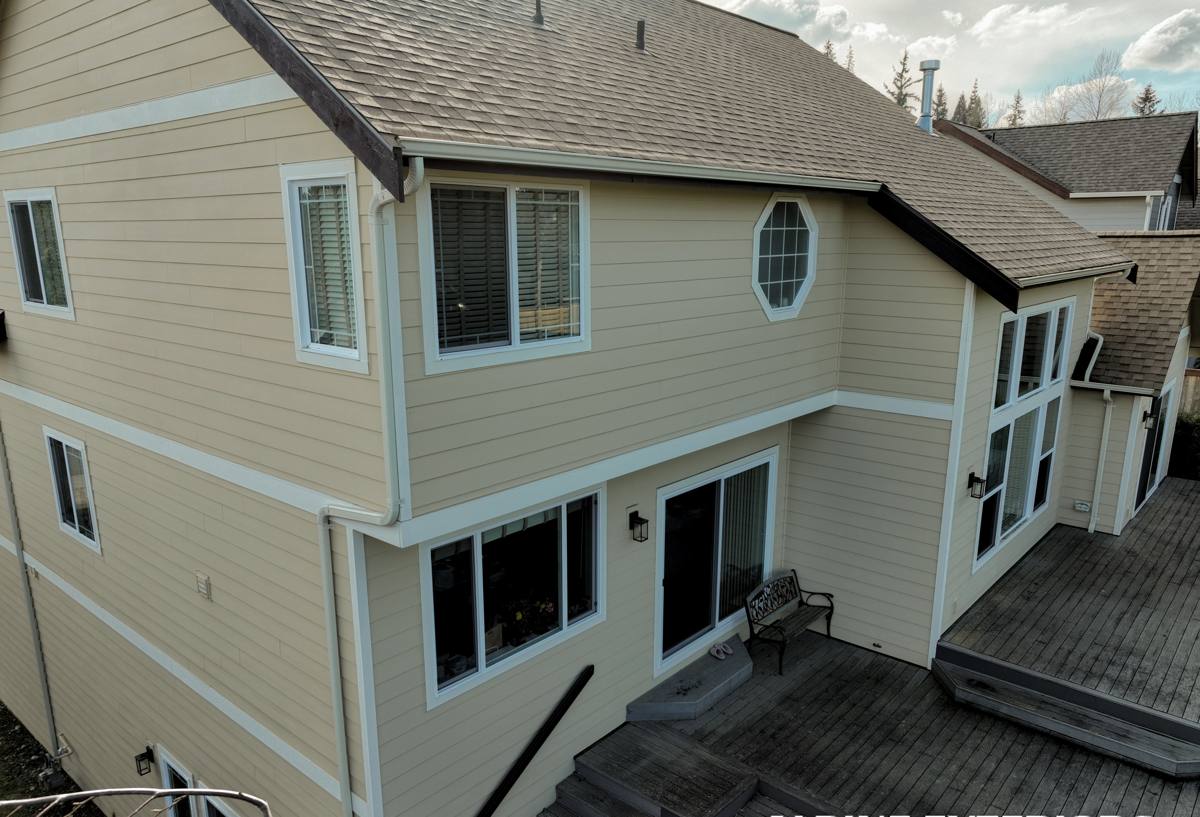
What Fairhaven's Climate Actually Does to Windows
Salt Air and Coastal Exposure
Salt in the air accelerates corrosion on anything metal — hinges, balance systems, screen frames, and lesser-grade hardware inside a window's operating mechanism. Over time this shows up as stiff or sticking sashes, corroded latches, and hardware that simply stops working smoothly. It's a slower process than storm damage, but it's steady, and it's part of why hardware quality matters as much as the glass package when you're this close to the water.
Wind-Driven Rain
Rain that comes in sideways during a windstorm tests a window's weatherstripping and flashing in a way that a gentle, straight-down rain never does. A window that's rated well on paper but installed with sloppy flashing or gaps in the sealant will let water find its way behind the trim eventually. That's when you start seeing soft spots, staining, or drywall damage on interior walls near the window opening — often long after the storm that caused it.
Moss and Persistent Moisture
Whatcom County's damp, mild climate is ideal moss-growing weather, and moss doesn't just grow on roofs. It takes hold in window sills, tracks, and any spot where water sits instead of draining. Sitting moisture breaks down sealants and wood trim faster than rain alone, which is why drainage detailing at the sill is one of the most overlooked parts of a window installation in this region.
What "Energy-Efficient" Should Mean for a Fairhaven Home
Energy efficiency in a window comes from three things working together: the glass package, the frame material, and how well the unit is sealed into the rough opening. A high-end window installed poorly will underperform a mid-grade window installed correctly — that's true anywhere, but it matters more here because of the added moisture load.
Glass Package
Most homes in this climate do well with double-pane, low-E glass filled with argon gas, which cuts heat loss through the glass and reduces condensation on cold, wet mornings. Triple-pane glass offers a further step up in insulation and sound dampening, which some homeowners value given how close Fairhaven sits to marine traffic noise and weather systems moving through, but it comes at a higher cost and added weight that your existing frame and opening need to support.
Frame Material
Frame material affects both energy performance and how well the window holds up to salt air and moisture over the long run. We'll walk through the trade-offs in the comparison below.
Installation and Air Sealing
Even the best-rated window will leak air and eventually water if it isn't shimmed level, flashed correctly, and sealed with the right products at the right points. This is the step that's invisible once the trim goes back on, and it's the step that determines whether the window performs like its rating suggests or falls short of it.
Comparing Frame Materials for a Salt-Air, High-Moisture Climate
There's no single "best" frame material for every home — it depends on your budget, your home's style, and how much long-term maintenance you're willing to take on. Here's how the common options stack up specifically for conditions like Fairhaven's.
| Frame Material | Salt Air / Moisture Resistance | Maintenance | Typical Cost Range |
|---|---|---|---|
| Vinyl | Good — won't corrode or rot, though lower-grade vinyl can become brittle over many years of UV and weather cycling | Low — no painting or sealing required | Lower end of the market |
| Fiberglass | Very good — dimensionally stable, resists warping and doesn't corrode | Low — occasional cleaning, paintable if desired | Mid to upper range |
| Wood-Clad | Fair — the exterior cladding protects against moisture, but any breach in the cladding exposes wood to rot risk in a wet climate | Higher — seals and cladding joints need periodic inspection | Upper range |
| Aluminum | Poor to fair — conducts heat and cold readily and is prone to condensation; not our first recommendation for this climate | Moderate | Varies |
For most Fairhaven homes, vinyl or fiberglass frames offer the best balance of moisture resistance, low upkeep, and value. Wood-clad frames can still be the right call for homes where matching an existing architectural style matters, as long as the cladding and flashing details are done correctly and checked periodically.
What a Correct Window Installation Involves
The window unit itself is only part of the job. How it's set into the wall determines whether it actually performs the way it's rated to. A proper installation in this climate includes:
- Removing old windows carefully to inspect the rough opening for hidden rot or water damage before anything new goes in
- Installing sill pan flashing that directs any water that gets past the window back outside, rather than into the wall cavity
- Applying flashing tape at the sides and top in the correct shingle-lap order so water always drains outward and down
- Shimming the window plumb, level, and square so sashes operate smoothly and seals compress evenly
- Sealing the interior air barrier separately from the exterior weather barrier — these are two different jobs, not one bead of caulk
- Insulating the gap between the frame and rough opening without overpacking, which can bow the frame
- Finishing exterior trim and caulking with products rated for the temperature and moisture swings of a coastal marine climate
Skipping or rushing any one of these steps is usually what's behind a window that looks fine for a year or two and then starts showing drafts, fogging, or water staining.
Signs Your Current Windows Are Underperforming
You don't need to wait for visible damage to know a window replacement is worth looking into. Common signs in homes around here include:
- Condensation or fog forming between the panes, which means the seal has failed and the insulating gas has escaped
- Noticeable drafts near the frame even when the window is fully latched
- Sashes that are hard to open, close, or lock — often a sign of frame warping or corroded hardware
- Soft wood, bubbling paint, or staining on the interior trim or sill
- Visible moss or persistent green growth in the sill track or exterior trim
- A noticeable temperature difference near the window compared to the rest of the room
Our Process, From Estimate to Final Walkthrough
We keep the process straightforward because homeowners have usually had enough surprises with contractors already. It generally goes like this:
- A no-pressure, on-site estimate where we look at your existing windows, note any signs of water intrusion or rot around the openings, and talk through your priorities — efficiency, noise, appearance, or budget.
- A written proposal that spells out the frame material, glass package, and installation scope so there's no ambiguity about what you're getting.
- Careful removal of the old units and inspection of each rough opening before the new window goes in — this is where hidden problems get caught early instead of after the fact.
- Installation following the flashing, sealing, and insulation steps outlined above, done the same way whether it's one window or a full-home replacement.
- A final walkthrough where we test operation on every window and confirm everything is sealed, trimmed, and cleaned up before we consider the job done.
Why Local Experience in This Area Matters
A crew that's worked window replacements around Ferndale and the Fairhaven area already knows how the local climate behaves — how far salt air travels inland, which exposures take the worst of the driving rain, and where moss tends to build up fastest on a home. That's not something you can fully account for with a generic install checklist written for a drier climate. It shows up in small decisions: which sealants hold up best against the salt and moisture cycle here, how sill pans should be detailed for this rainfall pattern, and which frame materials are worth the added cost versus which ones are overkill for a given home.
It also matters for accountability. A contractor who works this area regularly has a reputation to maintain with neighbors, not just a single job to finish and move on from.
Ready to Talk About Your Windows?
If your windows are drafty, fogging, sticking, or just past their useful life, we're happy to take a look and give you an honest read on what's going on — no pressure, no obligation. Use the form below to request a free estimate, and we'll walk through your options for windows that are actually built to hold up to Fairhaven's salt air, rain, and moss.