 Ferndale Siding
 Siding Built for the Sumas Side of Whatcom County
Homes in and around Sumas sit in one of the wetter, greyer stretches of Whatcom County. The combination of near-constant driving rain in the fall and winter, damp marine air drifting in off the Salish Sea, and long stretches of low sun that never quite dry the north side of a house creates a specific set of problems for exterior siding. Wood siding checks and rots. Vinyl warps, fades, and gives moisture a place to hide behind it. Cheaper fiber cement products, or fiber cement installed without attention to local detail, fail the same way — just more slowly. We install fiber cement siding for a living, specifically in this climate, and we've built our process around what actually happens to a wall assembly here over ten or twenty years, not what looks fine on install day.
This page is about one thing: fiber cement siding installation for homes in the Sumas area, done the way it needs to be done for this specific stretch of Whatcom County weather.
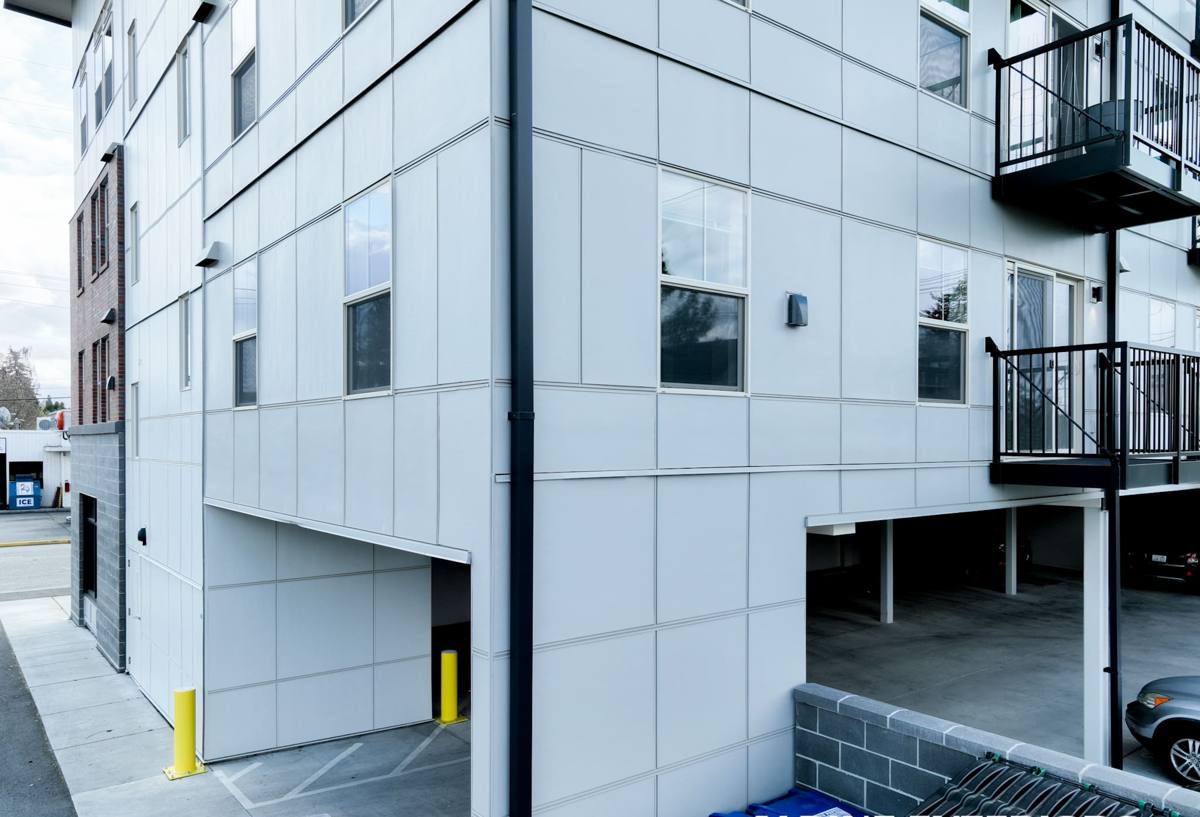
What Sumas's Climate Actually Does to a House
Driving Rain
Rain here doesn't just fall — wind pushes it sideways into wall assemblies, especially on west- and south-facing elevations. Any gap, unsealed joint, or missing piece of flashing becomes an entry point. Over a few wet seasons, water that gets behind siding and can't get back out causes sheathing rot, mold, and structural damage that's invisible until it's expensive.
Salt Air and Humidity
Proximity to Puget Sound and the Strait of Georgia means the air carries salt and moisture even well inland. That combination accelerates corrosion on fasteners and trim hardware, and it keeps siding surfaces damp longer after a storm than you'd see in a drier inland climate.
Moss Season
Whatcom County's moss season runs long — shaded, north-facing walls and anything under overhanging trees can stay damp enough to support moss and algae growth for months at a stretch. Moss holds moisture against a surface, and on the wrong material that moisture works its way into seams, fastener holes, and butt joints.
None of this is unusual for the area — it's just the baseline any siding product and any installation crew has to be built around.
Why We Install Only James Hardie Fiber Cement
We don't install vinyl, LP SmartSide, cedar, primed spruce, or other fiber cement brands. That's a deliberate standard, not a sales pitch, and it comes directly from what holds up in this climate:
- Non-combustible core — fiber cement doesn't feed a fire the way wood-based products can, which matters as wildfire smoke and dry-season risk have become a bigger part of Pacific Northwest summers.
- Engineered for moisture, not just painted against it — Hardie's HZ5 product line is specifically formulated for wetter climate zones, which the Ferndale/Sumas area falls into.
- Factory-applied ColorPlus finish — the finish is baked on at the factory under controlled conditions, rather than field-painted on-site where damp weather can compromise cure and adhesion.
- Track record — Hardie has decades of installed product in wet Pacific Northwest climates, which gives us (and homeowners) a real basis for expecting the product to perform, not just a marketing claim.
We're not going to tell you every other product is worthless — some of them have real strengths. But we've made a professional call that in a climate like this one, the trade-offs of vinyl, engineered wood, and off-brand fiber cement aren't ones we're willing to put our name behind. James Hardie is what we install, full stop.
What a Correct Installation Actually Involves
Fiber cement siding is only as good as the assembly behind it and the details around it. Most siding failures we get called out to inspect aren't product failures — they're installation shortcuts. A correct job in this climate includes:
Water Management Behind the Siding
A weather-resistant barrier and rainscreen or drainage gap so that any water that does get behind the siding has somewhere to go and can dry out, rather than sitting against the sheathing.
Flashing at Every Penetration
Windows, doors, hose bibs, light fixtures, and vents all need proper flashing and integration with the water barrier — not just caulk. Caulk fails; flashing sheds water by design and doesn't depend on adhesive staying intact for twenty years.
Correct Fastening and Clearances
Hardie has specific fastener spacing, clearance from grade, decks, and roof lines, and gap requirements at butt joints and trim. Skipping these to save time is the single most common cause of premature siding problems we see.
Caulking and Sealant Discipline
Used at the right joints, with the right product, not as a substitute for flashing. Over-caulking traps moisture; under-caulking lets it in. Both are common mistakes from crews that don't specialize in this product.
Our Process for Sumas-Area Jobs
- On-site assessment — we look at existing siding, sheathing condition where accessible, moisture entry points, and how the specific elevation exposure (sun, wind, tree cover) affects the job.
- Tear-off and inspection — old siding comes off and we check the sheathing underneath for rot or damage before anything new goes up. Problems found here get addressed before covering them up again.
- Water barrier and drainage plane — installed to current best practice for the wet Pacific Northwest, not the bare code minimum.
- Flashing and trim integration — windows, doors, and penetrations flashed and tied into the water-resistant barrier correctly.
- Hardie installation to spec — proper fastener type, spacing, clearances, and joint treatment, following Hardie's published installation requirements for this climate zone.
- Final trim, caulking, and inspection — finish details done deliberately, then a walkthrough so you know what was done and why.
James Hardie Product Lines We Use
Not every Hardie product fits every home. Depending on your home's style and exposure, we'll typically work with one or a combination of these:
| Product | Best Fit | Notes for This Climate |
|---|---|---|
| HardiePlank Lap Siding | Traditional and most common look | Available in HZ5, engineered for wetter zones like Whatcom County |
| HardiePanel Vertical Siding | Modern facades, accent walls, gable ends | Fewer horizontal joints where water can collect |
| HardieTrim | Corners, window and door surrounds, fascia | Matched material avoids the mismatched-durability problem of wood trim on fiber cement siding |
| HardieShingle | Accent gables, craftsman-style detailing | Gives a cedar-shake look without cedar's moisture and maintenance issues |
Cost Factors for Sumas-Area Homes
Every home is different, and we won't quote a number without seeing the job, but these are the variables that actually move the price:
| Factor | Why It Matters |
|---|---|
| Tear-off scope | Removing old siding down to sheathing costs more than siding over an already-sound assembly, but it's often the right call to check for hidden rot |
| Sheathing repair | Water damage found during tear-off adds cost but is far cheaper to fix now than after new siding is up |
| Home complexity | Multiple gables, dormers, and cut-ins mean more trim, more flashing detail, and more labor hours |
| Product mix | Combining lap siding with panel accents or shingle detailing costs more than a single uniform product |
| Finish | Factory ColorPlus finish costs more up front than primed product but eliminates a field-painting step and its long-term repainting cycle |
| Access and site conditions | Tight lots, tree cover, or difficult staging areas affect labor time |
Living With Fiber Cement Siding Here
Correctly installed Hardie siding is low-maintenance, not zero-maintenance. In a climate with this much moss and algae exposure, a periodic gentle wash (not high-pressure, which can force water into joints) keeps growth from taking hold on shaded elevations. Because the ColorPlus finish is baked on rather than field-applied, it holds color and resists the fading that drives most repainting cycles on wood or site-painted products. Caulked joints and trim should get a visual check every year or two, particularly after a hard winter, since sealant is the one component of the system that does age and eventually needs attention.
Signs Your Current Siding Is Losing the Fight
- Soft or spongy spots when you press on siding, especially near the bottom courses or under windows
- Persistent moss or algae staining that comes back quickly after cleaning
- Paint that's bubbling, peeling, or chalking heavily on wood or older fiber cement
- Visible warping, buckling, or gaps opening up at seams and corners
- Rising energy bills that could point to compromised insulation behind failing siding
- Cracks radiating from fastener points or corner trim
Why a Crew That Already Works This Area Matters
Siding installation isn't generic. A crew that regularly works Ferndale and the surrounding Whatcom County communities, including Sumas, already knows how local exposure — wind direction, rainfall patterns, tree cover, proximity to water — tends to hit different elevations of a house. That's not something you can fully substitute with a manual, and it's why we treat local experience as part of doing the job right rather than a marketing line.
If you're weighing a siding replacement or repair in the Sumas area and want a straight answer about what your home actually needs, we're happy to take a look. The estimate is free, there's no pressure, and you'll get a clear explanation of what we'd do and why — use the form below to get started.