 Ferndale Siding
 Siding That Actually Holds Up in Everson
Everson sits inland from the coastline, but that doesn't spare it from what makes Whatcom County one of the tougher places in the state to keep a house's exterior looking good and staying dry. Moist marine air moves through the valley most of the year, rain arrives sideways more often than straight down, and anything shaded or north-facing spends months at a time damp enough to grow moss. Ordinary siding — whatever brand it happens to be — is not built with that combination in mind. We install James Hardie fiber cement siding exclusively, and on Everson homes specifically, that choice comes down to how the product and the installation details respond to exactly these conditions.
This page is about one job in one area: putting James Hardie siding on a home in Everson, done the way the climate actually requires, not the way a generic install manual describes it.
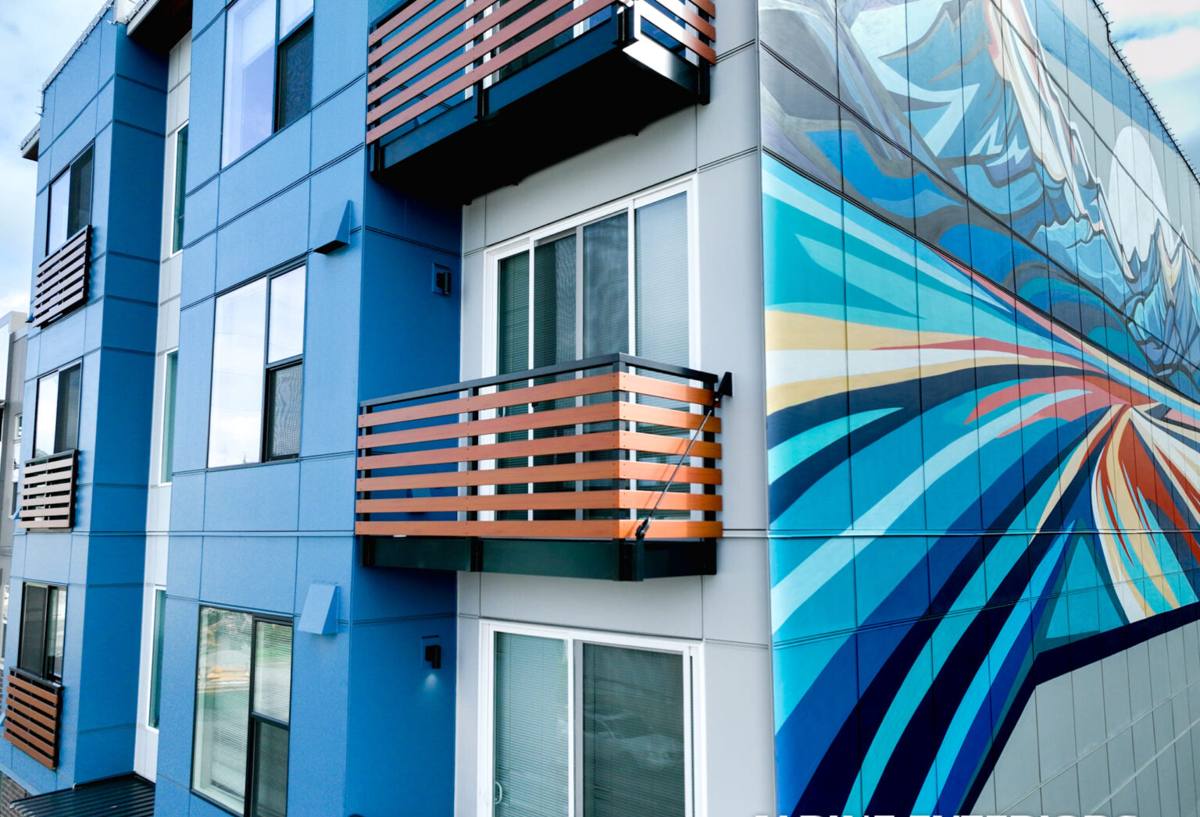
What Whatcom County's Climate Does to a House Over Time
Driving rain
Wind-driven rain doesn't just wet a wall's surface — it pushes moisture sideways into laps, seams, and fastener penetrations that would stay dry in a calmer climate. Siding systems that rely on caulk and paint film alone to keep water out tend to fail here faster than they would somewhere with gentler weather, because the water is actively being forced into every gap rather than sheeting off.
A long moss season
Moss needs shade, moisture, and time, and Everson supplies all three for a good stretch of the year. Moss holds water against a wall surface far longer than open air would, which is exactly the condition that rots wood-based siding and lifts paint off less durable materials. A siding product that can't tolerate sustained dampness against its face is fighting an uphill battle here.
Salt-influenced air
Whatcom County's proximity to the Salish Sea means the regional air carries salt content even well inland, and that salt-laced moisture accelerates corrosion on fasteners and metal trim and speeds up the breakdown of lower-grade finishes. It's a slow, cumulative effect — the kind of thing that doesn't show up in year one but shows up clearly by year ten.
None of these factors are dramatic on their own. Put together, year after year, they're why siding that looks fine going up can look tired within a decade — and why the material and the installation both matter more here than in a milder climate.
Why We Standardized on James Hardie for Homes Like This
We don't install vinyl, LP SmartSide, Cemplank, Allura, primed spruce, or cedar. That's not a marketing position — it's a decision we made after weighing how each of those products actually performs under sustained moisture, temperature swings, and UV exposure over 20-plus years, not just how they perform on day one.
James Hardie fiber cement is non-combustible, dimensionally stable in wet-dry cycling, and finished at the factory with ColorPlus technology rather than field-applied paint. That factory finish matters specifically in a climate like ours: it's baked on under controlled conditions and backed by its own finish warranty, so it isn't depending on a painter getting perfect adhesion on a damp Whatcom County jobsite. Hardie also builds region-specific product engineering into its HZ5 line, which is formulated for climates with our combination of moisture exposure and freeze-thaw cycling rather than a one-size-fits-all formulation.
We're not going to tell you every other product is worthless — cedar has real appeal, vinyl is inexpensive, LP SmartSide has genuine fans. What we will say plainly: given what this climate does to a wall over two decades, and given that we only want to put our name on work we're confident will still look right in year fifteen, Hardie is the one product line we're willing to stand behind for every home we side, Everson included.
How James Hardie Siding Compares for This Climate
| Material | Moisture behavior | Finish durability | Fire rating | Typical lifespan here |
|---|---|---|---|---|
| James Hardie fiber cement | Dimensionally stable; engineered HZ5 formulation for wet climates | Factory-baked ColorPlus finish, resists fading and chipping | Non-combustible | 30+ years with correct install |
| Vinyl siding | Can warp/buckle with temperature swings; water can get behind panels | Color molded through, but fades and becomes brittle with UV/age | Combustible, can melt/deform near heat | 15-25 years, shorter in harsh exposure |
| LP SmartSide (engineered wood) | Treated to resist moisture, but wood-based core is vulnerable if the finish is breached | Field or factory finish; edges need diligent sealing | Combustible | 20-30 years, highly dependent on maintenance |
| Cedar | Absorbs and releases moisture naturally; prone to rot and moss growth without upkeep | Requires ongoing staining/sealing | Combustible | 15-25 years with regular maintenance |
The table isn't meant to declare every alternative unusable — it's meant to show why moisture behavior and finish durability, specifically, are the two columns that matter most in a climate that stays damp for long stretches and pushes rain sideways into every seam.
What a Correct Installation Actually Involves
Even the right material fails early if it goes up wrong. On a climate like Everson's, the installation details are not optional extras — they're the difference between siding that performs for decades and siding that traps moisture behind itself within a few years.
- Weather-resistive barrier installed and lapped correctly before any siding goes up, with all penetrations properly sealed
- Rainscreen gap or proper furring where the wall assembly calls for it, so moisture that does get behind the cladding can drain and dry rather than sit against the sheathing
- Correct fastener type, length, and spacing per James Hardie's published installation instructions — not generic siding nails
- Proper clearance at grade, decks, and roof lines so siding never sits in standing water or constant splash-back
- Butt joints and corners flashed, not just caulked, so the seal doesn't depend entirely on sealant lasting forever
- Factory-cut edges sealed where field cuts expose raw material, per manufacturer specification
- Proper nailing pattern that avoids over-driving fasteners, which crushes the material and creates a weak point
Every one of those items is inspectable after the fact by someone who knows what to look for, and every one of them is a place where a rushed or unfamiliar crew cuts a corner that won't show up as a problem until a few winters have gone by.
Our Process for an Everson Project
The sequence doesn't change much from house to house, but the details we check at each step are shaped by what we've seen go wrong in this specific climate.
- Assessment — we look at existing siding, sheathing condition, moisture history, and how the specific home is exposed to prevailing wind and rain direction.
- Tear-off and inspection — removing old siding is also when hidden rot or moisture damage gets found; we address that before anything new goes up, not after.
- Weather barrier and drainage plane — this layer gets installed to spec, because it's the backup system if anything ever gets past the siding itself.
- James Hardie installation — panels, planks, or shingles installed to manufacturer specification, with attention to fastening, flashing, and clearances.
- Final inspection and walkthrough — we go over the finished work with the homeowner so there's no ambiguity about what was done and why.
We don't shortcut the tear-off and inspection step even when it slows the schedule down, because covering up a moisture problem with new siding just delays and hides it — it doesn't fix it.
Why a Ferndale-Based Crew Matters for an Everson Job
We're a Ferndale, Washington siding contractor, and Everson is well within the area we work regularly. That's worth something beyond convenience. A crew that already works this part of Whatcom County knows what the moss and moisture pressure look like on homes here, has a working relationship with local permitting processes, and can respond quickly if a question comes up mid-project or after the fact. It also means we're not learning this climate on your project — we've already seen what it does to siding installed without the right details, and we build the job around avoiding that outcome from the start.
Cost Factors for an Everson James Hardie Project
| Factor | Why it affects cost |
|---|---|
| Existing siding removal | Full tear-off costs more than installing over sound sheathing, but is often necessary to check for hidden moisture damage |
| Home size and wall complexity | More corners, dormers, and trim details mean more cutting, flashing, and labor time |
| Siding profile chosen | Lap siding, shingle-style panels, and board-and-batten each carry different material and labor costs |
| ColorPlus vs. field-painted finish | Factory-finished ColorPlus carries a material premium but removes future repainting costs for years |
| Sheathing or framing repair | Any rot found during tear-off needs to be repaired before new siding goes on, which is a separate line item |
We don't quote a number without seeing the house, because the tear-off condition alone can move the estimate meaningfully. What we can tell you honestly upfront is that a correct Hardie installation, done to manufacturer spec with proper drainage and flashing, costs more than a quick reside — and that the gap in cost is smaller than the gap in how long the two approaches actually last in this climate.
Maintenance After Installation
One of the practical advantages of James Hardie's factory finish is how little upkeep it demands compared to field-finished or wood-based alternatives. Homeowners in Everson should still expect to occasionally rinse pollen, debris, and any moss growth off the siding surface, particularly on shaded elevations, and to keep an eye on caulking at trim joints and penetrations over time the way you would with any exterior. What you shouldn't need is repainting, re-staining, or patching soft spots — if you're planning for those as recurring costs, that's usually a sign the wrong material went up in the first place.
If you're weighing siding options for a home in Everson, we're glad to walk the property, look at what's there now, and give you a straight assessment of what a correct James Hardie installation would involve — no pressure, no generic estimate pulled from a chart. Use the form below to request a free consultation.