 Ferndale Siding
 Composite Decking for Kendall Homes
Kendall is a quieter, wooded corner of Whatcom County — more tree cover, more shade, and more standing moisture than you'll find on an open lot closer to town. That combination is hard on outdoor wood. A deck out here spends a big part of the year damp, and damp wood under shade is exactly what feeds rot and moss. Composite decking was built to handle that kind of exposure, but only when it's installed correctly for the conditions it'll actually see.
We're based in Ferndale and work throughout Whatcom County, so Kendall isn't a special trip for us — it's part of the territory we already know. That matters more than it sounds like it should, because a deck built for a dry inland climate and a deck built for ours are not the same project, even if the materials look identical on a spec sheet.
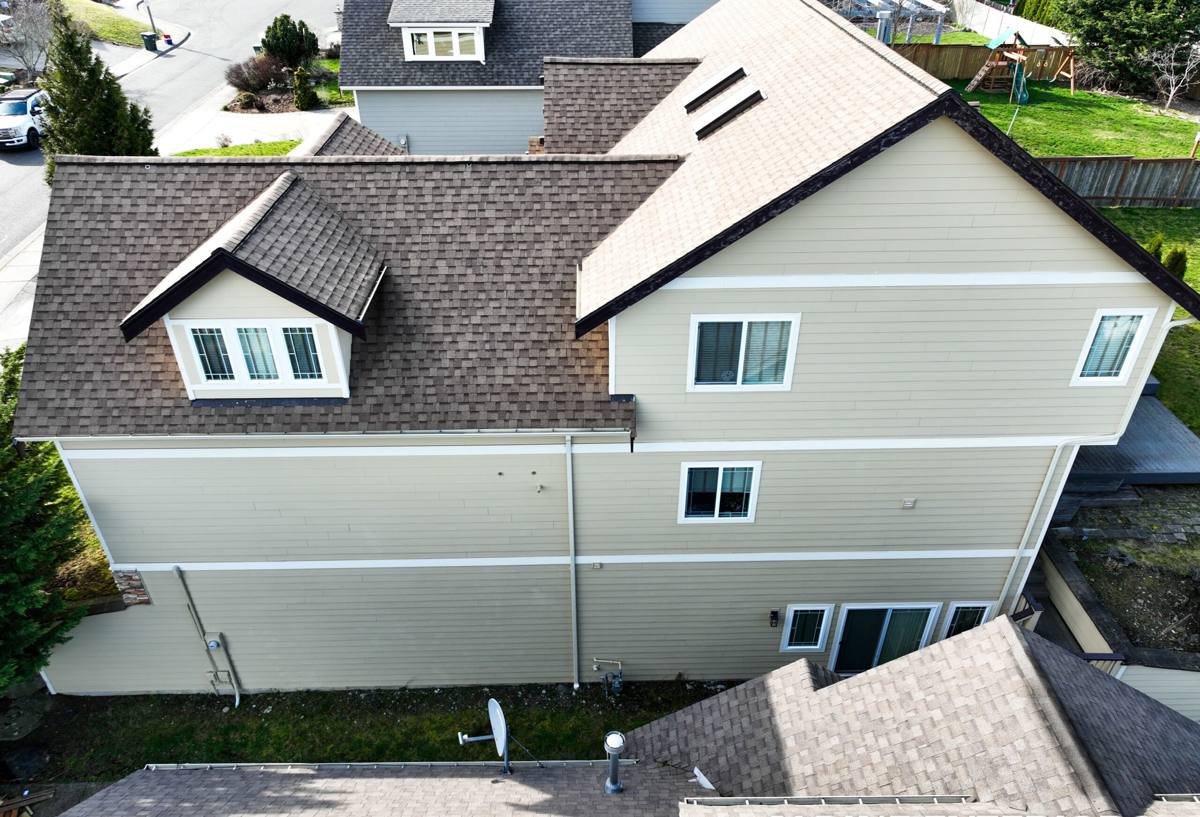
What the Local Climate Does to a Deck
Whatcom County sits in a marine-influenced climate, and even communities like Kendall that sit back from open water still get the effects of it: long stretches of driving rain, high humidity that doesn't fully let up between storms, and a moss season that can run most of the year in shaded spots. Add the tree cover common around Kendall properties, and you get decks that stay wet longer than they would on a sunnier, more exposed lot.
Why This Matters for Decking Specifically
Composite decking doesn't rot the way wood does, but it isn't immune to moisture-related problems. Trapped water under the boards, poor airflow beneath the deck frame, and organic debris packed into board grooves all create the same environment that grows algae and moss on any surface — composite included. The material resists damage; it doesn't resist neglect or a bad installation.
What a Correct Composite Deck Build Includes
A lot of decking problems we get called out to fix aren't material failures — they're installation shortcuts. Composite decking is more forgiving than wood in some ways and less forgiving in others, and the details below are where the difference between a deck that lasts and one that doesn't gets decided.
Framing and Substructure
Composite boards are only as good as what's underneath them. We use joist tape or another moisture barrier on top of the framing to keep water from wicking into the wood substructure — a step that's easy to skip and impossible to see once the boards go down. Joist spacing also needs to match the manufacturer's specification for the board profile being used; wider spacing than recommended leads to bounce and, over time, board sag.
Fasteners and Hardware
In a climate this wet, the wrong fastener corrodes long before the decking wears out. We use hidden fastening systems and hardware rated for exterior, high-moisture use, including at ledger connections and stair stringers where corrosion problems tend to show up first.
Drainage and Airflow
Decks built low to the ground or over poorly graded soil trap moisture underneath, which keeps the whole structure damp long after the surface has dried. We grade and vent the space under the deck as part of the build, not as an afterthought, so airflow can actually do its job between rain events.
Ledger Flashing
Where a deck attaches to the house, flashing has to be installed and layered correctly so water sheds away from the ledger board and the siding above it. This is one of the most common failure points on decks of any material, and it's a siding issue as much as a decking one — which is a big part of why it pays to hire a crew that does both.
Shade, Moss, and Slip Resistance
Kendall's tree cover is a real factor in how a deck performs, not just how it looks. Shaded composite decking stays damp longer after rain, which gives algae and moss more time to establish, especially in board grooves and along the north side of a house where sun never really reaches. Capped composite boards resist staining and moisture absorption far better than uncapped boards, which is why we lean toward capped products for builds in shaded, wet lots like the ones common around Kendall.
Surface texture matters too. Deeply grooved or heavily embossed boards look good but can hold grime and get slick faster in a climate with this much rain. We talk through texture options with every homeowner up front, because the right choice depends on how shaded the deck site actually is and how the household uses the space.
Composite vs. Other Decking Materials
Composite isn't the only option, and it isn't automatically the right one for every project. Here's how it stacks up against the alternatives most homeowners in this area are actually comparing it to.
| Material | Moisture Behavior in This Climate | Maintenance | Typical Lifespan |
|---|---|---|---|
| Pressure-treated wood | Absorbs moisture; prone to warping, splintering, and rot without upkeep | Annual sealing/staining recommended | 10-15 years with maintenance |
| Uncapped composite | Resists rot but can absorb some surface moisture and stain over time | Periodic cleaning; no sealing needed | 20-25 years |
| Capped composite | Best moisture and stain resistance of the group; shrugs off standing water | Occasional rinsing/sweeping | 25-30+ years |
| PVC decking | Fully synthetic; excellent moisture resistance but can feel less natural underfoot | Minimal | 25-30+ years |
For most Kendall properties dealing with heavy shade and long wet stretches, capped composite is the sweet spot between upfront cost and long-term performance. We'll still walk you through the honest trade-offs for your specific lot rather than pushing one product as a default.
Our Process, Start to Finish
- On-site assessment. We look at sun exposure, tree cover, existing structure (if there's a deck to replace), drainage, and how the space attaches to the house.
- Material and layout discussion. We talk through board profile, color, and texture options based on how shaded and exposed the specific site is.
- Written estimate. Clear scope, materials, and price before anything is scheduled — no surprises added mid-job.
- Permitting. We handle the permit process where one is required, including structural details for inspection.
- Demo and framing. Removal of the old deck if applicable, followed by framing built or reinforced to current code and spec.
- Moisture barrier and decking install. Joist protection, hidden fastening, and board installation to manufacturer specification.
- Final walkthrough. We check fastening, gaps for expansion, railing security, and drainage before calling the job done.
Repairing or Replacing an Older Deck
Not every deck in Kendall needs to be torn out. If the framing is sound and the problems are limited to the surface — worn boards, loose fasteners, moss buildup, or a railing that's come loose — repair or a partial resurface can make sense. But if the substructure has been absorbing moisture for years, patching the surface without addressing what's underneath just delays the same problem. We'll tell you honestly which category your deck falls into before recommending a full replacement, because that's a real cost difference and it should be your decision, not ours.
Permits and Local Requirements
Deck projects in Whatcom County typically require a permit once the structure exceeds a certain height or size, and guardrail, stair, and footing depth requirements are governed by the adopted building code. Footing depth in particular needs to account for frost and soil conditions on the specific lot — this isn't a place to guess. We handle the permitting and inspection process as part of the job so you're not the one tracking down requirements or scheduling inspections.
Keeping a Composite Deck Looking Right
Composite decking cuts maintenance dramatically compared to wood, but "low-maintenance" isn't "no-maintenance," especially in a climate that stays damp as long as ours does. A few habits go a long way:
- Sweep debris (needles, leaves, seed pods) out of board grooves before it packs down and holds moisture
- Rinse the deck surface a few times a year, more often in heavily shaded areas prone to moss
- Keep nearby gutters and downspouts clear so runoff isn't dumping extra water onto the deck
- Trim back overhanging branches where practical to reduce shade and debris buildup
- Check railings and stair connections annually for movement or loosened hardware
- Address any standing water on the surface — it usually points to a grading or drainage issue underneath, not a flaw in the boards
Why Hire a Crew That Already Works in Kendall
A deck built for a drier climate, installed by someone unfamiliar with how wet and shaded a Whatcom County property like this can stay, tends to show problems within a few years — trapped moisture, moss nobody accounted for, fasteners that weren't rated for the exposure. We work this area regularly, which means we're not guessing at how a given lot will perform once the rain settles in for the season. We also handle the siding and structural side of these homes, so when a deck ties into the house, the flashing and connection get treated as seriously as the decking itself.
If you're planning a new composite deck, replacing an aging one, or just not sure whether what you have needs repair or replacement, we're happy to take a look. Reach out for a free, no-pressure estimate using the form below.