 Ferndale Siding
 Why Lummi Island Roofs Take More Punishment
A roof on Lummi Island works harder than a roof ten miles inland. The island sits out in the marine waters off Whatcom County, which means the air carries salt, the rain comes in sideways off the water instead of straight down, and the tree cover that gives so many properties their privacy also keeps roofs shaded and damp for long stretches of the year. That combination — salt exposure, wind-driven rain, and a moss season that can run from fall through spring — shortens the life of fasteners, flashing, and shingles faster than most manufacturers' warranty literature accounts for.
None of that means Lummi Island roofs are doomed to constant trouble. It means repairs have to be done with that environment in mind, not treated like a generic patch job. A fix that would hold up fine in a dry, inland Ferndale neighborhood can fail within a season or two out on the island if it doesn't account for salt corrosion and standing moisture.
What a Correct Roof Repair Actually Involves
Diagnosing the Real Leak Path
Water rarely drips straight down from where it enters. It follows the roof deck, runs along rafters, and shows up on a ceiling several feet from the actual failure point. A repair that just seals the spot where a stain appeared indoors often misses the real problem entirely. We trace the leak back to its source — usually a flashing detail, a fastener, or a shingle lap — before we open anything up or apply a fix.
Flashing, Not Just Shingles
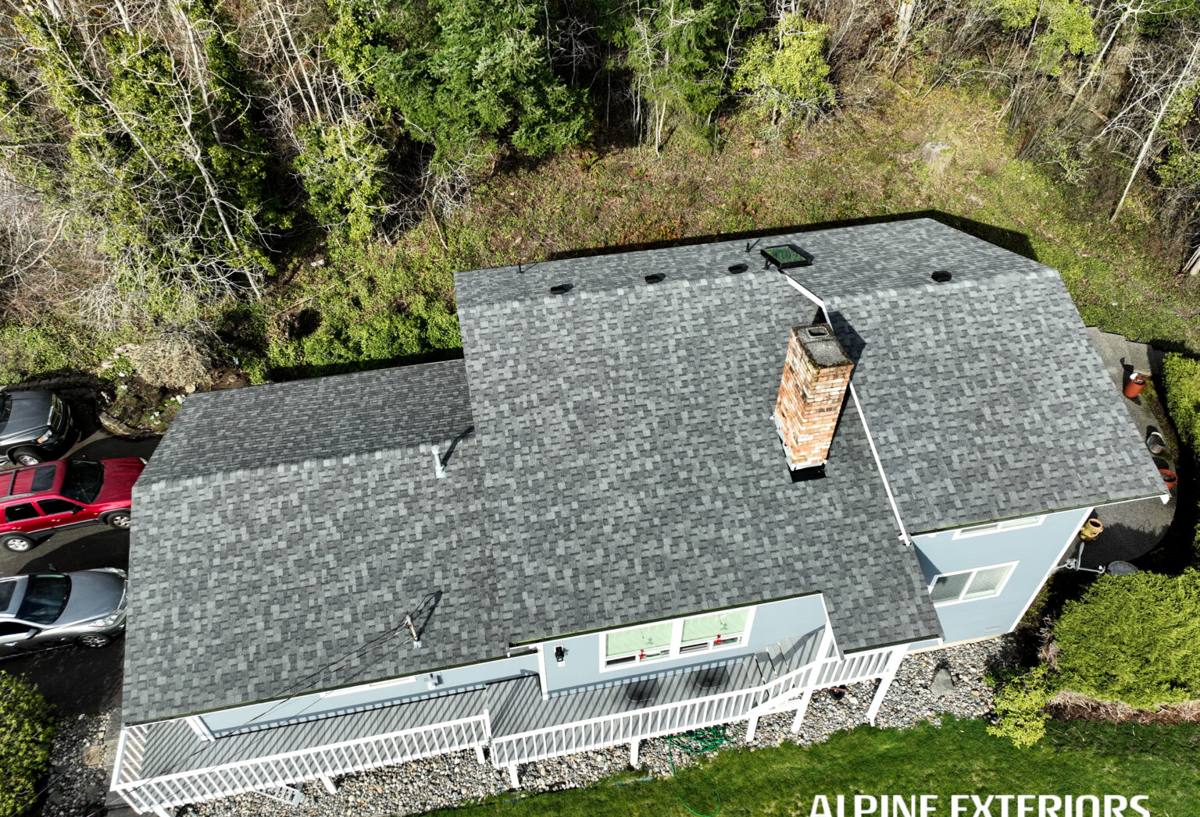
Most roof leaks we're called out for on Lummi Island don't start with the shingle field — they start at the details: chimney flashing, skylight curbs, roof-to-wall intersections, and valleys. These are the places where metal, sealant, and moisture do battle year after year, and salt air accelerates corrosion on any flashing that isn't properly coated or protected. A repair that reshingles over failing flashing is a repair that will leak again within a year or two.
Dealing With Moss the Right Way
Moss isn't just cosmetic. It holds moisture against the roofing material, lifts shingle edges as it grows, and works its way under laps and around fasteners. Scraping moss off without treating what's underneath — and without addressing why that section of roof stays damp long enough for moss to take hold — is a short-term fix. A correct repair removes the growth, checks the decking and shingles underneath for damage, and treats the area so regrowth is slower.
Common Roof Problems We See on Lummi Island
Every roof is different, but the failure patterns out here are consistent enough that we can usually narrow down the likely cause before we're even on the ladder.
| Symptom | Likely Cause | What a Correct Repair Involves |
|---|---|---|
| Moss buildup in valleys and on north-facing slopes | Shade, slow-drying roof sections, long wet season | Careful removal, inspection of decking underneath, treatment to slow regrowth |
| Rust staining or pinholes at flashing | Salt air corrosion on unprotected or aging metal | Flashing replacement with corrosion-resistant material, proper sealant detailing |
| Missing or lifted shingles on exposed edges | Wind-driven rain and gusts off the water | Matching shingle replacement with correct nailing pattern and edge sealing |
| Soft or spongy decking near eaves | Long-term moisture intrusion, often from an old, undetected leak | Decking repair or replacement before any new roofing goes back down |
| Interior ceiling stains far from any obvious roof damage | Water traveling along the deck from a flashing or valley leak | Full leak-path tracing before any surface repair is made |
Materials We Use — and Why We're Selective
Asphalt Composition Shingles
For most Lummi Island homes, a quality asphalt composition shingle with a solid algae-resistant rating is the practical choice. It's cost-effective to repair in sections, widely available so we're not waiting on special-order material after a storm, and performs well when installed with the right underlayment and ventilation for a damp, shaded lot.
Metal Roofing and Flashing
Metal shows up a lot in roof repairs here — not usually as the primary roofing material, but as flashing, valleys, and accent details. We use corrosion-resistant metals and finishes appropriate for salt-air exposure, because standard galvanized flashing that would be fine inland can start showing rust within a few years this close to the water.
Why We Don't Push Every Product on the Market
There are roofing products and systems we're selective about recommending for this specific climate — not because they're bad products in general, but because certain designs are more sensitive to installation quality, trap moisture differently in a shaded, high-moss environment, or carry warranty terms that don't hold up well under heavy organic growth. When we steer a homeowner away from an option, it's about matching the product to Lummi Island's actual conditions, not brand preference.
Our Repair Process
- Inspection and diagnosis — we get on the roof (weather permitting) and trace any leak to its actual source rather than guessing from the interior stain.
- Written scope and honest estimate — you get a clear explanation of what's failing, what we recommend, and what it costs before any work starts.
- Repair or replace the failed component — flashing, decking, shingles, or a combination, matched to what's actually causing the problem.
- Moss and moisture mitigation — where applicable, treating the surrounding area so the same failure doesn't recur in a season or two.
- Final check and cleanup — we confirm the repair holds under a hose test where practical and leave the site clean.
We schedule around ferry sailings so a Lummi Island appointment isn't held up by a missed crossing, and we bring the materials and tools we expect to need for that specific job, since running back for a forgotten part means losing part of the day to the ferry line rather than the drive.
Repair or Replace? How We Help You Decide
Not every roof problem needs a full replacement, and not every leak can be permanently solved with a patch. We walk through the honest tradeoffs with you rather than defaulting to whichever job is bigger.
| Factor | Points Toward Repair | Points Toward Replacement |
|---|---|---|
| Roof age | Roof is well within its expected service life | Roof is near or past the age where shingles naturally fail |
| Extent of damage | Damage is isolated to one section or detail | Damage is spread across multiple slopes or recurring in several spots |
| Decking condition | Decking underneath is sound | Decking is soft, rotted, or shows widespread moisture damage |
| Repair history | This is the first significant repair | The roof has needed several repairs in recent years |
| Timeline and budget | A targeted repair fits the current need and budget | Ongoing repair costs are approaching what a replacement would run |
Homeowner Maintenance Checklist
A little attention between professional inspections goes a long way in a climate like this.
- Walk the roofline visually from the ground twice a year, looking for moss patches, missing shingles, or sagging areas.
- Keep gutters and valleys clear of needles and debris so water has a clear path off the roof.
- Trim back overhanging branches that keep sections of roof shaded and slow to dry.
- Check the attic after heavy storms for daylight, damp insulation, or staining on the underside of the decking.
- Have flashing around chimneys and skylights checked after any significant windstorm.
- Don't pressure-wash moss off the roof yourself — it can drive water under shingles and damage the granule surface.
- Schedule a professional inspection every one to two years, even if nothing looks obviously wrong.
Why Hiring a Crew That Already Works Lummi Island Matters
Getting a crew and materials to an island job takes planning that a mainland-only roofer doesn't deal with day to day. Ferry schedules affect when work can start and how a day is planned out, and a contractor who's made that trip before doesn't lose half a day figuring it out. Familiarity with how exposed a particular area of the island tends to be to wind and salt, and how long moss tends to hold on in the shaded, wetter spots, also means less guesswork in the diagnosis and a repair that's built for the conditions it actually has to survive — not a generic fix pulled from a mainland job.
Before hiring anyone for roof work here, it's worth asking directly about their experience with island logistics, their approach to flashing and moss issues specifically, and getting a written scope so you know exactly what's being repaired and why.
If you're dealing with a leak, moss buildup, or storm damage on a Lummi Island roof, we're happy to take a look and give you a straightforward, no-pressure estimate — just fill out the form below.