 Ferndale Siding
 Building Decks That Hold Up Near the Water in Lummi Nation
Homes in and around Lummi Nation sit close to Bellingham Bay and the open water of Whatcom County, and that proximity changes what a deck has to survive. Salt-laden air corrodes fasteners and hardware faster than it does further inland. Driving rain off the water finds every gap in flashing and decking. And the long, wet moss season here coats anything horizontal in a slick green film if it isn't built to shed water and dry out. A deck built to a generic spec sheet doesn't last in this environment. A deck built for this specific stretch of coastline does.
We've worked on homes throughout this area long enough to know which details matter and which corners get cut on jobs that don't hold up. This page covers what a correctly built deck looks like here, what goes wrong when it isn't, and how we approach the work.
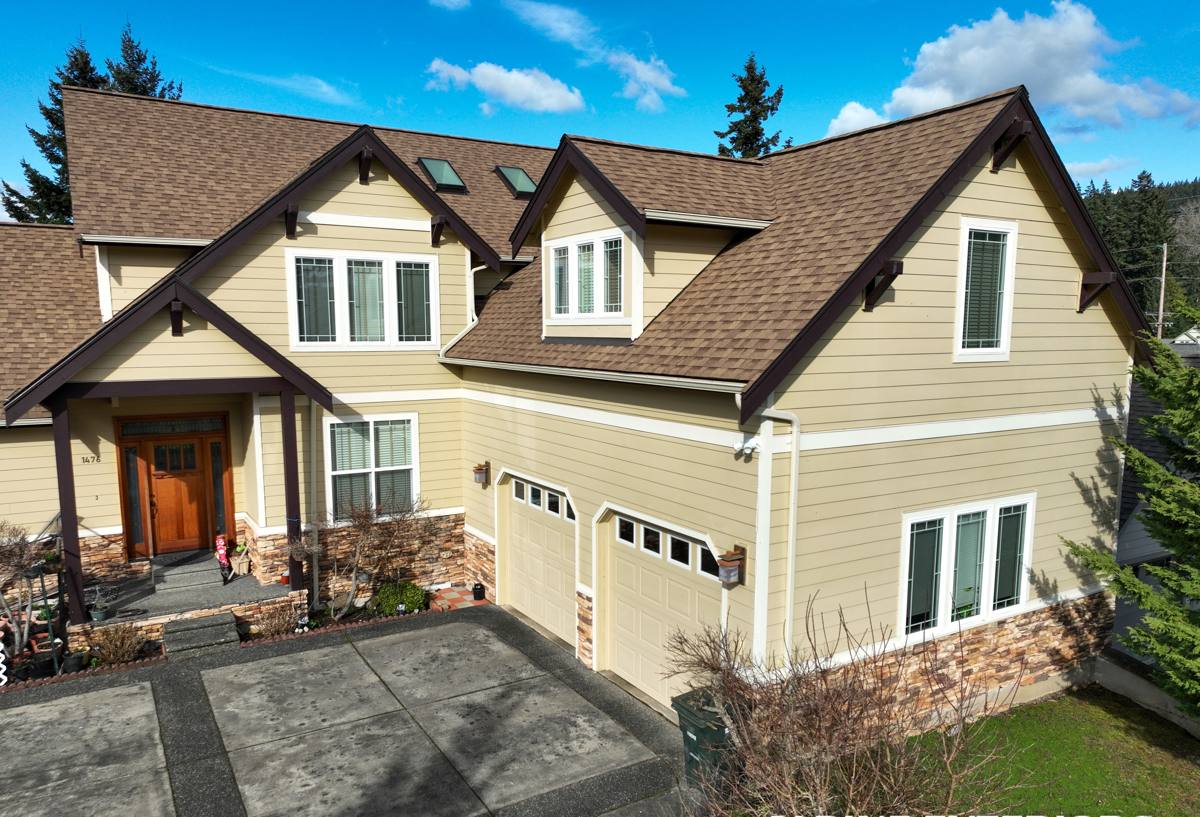
What Salt Air, Rain, and Moss Actually Do to a Deck
Salt Air and Metal Hardware
Salt in the air accelerates corrosion on any exposed metal — joist hangers, screws, bolts, and structural connectors. Standard galvanized hardware can start rusting within a few seasons this close to the water. Once a fastener corrodes, it loses holding strength long before it looks obviously bad from the surface, which is part of why deck hardware needs to be rated for this environment from day one, not upgraded after something fails.
Driving Rain and Water Intrusion
Whatcom County gets sustained, wind-driven rain for long stretches of the year. On a deck, that means water doesn't just fall straight down — it gets pushed sideways into ledger connections, under railing posts, and into any seam where flashing is missing or poorly lapped. The ledger board connection, where a deck attaches to the house, is the single most common source of hidden water damage on decks in this region because it's an easy detail to get wrong and a hard one to inspect once it's covered.
Moss Season and Surface Buildup
Moss and algae growth thrive in the shaded, damp conditions common here for months at a time. On decking boards, moss buildup isn't just cosmetic — it holds moisture against the wood or composite surface, makes the deck genuinely slippery underfoot, and accelerates surface breakdown on lower-grade materials. Decks with poor airflow underneath, tight board spacing, or heavy shade cover see this worst.
What a Correctly Built Deck Needs in This Climate
- Structural hardware and fasteners rated for coastal or high-corrosion environments, not standard galvanized
- Properly lapped, code-compliant flashing at the ledger board and any point where the deck meets the house
- Adequate slope and board spacing so water sheds off the surface instead of pooling
- Sufficient clearance and airflow underneath the deck to let framing dry out between rain events
- Decking material chosen with moss and algae resistance in mind, not just appearance
- Railing posts and footings installed to shed water away from end grain and connection points
- A maintenance plan that accounts for moss cleaning before it becomes a slip hazard or a moisture trap
Choosing Decking Material for This Environment
Material choice matters more here than in drier inland areas. Every option has real trade-offs — the goal is picking the one that fits how you'll use the deck and how much upkeep you want to take on, not chasing a single "best" material.
| Material | Moisture & Moss Behavior | Maintenance | Typical Lifespan Here |
|---|---|---|---|
| Pressure-treated wood | Absorbs moisture readily; needs sealing to resist moss and rot | Annual cleaning and periodic sealing/staining | 10–15 years with upkeep |
| Cedar | Naturally rot-resistant but still needs sealing near the water | Regular sealing; moss cleaning in shaded areas | 15–20 years with upkeep |
| Composite decking | Doesn't absorb water like wood, but surface film and grain texture can still trap moss on shaded boards | Periodic washing; no sealing/staining required | 25+ years, varies by product line |
| PVC decking | Fully non-absorbent; sheds moisture well | Occasional washing | 25+ years, varies by product line |
We'll walk through these trade-offs honestly during an estimate rather than steering everyone toward the same product. A shaded lot near heavy tree cover has different needs than an open, sun-exposed site even a few blocks away.
Hardware and Fasteners: The Detail Most Decks Get Wrong
This is worth its own section because it's the single biggest difference between a deck that lasts and one that needs structural repair inside a decade. Standard exterior screws and hangers are rated for general outdoor use, not sustained salt exposure. Near the water, we spec stainless steel or coated hardware rated for corrosion resistance at every structural connection — hangers, ledger bolts, post bases, and railing brackets. It costs more up front than standard hardware. It's a fraction of the cost of tearing into a deck a few years later to replace corroded structural connectors hidden under the decking surface.
Ledger Boards and Flashing: Where Water Damage Starts
Most deck failures we see near the water don't start with the decking boards — they start at the ledger board, the piece that attaches the deck frame to the house. If flashing isn't properly installed and lapped over the house's weather-resistant barrier, wind-driven rain works its way behind it over time. That moisture gets trapped against the house's framing, out of sight, and by the time it shows up as a soft spot or a stain inside, real structural damage has already happened. Getting this connection right the first time — proper flashing, correct fastener spacing, and a gap for drainage — is non-negotiable on every deck we build.
Signs of Ledger or Flashing Problems on an Existing Deck
- Soft or spongy decking near where the deck meets the house
- Staining or discoloration on the siding directly above the ledger board
- Visible gaps or missing flashing where the deck attaches
- Interior staining on a wall that backs up to the deck connection
Our Deck Building Process
- On-site assessment — we look at sun exposure, tree cover, drainage patterns, and how close the site is to the water to understand what the deck will actually face year-round.
- Material and layout discussion — we go over decking options, railing styles, and layout based on how you use the space and your maintenance preferences.
- Permitting and code compliance — deck construction in Whatcom County is subject to local building code, and we handle the permitting process so the structure is inspected and compliant.
- Framing and structural work — footings, posts, and joists are installed with corrosion-resistant hardware and proper spacing for drainage and airflow.
- Flashing and ledger installation — the connection to your home gets flashed and sealed correctly before anything else is built on top of it.
- Decking and railing installation — surface material and railing go in per the agreed layout, with attention to board spacing and drainage slope.
- Final walkthrough — we go over the finished deck with you, including what maintenance to expect given the local climate.
Maintenance Realities for a Deck in This Area
Even a well-built deck near Lummi Nation needs some seasonal attention — that's the honest trade-off of living this close to the water. What that looks like depends on material choice, but a few things apply across the board:
- Clear moss and organic debris from the surface and between boards before it builds up, ideally before the wettest months
- Check railing posts and structural connections periodically for signs of corrosion or loosening
- Keep gutters and downspouts clear so water isn't dumping directly onto or near the deck
- Reseal wood decking on the schedule appropriate to the product — skipping this is the fastest way to shorten a wood deck's life here
- Trim back overhanging vegetation that keeps sections of the deck shaded and damp longer than necessary
Why Local Experience Matters for This Job
A deck built to a generic national spec will often pass inspection and look fine on day one. The problems show up two, five, or eight years later — corroded hardware, a soft ledger connection, decking that's been slick with moss every winter since it was installed. Crews who work this specific area regularly know which hardware grade actually holds up here, how much slope and airflow the local rain and moss conditions really demand, and how flashing needs to be detailed for driving, wind-blown rain rather than straight-down rain. That knowledge doesn't come from a manual — it comes from seeing what fails and what doesn't in this exact climate, on this exact coastline.
If you're planning a new deck or need an existing one assessed for water or hardware issues, we're glad to take a look and walk you through your options with no pressure and no upsell — just a straight assessment of what your home and site actually need. Reach out below for a free estimate.