 Ferndale Siding
 New Roof Installation Built for Lynden's Weather
Lynden sits inland from the Strait of Georgia and Bellingham Bay, but that doesn't spare it from the weather pattern that shapes every roof in Whatcom County: long, wet winters, steady onshore wind, and short, humid summers that never quite dry things out. A roof here isn't just shedding water for a few storms a year — it's living under near-constant moisture load for months at a time, with freeze-thaw cycles thrown in during cold snaps. That combination of driving rain, damp air carrying salt influence off the Sound, and a moss season that can run from October through May is exactly why a "new roof" here needs to be engineered for this climate, not just installed to code minimums.
We're based out of Ferndale and work throughout Whatcom County, including Lynden, on a regular basis. That matters more than it sounds like it should — a crew that's replaced roofs in this specific weather pattern knows where water actually collects on a Lynden roofline, not just where a spec sheet says it should.
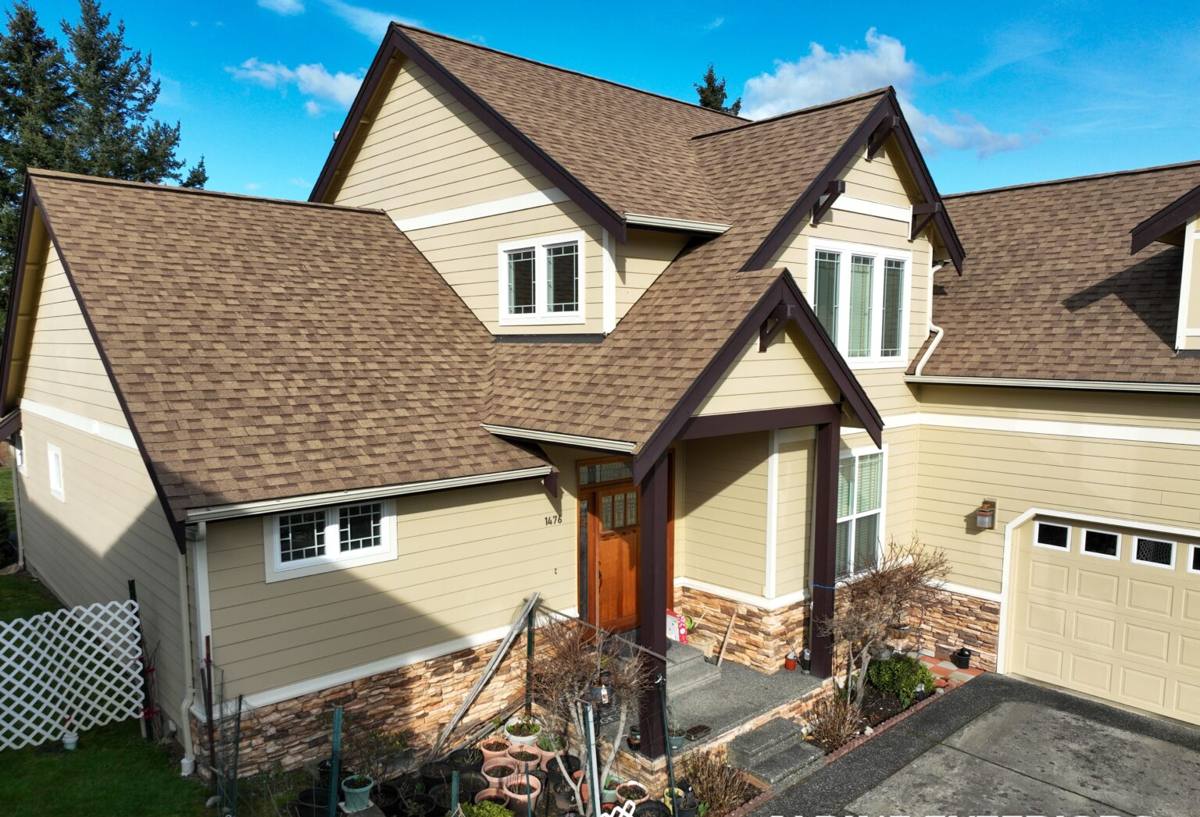
Signs a Lynden Home Needs a New Roof, Not Another Repair
Repairs make sense when a roof has isolated damage and years of usable life left. Replacement makes sense when the roofing system as a whole has reached the end of its service life or when repairs would just be chasing new leaks every wet season. Common signs we see on homes in this area include:
- Granule loss heavy enough that you can see bare, shiny patches on asphalt shingles
- Shingles that are cupping, curling at the edges, or cracking
- Moss or dark streaking that keeps coming back within a year or two of cleaning
- Soft spots in the decking you can feel when walking the roof, or sagging visible from the ground
- Daylight visible through the attic roof deck, or damp insulation after a storm
- A roof that's 20+ years old on asphalt shingles, or showing widespread wear regardless of age
- Rising energy bills tied to poor attic ventilation or failing insulation under the roof deck
If you're only seeing one or two of these, a targeted repair may still be the right call. When several show up together, that's usually the roofing system telling you it's done, and patch repairs at that point tend to cost more over a few years than one correct replacement.
What a Correct New Roof Installation Actually Involves
Tear-Off and Deck Inspection
We remove the old roofing down to the deck rather than layering over it. Layering hides problems and voids most manufacturer warranties. Once the deck is exposed, we check every sheet of sheathing for soft spots, delamination, or water staining and replace anything compromised before a single new shingle goes down. Skipping this step is the single most common cause of a new roof failing early.
Underlayment and Water Protection
In a climate with this much sustained rainfall, underlayment isn't a formality — it's the roof's real backup line of defense. We use synthetic underlayment across the full deck and self-adhering ice-and-water membrane at the vulnerable points: eaves, valleys, around chimneys and skylights, and anywhere roof planes meet a wall. Those transition points are where the vast majority of Whatcom County roof leaks actually start.
Flashing
Flashing directs water around penetrations and roof transitions instead of letting it work its way underneath the shingles. We install new step flashing, counter-flashing, and valley metal rather than reusing old pieces — reused flashing is a common source of "mystery leaks" that show up a year or two after a cheaper reroof.
Ventilation
Proper intake at the eaves and exhaust at the ridge keeps the attic temperature and moisture close to outdoor conditions. Without it, moisture gets trapped under the deck, which accelerates rot, encourages moss growth from the underside out, and can quietly shorten a new roof's life by years even if everything above the deck was installed correctly.
Fastening and Ridge Detail
Shingles are nailed to the manufacturer's specified pattern, not stapled or under-nailed to save time. Ridge cap is installed as its own component, not cut from field shingles, since it takes the brunt of wind-driven rain along the peak of the roof.
Material Options for Whatcom County Homes
There's no single "best" roofing material — the right choice depends on budget, roof pitch, how long you plan to stay in the home, and how much maintenance you want to take on. Here's how the common options compare for a climate like this one:
| Material | Typical Lifespan | How It Handles This Climate | Maintenance |
|---|---|---|---|
| Architectural asphalt shingles | 25–30 years | Good performance when properly ventilated and flashed; wide color/style range | Periodic moss treatment, gutter clearing |
| 3-tab asphalt shingles | 15–20 years | Lower wind rating and thinner profile; shows wear faster in sustained wet weather | Same as architectural, more frequent replacement |
| Standing seam metal | 40–50+ years | Sheds rain and moss buildup very well; strong wind performance | Low; occasional fastener/sealant checks |
| Cedar shake | 20–30 years with upkeep | Natural look but needs consistent treatment to resist moss and moisture in this climate | Higher; regular treatment and inspection |
As a matter of professional standard, we steer homeowners away from products that demand a maintenance schedule most people can't realistically keep up with in a wet climate — not because a material is inherently bad, but because a roof that only performs well with frequent upkeep tends to underperform in the real world. We'll walk through the honest trade-offs for your specific roof rather than push one product line.
Our Process, Start to Finish
- On-site evaluation — we inspect the current roof, attic ventilation, and deck condition, and take measurements.
- Written estimate — a clear scope of work and price, with material options explained so you're choosing based on facts, not sales pressure.
- Scheduling around weather — we plan installation for a stretch of dry days where possible, since a roof deck exposed to rain mid-install is asking for trouble.
- Tear-off and deck repair — full removal of old roofing, deck inspection, and replacement of any damaged sheathing.
- Underlayment, flashing, and ventilation install — the layers that determine whether the roof actually performs long-term.
- Shingle or panel installation — installed to manufacturer specification for proper wind and warranty coverage.
- Cleanup and magnetic nail sweep — job site cleared of debris and checked for stray fasteners.
- Final walkthrough — we review the finished roof with you before calling the job complete.
Moss and Ventilation: The Two Issues That Define a Whatcom County Roof
Moss isn't just cosmetic here — it holds moisture directly against the shingle surface and, over years, works its way under tabs and lifts them, opening a path for water. A new roof done right reduces how quickly moss establishes by using proper flashing at valleys and eaves (where moisture lingers longest) and by not leaving overhanging tree limbs shading the roof deck, when that's something a homeowner can control. Zinc or copper strips near the ridge can help slow regrowth on some roofs, though they're not a substitute for periodic cleaning.
Ventilation and moss are connected: a poorly ventilated attic keeps the underside of the deck cooler and damper than it should be, which gives moss and algae more to work with from below as well as above. Getting the intake-to-exhaust balance right during installation is one of the most overlooked factors in how long a roof actually lasts in this region.
What Affects the Cost of a New Roof
| Factor | Why It Matters |
|---|---|
| Roof size and pitch | Steeper roofs take longer to work safely and use more material per square |
| Number of layers to remove | Tearing off multiple old layers adds labor and disposal cost |
| Deck condition | Rotted or soft sheathing found during tear-off adds material and labor to replace |
| Material choice | Asphalt, metal, and cedar carry very different material and installation costs |
| Roof complexity | Valleys, dormers, skylights, and chimneys all add flashing work and time |
| Ventilation upgrades | Adding proper intake/exhaust where it's missing is worth the added cost long-term |
We don't quote a price without seeing the roof — anyone who does is guessing. What we can tell you is that the cheapest bid on paper is almost never the cheapest roof over 20 years once you account for underlayment quality, flashing work, and ventilation that either was or wasn't done correctly the first time.
Why a Local Ferndale-Based Crew Matters for a Lynden Roof
Roofing crews that only pass through an area occasionally tend to build to generic specifications. A crew that regularly works Whatcom County roofs — including Lynden — has already seen which valleys collect moss fastest in this climate, which flashing details hold up against driving rain off the Sound, and which ventilation setups actually keep attics dry through a full wet season. That local pattern recognition doesn't show up on a spec sheet, but it shows up in how long the roof lasts.
Being nearby also means faster response if something needs a look after a storm, and a crew with an ongoing reputation in the community, not a one-time job and gone.
Ready for an Honest Look at Your Roof?
If your Lynden home is showing wear, has an aging roof, or you're just weighing whether repair or replacement makes more sense, we're glad to take a look and give you a straightforward answer. Fill out the form below for a free, no-pressure estimate — no obligation, just an honest assessment from a crew that works this climate year-round.