 Ferndale Siding
 Siding Installation Built for Lynden's Climate
Lynden sits inland from the coast, but it still lives inside the same wet, marine-influenced weather system that shapes all of Whatcom County. Homes here go through long stretches of driving rain, damp shoulder seasons that never quite dry out, and a moss season that can run from late fall clear into spring. Add in the humid air that moves inland off the Sound, and siding on a Lynden home is under near-constant low-grade moisture pressure for most of the year. That's a very different set of demands than siding installed in a dry climate, and it's why we approach every Lynden project as a moisture-management job first and a cosmetic upgrade second.
When we talk to homeowners in Lynden, the complaints we hear are consistent: paint that won't hold past a few years, dark streaking and moss creeping in around trim and lower courses, soft spots near ground level, and siding that looks tired well before it should. Almost all of that traces back to one thing — the siding material and the installation details weren't matched to what this climate actually does to a house, year after year.
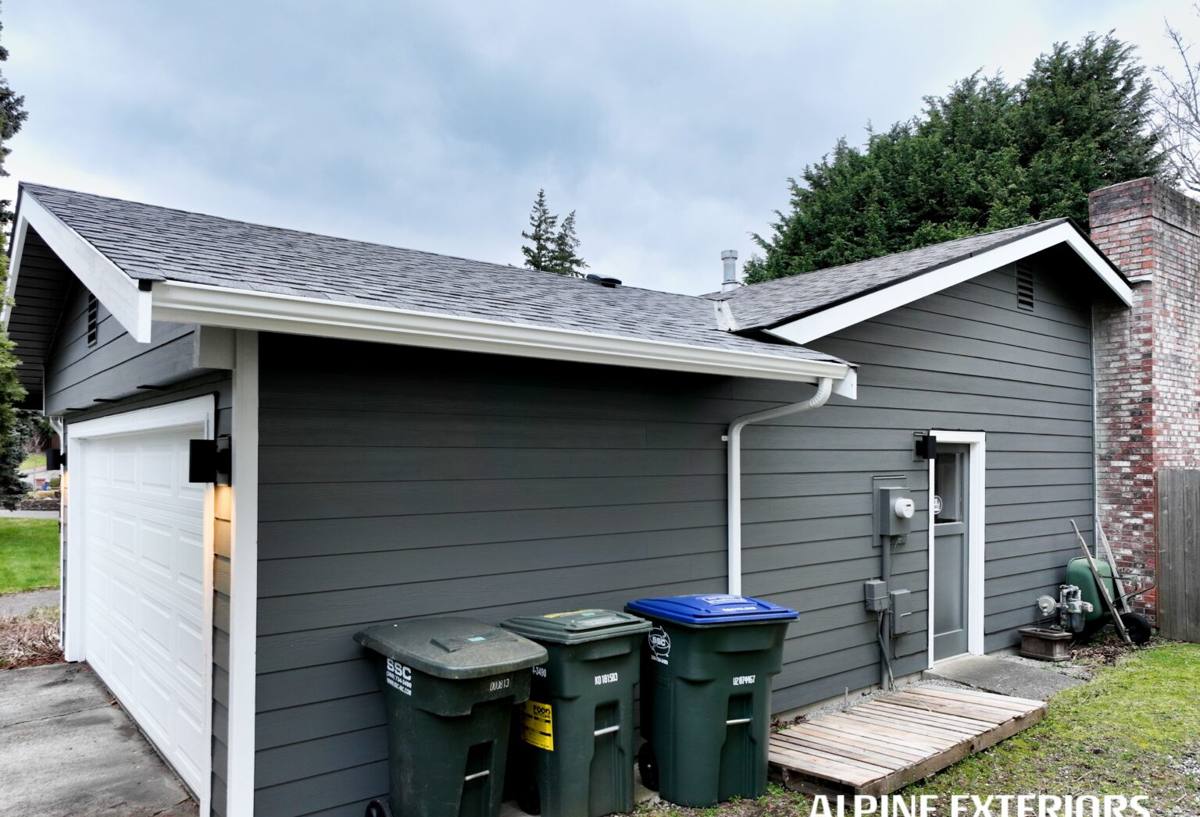
What Lynden Homes Actually Need From Their Siding
Moisture Management, Not Just Water Resistance
Any siding sheds rain when it's brand new. The real test is what happens at year five, ten, and twenty, when caulk has aged, fasteners have moved slightly, and the assembly behind the siding has to deal with whatever moisture gets past the surface. In a climate like ours, that means the whole wall system — house wrap, flashing, drainage plane, and siding — needs to work together to get water out, not trap it in.
Resistance to Moss and Organic Growth
Moss doesn't just grow on roofs here. It takes hold anywhere a surface stays damp and shaded long enough — north-facing walls, areas under eaves, and low sections near landscaping. Porous or absorbent siding materials give moss and mildew something to grip onto and feed from. A dense, factory-finished material resists that far better than a soft or unfinished substrate.
A Finish That Holds Up to Real Weather Cycling
Lynden sees real seasonal swings — cold, wet winters and warmer, drier summers — and that cycling stresses paint film and substrate alike. A finish that was hand-applied or field-painted tends to show its age faster under that kind of repeated expansion and contraction than a factory-cured finish engineered specifically for it.
Why We Install Only James Hardie Fiber Cement
We made a deliberate decision as a company to install James Hardie fiber cement siding exclusively. We don't install vinyl, LP SmartSide, Cemplank, Allura, primed spruce, or cedar. That's not a marketing position — it's a judgment call based on what actually holds up on homes in this climate over the long term, and what we're willing to stand behind.
Vinyl is inexpensive and easy to install, but it's a thin plastic product that expands and contracts significantly with temperature swings, can warp or crack in impact-prone areas, and simply isn't as rigid or impact-resistant as fiber cement. Engineered wood products like LP SmartSide perform reasonably well when the installation and maintenance schedule are followed to the letter, but they remain wood-based, which means they're more vulnerable to moisture intrusion at cut edges and seams than a cement-based product — a real concern in a climate this wet. Primed spruce and cedar are natural wood siding options that can look beautiful, but they demand an ongoing maintenance commitment — recoating, caulking, and inspection — that most homeowners underestimate until moss and rot show up around year six or seven.
James Hardie fiber cement is a cement-and-cellulose composite, which means it's non-combustible, doesn't swell or rot when it absorbs moisture the way wood-based products can, and holds paint and factory finish far more consistently over time. It's engineered specifically for demanding climates — Hardie's HZ10 product line, in particular, is formulated for regions with significant moisture exposure, which describes Lynden and the rest of Whatcom County well. The ColorPlus factory finish is baked on under controlled conditions rather than applied on-site, which gives it better fade and wear resistance than a field-applied coat, along with a stronger warranty against finish failure.
None of this means other products are junk — plenty of them perform fine when installed and maintained correctly. It means that after years of doing this work in this specific climate, fiber cement is the material we're willing to put our name behind for a Lynden home.
What a Correct Siding Installation Involves
The siding material only performs as well as the assembly it's installed into. A correct James Hardie installation in this climate includes:
- Removal of old siding and inspection of the sheathing underneath for hidden rot or moisture damage before anything new goes up
- Repair or replacement of any compromised sheathing — covering over a soft spot is how small problems become expensive ones
- A properly lapped, code-compliant weather-resistive barrier (house wrap) installed before any siding contacts the wall
- Correct flashing at every window, door, deck ledger, and roofline intersection — the majority of siding failures we see start at flashing details, not the field of the wall
- Proper fastener placement and type, per Hardie's published installation specifications, which affect both structural performance and warranty validity
- Correct joint and butt-seam treatment, including proper caulking and gapping to allow for material movement
- Ventilation and clearance details at grade, decks, and patios so the bottom edge of the siding isn't sitting in standing moisture
Hardie's product warranty is tied to installation per their published specifications. A crew that cuts corners on flashing or fastening isn't just risking early wear — they're potentially voiding the manufacturer warranty the homeowner is paying for.
Our Process for a Lynden Siding Installation
1. On-Site Assessment
We walk the exterior with you, looking at existing siding condition, trim, moisture staining, and any areas where moss or algae have already taken hold. We also check for soft spots that may indicate sheathing damage underneath.
2. Scope and Product Selection
We talk through Hardie's plank, panel, and shingle options, along with color and texture choices, and build a scope that addresses both the visible siding and anything we find underneath it.
3. Written Estimate
You get a clear, itemized estimate — material, labor, and any sheathing repair allowances — with no vague line items.
4. Tear-Off and Inspection
Old siding comes off, and we inspect the wall assembly before installing anything new. This is the step that gets skipped by crews trying to move fast, and it's the one that matters most in a wet climate.
5. Installation to Manufacturer Spec
House wrap, flashing, fastening, and joint treatment are all done to James Hardie's published requirements, not shortcuts.
6. Final Walkthrough
We walk the finished job with you, checking finish quality, trim details, and caulking before we call it complete.
Comparing Siding Options for a Lynden Home
| Factor | Vinyl | Engineered Wood (LP SmartSide) | Cedar / Primed Spruce | James Hardie Fiber Cement |
|---|---|---|---|---|
| Moisture tolerance in wet climates | Doesn't absorb, but seams and gaps can trap water behind it | Wood-based; vulnerable at cut edges and seams if not sealed and maintained | Absorbs moisture directly; needs consistent maintenance | Cement-based; doesn't swell or rot from moisture absorption |
| Moss/algae resistance | Moderate; can trap moisture behind panels | Moderate, maintenance-dependent | Lower; porous surface favors growth | High with factory finish |
| Finish durability | Color molded in but can fade and chalk | Field or factory finish, variable | Requires periodic recoating | Factory-cured ColorPlus finish |
| Fire resistance | Combustible | Combustible (wood-based) | Combustible | Non-combustible |
| Typical maintenance | Low, but limited repair options if damaged | Moderate — sealing, inspection | High — recoating, caulking, inspection | Low — occasional wash and touch-up |
Cost Factors for a Lynden Siding Project
Every home is different, but the factors that most affect a Lynden siding installation quote are consistent:
| Factor | Why It Matters |
|---|---|
| Condition of existing sheathing | Hidden moisture damage found during tear-off adds repair scope |
| Home size and wall complexity | More corners, gables, and trim details mean more labor and material |
| Hardie product line and profile chosen | Plank, shingle, and panel styles, plus HZ10 formulation, price differently |
| Trim and accessory scope | Fascia, soffit, and trim replacement alongside siding affects total cost |
| Access and site conditions | Multi-story sections, tight lot lines, and landscaping affect labor time |
A Pre-Project Checklist for Homeowners
- Ask any contractor for their James Hardie installation certification or documented experience with the product
- Confirm they'll inspect sheathing during tear-off, not just install over the existing wall
- Get a written scope that specifies flashing and fastening details, not just "siding installation"
- Ask how they handle a moisture problem if one is discovered mid-project
- Confirm the warranty terms — both the manufacturer's product warranty and the contractor's workmanship warranty
- Ask for a clear timeline, including weather contingency planning given our rainy season
Why a Local Crew Matters
Siding installed by a crew that already works in Whatcom County understands things a traveling or out-of-area contractor won't necessarily account for — how our rain patterns move through a wall system over years, which orientations on a home tend to hold moisture longest, and how much moss pressure a north-facing wall or shaded elevation is actually going to see. That local knowledge shows up in the small decisions: where extra flashing attention goes, how joints are treated, and which details get extra care instead of being treated as boilerplate. It's also easier to get warranty and maintenance support from a crew that's still local next year and the year after, rather than one that installed and moved on.
If you're planning a siding project for your Lynden home, we're happy to walk the exterior with you, look at what's going on underneath the current siding, and put together a clear, honest estimate — no pressure, no upsell games, just a straight look at what your home needs. Request a free estimate using the form below.